“The hardest part about having a disability is that people look at you and only see that. They don't see who you are.”
— Andrew reflects on the perceptions people have of patients with visible disabilities.

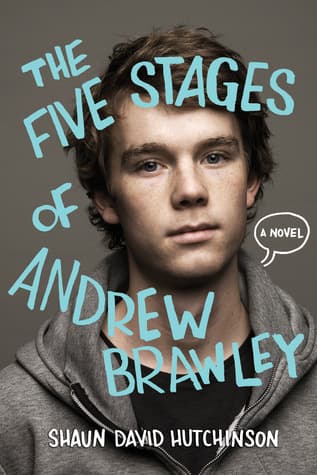
Shaun David Hutchinson (2015)
Genre
Psychology / Young Adult / Romance
Reading Time
297 min
Key Themes
See below
Sign in to track this book
Haunted by the memory of his family's death, Andrew Brawley hides in a hospital, only to find a reason to live and love when a hate-crime victim named Rusty arrives, forcing Drew to confront his past and accept his survival.
Andrew Brawley, seventeen, has lived in the hospital for months since a car accident killed his entire family—his parents and younger sister, Sarah. He works odd jobs, from serving food in the cafeteria to helping nurses, and sleeps in a forgotten supply closet. He makes himself invisible, avoiding social workers and the outside world, consumed by guilt over his survival. He sketches a graphic novel in his notebook, showing a superhero called the 'Guardian' fighting a personified 'Death.' The hospital staff, particularly Nurse Betty and orderly Daniel, know he is there but mostly leave him alone, understanding his grief.
One night, Rusty, a new patient, comes into the ER with severe burns on half his body. Classmates had doused him with gasoline and set him on fire in a hate crime. Andrew is immediately drawn to Rusty's pain, seeing a reflection of his own suffering. He starts visiting Rusty's room, at first just watching, then leaving small gifts, and eventually talking. Rusty, despite his physical and emotional trauma, shows surprising resilience and dry wit, which slowly breaks through Andrew's hardened shell. Andrew feels an intense need to protect Rusty, a feeling he has not had since his family's death.
Andrew's graphic novel, 'The Guardian,' becomes an outlet for his emotions and a metaphor for his wish to save Rusty. In the comic, the Guardian fights 'Death,' a shadowy figure that represents not just literal death but also despair and Andrew's trauma. He starts to include Rusty in the story, showing the Guardian fighting to protect an innocent, injured boy. Drawing and storytelling help Andrew process his guilt and his growing affection for Rusty, showing his inner struggle to keep Death from taking another person he cares about. He believes that if he can defeat Death in his comic, he can protect Rusty in real life.
Andrew and Rusty's relationship grows beyond simple visits. They share stories about their pasts, fears, and dreams. Andrew reveals more about his family and the accident, while Rusty talks about his life before the attack and his struggles as an openly gay person in a hostile environment. Andrew arranges a 'date' for them in the hospital's unused hydrotherapy room, filling it with fairy lights and ordering pizza. This intimate moment strengthens their connection, making them feel less alone in their traumas. Their shared vulnerability creates a strong bond, offering comfort and a glimmer of hope amid their pain.
Andrew's long stay in the hospital eventually draws the attention of social services and his estranged Aunt Jean, who tries to persuade him to leave the hospital and live with her. These attempts to pull him back into the 'real world' are met with strong resistance from Andrew, who sees the hospital as his sanctuary and the only place he feels safe from his guilt and memories. He fears that leaving means facing his past and losing his connection to Rusty, who is his only source of happiness and purpose. He continues to avoid all efforts to remove him, clinging to his self-imposed isolation.
Rusty experiences a severe medical setback, developing an infection that puts his life at risk. This crisis sends Andrew into a panic, reawakening his deepest fears of loss. He spends every moment by Rusty's bedside, terrified of history repeating itself. This event reinforces his belief that Death is pursuing him and those he cares about. The doctors and nurses work to stabilize Rusty, and Andrew's vigil shows the depth of his feelings for Rusty and his desperate need to protect him, even as he feels powerless against illness and fate.
Driven by terror, Andrew becomes convinced that he needs to make a bargain with Death to save Rusty. He believes that Death spared him in the car accident and is now coming for Rusty as cosmic retribution. He starts to imagine conversations with Death, a chilling, taunting figure from his graphic novel. He considers sacrificing himself or part of his future for Rusty's life, echoing the Guardian's desperate pleas in his comic. This delusion highlights the severity of his survivor's guilt and his distorted view of control over life and death.
In a moment of deep vulnerability, Andrew confesses a painful truth about the car accident to Rusty. He reveals that his younger sister, Sarah, was alive for a short time after the crash and called for him. Overwhelmed by shock, fear, and his own injuries, he could not reach her, and she died alone. This confession is the core of his survivor's guilt, the belief that he failed to save her. Rusty, despite his own pain, offers Andrew comfort and forgiveness, assuring him that he could not have done anything differently, starting to undo Andrew's self-blame.
Andrew eventually comes to a realization, helped by Rusty's steady support and the subtle guidance of Nurse Betty and Daniel. He understands that he cannot literally bargain with Death or change the past. His 'bargain' is not about a supernatural being, but about facing his own guilt and accepting what happened. He starts to understand that his family's deaths were not his fault and that he did not choose to survive. This acceptance is a painful but necessary step toward healing, allowing him to release the crushing burden of responsibility he has carried for so long.
As Rusty continues to recover, Andrew starts to imagine a future for himself outside the hospital. He plans with Rusty to move in together once Rusty is discharged, finding an apartment and even considering community college. This decision marks a turning point, showing Andrew's willingness to embrace life again. The hospital, once a refuge, now feels like a cage, and the possibility of a life with Rusty offers him a compelling reason to step out of his self-imposed exile and face the world. Their shared trauma has built a bond strong enough to propel them toward a new beginning.
Andrew finishes his graphic novel. In the final pages, the Guardian does not defeat Death in a physical battle, but learns to live with its presence, understanding that some things are beyond control. The Guardian finds a new purpose in protecting the living and finding hope amid loss, rather than seeking vengeance or impossible bargains. This artistic resolution mirrors Andrew's own emotional journey, symbolizing his acceptance of grief and his renewed focus on life and love. The comic shows his healing and his ability to find strength in vulnerability and connection.
With Rusty's discharge near, Andrew makes the difficult but necessary decision to leave the hospital. He says goodbye to the staff who have become his surrogate family—Nurse Betty, Daniel, and others. He packs his few belongings, including his finished graphic novel. Together, Andrew and Rusty walk out of the hospital, hand in hand, ready to face the outside world and build a new life. This departure is a strong symbol of their healing and their commitment to each other, leaving behind their past traumas for a hopeful, though uncertain, future.
The Protagonist
Andrew transforms from a guilt-ridden, isolated survivor to someone who accepts his past, embraces love, and chooses to live again.
The Love Interest / Catalyst
Rusty endures immense physical and emotional trauma, yet finds love and healing through his connection with Andrew, choosing to live despite his scars.
The Supporting
Remains a steadfast source of comfort and quiet support for Andrew, witnessing his journey of healing.
The Supporting
Provides consistent, reliable friendship and practical wisdom to Andrew throughout his stay.
The Mentioned / Catalyst
Her memory serves as the core of Andrew's internal conflict, and his acceptance of her death is key to his healing.
The Antagonist / Metaphor
Starts as a literal antagonist in Andrew's mind, but ultimately becomes a metaphor for grief that Andrew learns to accept rather than defeat.
The main theme is Andrew's overwhelming grief for his lost family and the crippling survivor's guilt he carries, especially about not saving his sister, Sarah. This guilt shows in his self-imposed isolation in the hospital and his belief that Death is pursuing him. His journey is about learning to process this grief, forgiving himself, and understanding that he is not responsible for what happened. This is clear in his internal thoughts and his graphic novel where the Guardian fights 'Death,' symbolizing his struggle to accept his losses and the unfairness of fate.
“I was supposed to die that night. My parents did, and so did my sister, but I survived.”
Andrew's healing journey is linked to his growing relationship with Rusty. Isolated by his pain, Andrew finds comfort and a reason to live through his connection with another deeply wounded person. Rusty's resilience, his willingness to share his own trauma, and his capacity for love slowly break down Andrew's emotional walls. Their shared vulnerability creates a strong bond that allows both boys to start processing their traumas and imagine a future beyond their pain. The hospital, initially a hiding place, becomes a place of unexpected connection and recovery.
“Maybe the only way to get through something like this is to have someone to get through it with.”
Andrew's graphic novel, 'The Guardian,' is a coping mechanism and a metaphor for his inner struggles. By drawing and writing, Andrew shows his grief, his fight with 'Death,' and his desire to protect Rusty. The comic helps him process his emotions, giving form to his fears and hopes. As his understanding grows, so does the Guardian's story, reflecting his acceptance of loss and his new focus on life. The art becomes a way to self-discovery and a means of finding meaning in his trauma.
“Sometimes, the only way to fight the monsters is to draw them.”
Despite losing his biological family, Andrew finds a new, unconventional family within the hospital. Nurse Betty and Daniel act as guardians, providing care, stability, and friendship. Rusty becomes his romantic partner and a new reason for living. This theme shows that family is not just blood, but bonds of care, understanding, and shared experience. The hospital, a place of sickness and pain, paradoxically becomes a sanctuary where Andrew finds belonging and love amid his deepest despair, showing that even in the darkest times, human connection can provide comfort.
“This hospital. It's like a family, you know? A really messed up, broken family, but still family.”
Andrew's initial belief that he can 'bargain' with Death or control outcomes comes from his intense guilt and his desperate need to prevent further loss. He struggles with the randomness of tragedy and the lack of control over life and death. His journey moves from a desire to control or reverse the past to an acceptance of what cannot be changed. This acceptance is not about giving up, but about understanding his limits and choosing to focus on what he *can* influence: his present and future with Rusty. It is a shift from fighting fate to embracing life despite its uncertainties.
“You can't bargain with Death, Andrew. You can only live.”
Andrew's ongoing comic book that externalizes his internal battles.
Andrew's graphic novel is a central plot device, serving as a direct window into his psychological state. It personifies his grief and survivor's guilt as 'Death' and his desire to protect as 'The Guardian.' The evolution of the comic's narrative, from a literal battle against Death to an acceptance of its presence and a focus on living, directly mirrors Andrew's own emotional and psychological development. It allows the reader to understand his unspoken turmoil and provides a tangible representation of his healing process as he literally draws his way through his trauma.
A liminal space that acts as both a refuge and a prison for Andrew.
The hospital is more than just a setting; it's a character in itself, functioning as a liminal space between life and death, past and future. For Andrew, it's a sanctuary where he can hide from the outside world and his painful memories, a place of anonymity and safety. However, it also becomes a psychological prison, trapping him in his grief. Its sterile environment contrasts with the intense emotions within. The hospital is where he meets Rusty, marking it as a place of unexpected connection and ultimate transformation, as he eventually chooses to leave its confines for a new life.
Andrew's internal struggle with loss given a tangible form.
The personification of Death, both in Andrew's graphic novel and in his own mind, is a powerful device. It externalizes Andrew's profound survivor's guilt and his fear of losing others. By giving Death a tangible form, Andrew can attempt to conceptualize and 'fight' his trauma. This device allows the author to explore the abstract concepts of grief, fate, and control in a more concrete way, illustrating Andrew's internal battle against forces he feels are actively persecuting him, until he ultimately realizes that Death is not an entity to be defeated, but a part of life to be accepted.
Reveals Andrew's past trauma and ongoing psychological state.
The narrative frequently employs flashbacks to the car accident and Andrew's family life before the tragedy, gradually revealing the full extent of his trauma and the specific details of his sister Sarah's death. These flashbacks are often triggered by current events or Andrew's emotional state, underscoring how deeply his past affects his present. Coupled with his extensive internal monologues, this device provides deep insight into Andrew's guilt, fears, and his skewed perception of reality, allowing the reader to understand the complex psychological landscape he navigates.
“The hardest part about having a disability is that people look at you and only see that. They don't see who you are.”
— Andrew reflects on the perceptions people have of patients with visible disabilities.
“Sometimes the only way to heal a wound is to stop picking at it.”
— Andrew considers the necessity of letting go of past traumas to move forward.
“We're all broken. It's just a matter of how you put yourself back together.”
— A recurring theme about the characters' struggles and resilience in the hospital.
“Love isn't about finding someone perfect. It's about finding someone who's perfectly imperfect for you.”
— Andrew's evolving understanding of love and relationships.
“Grief is a funny thing. It's like a heavy blanket you can't quite shake off, even when you want to.”
— Andrew's internal struggle with the loss of his parents.
“Hope is a dangerous thing. It can keep you alive, but it can also make you hurt worse when it's gone.”
— Andrew's cynical view on hope, born from his past experiences.
“Sometimes the best way to help someone is just to be there. Not to fix them, but to sit with them in their brokenness.”
— Andrew learns the value of presence and empathy in supporting others.
“The world isn't always fair, but that doesn't mean you have to stop fighting for what's right.”
— Andrew's internal monologue about injustice and the importance of standing up for oneself.
“You can't outrun your past, but you can learn to live with it.”
— Andrew's journey of coming to terms with his traumatic past.
“It's okay to be scared. It's not okay to let fear stop you.”
— A message of encouragement about facing fears.
“Everyone has a story. You just have to be willing to listen.”
— Andrew's growing understanding of the complex lives of those around him.
“Sometimes the most beautiful things are found in the most unexpected places.”
— Andrew's realization about finding love and connection in the hospital setting.
“Being strong isn't about not feeling pain. It's about feeling it and still moving forward.”
— Andrew's internal definition of strength as he navigates his own pain.
“You don't have to save the world, just the piece of it you can reach.”
— A pragmatic view on making a difference, as Andrew helps those in his immediate vicinity.
Ready to see how well you understood this book? Take our interactive quiz with 10 questions.

Rhonda Byrne
4.3

Menno Henselmans
4.3

Sylvia Plath
4.3

Elliot Aronson
4.3

Joseph Campbell
4.3
Erich Fromm
4.3
Irvin D. Yalom
4.2

Lucy Strange
4.2