BookBrief
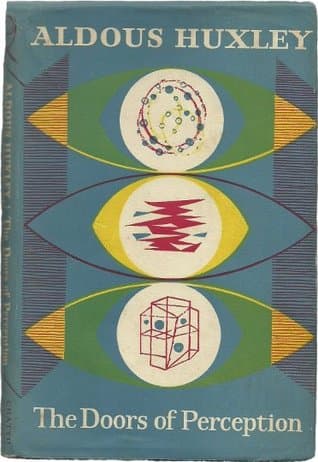
The Doors of Perception cover
Archivist's Choice

The Doors of Perception

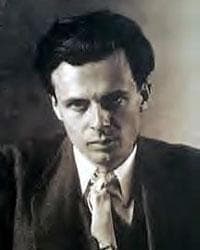
Aldous Huxley (1954)

Genre

Psychology / Spirituality / Science / Philosophy

Reading Time

60 min

Key Themes

See below

Track Your Reading

Sign in to track this book

Aldous Huxley writes about his mescaline experience, where ordinary things gained divine meaning and his sense of self disappeared.

Core Idea

Aldous Huxley says the human mind filters reality to help us survive. He argues that psychedelics like mescaline can temporarily remove this filter, allowing for a heightened perception of reality's beauty and connection, similar to mystical experiences. This state dissolves the ego, makes language seem inadequate, and suggests these substances could offer spiritual insight, moving beyond a purely practical existence to glimpse universal truths.
Reading time
60 min
Difficulty
Medium
✓ Read this if...
You are curious about the philosophical and psychological implications of psychedelic experiences, the nature of perception, or the intersection of spirituality and science.
✗ Skip this if...
You are looking for a practical guide to psychedelic use, a deep dive into neuroscience, or a purely scientific account without philosophical speculation.

Core idea

The central argument and framework that powers the entire book.

Aldous Huxley says the human mind filters reality to help us survive. He argues that psychedelics like mescaline can temporarily remove this filter, allowing for a heightened perception of reality's beauty and connection, similar to mystical experiences. This state dissolves the ego, makes language seem inadequate, and suggests these substances could offer spiritual insight, moving beyond a purely practical existence to glimpse universal truths.

At a glance

Reading time

60 min

Difficulty

Medium

Read this if...

You are curious about the philosophical and psychological implications of psychedelic experiences, the nature of perception, or the intersection of spirituality and science.

Skip this if...

You are looking for a practical guide to psychedelic use, a deep dive into neuroscience, or a purely scientific account without philosophical speculation.

Key Takeaways

1

Unveiling the Mind's Filter

Mescaline temporarily bypasses the brain's 'reducing valve,' revealing a richer reality.

Quote

The function of the brain and nervous system is to protect us from being overwhelmed and confused by this mass of largely useless and irrelevant knowledge, by shutting out most of what we should otherwise perceive or remember at any moment, and leaving only that which is likely to be practically useful.

Huxley believes the human brain filters most sensory information to allow for survival. This filter, while useful, hides the rich reality around us. Mescaline, in Huxley's experience, temporarily turns off this filter, allowing a direct perception of a 'Mind at Large.' This leads to an intense appreciation of beauty and meaning in ordinary objects, making them seem luminous. The experience suggests our usual perception is not a direct view of reality, but a limited version made for survival.

Supporting evidence

Huxley's description of a garden chair transforming into 'an intricate but wholly intelligible device, for some purpose beyond my comprehension,' and the intense luminosity of flowers, even the folds of his trousers, as 'miraculous' and 'sacramental.'

Apply this

Cultivate 'beginner's mind' in daily life: consciously pause and observe ordinary objects without immediate categorization or judgment, attempting to perceive their intrinsic qualities beyond their utilitarian function. Practice mindful observation, allowing for a momentary suspension of the brain's usual filtering mechanisms.

reducing-valvemind-at-largephenomenology
2

The Sacrament of Perception

Mescaline can transform ordinary vision into a deeply spiritual and sacramental experience.

Quote

This is how one ought to see, how things really are.

Huxley's mescaline experience was a spiritual encounter, not just an aesthetic one. He found the drug gave a 'sacramental vision,' where everyday things—a flower, a chair, a book—shone with a divine presence. This was not an escape from reality, but an immersion into a more fundamental reality that felt more real than ordinary perception. He compared it to mystical experiences, suggesting that the heightened senses and ego dissolution from mescaline could offer a look into a 'divine ground' where the separation between self and other ...

Supporting evidence

His repeated use of terms like 'sacramental vision,' 'gratuitous grace,' and the comparison of his experience to the 'Beatific Vision' described by mystics. The example of seeing flowers as 'what Adam had seen on the morning of his creation.'

Apply this

Seek moments of profound presence and wonder in nature or art. Engage in practices like meditation or contemplative prayer that aim to quiet the ego and foster a sense of interconnectedness, allowing for a more direct, less filtered experience of the world's inherent beauty and sacredness.

mysticismsacramental-visiondivine-ground
3

Beyond Utilitarian Existence

The mescaline experience highlights the human need for non-utilitarian beauty and meaning.

Quote

For the man who comes to a mescaline experience without any of these preconceptions, the experience is apt to be a revelation.

Huxley says modern Western society, focused on reason and production, often overlooks the human need for direct experiences of beauty, meaning, and transcendence. Our perception becomes practical, focused on an object's function or danger. Mescaline, by removing this practical overlay, allows an appreciation of 'being' over 'doing,' and of intrinsic value over instrumental value. It shows a basic human desire for experiences not tied to practical ends, suggesting that when this desire is not met, it can lead to spiritual unease or a s...

Supporting evidence

Huxley's critique of industrial society and its 'mass of useless and irrelevant knowledge' that our brains filter. His observation that 'we are all born with a thirst for the numinous,' which society often fails to quench.

Apply this

Actively incorporate non-utilitarian activities into your life: dedicate time to art, music, nature walks, or simply quiet contemplation, without a specific goal or outcome in mind. Prioritize experiences that foster a sense of wonder and intrinsic value over those driven by productivity or consumption.

numinousutilitarianismintrinsic-value
4

The Problem of Language and Experience

Verbal language is inherently inadequate for describing profound, ineffable experiences.

Quote

The otherness of the experience was so complete that language was almost useless.

Huxley struggles to describe the mescaline experience in words. He finds that everyday language, made for practical life and linear thought, cannot capture the multi-dimensional, timeless, and ego-dissolving nature of his altered state. The experience was 'other,' defying labels and the structure of language. This shows a basic limit of language in describing subjective, non-rational, or mystical states of consciousness, suggesting some truths can only be known through direct experience. It also shows the difficulty of explaining such...

Supporting evidence

Huxley's repeated apologies for the inadequacy of his descriptions, his attempts to use metaphors and analogies (e.g., 'gem-like luminosity,' 'tapestry of precious stones'), and his acknowledgment that 'the experience was so complete that language was almost useless.'

Apply this

When trying to communicate deeply personal or profound experiences, acknowledge the limitations of language. Instead of striving for perfect verbal accuracy, focus on conveying the *feeling* or *essence* of the experience, using imagery, analogy, and emotional expression. Also, be open to understanding that some experiences are inherently private and resist full articulation.

ineffabilitylanguage-limitationssubjective-experience
5

Art as a Glimpse

Art, particularly non-representational forms, can offer echoes of the mescaline state.

Quote

The mescaline experience is a reminder that the world as we ordinarily perceive it is only one of many worlds.

Huxley explores how the mescaline experience relates to art, suggesting that some art, especially that focused on color, texture, and light rather than story, can create a similar feeling of intensified reality and meaning. He notes how artists like Van Gogh seemed to have a heightened perception of the world's vibrancy, making the familiar seem extraordinary. For Huxley, the mescaline state clarifies what good art tries to do: remove the practical view and show the luminous 'thisness' of things, offering a temporary escape from the o...

Supporting evidence

His contemplation of a flower painting in a book, remarking how it was 'a magnificent piece of still life,' but still 'dead' compared to the living flowers he was perceiving. He also mentions the 'jewelled' quality of certain objects, reminiscent of highly detailed, luminous art.

Apply this

Engage with art, especially abstract or impressionistic works, with an open mind, allowing yourself to be absorbed by color, form, and texture without immediately seeking narrative or literal interpretation. View art as a potential 'door' to altered perception, rather than just a representation of reality.

art-perceptionaesthetic-experiencenon-representational-art
6

The Ego's Dissolution

Mescaline temporarily dissolves the ego, leading to a sense of unity and timelessness.

Quote

I was looking at my legs, or rather at the trousers which covered them, and they were indescribably rich in texture.

A main part of Huxley's mescaline journey was a big shift in his sense of self. The boundaries of his ego dissolved, leading to a feeling of being connected to everything. This was not a negative loss of identity, but an expansion of consciousness, where the line between observer and observed blurred. Time also lost its linear flow, replaced by an eternal present. This ego dissolution is important in many mystical traditions and suggests our usual sense of self is a construct, and that a deeper, unified consciousness is possible. For ...

Supporting evidence

His description of feeling 'no longer myself' in the ordinary sense, and how external objects became so absorbing that he lost awareness of his personal concerns. The feeling of 'being' rather than 'doing' and the lack of concern for time.

Apply this

Practice mindfulness and meditation to cultivate a temporary detachment from ego-driven thoughts and concerns. Engage in activities that foster a sense of flow and absorption, where self-consciousness diminishes, such as creative pursuits, deep concentration, or being fully present in nature.

ego-dissolutionunity-consciousnesstimelessness
7

Psychological Implications for Mental Health

Psychedelics offer potential therapeutic avenues for mental illnesses like depression and schizophrenia.

Quote

For the schizophrenic, mescaline can be a form of 'chemical vacation' from his own hell.

Huxley thought about the potential for mescaline and similar psychedelics in therapy. He saw that the drug could cause states similar to some mental illnesses (like heightened senses or altered thoughts) but with a key difference: the mescaline user stayed lucid and curious, while a mentally ill person often felt distress. This led him to think that controlled psychedelic experiences could offer a 'chemical vacation' for people with conditions like schizophrenia, giving them a temporary break from their struggles or a new perspective....

Supporting evidence

Huxley's discussion of the similarities and differences between the mescaline state and schizophrenic psychosis, and his suggestion that 'the drug might be used to help the schizophrenic to escape from the prison of his own mind.'

Apply this

Support and stay informed about ongoing scientific research into the therapeutic applications of psychedelics for mental health conditions. Approach discussions about mental health with empathy, recognizing the diverse internal realities individuals experience, and the potential for novel treatments.

psychedelic-therapymental-healthschizophrenia-research
8

The Perennial Philosophy Revisited

The mescaline experience offers empirical validation for aspects of the Perennial Philosophy.

Quote

The mescaline experience is a reminder that the world as we ordinarily perceive it is only one of many worlds.

Huxley, who believed in the Perennial Philosophy (the idea that a single, universal truth is found in all major spiritual traditions), found his mescaline experience confirmed its ideas. The ego dissolution, the perception of a connected 'Mind at Large,' the ineffable nature of the experience, and the sense of deep meaning in all things, all reflected themes in mystical traditions across cultures. He saw the drug as a tool, a 'gratuitous grace,' that could temporarily allow access to states of consciousness previously described by sai...

Supporting evidence

Huxley's explicit references to the 'Mind at Large,' his comparisons to the 'Beatific Vision,' and his frequent allusions to the writings of mystics like Meister Eckhart and William Blake, whose descriptions resonated with his mescaline journey.

Apply this

Explore different spiritual and philosophical traditions with an open mind, looking for common threads and universal truths. Consider how altered states of consciousness, whether induced by meditation, prayer, or carefully supervised psychedelics, can offer insights into the nature of reality and consciousness.

perennial-philosophymystical-experiencespiritual-traditions
9

A Tool, Not a Panacea

Psychedelics are powerful tools for insight, but not a substitute for spiritual work or ethical living.

Quote

Mescaline is not a universal panacea, nor is it a substitute for virtue.

Huxley warns against seeing mescaline as a quick path to enlightenment or a solution for all problems. He says that while the drug can open 'doors of perception' and give insights, these insights must be used in daily life and lead to ethical action and spiritual practice. The experience itself is a 'gratuitous grace,' a gift, but it does not automatically give wisdom or virtue. Without effort and integration, the insights can fade, leaving the person unchanged. This view distinguishes between a powerful exploration tool and a magical...

Supporting evidence

Huxley's specific caution: 'Mescaline is not a universal panacea,' and his statement that 'nobody who takes mescaline will be any the better for it unless he is prepared to be a good deal better for it.'

Apply this

If exploring altered states of consciousness, approach them with respect, clear intention, and a commitment to integrating any insights gained into daily life through reflection, ethical action, and sustained personal growth. Understand that such experiences are a starting point, not an endpoint, for profound change.

integrationspiritual-practiceethical-living

Critical analysis

Notable Quotes

To be shaken out of the ruts of ordinary perception, to be shown for a few timeless hours the outer and the inner world, not as they appear to an animal obsessed with survival or to a human being obsessed with words and notions, but as they are apprehended, directly and unconditionally, by Mind at Large—this is an experience of inestimable value to everyone and especially to the intellectual.

Huxley reflects on the value of transcending ordinary consciousness through mescaline.

We live together, we act on, and react to, one another; but always and in all circumstances we are by ourselves.

A philosophical observation on human isolation and perception.

The man who comes back through the Door in the Wall will never be quite the same as the man who went out.

Describing the transformative effect of psychedelic experiences.

Most lead lives at worst so painful, at best so monotonous, poor and limited that the urge to escape, the longing to transcend themselves if only for a few moments, is and has always been one of the principal appetites of the soul.

Huxley discusses humanity's innate desire for transcendence.

The urge to escape from selfhood and the environment is in almost everyone almost all the time.

A psychological insight into human nature and escapism.

What the rest of us see only under the influence of mescaline, the artist is congenitally equipped to see all the time.

Comparing the artist's perception to that induced by psychedelics.

The schizophrenic is like a man permanently under the influence of mescaline, and therefore unable to shut off the experience of a reality which he is not holy enough to live with.

Drawing parallels between schizophrenia and psychedelic states.

The world is an illusion, but it is an illusion which we must take seriously, because it is real as far as it goes.

A philosophical musing on the nature of reality and perception.

For the artist as for the mescaline taker, draperies are living hieroglyphs that stand in some peculiarly expressive way for the unfathomable mystery of pure being.

Describing heightened aesthetic perception under mescaline.

The brain is provided with a number of enzyme systems which serve to co-ordinate its workings.

A scientific explanation of brain function in relation to perception.

We can only love what we know, and we can never know completely what we do not love.

A philosophical insight into the relationship between knowledge and love.

The man who comes back through the Door in the Wall will never be quite the same as the man who went out. He will be wiser but less sure, happier but less self-satisfied, humbler in acknowledging his ignorance yet better equipped to understand the relationship of words to things, of systematic reasoning to the unfathomable Mystery which it tries, forever vainly, to comprehend.

Elaborating on the transformative effects of psychedelic experiences.

The urge to transcend self-conscious selfhood is a principal appetite of the soul.

Reiterating the human desire for spiritual transcendence.

In the final stage of egolessness there is an 'obscure knowledge' that All is in all—that All is actually each.

Describing a mystical state of consciousness achieved through mescaline.

Quiz

Test Your Knowledge

Ready to see how well you understood this book? Take our interactive quiz with 10 questions.

10
Questions
~5
Minutes
?
Best Score

Key Questions (FAQ)

'The Doors of Perception' is Aldous Huxley's philosophical essay detailing his experiences and insights from taking mescaline in 1953. It explores altered states of consciousness, aesthetic perception, and sacramental visions, connecting them to art and religion.

About the author

Aldous Huxley

Aldous Leonard Huxley was an English writer and philosopher. His bibliography spans nearly 50 books, including novels and non-fiction works, as well as essays, narratives, and poems.