BookBrief
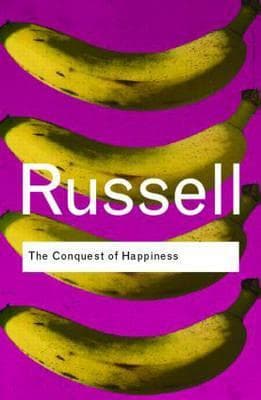
The Conquest of Happiness cover
Archivist's Choice

The Conquest of Happiness

Bertrand Russell (1930)

Genre

Psychology / Philosophy / Self-Help

Reading Time

180 min

Key Themes

See below

Track Your Reading

Sign in to track this book

Bertrand Russell shows how human unhappiness comes from self-absorption and how to find lasting happiness by engaging with the world.

Core Idea

Bertrand Russell says that unhappiness mostly comes from being too focused on oneself, like dwelling on personal flaws, failures, or unfairness in the world. He thinks real happiness does not come from trying to be happy directly, but from having outside interests and looking outward. Russell explains common reasons for modern unhappiness, such as envy, boredom, tiredness, and fear, and offers practical solutions. He suggests living a balanced life with different interests, good work, affection, and accepting what cannot be changed. He believes a happy person is someone who is whole, looks outward, and can both work hard and accept things wisely.
Reading time
180 min
Difficulty
Medium
✓ Read this if...
You feel perpetually dissatisfied, struggle with envy or boredom, or are looking for a philosophical yet practical guide to cultivating lasting contentment by shifting focus from self to the world.
✗ Skip this if...
You prefer modern, actionable self-help with quick fixes, or are looking for a spiritual or therapeutic approach to happiness rather than a rational, philosophical one.

Core idea

The central argument and framework that powers the entire book.

Bertrand Russell says that unhappiness mostly comes from being too focused on oneself, like dwelling on personal flaws, failures, or unfairness in the world. He thinks real happiness does not come from trying to be happy directly, but from having outside interests and looking outward. Russell explains common reasons for modern unhappiness, such as envy, boredom, tiredness, and fear, and offers practical solutions. He suggests living a balanced life with different interests, good work, affection, and accepting what cannot be changed. He believes a happy person is someone who is whole, looks outward, and can both work hard and accept things wisely.

At a glance

Reading time

180 min

Difficulty

Medium

Read this if...

You feel perpetually dissatisfied, struggle with envy or boredom, or are looking for a philosophical yet practical guide to cultivating lasting contentment by shifting focus from self to the world.

Skip this if...

You prefer modern, actionable self-help with quick fixes, or are looking for a spiritual or therapeutic approach to happiness rather than a rational, philosophical one.

Key Takeaways

1

Escape Self-Absorption

Happiness lies in outward focus, not inward rumination.

Quote

The man who is unhappy will, as a rule, be happy if he can be cured of his unhappiness; and, conversely, the man who is happy will, as a rule, be unhappy if he can be cured of his happiness. This is a paradox, but it is true.

Russell says that much unhappiness comes from being too focused on oneself. Whether it is the 'sinner' thinking about guilt, the 'narcissist' wanting admiration, or the 'megalomaniac' wanting power, an inward focus separates people and makes them see reality wrongly. He thinks real happiness needs a shift from looking inward to engaging with the outside world—people, ideas, nature, and causes beyond oneself. This outward focus creates purpose and connection that self-focus prevents, leading to a richer, more stable contentment. It is ...

Supporting evidence

Russell uses the archetypes of the 'sinner,' the 'narcissist,' and the 'megalomaniac' to illustrate how different forms of self-absorption lead to distinct types of unhappiness, from guilt and vanity to isolation and delusion.

Apply this

Actively seek hobbies, volunteer work, or intellectual pursuits that direct your attention away from your own anxieties and towards external objects or causes. Consciously practice empathy and engage in conversations that focus on others rather than exclusively on your own experiences.


2

The Pitfalls of Envy

Envy is a corrosive force, a secret sorrow that poisons joy.

Quote

Envy is, I should say, one of the most potent causes of unhappiness. The envious man is not merely made unhappy by his envy, but is led to inflict unhappiness upon others in the hope of thereby mitigating his own; and so he becomes a rival of others, and not merely a rival, but a potential enemy.

Russell says envy is a big barrier to happiness. He describes it as a deep human emotion that, if not controlled, can ruin peace of mind. Envy makes people compare themselves to others, creating endless dissatisfaction because someone will always seem to have more. This emotion not only stops one from appreciating their own good things but also causes resentment towards others, leading to isolation. Russell suggests that overcoming envy means focusing on one's own path and finding joy in one's own achievements, instead of comparing su...

Supporting evidence

Russell discusses how envy manifests in various social classes and even among nations, arguing it's a universal human frailty that underlies much societal discontent and individual misery.

Apply this

Practice gratitude daily by listing things you appreciate in your own life. When you feel envy arising, consciously shift your focus to your own progress and unique strengths, rather than dwelling on what others possess. Limit exposure to social media that triggers comparison.

3

The Tyranny of Boredom

A capacity for intelligent boredom is a prerequisite for a fulfilling life.

Quote

The secret of happiness is to be able to enjoy the common things, and not to be too dependent upon the exceptional things.

Russell says that not being able to handle boredom causes a lot of modern unhappiness. In a world with constant stimulation and instant rewards, many people have lost the ability for quiet thought and developing inner resources. He thinks some 'fruitful boredom' is needed for creativity, deep thinking, and enjoying simple things. Constant stimulation leads to a shallow life, where people are always chasing quick excitement and cannot find contentment in everyday things. Developing a rich inner life makes one less dependent on outside ...

Supporting evidence

Russell contrasts the lives of those constantly seeking new sensations with those who find satisfaction in more routine or intellectual pursuits, illustrating how the former often leads to a cycle of escalating desires and eventual ennui.

Apply this

Regularly schedule periods of unstructured time where you intentionally avoid distractions like phones or television. Engage in activities that require sustained attention and patience, such as reading a long book, gardening, or a complex hobby. Embrace moments of quiet reflection.

4

The Importance of External Interests

A wide range of impersonal interests is the bedrock of lasting happiness.

Quote

Happiness is a state of mind, and it is largely a matter of having a wide range of interests and of being able to take a genuine delight in them.

Russell strongly suggests having many 'impersonal interests'—passions and activities outside one's immediate personal life like work or family. These interests, whether intellectual, artistic, or practical, offer an escape from self-focus and give ongoing satisfaction. When one part of life has problems, other interests can provide comfort and purpose, preventing complete despair. A person with many interests is less affected by bad luck and has a richer, more stable inner world. It is about building a strong mental system that can ha...

Supporting evidence

Russell observes that individuals who are deeply engaged in hobbies, scientific research, or community work often exhibit a greater resilience to personal misfortune and a more consistent cheerfulness.

Apply this

Identify at least two new hobbies or intellectual subjects you've always wanted to explore. Dedicate specific time each week to these pursuits, regardless of immediate results or external validation. Join a club or group related to an interest.

5

The Role of Affection

Giving and receiving affection is crucial for human contentment and security.

Quote

Of all the forms of caution, caution in love is perhaps the most fatal to true happiness.

Russell emphasizes how important affection is for happiness. He says that real affection, both giving and receiving, provides a basic sense of security and belonging that people need to be well. Unlike just admiration, affection comes from a deeper connection and mutual respect, creating a place where one feels valued for who they are, not for what they achieve. A life without affection leads to a constant feeling of isolation and a desperate search for outside approval, which is rarely satisfying. He warns against being too careful w...

Supporting evidence

Russell discusses how a child's sense of security is built upon parental affection and how this need for warm, reciprocal relationships extends into adulthood, influencing social interactions and overall happiness.

Apply this

Actively cultivate and express affection in your close relationships. Be vulnerable and open to giving and receiving love without excessive caution. Make time for genuine connection with friends and family, prioritizing quality interaction over superficial engagement.

6

Work and Purpose

Meaningful work provides structure, purpose, and a sense of achievement.

Quote

The greatest happiness comes from doing something that is difficult and that you know you can do well.

While he knows not all work is fun, Russell highlights its important role in a happy life. Beyond just money, work gives structure, a routine, and a way to use skills and creativity. The satisfaction from finishing a task, especially a hard one, adds a lot to self-esteem and a feeling of purpose. Even simple work, if done carefully, can give a sense of accomplishment. Not having meaningful work can lead to idleness, boredom, and a feeling of having no direction, all bad for happiness. It is about feeling like you contribute and are ca...

Supporting evidence

Russell contrasts the 'man of leisure' who, despite having no financial need to work, often falls into ennui, with the craftsman or professional who derives deep satisfaction from their skilled labor.

Apply this

Seek to find aspects of your current work that you can approach with a sense of craftsmanship or purpose. If your work feels completely devoid of meaning, actively explore ways to gain new skills or transition to a role that offers more personal satisfaction. Pursue challenging projects, even outside your main job.

7

The Balance of Effort and Resignation

Recognizing what can and cannot be changed is key to peace of mind.

Quote

Much unhappiness is due to the fact that men are either too obstinate to admit defeat or too lazy to make efforts.

Russell suggests a practical way to deal with life's problems, recommending a good balance between strong effort and wise acceptance. It is important to work hard where change is possible and helpful, but equally important to calmly accept parts of life that cannot be controlled. Fighting against what is unavoidable only leads to frustration, bitterness, and wasted energy. This does not mean passively accepting all bad luck, but instead wisely knowing what needs action and what needs acceptance. This way of thinking frees up mental an...

Supporting evidence

He gives examples of people who cling to lost causes or impossible desires, contrasting their misery with those who learn to adapt and find new paths when faced with insurmountable obstacles.

Apply this

When facing a problem, clearly distinguish between factors you can influence and those you cannot. Focus your energy exclusively on the former. For unchangeable circumstances, practice mindfulness and acceptance, redirecting your emotional energy towards more constructive activities.

8

Conquering Fear

Rationality and courage are essential tools against paralyzing anxieties.

Quote

Fear is the main source of superstition, and one of the main sources of cruelty. To conquer fear is the beginning of wisdom.

Russell says fear is a basic barrier to happiness, often showing up as anxiety, worry, or superstition. He thinks many fears are irrational and made worse by an overactive imagination, leading to inaction and not being able to fully live life. Overcoming fear needs both rational thought and bravery. By facing what one fears, either by thinking about it or doing something about it, one can often lessen its power. He suggests that some courage is needed not just for big heroic acts but for the daily challenges that might otherwise overw...

Supporting evidence

Russell discusses how irrational fears often stem from childhood conditioning or societal pressures, and how a rational examination of these fears can often reveal their baselessness.

Apply this

Identify a specific fear that holds you back. Rationally analyze its likelihood and potential consequences. Gradually expose yourself to the feared situation (if safe) or challenge the negative thoughts associated with it. Cultivate a mindset of intellectual curiosity to demystify unknowns.

9

The Value of an Open Mind

Dogmatism and rigid beliefs stifle growth and true understanding.

Quote

The trouble with the world is that the stupid are cocksure and the intelligent are full of doubt.

Russell champions having an open mind as a foundation for happiness and intellectual well-being. Being too set in one's beliefs, whether religious, political, or personal, leads to intellectual stagnation and not being able to adapt to new information or changing situations. A closed mind causes intolerance, fear of the unknown, and resistance to correcting oneself, all of which are bad for personal growth and getting along with others. By accepting doubt, curiosity, and being willing to change one's beliefs, people can handle life's ...

Supporting evidence

While not a specific study, Russell's entire philosophical approach, including his critiques of various forms of dogma and unexamined beliefs, serves as evidence for the benefits of intellectual flexibility.

Apply this

Actively seek out perspectives that challenge your own. Engage in respectful debate, prioritizing understanding over winning. Regularly question your own assumptions and be willing to admit when you are wrong. Cultivate intellectual humility.

10

The Happy Man: A Synthesis

Happiness is a byproduct of outward engagement and integrated living.

Quote

The happy man is the man who lives objectively, who has free affections and wide interests, who secures his happiness through these interests and affections and through the fact that they, in turn, make him a source of happiness to others.

Russell's 'happy man' is not someone who actively tries to be happy, but someone for whom happiness naturally comes from living a good life. This person has many outside interests, is not too focused on themselves, and experiences real affection, both given and received. They find satisfaction in meaningful work, accept what cannot be changed calmly, and face fears with reason. Such a person is part of the world, getting joy from engaging with it, and in turn, becomes a source of happiness for others. It is a complete view where conte...

Supporting evidence

This takeaway synthesizes Russell's arguments throughout the book, drawing on his various examples of both unhappy and potentially happy individuals to construct a composite picture of the ideal state.

Apply this

Regularly assess your life across Russell's suggested dimensions: are you overly self-absorbed? Do you have sufficient external interests? Are your affections free? Continuously strive for balance and outward engagement, understanding that happiness is cultivated indirectly through purposeful living.

Critical analysis

Notable Quotes

The secret of happiness is this: let your interests be as wide as possible, and let your reactions to things and persons that interest you be as far as possible friendly rather than hostile.

Summarizing the path to happiness through engagement and positive interaction.

To be without some of the things you want is an indispensable part of happiness.

Discussing how constant gratification can lead to boredom and a lack of appreciation.

Boredom is a vital problem for the moralist, since at least half the sins of mankind are caused by the fear of it.

Highlighting boredom as a significant motivator for destructive behavior.

One of the symptoms of an approaching nervous breakdown is the belief that one's work is terribly important.

Critiquing the excessive seriousness and self-importance often attached to work.

If a man is to be happy, he must not feel that his life is a pointless march towards the grave.

Emphasizing the need for a sense of purpose and meaning in life.

The man who is unhappy will, as a rule, adopt an unhappy creed, whereas the man who is happy will adopt a happy creed; each man finds the cosmogony that suits his temperament.

Illustrating how one's emotional state influences their worldview and beliefs.

Many people, especially those who have been at college, have a contempt for happiness as a thing only fit for pigs.

Addressing the intellectual snobbery that often dismisses simple happiness.

The greatest joy of life is to be able to forget.

Suggesting that the ability to move past past pains and worries is crucial for well-being.

Of all the forms of caution, caution in love is perhaps the most fatal to true happiness.

Arguing against excessive prudence and fear in pursuing romantic love.

The kind of happiness that requires an expensive income is not the best kind.

Distinguishing between superficial happiness tied to wealth and deeper, more accessible forms.

The man who pursues happiness in a spirit of egoism is likely to be foiled by boredom.

Explaining why self-centered pursuits of happiness often lead to dissatisfaction.

Envy is, of course, a form of misery, and one of the most widespread and potent.

Identifying envy as a significant source of unhappiness and a common human failing.

Happiness is not a gift of the gods, but a conquest.

Emphasizing that happiness is achieved through effort and conscious choices, not merely received.

Quiz

Test Your Knowledge

Ready to see how well you understood this book? Take our interactive quiz with 10 questions.

10
Questions
~5
Minutes
?
Best Score

Key Questions (FAQ)

'The Conquest of Happiness' by Bertrand Russell offers a systematic approach to overcoming unhappiness and achieving a fulfilling life. Russell dissects common causes of misery and then presents practical, philosophical pathways to cultivate joy and contentment through balanced engagement with the world.

About the author

Bertrand Russell

Bertrand Russell was a Nobel Prize-winning philosopher, logician, and social critic. A prolific writer, his works spanned logic, epistemology, metaphysics, ethics, and political philosophy. Notable books include 'The Problems of Philosophy,' 'A History of Western Philosophy,' and 'The Conquest of Happiness.' His contributions significantly influenced analytic philosophy and mathematics.