“The Car was a sleek black beast, its chrome gleaming under the desert sun, a promise of speed and freedom.”
— Describing the protagonist's first impression of the sentient car.

Sign in to track this book
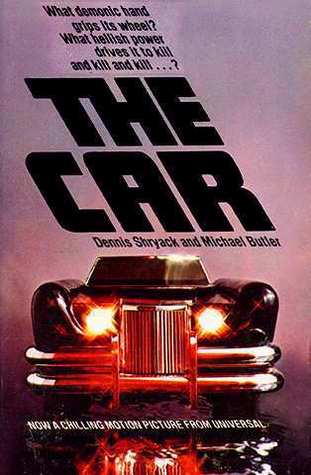
A sleek, driverless black car appears in Santa Ynez, turning into a malevolent force that terrorizes the town with an unexplained rampage.
The peaceful community of Santa Ynez, Utah, is shattered when a sleek, custom-built black car, seemingly driverless, brutally runs down two young cyclists, Gerry and Margie, on a desert road. The incident is first called a hit-and-run, but the lack of a driver and the car's deliberate movements raise immediate questions. Sheriff Wade Parent, a dedicated but tired lawman, starts the investigation, facing a puzzling lack of evidence. The car looks threatening, with dark tinted windows and an eerie, almost living quality, setting a tone of dread for the unsuspecting town. This unprovoked attack begins the vehicle's killing spree, introducing the main villain and the immediate danger to the community.
After the cyclists' deaths, a hitchhiker named Amos, who had previously seen the car and sensed its evil, becomes its next victim. The car deliberately chases him, forcing him over a bridge railing to his death. Later, the car targets and kills a local man, Sam, by ramming his pickup truck off the road. Sheriff Parent and his deputies, Luke and Everett, grow more confused. The car shows an unusual ability to escape and seems to know their moves. The community starts to panic, realizing they are dealing with something far more sinister than a typical criminal. The car's actions are not random; they show a chilling precision and an almost personal vendetta against the town's people, pushing authorities to face an unknown, powerful enemy.
During a town parade practice, the black car suddenly appears, driving directly into the marching band. Panic breaks out as people scatter. The car then deliberately targets and kills Everett, one of Sheriff Parent's deputies, by pinning him against a wall. It also injures several others. This public violence confirms the town's terror and the authorities' understanding that they are against an intelligent, evil force. Wade Parent, seeing the destruction, becomes even more determined to stop the car, now personally affected by the loss of his friend and colleague. The car's bold attack in broad daylight, in front of many witnesses, shows its complete disregard for human life and its seemingly invincible nature, further escalating the conflict.
Sheriff Wade Parent and his remaining deputies, along with forensics experts, carefully examine the evidence. They find no trace of a driver, no fingerprints, and no identifying marks on the car itself. The vehicle appears to be a mix of custom parts, designed for destruction. Theories range from a deranged killer to something supernatural. Luke, a more superstitious deputy, suggests the car is possessed or even a demon. Wade, a man of logic, struggles to accept such ideas but faces more and more unexplainable events. The car seems to know their next moves, appearing and disappearing without a trace, baffling all normal investigation methods and pushing the limits of their understanding, forcing them to consider the impossible.
The black car targets a school bus, driven by Wade Parent's girlfriend, Lauren. Inside are Wade's two daughters, Debbie and Lynne, and other children. The car relentlessly chases the bus, trying to force it off the road. In a terrifying chase, Lauren skillfully drives the bus, but the car's persistence is frightening. Wade, alerted to the danger, races to intercept, coordinating with other officers. He creates a diversion, allowing Lauren to escape with the children to safety. This close call makes the threat deeply personal for Wade, as his own family was targeted. The incident shows the car's cruel malice, willing to harm children, and strengthens Wade's resolve to end its reign of terror.
After the school bus incident, Lauren and the children are safe at her house, which stands on consecrated ground, the site of an old church. The car arrives and tries to break in, ramming the house repeatedly. However, it cannot cross the threshold, as if an invisible barrier stops it. The car's horn blares in frustration, and its engine roars with fury. This scene reveals an important detail: the car cannot enter holy ground. Wade Parent and the others realize this limit, giving them a possible weakness to use. The car's inability to enter the house, despite its great power, hints at its supernatural nature and offers the first sign of hope in defeating it.
Knowing the car cannot enter consecrated ground, and after much discussion with his deputies, Sheriff Wade Parent forms a desperate plan. He decides to lure the car into a remote canyon called 'The Devil's Canyon,' a desolate, rocky area far from any town. The plan involves setting a trap with explosives, hoping to bury the car under a rockslide. Wade understands the great risk, but with normal methods failing, he sees no other choice. He gathers his team, explains the dangerous maneuver, and they begin to prepare the necessary explosives and equipment, knowing this will be their last, most dangerous fight with the metallic monster.
Sheriff Wade Parent, Luke, and the remaining deputies put their plan into action. They use Wade's own patrol car as bait, driving it into The Devil's Canyon. As expected, the black car appears, drawn by the challenge. A high-stakes chase follows, with Wade skillfully leading the car deeper into the canyon. The car, seemingly overconfident, chases relentlessly, its menacing horn blaring. The deputies position themselves on the canyon's rim, ready to detonate the explosives. The tension is clear as Wade barely escapes the car's attacks, pushing it further into the designated kill zone, hoping their calculations are correct and the car will fall for their trap.
As Wade Parent moves his vehicle out of the canyon's choke point, the black car follows, just as planned. With precision, the deputies trigger the explosives. A massive rockslide starts, burying the black car under tons of debris. The explosion is huge, shaking the entire canyon. The team watches, holding their breath, as the dust settles. There is a sense of triumph mixed with disbelief. However, as the dust clears, a chilling red glow comes from the rubble, and a spectral, demonic face briefly appears in the smoke before vanishing. This final, terrifying image confirms the car's supernatural nature, leaving the survivors with a deep sense of unease and a lingering question about what they truly fought and if it is truly gone.
Afterward, Santa Ynez slowly begins to heal, but the trauma of the black car's rampage leaves a lasting mark. Sheriff Wade Parent, though victorious, carries the weight of the lives lost and the horrifying encounter. The townspeople are relieved, but a collective fear remains, a knowledge that something truly evil had visited them. The official explanation stays vague, unable to fully explain the car's supernatural properties. As Wade drives away from the canyon, he and Luke share a look of unspoken understanding about the demonic entity they faced. The ending suggests that while the immediate threat is gone, the memory of the car and its evil will forever haunt the quiet desert town, leaving a chilling sense that such evil could return.
The Protagonist
Wade transforms from a by-the-book sheriff into a man willing to accept the impossible to protect his town, ultimately embracing unconventional methods to defeat a supernatural foe.
The Antagonist
The Car's arc is one of escalating terror and destruction, culminating in its apparent defeat, though its demonic essence hints at its enduring nature.
The Supporting
Lauren proves her resilience and courage in the face of terror, providing critical support and a safe haven for the town's children.
The Supporting
Luke's initial superstitious theories are validated by the car's actions, solidifying his belief in the supernatural and his resolve to help Wade defeat it.
The Supporting/Mentioned
Everett's arc is cut short by the car's violence, his death serving as a catalyst for Wade's intensified resolve.
The Supporting
Debbie endures the trauma of being targeted by the Car, serving as a powerful motivator for her father's actions.
The Supporting
Lynne, as a child, experiences the terror of the Car, emphasizing the widespread fear it instills in the community.
The Mentioned
Amos serves as an early victim, his death highlighting the Car's indiscriminate cruelty and setting the stage for its reign of terror.
The novel explores evil as an independent, supernatural force, not a human act. The Car has no driver or understandable motives; it simply exists to kill and terrorize. This abstract portrayal of evil forces characters like Wade Parent to face something beyond their understanding, challenging their rational view of the world. The demonic face seen in the smoke after the Car's destruction confirms this theme, suggesting that evil is an ancient, powerful force that can appear in unexpected forms, rather than being limited to human actions. The Car's inability to cross consecrated ground further hints at its unholy origin, making it a literal manifestation of demonic evil.
“It was evil. Pure, concentrated, mechanical evil. And it was hungry.”
A main theme is humanity's fight against a force that defies explanation and normal control. Sheriff Wade Parent, a practical lawman, first tries to use logical police methods to stop the Car. However, its driverless nature, invincibility, and apparent sentience push him and the community into the unknown. The frustration and fear come from being unable to categorize, understand, or predict the Car's actions. This theme shows the limits of human reason and control when facing truly supernatural or incomprehensible threats, forcing characters to change their thinking and strategies, as seen when Wade considers the holy ground weakness.
“How do you fight something that isn't alive, but isn't dead either?”
The novel clearly shows a small, peaceful community thrown into chaos and terror by an external, relentless threat. The Car's attacks erode the town's sense of security, trust, and normalcy. The residents of Santa Ynez must come together, but also experience panic, suspicion, and grief as their friends and loved ones are systematically targeted. The theme explores how shared trauma can both divide and unite a community, forcing them to face their weaknesses and rely on each other, as seen in the collective effort to protect the school bus children and in the final plan to destroy the Car.
“Santa Ynez had always been a quiet town. Now it was a town holding its breath, waiting for the next scream.”
The Car's rampage represents a violent loss of innocence, for both individuals and the town itself. The first victims are young cyclists, and later, children are targeted on a school bus. The peaceful, idyllic setting of Santa Ynez is permanently scarred by senseless violence. For characters like Wade Parent, the loss of innocence is personal, as his own family is threatened and his understanding of the world is shattered. The town loses its sense of safety and calm, replaced by a widespread fear. This theme highlights the destructive power of evil and how it can forever change the perception of a once-safe world.
“The quiet desert air now carried the scent of fear, and the memory of screams.”
The absence of a visible driver makes the Car a more terrifying and inexplicable antagonist.
The Car's most striking and terrifying feature is the complete absence of a driver. Its windows are heavily tinted, and no one ever sees a person behind the wheel. This device elevates the Car from a mere vehicle to a sentient, autonomous entity, making it a more abstract and therefore more frightening antagonist. It removes any human motive or vulnerability, forcing characters and readers to confront the possibility of a supernatural or demonic force, thus amplifying the horror and mystery. The unseen driver makes it impossible to reason with or apprehend in conventional ways, driving the plot towards more desperate and unconventional solutions.
The Car's inability to enter holy ground reveals a crucial vulnerability.
The revelation that the Car cannot cross consecrated ground (like the site of an old church where Lauren's house stands) serves as a critical plot device. This limitation provides the first concrete clue about the Car's supernatural nature and, more importantly, offers a potential strategy for defeating it. It shifts the narrative from a hopeless struggle against an invincible foe to one where the protagonists can exploit a specific weakness. This device is essential for the climax, as it informs Wade Parent's plan to lure the Car into a trap and destroy it, giving the human characters a fighting chance against the demonic entity.
The Car's distinctive horn serves as a chilling auditory signature and psychological weapon.
The Car's horn is not just a sound; it's a character in itself, used as a powerful psychological weapon and a signifier of its presence. It has a unique, almost animalistic roar, often described as a 'demonic' or 'taunting' sound. The horn blares before attacks, during chases, and when the Car is frustrated, like when it cannot enter Lauren's house. This auditory device creates immense tension and dread, signaling imminent danger and reinforcing the Car's malevolent personality. It allows the Car to 'communicate' its anger and determination, making its actions feel even more deliberate and personal.
A brief, spectral image confirming the Car's supernatural origin.
After the Car is destroyed in the canyon, a brief, spectral image of a demonic face appears in the smoke and dust. This plot device serves as a definitive confirmation of the Car's supernatural, possibly demonic, origin. It leaves no doubt that the characters were battling an unholy entity, not just a human driving a car. While fleeting, this visual reinforces the film's horror elements and leaves a lasting impression of lingering evil, suggesting that even if the physical manifestation is destroyed, the essence of the evil might persist or return, adding to the chilling ambiguity of the ending.
“The Car was a sleek black beast, its chrome gleaming under the desert sun, a promise of speed and freedom.”
— Describing the protagonist's first impression of the sentient car.
“It wasn't just metal and glass; it had a will, a purpose that transcended mere mechanics.”
— The narrator's realization that the car is more than an ordinary vehicle.
“Fear was a passenger, always riding shotgun, but the thrill of the chase, the sheer exhilaration of the ride, pushed it to the backseat.”
— Reflecting on the dangerous journeys undertaken with the car.
“The desert stretched out, an endless canvas for the Car's dark artistry.”
— Setting the scene for the car's destructive capabilities in a vast, empty landscape.
“Every turn of the wheel felt like a decision, not of my own making, but of the Car's.”
— The protagonist feeling a loss of control to the sentient vehicle.
“It didn't just drive; it hunted. And the prey was often human.”
— A chilling observation about the car's predatory nature.
“The engine hummed a lullaby of impending doom, a sound both terrifying and strangely hypnotic.”
— Describing the car's engine noise as a harbinger of danger.
“You don't own the Car. The Car owns you.”
— A character's stark warning about the true nature of the car's relationship with its driver.
“There was a malevolence in its polished surfaces, a silent scream trapped within its steel frame.”
— Perceiving the car's sinister essence.
“The road was its veins, the gasoline its blood, and the driver merely a fleeting thought in its mechanical mind.”
— A metaphor illustrating the car's dominance and the driver's insignificance.
“It was a monument to vengeance, a rolling tomb of twisted metal and forgotten souls.”
— Reflecting on the car's destructive history and purpose.
“Even in its stillness, there was a palpable sense of power, a coiled serpent waiting to strike.”
— Describing the car's latent threat even when stationary.
“The only way to stop it was to become as relentless, as unyielding, as the Car itself.”
— The protagonist's realization of the extreme measures needed to combat the car.
Ready to see how well you understood this book? Take our interactive quiz with 10 questions.

Dennis Shryack is a fiction author known for his thriller novel, "The Car," which was adapted into a cult classic horror film. His writing often explores themes of suspense and survival, drawing readers into intense and often terrifying narratives. Shryack's work has cemented his place in the thriller and horror genres.