“I saw my life branching out before me like the green fig tree in the story. From the tip of every branch, like a fat purple fig, a wonderful future beckoned and winked.”
— Esther Greenwood reflects on her overwhelming choices and paralysis in life.

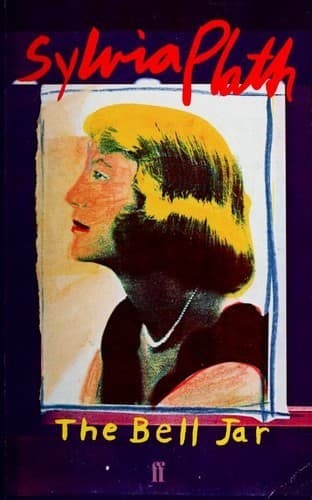
Sylvia Plath (1963)
Genre
Psychology
Reading Time
294 min
Key Themes
See below
Sign in to track this book
In the suffocating grip of 1950s expectations, a brilliant young woman's descent into mental illness is painted with such vivid, internal clarity that her 'insanity' feels terrifyingly rational and inevitable.
“I saw my life branching out before me like the green fig tree in the story. From the tip of every branch, like a fat purple fig, a wonderful future beckoned and winked.”
— Esther Greenwood reflects on her overwhelming choices and paralysis in life.
“I felt very still and very empty, the way the eye of a tornado must feel, moving dully along in the middle of the surrounding hullabaloo.”
— Esther describes her emotional numbness and detachment from the world.
“To the person in the bell jar, blank and stopped as a dead baby, the world itself is the bad dream.”
— Esther compares her depression to being trapped under a bell jar.
“I took a deep breath and listened to the old brag of my heart. I am, I am, I am.”
— A moment of existential affirmation and connection to life.
“If neurotic is wanting two mutually exclusive things at one and the same time, then I'm neurotic as hell. I'll be flying back and forth between one mutually exclusive thing and another for the rest of my days.”
— Esther on her conflicting desires and sense of self.
“I felt my lungs inflate with the onrush of scenery—air, mountains, trees, people. I thought, 'This is what it is to be happy.'”
— A rare moment of clarity and joy during her recovery.
“The silence depressed me. It wasn't the silence of silence. It was my own silence.”
— Esther reflects on her inability to communicate and connect.
“I wanted to be where nobody I knew could ever come.”
— Expressing a desire for escape and anonymity.
“I saw the years of my life spaced along a road in the form of telephone poles, threaded together by wires. I counted one, two, three... nineteen telephone poles, and then the wires dangled into space, and try as I would, I couldn't see a single pole beyond the nineteenth.”
— Esther visualizes her future as abruptly ending, reflecting her suicidal thoughts.
“I am an observer, and I observe.”
— Esther describes her detached perspective on life.
“I felt myself melting into the shadows like the negative of a person I'd never seen before in my life.”
— A moment of dissociation and loss of self.
“The trouble was, I had been inadequate all along, I simply hadn't thought about it.”
— Esther confronts her feelings of inadequacy and failure.
“I wanted to tell her that if only something were wrong with my body it would be fine, I would rather have anything wrong with my body than something wrong with my head.”
— Esther expresses the stigma and difficulty of mental illness.
“I saw the world divided into people who had slept with somebody and people who hadn't, and this seemed the only really significant difference between one person and another.”
— Esther's cynical view on societal norms and relationships.
“I felt wise and cynical as all hell.”
— Esther describes her jaded outlook after her experiences.
Ready to see how well you understood this book? Take our interactive quiz with 10 questions.
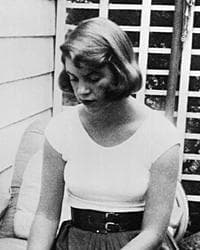
Sylvia Plath was an American poet, novelist, and short story writer. She is credited with advancing the genre of confessional poetry and is best known for two of her published collections, The Colossus and Other Poems (1960) and Ariel (1965), as well as The Bell Jar, a semi-autobiographical novel published shortly before her suicide in 1963. The Collected Poems was published in 1981, which included previously unpublished works. For this collection Plath was awarded a Pulitzer Prize in Poetry in 1982, making her the fourth to receive this honour posthumously.
Rhonda Byrne
4.3

Menno Henselmans
4.3

Sylvia Plath
4.3
Elliot Aronson
4.3

Joseph Campbell
4.3
Erich Fromm
4.3
Irvin D. Yalom
4.2

Lucy Strange
4.2