
Biography coming soon.

Sam J. Miller (2017)
Genre
Psychology / Fantasy / Young Adult
Reading Time
12 Minutes
Key Themes
See below
Sign in to track this book
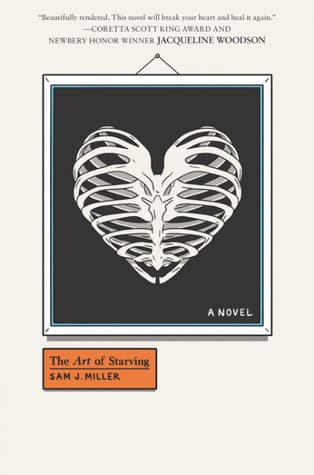
A bullied gay teen believes his eating disorder gives him superpowers as he starves himself to find out what happened to his sister.
Matt, a bullied gay teenager, intentionally starves himself. He believes this self-deprivation gives him unusual abilities: heightened senses, vivid hallucinations, and a perceived ability to read minds and influence events. His main goal is to find out what happened to his older sister, Maya, who disappeared suddenly. Matt is convinced Tariq, the popular football captain, and his friends are responsible. Despite his mother's constant worry and attempts to feed him, Matt resists eating, seeing hunger as a source of strength, not illness.
Driven to find answers, Matt plans to get close to Tariq. He starts going to football practices, first observing, then subtly inserting himself into Tariq's world. Matt uses his perceived powers to anticipate Tariq's moods and moves, believing this helps him navigate social situations. He eventually forms a tentative friendship with Tariq, surprising his few friends, especially Amy. Matt endures Tariq's casual meanness and discomfort, all while searching for clues about Maya, convinced Tariq knows something.
As Matt spends more time with Tariq, their relationship becomes complex and confusing. Tariq, initially dismissive, starts showing vulnerability and even affection. They share genuine moments, playing video games and discussing personal struggles. This challenges Matt's idea of Tariq as a purely evil bully. Matt finds himself drawn to Tariq, despite his original intentions and the internal conflict this causes. He struggles to reconcile the person he believes drove his sister away with the person now showing him unexpected kindness, complicating his investigation.
Matt's perceived powers grow in intensity, appearing as clearer visions, stronger telepathic impressions, and a growing belief in his ability to manipulate reality. He starts to believe he can see the 'threads' connecting people and events. However, these experiences are linked to his rapidly declining physical and mental health. Starvation causes extreme fatigue, dizziness, hallucinations, and severe mood swings. His body wastes away, and his thinking becomes impaired, making it hard to tell reality from his starved mind. The line between 'power' and 'illness' blurs.
Amy, Matt's best friend, worries about his drastic weight loss, his focus on Tariq, and his claims of developing powers. She tries to talk to him, expressing concern for his health and challenging his erratic behavior. Amy tries to make him eat and urges him to seek help, but Matt, consumed by his mission and belief in his abilities, dismisses her worries. Their friendship becomes strained as Matt isolates himself, refusing to acknowledge the severity of his eating disorder.
Through his investigation and perceived powers, Matt uncovers a secret about Tariq: he is gay and deeply closeted, fearing exposure and judgment from his conservative father and peers. Tariq's bullying, especially towards Matt, is a desperate attempt to maintain a tough facade and deflect suspicion. This revelation changes Matt's view of Tariq and their relationship. It adds empathy and understanding, but also complicates his mission as he deals with Tariq's vulnerability and his own growing feelings.
Amidst their complicated dynamic, Matt and Tariq share an unexpected kiss. This is a turning point, moving their relationship beyond investigation to genuine romantic attraction. The kiss has both tenderness and tension, reflecting Tariq's internal conflict about his sexuality and Matt's own confusion and desire. While Matt's goal was to expose Tariq, he finds himself drawn to him, experiencing a powerful connection he didn't expect. This intimacy further blurs his mission, making his next steps difficult.
Matt finally learns the truth about Maya's disappearance, but it is not what he expected. Maya did not run away because of Tariq; she left due to her own mental health struggles and a difficult home life, made worse by her parents' constant fighting and her feelings of being overlooked. Tariq had tried to help her, but his efforts were misunderstood. The realization shatters Matt's narrative and revenge plot. The truth is more mundane and heartbreaking than his theories, leaving him feeling lost and betrayed by his own mind.
With the truth about Maya revealed, Matt's 'powers' are unmasked as severe symptoms of advanced starvation and mental health struggles. The 'threads' he saw, the mind-reading, and control over time were all vivid hallucinations and delusions caused by his eating disorder. The weight of this realization, combined with his extreme physical deterioration, leads to a mental and physical collapse. Matt is found in a critical state, ravaged by starvation, and rushed to the hospital. This is the lowest point of his journey, forcing him to confront the reality of his illness.
Matt begins a long recovery in the hospital, dealing with the physical and psychological effects of his eating disorder. He receives medical care and therapy, slowly addressing the issues that led to his starvation. His mother and Amy support him. The journey is difficult, with relapses and setbacks, but Matt gradually starts to rebuild his relationship with food, his body, and himself. He learns that true strength comes not from self-deprivation, but from self-acceptance, vulnerability, and seeking help.
As Matt slowly recovers, he and Tariq begin to reconcile. Their relationship, initially built on deceit and vengeance, becomes more honest and tender. Tariq, having faced his own fears, apologizes for his past actions and expresses remorse. They navigate their growing feelings, acknowledging the difficult circumstances that brought them together. Matt also mends his relationship with Amy. The novel ends with Matt still recovering, but with a new understanding of himself, his body, and the importance of genuine connection, looking towards a future where he can embrace all forms of hunger in a healthy way.
The Protagonist
Matt transforms from a self-destructive, delusional teen seeking revenge to a vulnerable individual confronting his illness and beginning a journey of self-acceptance and healing.
The Antagonist/Supporting
Tariq evolves from a stereotypical bully hiding behind a facade to a vulnerable individual who confronts his sexuality and begins to accept himself.
The Supporting
Amy remains a constant, supportive friend, demonstrating resilience and unwavering loyalty despite Matt's self-destructive path.
The Supporting
Maya's character arc is revealed retrospectively; she is initially a mysterious vanished figure, later revealed to be a struggling individual who chose to leave for her own well-being.
The Supporting
Matt's Mom moves from being overwhelmed and somewhat in denial about Matt's condition to actively supporting his recovery.
The Supporting
Jesse remains largely static, representing the typical high school follower who participates in bullying by association.
This theme explores the physical and psychological effects of anorexia nervosa and extreme starvation. Matt's journey shows how an eating disorder can distort perception, cause hallucinations, and lead to a detachment from reality. The 'superpowers' he believes he has are symptoms of his illness, showing the dangerous delusion and self-deception in the disease. The novel portrays the suffering, isolation, and near-fatal consequences of unchecked self-starvation.
“The hunger cleared his mind, kept him sharp—and he needs to be as sharp as possible if he’s going to find out just how Tariq and his band of high school bullies drove his sister, Maya, away.”
A central theme is the deceptive nature of perceived power, especially when it comes from illness and desperation. Matt believes he gains control over his life by starving himself, seeing it as strength and supernatural ability. However, this 'power' is an illusion, a sign of his deteriorating mental state. The novel shows that true power is not in controlling external forces or denying basic needs, but in self-acceptance, vulnerability, and the courage to seek help and face reality.
“So what is lunch, really, compared to the secrets of the universe?”
The novel explores the struggles of identity and sexuality, especially for gay teenagers in a homophobic environment. Both Matt and Tariq deal with their hidden sexual identities, leading to internal conflict and self-loathing. Tariq's bullying comes from his fear of exposure, while Matt's quest for revenge becomes tied to his growing feelings for Tariq. The story argues for the importance of self-acceptance, authenticity, and finding healthy ways to express oneself, despite societal pressures.
“Matt didn’t realize there are many kinds of hunger… and he isn’t in control of all of them.”
The theme of bullying is central, driving Matt's initial desire for revenge. The novel looks at the cycle of bullying, showing how victims can become obsessed with retribution. It also explores the reasons behind a bully's actions, revealing Tariq's own pain and vulnerability. As Matt learns the truth, his desire for revenge changes into a journey toward understanding and, eventually, forgiveness. The story suggests that healing comes not from retribution, but from confronting underlying issues and breaking the cycle of anger.
“He needs to be as sharp as possible if he’s going to find out just how Tariq and his band of high school bullies drove his sister, Maya, away.”
This theme is important because the entire story is filtered through Matt's unreliable perception. The novel blurs the line between what is real and what are delusions caused by his starvation. His 'powers'—seeing threads, reading minds, manipulating time—are presented convincingly enough to make the reader question them, only to be revealed as symptoms of his severe illness. This exploration challenges the reader to consider how mental and physical states can change one's experience of reality.
“The ability to see things he shouldn’t be able to see. The knack of tuning in to thoughts right out of people’s heads. Maybe even the authority to bend time and space.”
Matt's perspective is skewed by his eating disorder and delusions.
The entire story is told from Matt's first-person perspective, making him an unreliable narrator. His extreme starvation and deteriorating mental state lead to hallucinations, delusions, and a distorted perception of reality. The reader is initially led to believe in his 'powers,' only to later realize they are symptoms of his illness. This device effectively immerses the reader in Matt's subjective experience, creating suspense and a deeper understanding of the psychological impact of an eating disorder.
Supernatural elements are introduced but later revealed as psychological symptoms.
The novel initially presents elements of magical realism, with Matt genuinely believing he has developed superpowers like telepathy, precognition, and the ability to manipulate time. These fantastical elements are woven into the otherwise realistic contemporary setting. However, this device is ultimately subverted when these 'powers' are revealed to be vivid hallucinations and delusions caused by his severe eating disorder. This subversion underscores the psychological horror of his illness and the internal reality he constructs.
Maya's absence drives Matt's actions, but the true stakes are internal.
Maya's mysterious disappearance serves as a MacGuffin, an object or plot device that is crucial to the plot and motivates the protagonist's actions, but whose specific nature is less important than its effect on the characters. While Matt is obsessed with uncovering what happened to her, the true journey and transformation are internal: his struggle with his eating disorder, his identity, and his relationship with Tariq. The truth about Maya is eventually revealed, but by then, the focus has shifted to Matt's personal crisis and recovery.
Physical hunger represents various emotional and psychological hungers.
Hunger is a pervasive and multifaceted symbol throughout the novel. Initially, it represents Matt's physical starvation, a self-inflicted 'power.' However, it quickly expands to symbolize other forms of unfulfilled longing: Matt's hunger for justice for Maya, his hunger for acceptance, his hunger for control, and eventually, his unspoken hunger for connection and love, particularly with Tariq. The novel's title, 'The Art of Starving,' itself highlights this symbolic duality, suggesting a deliberate cultivation of deprivation that extends beyond mere food.
Ready to see how well you understood this book? Take our interactive quiz with 10 questions.
Biography coming soon.

Rhonda Byrne
4.3

Menno Henselmans
4.3

Sylvia Plath
4.3
Elliot Aronson
4.3

Joseph Campbell
4.3

Erich Fromm
4.3
Irvin D. Yalom
4.2

Lucy Strange
4.2