BookBrief
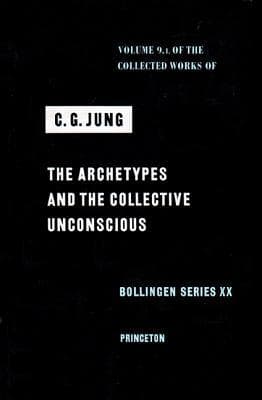
The Archetypes and the Collective Unconscious cover
Archivist's Choice

The Archetypes and the Collective Unconscious

C.G. Jung

Genre

Psychology / Spirituality / Science / Philosophy

Reading Time

1500 min

Key Themes

See below

Track Your Reading

Sign in to track this book

Ancient myths and personal dreams meet to show how universal patterns of the human mind shape our individual lives and shared future.

Core Idea

C.G. Jung's "The Archetypes and the Collective Unconscious" states that a deeper, shared layer of the mind, the collective unconscious, exists beyond personal experience. This universal part of the mind is inherited and common to everyone. It holds basic images and patterns of thought, feeling, and behavior called archetypes. These archetypes appear in myths, religions, dreams, and art across cultures. They act as mental organs that make people likely to experience and react to the world in certain, repeated ways. The book looks at key archetypes like the Shadow, Anima/Animus, Persona, and the Self. It argues that bringing these unconscious parts into awareness is important for mental health and for individuation—the journey toward a complete and realized self.
Reading time
1500 min
Difficulty
Hard
✓ Read this if...
You are a serious student of psychology, philosophy, or spirituality interested in the foundational concepts of Jungian analytical psychology, particularly the collective unconscious and archetypes, and are prepared for a dense, academic exploration of the human psyche.
✗ Skip this if...
You are looking for a light introduction to psychology, prefer practical self-help guides, or are unwilling to engage with complex theoretical concepts, mythological references, and a less linear, more associative style of argumentation.

Core idea

The central argument and framework that powers the entire book.

C.G. Jung's "The Archetypes and the Collective Unconscious" states that a deeper, shared layer of the mind, the collective unconscious, exists beyond personal experience. This universal part of the mind is inherited and common to everyone. It holds basic images and patterns of thought, feeling, and behavior called archetypes. These archetypes appear in myths, religions, dreams, and art across cultures. They act as mental organs that make people likely to experience and react to the world in certain, repeated ways. The book looks at key archetypes like the Shadow, Anima/Animus, Persona, and the Self. It argues that bringing these unconscious parts into awareness is important for mental health and for individuation—the journey toward a complete and realized self.

At a glance

Reading time

1500 min

Difficulty

Hard

Read this if...

You are a serious student of psychology, philosophy, or spirituality interested in the foundational concepts of Jungian analytical psychology, particularly the collective unconscious and archetypes, and are prepared for a dense, academic exploration of the human psyche.

Skip this if...

You are looking for a light introduction to psychology, prefer practical self-help guides, or are unwilling to engage with complex theoretical concepts, mythological references, and a less linear, more associative style of argumentation.

Key Takeaways

1

The Collective Unconscious: A Universal Blueprint

Beyond personal experience, humanity shares an inherited psychic structure.

Quote

The collective unconscious contains the whole spiritual heritage of mankind's evolution, born anew in the brain structure of every individual.

Jung suggests that the mind is not just a result of individual experience and upbringing. It also has a deeper, inherited layer: the collective unconscious. This universal part of the mind is not learned but passed down, holding tendencies to react in certain ways and form specific ideas. It is a store of old experiences and images common to all people, appearing in myths, religions, and dreams across cultures. Unlike Freud's personal unconscious, which holds forgotten memories, the collective unconscious is a shared, objective mental...

Supporting evidence

Jung frequently cites recurring motifs in mythology, folklore, and religious iconography from disparate cultures (e.g., the hero's journey, the wise old man, the great mother) as evidence of pre-existing psychic structures that transcend individual learning or cultural diffusion.

Apply this

When encountering seemingly irrational fears, powerful attractions, or recurring dream symbols, consider their potential connection to archetypal patterns rather than solely personal history. This perspective can offer a broader, more compassionate understanding of human behavior and motivations, both in oneself and others.


collective-unconsciousarchetypesinherited-predispositions
2

Archetypes: Psychic Organs of Experience

Universal patterns of behavior and imagery that shape human perception and reaction.

Quote

Archetypes are systems of readiness for action, and at the same time images and motifs that are characteristic of myth and fairy tale.

Archetypes are not fixed images or ideas. They are like empty molds that guide mental energy and create specific symbolic forms. They are inborn, universal patterns or models of people, behaviors, or personalities that play a basic role in shaping human experience. For example, the Mother archetype is not a specific mother, but a basic pattern that affects how we see, react to, and project onto mother figures in our lives. These archetypes appear in dreams, myths, art, and daily interactions. They guide our instincts, emotions, and th...

Supporting evidence

Jung's extensive comparative studies of world mythologies, religious texts, and alchemical symbolism reveal strikingly similar patterns and character types (e.g., the Hero, the Shadow, the Anima/Animus, the Wise Old Man/Woman) that appear independently across diverse cultures and historical periods.

Apply this

Identify recurring themes or character types in your dreams, fantasies, or even significant relationships. Recognizing which archetypes are active can provide insight into underlying motivations, conflicts, and potentials, helping you understand your reactions and projections more deeply.

archetypescollective-unconscioussymbolismmythology
3

The Ego and the Unconscious: A Dynamic Relationship

Consciousness is shaped by, and must integrate with, its unconscious depths.

Quote

The ego stands to the unconscious as the conscious mind stands to the collective unconscious.

Jung stresses that the ego, our conscious self and identity, is not the whole mind. It exists in a constant, often tense, relationship with the unconscious. The unconscious is not just a place for forgotten memories. It is an active, changing force that always affects conscious thought, behavior, and perception through dreams, intuitions, and projections. A healthy mind needs a strong, stable ego that can deal with and bring together unconscious content, rather than being overwhelmed or cut off from it. This back-and-forth is importan...

Supporting evidence

Jung's clinical work with patients frequently revealed how repressed or unacknowledged unconscious material would manifest in neurotic symptoms, phobias, or obsessive behaviors, demonstrating the active and often disruptive influence of the unconscious on conscious life.

Apply this

Pay attention to your dreams, 'gut feelings,' and spontaneous thoughts. These are often messages from the unconscious. Instead of dismissing them, reflect on what they might be communicating. Journaling and active imagination can be powerful tools for fostering this dialogue between ego and unconscious.

egounconsciousconsciousnessintegration
4

The Shadow: Confronting Our Dark Side

The unacknowledged, often negative, aspects of our personality.

Quote

The shadow is a moral problem that challenges the whole ego-personality, for no one can become conscious of the shadow without considerable moral effort.

The Shadow archetype represents the hidden, unacknowledged, and often negative parts of our personality—everything we see as bad about ourselves and push into the unconscious. This can include basic instincts, unwanted traits, weaknesses, and even undeveloped good qualities. While often seen as 'evil,' the Shadow is not bad itself; it just holds what the ego has rejected. Projecting the Shadow onto others (seeing our own flaws in them) is a common defense. Facing and integrating the Shadow is a vital, though hard, step in mental devel...

Supporting evidence

Jung describes how individuals often vehemently criticize in others the very faults they unconsciously possess themselves. He also noted how sudden, uncharacteristic outbursts of anger or cruelty could be attributed to a disowned Shadow erupting from the unconscious.

Apply this

Identify what truly irritates you about others; these might be projections of your own Shadow. Reflect on your 'darker' impulses, jealousies, or resentments without judgment. Acknowledge their existence and explore their origins. This is not about acting them out, but about integrating them into a more complete self-understanding.

shadow-archetypeprojectionrepressionself-awareness
5

Anima and Animus: The Inner Opposite Sex

The unconscious feminine in men and masculine in women, crucial for psychic balance.

Quote

The anima is a personification of the feminine nature in a man, and the animus of the masculine nature in a woman.

Jung proposed the Anima (a man's unconscious feminine side) and the Animus (a woman's unconscious masculine side) as important archetypes for understanding personality and relationships. These opposite-sex figures represent the total experiences of men with women, and women with men, throughout history, residing in the collective unconscious. The Anima often shows up as moods, emotional sensitivity, relationship ability, and creativity in men. The Animus typically appears as opinions, logical thought, assertiveness, and drive in women...

Supporting evidence

Jung observed how men often project their Anima onto women, leading to idealized or demonized perceptions, and how women might project their Animus onto men. He also noted how these archetypes appear in dreams as figures of the opposite sex, often guiding or challenging the dreamer.

Apply this

For men, explore your emotional landscape, creativity, and capacity for connection. For women, examine your assertive qualities, logical reasoning, and capacity for independent thought. Recognizing and developing these internal 'opposite sex' qualities leads to greater inner balance and more fulfilling relationships.

animaanimuscontrasexual-archetypepsychic-balance
6

The Self: The Archetype of Wholeness

The central organizing principle of the psyche, striving for integration.

Quote

The Self is not only the centre but also the whole circumference which embraces both conscious and unconscious; it is the centre of this totality, just as the ego is the centre of consciousness.

The Self is the most important archetype in Jungian psychology. It represents the whole mind, including both conscious and unconscious parts. It is the archetype of wholeness, unity, and integration. It acts as the main organizing force that aims for the realization of one's full potential. Unlike the ego, which is the center of consciousness, the Self is the center of the entire personality. It is often shown by mandalas, the Christ figure, or the Buddha—symbols of perfect balance and completeness. The process of individuation, Jung'...

Supporting evidence

Jung found universal symbols of wholeness and totality, such as mandalas, the philosophical stone in alchemy, and the image of the divine child, appearing spontaneously in the dreams and art of his patients, particularly during periods of intense psychological transformation.

Apply this

Engage in practices that foster self-reflection and integration, such as dream analysis, active imagination, or creative expression. Look for symbols of unity, balance, and totality in your life, dreams, or art, as these can be manifestations of the Self guiding you towards greater wholeness.

self-archetypeindividuationwholenessmandalas
7

Individuation: The Journey to Wholeness

The lifelong process of becoming a unique, integrated, and authentic self.

Quote

Individuation means becoming a single, homogeneous being, and, in so far as 'individuality' embraces our innermost, last, and incomparable uniqueness, it also implies becoming one's own self.

Individuation is the main aim of Jungian psychology. It is the process by which a person becomes a 'whole, indivisible unity,' separate from the group and integrated within themselves. It is a lifelong journey of mental development, moving beyond the ego's limited view to integrate unconscious parts, including the Shadow, Anima/Animus, and other archetypes, guided by the Self. This process involves facing one's personal history, social expectations, and universal human patterns. It is not about becoming selfish. It is about realizing ...

Supporting evidence

Jung's extensive work with patients, particularly those in the second half of life, demonstrated a natural drive towards self-realization and the integration of previously disowned aspects of the personality, often marked by a shift in values from external achievement to internal meaning.

Apply this

Regularly engage in self-reflection, dream analysis, and journaling. Pay attention to synchronicities and meaningful coincidences. Seek out experiences that challenge your comfort zone and encourage you to integrate different aspects of your personality, rather than suppressing them. Therapy can be a powerful tool in this journey.

individuationself-realizationpsychological-developmentwholeness
8

Symbols: Bridges to the Unconscious

The language of the unconscious, revealing deeper meanings and guiding psychic processes.

Quote

A word or an image is symbolic when it implies something more than its obvious and immediate meaning. It has a wider 'unconscious' aspect that is never precisely defined or fully explained.

For Jung, symbols are not just signs or stories; they are the main language of the unconscious, especially the collective unconscious. A symbol is not a fixed, intellectual concept. It is a living image that points to something unknown, beyond rational explanation. Dreams, myths, religious rituals, and art are full of symbolic content. By working with symbols, we can reach deeper parts of the mind, allowing unconscious material to become conscious. Interpreting symbols is not about finding one clear meaning. It is about exploring the ...

Supporting evidence

Jung's analysis of individual dreams and their recurring symbolic motifs (e.g., snakes representing healing or transformation, houses representing the psyche) consistently demonstrated how symbols communicated complex unconscious messages that were inaccessible to rational thought.

Apply this

Pay close attention to recurring images, objects, or themes in your dreams, daydreams, or even art and literature that resonate strongly with you. Instead of trying to 'figure them out' logically, allow yourself to explore their emotional and intuitive associations. Journaling and drawing can help unlock their meaning.

symbolsdream-analysisunconscious-languagemythology
9

The Persona: Our Social Mask

The identity we present to the world, often concealing our true self.

Quote

The persona is a complicated system of relations between individual consciousness and society, fittingly enough a kind of mask, designed on the one hand to make a definite impression upon others, and on the other to conceal the true nature of the individual.

The Persona, from the Latin word for 'mask,' is the social face we show the world. It is the role we play in society, a balance between our individual needs and what society expects. While necessary for social interaction and functioning, too much identification with the Persona can be harmful. When we mistake our social role for our true self, we lose touch with our real nature and inner life. This leads to feelings of emptiness, inauthenticity, and mental stagnation. Healthy development involves seeing the Persona as a useful tool, ...

Supporting evidence

Jung observed how individuals in certain professions (e.g., doctors, lawyers, clergy) could become so identified with their professional role that they lost touch with their personal feelings, desires, and even their Shadow, leading to crises of identity or burnout.

Apply this

Reflect on the different roles you play in various social contexts. Are there situations where you feel you are performing or hiding aspects of yourself? Consciously experiment with letting down your 'guard' in safe situations to allow more of your authentic self to emerge, distinguishing between your role and your essence.

personasocial-maskauthenticityego
10

Transcendence of Opposites: The Goal of Psychic Life

Integrating polarities to achieve a higher, unified state of being.

Quote

The psychological rule says that when an inner situation is not made conscious, it happens outside, as fate. That is to say, when the individual remains undivided and does not become conscious of his inner opposite, the world must perforce act out the conflict and be torn into two halves.

A main idea in Jung's work is that the mind is built on basic opposites: conscious/unconscious, good/evil, masculine/feminine, light/dark. Mental suffering often comes from being unable to integrate these opposites, leading to one-sidedness or inner conflict. The goal of mental development, especially individuation, is not to get rid of one pole for another. It is to move past them through a 'third' or 'transcendent function.' This involves bringing the opposing forces into conscious discussion, recognizing how they depend on each oth...

Supporting evidence

Jung frequently drew parallels to alchemical processes, where base metals were transformed into gold through the conjunction of opposites (e.g., sun and moon, king and queen), symbolizing the psychological integration of conflicting psychic elements into a higher state of wholeness.

Apply this

Identify significant inner conflicts or external situations where you feel torn between two extremes. Instead of choosing one side or suppressing the other, explore what each opposite represents. Try to hold the tension between them and see if a new, more inclusive understanding or solution emerges that incorporates aspects of both.

transcendence-of-oppositesintegrationpsychic-tensionwholeness

Critical analysis

Notable Quotes

The Gods have become diseases.

Discussing the repression of archetypal energies in modern man, leading to psychological complexes and neuroses.

One does not become enlightened by imagining figures of light, but by making the darkness conscious.

Emphasizing the importance of confronting and integrating the shadow aspect of the personality.

The collective unconscious consists of the sum of the instincts and archetypes.

Defining the core components and nature of the collective unconscious.

The soul demands your suffering.

Highlighting the transformative power of suffering and its role in psychological growth and individuation.

Everything that irritates us about others can lead us to an understanding of ourselves.

Discussing projection and how external irritations can reveal aspects of our own unconscious.

The meeting of two personalities is like the contact of two chemical substances: if there is any reaction, both are transformed.

Describing the transformative nature of interpersonal relationships and their impact on individual psyches.

The privilege of a lifetime is to become who you truly are.

Encapsulating the ultimate goal of individuation and self-realization.

The creation of something new is not accomplished by the intellect but by the play instinct acting from inner necessity. The creative mind plays with the objects it loves.

Exploring the nature of creativity and its origins in the unconscious and instinctual drives.

Neurosis is always a substitute for legitimate suffering.

Suggesting that psychological distress often arises from avoiding necessary challenges or emotional pain.

Man's task is to become conscious of the contents that press upward from the unconscious.

Outlining the fundamental process of psychological development and integration.

The archetypes are systems of readiness for action, and at the same time images and emotions.

Defining the multifaceted nature of archetypes as both patterns of behavior and symbolic representations.

Every man carries his own shadow, and the less it is embodied in the individual's conscious life, the denser, blacker, and heavier it is.

Explaining the consequences of repressing the shadow and the importance of its conscious integration.

The pendulum of the mind oscillates between sense and nonsense, not between right and wrong.

Highlighting the often irrational and paradoxical nature of the psyche, beyond simple moral judgments.

There is no generally valid interpretation of dreams.

Emphasizing the highly individual and subjective nature of dream interpretation, rejecting universal symbol dictionaries.

Quiz

Test Your Knowledge

Ready to see how well you understood this book? Take our interactive quiz with 10 questions.

10
Questions
~5
Minutes
?
Best Score

Key Questions (FAQ)

This book introduces Jung's groundbreaking theories of the collective unconscious – a universal, inherited reservoir of human experience – and the archetypes, which are primordial images and patterns residing within it. It explores how these unconscious elements influence human thought, emotion, and behavior across cultures and throughout history.

About the author

C.G. Jung

Carl Jung was a Swiss psychiatrist and psychoanalyst who founded analytical psychology. His extensive writings, including "Man and His Symbols" and "The Archetypes and the Collective Unconscious," explored the human psyche, dreams, and the concept of the collective unconscious. Jung's work profoundly influenced depth psychology, philosophy, and comparative religion.