“Frankie Parsons didn't like to be looked at and she didn't like to look at herself.”
— Introducing Frankie's self-consciousness and discomfort with attention.

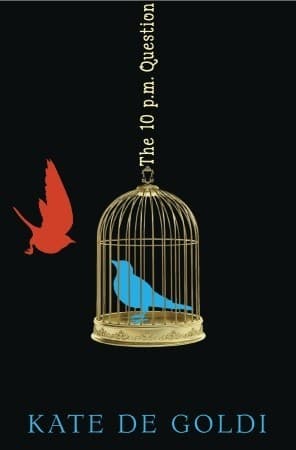
Kate De Goldi (2010)
Genre
Psychology / Children's / Young Adult
Reading Time
300 min
Key Themes
See below
Sign in to track this book
A hypochondriac twelve-year-old, whose reclusive mother fuels his anxieties, finds his meticulously constructed world of 'what-ifs' upended by a new, inquisitive girl, forcing him to confront the unspoken truth he fears most.
Twelve-year-old Frankie Parsons lives with constant worries. He meticulously checks for danger, from potential cancers to smoke alarm function, often asking his mother, Ma, for reassurance. Ma is a recluse, rarely leaving their home in Wellington, New Zealand, which adds to Frankie's isolation. His best friend, Gigs, is outgoing and carefree, a contrast to Frankie's inner world, but he doesn't fully grasp Frankie's deep worries. Frankie's older sister, Sydney, focuses on her social life, leaving Frankie and Ma in their shared bubble of anxieties and routines. Frankie's biggest unspoken worry concerns Ma's reclusiveness, a question he cannot bring himself to ask.
Frankie's sister, Sydney, brings home a new friend, May, a lively and confident girl. May's presence is a small but noticeable change to the quiet, predictable rhythm of the Parsons household. While May's visit is brief, her outgoing personality and confidence offer a glimpse into a different way of being, sharply contrasting with Frankie's guarded manner and Ma's reclusiveness. Frankie observes May with a mix of curiosity and unease, aware of how different she is from his immediate family. This encounter foreshadows the bigger disruption that will soon enter his life.
A new girl, Roxane, joins Frankie's class. She is immediately noticeable for her red hair, unusual clothes, and direct, curious nature. Roxane asks direct questions and states her opinions without hesitation, which both fascinates and unnerves Frankie. Her presence stands out at school, and her willingness to challenge norms and speak her mind contrasts sharply with Frankie's cautious approach to life. Roxane's arrival sets the stage for a major shift in Frankie's carefully built world, as her very existence seems to demand answers to the questions he avoids.
Roxane, with her curiosity, begins asking Frankie direct questions about his family, especially his mother, Ma. She notices Ma's absence from school events and her unusual reclusiveness. Frankie, unused to such directness and protective of his family's secrets, tries to avoid her questions. He gives vague answers, changes the subject, or simply tries to stay away from her. Roxane, however, is persistent. Her questions chip away at Frankie's carefully maintained facade, forcing him to confront parts of his life he usually keeps hidden, even from himself. Her probing questions start to reveal the underlying tension in Frankie's life.
Frankie and Roxane are assigned a school project about trees. This pairing forces them to spend more time together, both physically and emotionally. Despite Frankie's initial discomfort, their shared task gives them chances to interact more deeply. During these times, Roxane continues to observe Frankie and his family, subtly pushing him to acknowledge the unusual aspects of his home life. Frankie, though still guarded, slowly begins to open up to Roxane, drawn by her unique perspective and her genuine, if blunt, interest. Their collaboration marks a turning point as Frankie's defenses start to weaken.
The school project requires Roxane to visit Frankie's house. This is a significant event, as Ma rarely interacts with outsiders. Roxane's visit brings her face-to-face with Ma's reclusiveness and the unique atmosphere of the Parsons' home. Roxane's direct observations and uninhibited questions about Ma's situation make Frankie deeply uncomfortable. Ma, in turn, reacts with apprehension and a certain acceptance of Roxane's presence. This direct encounter forces Frankie to see his family through Roxane's eyes, highlighting the sharp differences between his world and what Roxane considers normal. The visit emphasizes the family's isolation and Ma's fragile state.
As Roxane's influence grows, Frankie's inner conflict intensifies. Her open questioning and refusal to accept superficial answers force Frankie to confront his own suppressed anxieties about Ma. He feels a growing need to understand why Ma is reclusive, a question he has always ignored. His usual coping methods of meticulous checking and avoidance begin to feel insufficient. Roxane's daring spirit, which initially made him uncomfortable, now inspires a different kind of courage in him, pushing him toward the truth he has always feared. He starts to see the possibility of an alternative to his anxious existence.
Driven by Roxane's influence and his own growing need for understanding, Frankie finally gathers the courage to ask Ma the '10 PM Question' – the unspoken, fundamental question about her reclusiveness and her past. This direct confrontation is emotionally charged. Ma, sensing Frankie's earnestness and perhaps recognizing that the time for secrets is over, reveals the truth about her past trauma and the events that led to her agoraphobia and withdrawal from the world. The revelation is painful but also gives Frankie a crucial understanding of his mother's condition, giving context to their shared anxieties and her unique way of life.
After Ma's confession, Frankie processes the profound and often painful truth about his mother's past. The revelation explains so much about Ma's behavior and the family's unspoken rules, but it also gives Frankie a new kind of understanding. He grapples with this knowledge, recognizing the depth of Ma's suffering and her sacrifices. This period is marked by introspection, as Frankie tries to integrate this new information into his understanding of his family and himself. He begins to see his anxieties not just as personal quirks, but as reflections of a deeper, shared history.
With the truth finally revealed and understood, a subtle but significant shift occurs in Frankie. While his anxieties do not magically disappear, he now has a context for them and a sense of agency. He begins to find a new path forward, embracing a nascent courage inspired by Roxane and his own journey. The ending suggests a hopeful future, where Frankie is better equipped to manage his worries and understand his mother, perhaps even helping her to take small steps toward engaging with the outside world. He has learned that facing difficult questions, even the ones asked at 10 PM, can lead to understanding and growth.
The Protagonist
Frankie transforms from an anxiety-ridden, avoidant boy into someone capable of confronting difficult truths and embracing courage, finding agency in understanding.
The Supporting
Ma remains largely static in her reclusiveness until Frankie's direct confrontation, which leads to a painful but necessary sharing of her past, offering a pathway to potential healing.
The Supporting
Roxane's role is primarily catalytic; she remains consistent in her inquisitive nature, serving as the external force that drives Frankie's internal change.
The Supporting
Gigs remains a steadfast and supportive friend, his character serving as a stable point of comparison for Frankie's internal turmoil.
The Supporting
Sydney remains largely consistent, her character serving to illustrate the varying ways family members cope with Ma's condition and the general challenges of adolescence.
The Supporting
Mr. Parsons remains a steady, if somewhat passive, presence, his character demonstrating the societal pressures and family dynamics that contribute to Ma's isolation.
The Mentioned
The Fat Controller serves as a consistent object of Frankie's anxieties, remaining a static element in the narrative.
The Mentioned
May's role is minor and serves as a fleeting contrast, without a significant arc of her own.
The novel explores the pervasive nature of anxiety, especially through Frankie's character. His constant checking of bodily functions, potential hazards like smoke alarms, and fears of illness (e.g., 'galloping cancer,' worms from the cat) are central to his daily life. Ma's agoraphobia and shared anxieties further show how deeply ingrained these fears can become within a family, creating a cycle. The narrative highlights the internal monologue of anxiety, showing how it shapes perception and behavior, making ordinary situations feel dangerous. Frankie's journey is ultimately about learning to manage, rather than eliminate, these anxieties.
“The 10 PM Question, which wasn't a question at all, was the thing that sat in the centre of his mind. And around it, like planets, spun all the other questions.”
A core theme is the heavy toll that unspoken family secrets take, especially on children. Ma's reclusiveness is the central '10 PM Question' that Frankie cannot voice, yet it deeply shapes his life and anxieties. The entire family implicitly understands that certain topics are off-limits, creating an atmosphere of avoidance and half-truths. This silence prevents healing and understanding, leaving Frankie to piece together fragmented clues and internalize fear. Roxane's directness forces these secrets into the open, showing that while truth can be painful, it is also liberating and necessary for growth.
“He knew that there was a question that needed asking, a question that was bigger than all the others, but he couldn't get it out.”
The novel emphasizes the transformative power of genuine human connection and empathy. Frankie's isolation, stemming from his anxieties and Ma's reclusiveness, is profound. Roxane's arrival and her unwavering, though blunt, curiosity break this isolation. She does not shy away from the 'weirdness' of Frankie's life but approaches it with an open mind and persistent questioning, which, though initially uncomfortable, ultimately makes Frankie feel seen and understood. This connection empowers Frankie to confront his fears and seek the truth, showing that empathy from an outsider can provide the courage needed for internal change.
“Roxane didn't look away. She just kept looking, like she was trying to see right inside him.”
Frankie's journey is a coming-of-age story, marked by his transition from childhood innocence and avoidance to a more mature understanding of himself and his family. He learns that growth often requires confronting difficult realities and asking uncomfortable questions. His path to self-discovery is linked with understanding his mother's past and the origins of his own anxieties. By facing the '10 PM Question,' Frankie gains insight into his family's history and develops resilience, courage, and a clearer sense of his own identity beyond his fears. He learns that being 'set apart' does not have to mean being alone.
“He was learning that some questions, once asked, could never be unasked. And some answers, once given, changed everything.”
The novel portrays the complex dynamics within the Parsons family and how they cope with Ma's condition. While Frankie and Ma share a unique bond of anxiety, Sydney and Mr. Parsons show different levels of awareness and involvement. Mr. Parsons' quiet enabling and Sydney's youthful detachment highlight the subtle ways families adapt to, and sometimes inadvertently continue, mental health challenges. The story underscores the importance of open communication within a family, suggesting that a lack of it can lead to isolation and prolonged suffering, while honest confrontation, though difficult, can be the first step toward a healthier support system.
“Families were like that, he thought. Full of things that weren't said, full of things that everyone knew but pretended they didn't.”
A metaphorical representation of Frankie's central, unspoken anxiety about his mother's condition.
The '10 PM Question' is not a literal question asked at a specific time, but rather a powerful metaphor for the core, unaddressed mystery surrounding Ma's reclusiveness. It symbolizes the deepest, most troubling anxiety that Frankie carries, the one he can never bring himself to voice. This device creates suspense and focuses the narrative, building towards the inevitable confrontation. It also represents the universal human experience of having fundamental questions or fears that we avoid, highlighting the burden of unspoken truths within families and the courage required to finally ask them.
The constant stream of anxious thoughts and meticulous observations within Frankie's mind.
Frankie's internal monologue is a pervasive plot device that grants readers direct access to his anxious and observant mind. It details his meticulous checking of potential dangers, his health worries, and his overthinking of social situations. This device immerses the reader in Frankie's subjective experience, making his anxieties palpable and his perspective unique. It also serves to build his character, revealing his intelligence, sensitivity, and the overwhelming nature of his fears. The internal monologue highlights the isolating nature of anxiety, as Frankie often processes the world more intensely within his own head than through external interaction.
A character whose directness and curiosity force the protagonist to confront his hidden truths.
Roxane serves as a crucial catalyst in the narrative. Her arrival and her forthright, unblinking curiosity disrupt Frankie's carefully constructed world of avoidance. Unlike Gigs or his family, Roxane isn't content with superficial answers or unspoken rules. Her persistent questions about Ma's reclusiveness directly challenge Frankie's comfort zone, forcing him to acknowledge the '10 PM Question' he has long suppressed. This device pushes the plot forward, initiating the confrontation and revelation that are central to Frankie's growth and the resolution of the story's main conflict. Without Roxane, Frankie might never have found the courage to seek the truth.
A character whose condition and history drive the central mystery and emotional core of the story.
Ma's character, particularly her severe reclusiveness and agoraphobia, functions as a central plot device. Her condition creates the primary mystery that Frankie seeks to unravel – the '10 PM Question.' Her inability to leave the house, her shared anxieties with Frankie, and the unspoken trauma in her past are the driving forces behind much of the narrative's tension and emotional depth. She is both a source of Frankie's worries and the ultimate key to his understanding of his family and himself. Her reclusiveness isolates the family, making the eventual revelation of her past all the more impactful.
“Frankie Parsons didn't like to be looked at and she didn't like to look at herself.”
— Introducing Frankie's self-consciousness and discomfort with attention.
“The 10 p.m. question was always about something that had happened that day, or something that was going to happen tomorrow, or something that might happen next week, or something that might have happened last year.”
— Explaining the nature and breadth of the nightly '10 p.m. question' ritual.
“It was difficult to explain to people who didn't have a mother like Frankie's mother how it felt to have a mother like Frankie's mother.”
— Frankie reflecting on the uniqueness and challenges of her mother's mental state.
“She knew that her mother loved her, but it was a love that came with conditions, with a fragility that needed constant tending.”
— Frankie's nuanced understanding of her mother's love, shaped by her mother's condition.
“Secrets were like stones in your pockets, weighing you down, making you walk slower.”
— Frankie's internal struggle with keeping secrets and their psychological burden.
“The world was full of people who didn't notice things, and then there were people who noticed everything, and Frankie was one of the latter.”
— Highlighting Frankie's observational nature and her sensitivity to her surroundings.
“Sometimes being brave just meant getting out of bed in the morning.”
— Frankie's internal thought about the everyday struggles that require courage.
“She liked the feeling of words, the way they fitted together, the way they could make sense of things that didn't make sense.”
— Frankie's appreciation for language and its power to bring order to her thoughts.
“It wasn't that she didn't want a friend; it was that she didn't know how to have one.”
— Frankie's social anxiety and her difficulty forming connections.
“Grief was a strange thing. It didn't go away; it just changed its shape.”
— Frankie's evolving understanding of grief as she processes loss.
“The quiet was a kind of protection, a soft blanket she could pull over her head.”
— Frankie finding comfort and refuge in silence and solitude.
“Everything changed, even when you tried to keep it the same.”
— Frankie's realization about the inevitability of change, despite her desire for stability.
“She understood then that sometimes the most important questions didn't have easy answers, or any answers at all.”
— Frankie's growing maturity in facing life's complexities and ambiguities.
Ready to see how well you understood this book? Take our interactive quiz with 10 questions.

Biography coming soon.

Rhonda Byrne
4.3

Menno Henselmans
4.3

Sylvia Plath
4.3

Elliot Aronson
4.3
Joseph Campbell
4.3

Erich Fromm
4.3

Irvin D. Yalom
4.2

Lucy Strange
4.2