“One day, when I was quite a child, I remember feeling for the first time that strange sensation of being alive, of being conscious, of being myself.”
— Ivan's early childhood memory of self-awareness.

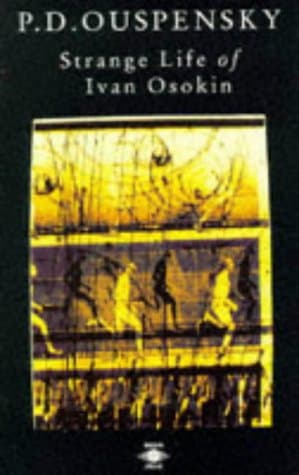
P.D. Ouspensky (1972)
Genre
Psychology / Spirituality / Philosophy
Reading Time
240 min
Key Themes
See below
Sign in to track this book
Haunted by a recurring dream that reveals the cyclical futility of his existence, a man desperately seeks to alter his fate across multiple lifetimes in a philosophical journey from Moscow to Paris.
“One day, when I was quite a child, I remember feeling for the first time that strange sensation of being alive, of being conscious, of being myself.”
— Ivan's early childhood memory of self-awareness.
“Life is a dream, and we are the dreamers. But there are different kinds of dreams, and different degrees of awakening.”
— A philosophical reflection on the nature of reality and consciousness.
“We are always repeating ourselves. We live in a circle, and we do not see it. We think we are moving forward, but we are only going round and round.”
— Ivan's realization about the cyclical nature of his life and human experience.
“The past is not dead, it is not even past. It is always present, shaping our future, determining our present.”
— A contemplation on the enduring influence of past events and decisions.
“If only I could remember, if only I could foresee! Then I would be able to change something.”
— Ivan's longing for true memory and foresight to alter his destiny.
“Every moment is a choice, even if we do not perceive it as such. And every choice creates a new path, or reinforces an old one.”
— A statement on the power of choice, even in seemingly deterministic situations.
“The greatest prison is the one we build for ourselves, out of our own habits and illusions.”
— A metaphor for the self-imposed limitations of human behavior and perception.
“To truly remember means to understand why it happened, and how it is connected to everything else.”
— A deeper definition of memory, beyond mere recall of events.
“People live in a state of constant sleep, a sleep of consciousness. They only wake up for brief moments, and then fall asleep again.”
— An observation about the general unconsciousness of humanity.
“There is no escape from oneself. The only way out is through.”
— A statement about confronting one's inner self and problems.
“The world is exactly what we make of it, no more, no less. Our perception creates our reality.”
— An emphasis on the subjective nature of reality and the power of perception.
“What is important is not what happens to us, but how we react to what happens.”
— A stoic-like perspective on the importance of one's internal response to external events.
“Life is a school, and we are here to learn. But we keep repeating the same lessons until we truly understand them.”
— A spiritual view of life as a learning process with recurring challenges.
“The future is only a continuation of the present, unless we consciously intervene and change the direction.”
— A reflection on the potential for conscious intervention to alter one's predetermined future.
Ready to see how well you understood this book? Take our interactive quiz with 10 questions.

Biography coming soon.
Rhonda Byrne
4.3

Menno Henselmans
4.3
Sylvia Plath
4.3
Elliot Aronson
4.3

Joseph Campbell
4.3
Erich Fromm
4.3
Irvin D. Yalom
4.2

Lucy Strange
4.2