BookBrief
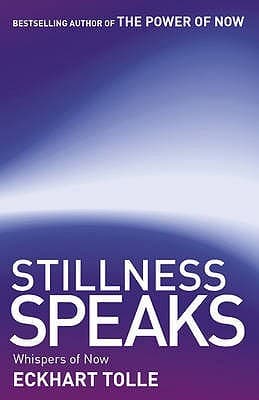
Stillness Speaks cover
Archivist's Choice

Stillness Speaks

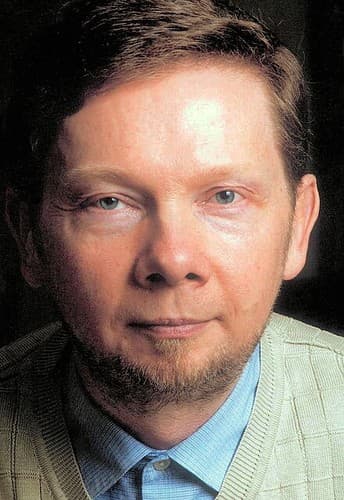
Eckhart Tolle (2003)

Genre

Psychology / Spirituality / Philosophy / Self-Help

Reading Time

90 min

Key Themes

See below

Track Your Reading

Sign in to track this book

Transcending the mind's constant chatter through stillness helps us understand ourselves, our relationships, and the wisdom of existence, easing suffering and revealing our true nature.

Core Idea

Eckhart Tolle suggests that human suffering comes from identifying too much with our thoughts and ego. He believes that real peace, joy, and spiritual awakening become available when we move past this mental noise and focus on the present moment, which he calls 'stillness.' This isn't about quiet; it's an inner awareness that exists before thoughts and forms, representing our true, unmanifested self. The book offers ways to reach this state, mainly through focusing mindfully on the present, watching thoughts without judgment, and connecting with the 'inner body.' By letting go of the past and future and seeing that all forms are temporary, people can access a deeper level of consciousness, changing how they experience life, relationships, and even death.
Reading time
90 min
Difficulty
Easy
✓ Read this if...
You are seeking spiritual guidance to reduce mental suffering, quiet an overactive mind, and connect with a deeper sense of inner peace by focusing on present moment awareness.
✗ Skip this if...
You prefer a purely academic, scientific, or highly structured argument without spiritual or philosophical undertones, or if you are looking for practical, step-by-step external life improvement strategies rather than internal transformation.

Core idea

The central argument and framework that powers the entire book.

Eckhart Tolle suggests that human suffering comes from identifying too much with our thoughts and ego. He believes that real peace, joy, and spiritual awakening become available when we move past this mental noise and focus on the present moment, which he calls 'stillness.' This isn't about quiet; it's an inner awareness that exists before thoughts and forms, representing our true, unmanifested self.

The book offers ways to reach this state, mainly through focusing mindfully on the present, watching thoughts without judgment, and connecting with the 'inner body.' By letting go of the past and future and seeing that all forms are temporary, people can access a deeper level of consciousness, changing how they experience life, relationships, and even death.

At a glance

Reading time

90 min

Difficulty

Easy

Read this if...

You are seeking spiritual guidance to reduce mental suffering, quiet an overactive mind, and connect with a deeper sense of inner peace by focusing on present moment awareness.

Skip this if...

You prefer a purely academic, scientific, or highly structured argument without spiritual or philosophical undertones, or if you are looking for practical, step-by-step external life improvement strategies rather than internal transformation.

Key Takeaways

1

The Tyranny of Thought

Our incessant mental chatter is the root of most suffering and disconnects us from reality.

Quote

The mind is a superb instrument if used rightly. Used wrongly, however, it becomes very destructive. To put it more accurately, it is not so much that you use your mind wrongly – you usually don’t use it at all. It uses you.

Tolle says our usual state is to identify with our thinking mind, a constant flow of thoughts, judgments, and ideas. This 'mind-noise' creates a false self, a conceptual 'me' that is always striving, fearing, or regretting. This endless mental activity stops us from experiencing the present moment purely. It's a basic misunderstanding, an illusion that we are our thoughts, rather than the awareness behind them. This identification is the main source of human suffering, anxiety, and unhappiness, as the mind is rarely content with 'what...

Supporting evidence

Tolle frequently uses the metaphor of 'the mind using you,' highlighting how often our thoughts seem to operate autonomously, dictating our emotions and perceptions without our conscious control or permission.

Apply this

Begin to observe your thoughts without judgment. Recognize that you are the awareness observing the thought, not the thought itself. When a thought arises, simply acknowledge it and let it pass, like clouds in the sky, without engaging or identifying with it.
mind-identificationconceptual-selfmental-noise
2

The Power of the Present Moment

True liberation and peace are found by fully inhabiting the 'Now,' the only reality that truly exists.

Quote

The past has no power over the present moment. The future is a conceptual thought in the mind, a projection. The only reality is the Now.

Tolle stresses that the past is just a memory, and the future is an imagined idea. Neither truly exists. The only way to access life, to reality, is through the eternal present moment, the 'Now.' However, our minds constantly pull us away from this reality, dwelling on past issues or future worries. By fully accepting the present moment, we break free from the mind's control and access a deeper level of consciousness. This is where true stillness, peace, and joy reside, unaffected by outside events or mental interpretations. It's not ...

Supporting evidence

Tolle often points to the direct experience of being fully present during simple activities like walking, eating, or listening, where the mind's chatter momentarily subsides, and a sense of calm and clarity emerges.

Apply this

Consciously bring your attention to your current activity, no matter how mundane. Feel your breath, the sensations in your body, the sounds around you. When the mind wanders, gently bring it back to the present moment, again and again.

the-nowpresent-moment-awarenesssurrender
3

The Pain-Body Revealed

Unresolved emotional pain accumulates into an energetic entity that feeds on negative thought and experience.

Quote

The pain-body is an energy field, almost like a separate entity, that exists in most human beings. It consists of old unexpressed and unacknowledged emotion. The stronger it is, the more it will try to feed on drama.

One of Tolle's most powerful ideas is the 'pain-body.' He describes it as an energy within us, made up of past emotional pain—trauma, anger, sorrow, fear, and resentment—that wasn't fully acknowledged or released. The pain-body often lies dormant but is triggered by certain situations, and once active, it tries to keep itself going by creating more pain. It does this by influencing our thoughts, creating negative stories, and even causing situations that lead to more suffering, which it then 'feeds' on. Recognizing and detaching from ...

Supporting evidence

Tolle illustrates the pain-body's manifestation through common human behaviors: sudden irrational anger, chronic victimhood, self-pity, or the tendency to re-experience old emotional wounds in new relationships or situations.

Apply this

When you feel a wave of intense negative emotion, instead of identifying with it or acting it out, observe it. Recognize, 'This is the pain-body.' Feel its energy without labeling it or letting your mind create a story around it. This act of conscious witnessing disempowers it.

emotional-paininner-sufferingconscious-witnessing
4

Beyond Thought: The Inner Body

Connecting with the subtle energy field of the inner body anchors us in the present and beyond the mind.

Quote

The inner body is your link with the Unmanifested. It is your root in the One Life, the 'God' within you.

Our physical body is not just a shell; it is an energy field, an 'inner body' that we can feel and access. Tolle suggests that by bringing conscious attention to the subtle energy within our bodies—the tingling, aliveness, or vibration—we create a strong anchor in the present moment. This practice bypasses the constant stream of thoughts and connects us directly to the deeper intelligence and stillness that underlies our existence. It's a direct path to the 'Unmanifested,' the source of all life. Consistent awareness of the inner body...

Supporting evidence

Tolle encourages readers to close their eyes and feel the aliveness in their hands, feet, or throughout their entire body. He notes that even a few minutes of this practice can bring a profound sense of calm and centeredness.

Apply this

Regularly take a few moments to close your eyes and feel the energy field within your body. Feel your hands from the inside, then your feet, then your whole body. Rest in this feeling of aliveness, letting go of all thought.

inner-body-awarenessenergy-fieldunmanifestedbody-consciousness
5

The Stillness Behind the Noise

Silence and stillness are not an absence, but a profound presence, the essence of who we are.

Quote

Stillness is not the absence of noise, though it can seem to be that on the surface. It is the underlying space in which all noise, all sound, all thought, all sensation arises and subsides.

Tolle defines stillness and silence not just as the absence of sound or activity, but as a conscious presence. Just as the space in a room allows objects to exist, the stillness within us is the basic ground of being from which all experience comes. By noticing the silence between sounds, the gaps between thoughts, or the spaciousness within, we access a deeper part of ourselves—our true nature, which is consciousness itself. This stillness is peaceful, wise, and full of creative potential. It's the 'unmanifested' showing through the ...

Supporting evidence

Tolle points to the peace found in nature, not just its beauty, but the underlying stillness that pervades it, and how even in the midst of city noise, one can find moments of inner silence.

Apply this

Listen to the silence between words when someone speaks, or the silence underlying ambient sounds. Seek the space and stillness between your thoughts. Allow yourself to rest in that spaciousness, even for a few seconds.

inner-silenceground-of-beingspaciousnessconsciousness
6

Beyond Form: The Impermanence of Life

All forms are temporary; recognizing this truth frees us from attachment and the fear of loss.

Quote

Whatever you perceive, experience, think, or feel is ultimately not who you are. The essence of who you are is the timeless, formless, unmanifested consciousness.

Tolle states that all manifest forms—our bodies, possessions, relationships, social roles, thoughts, and emotions—are temporary. They appear and disappear. Our suffering often comes from unconsciously identifying with these forms, leading to attachment and the fear of loss. When we cling to things, we suffer when they change or vanish. By realizing that our true essence is the formless consciousness that observes these forms, we can experience life's temporary nature without resistance. This doesn't mean we don't enjoy or appreciate f...

Supporting evidence

Tolle frequently uses the analogy of a wave (form) on the ocean (formless). The wave is temporary, but the ocean is eternal. Our identification with the wave brings suffering, while identification with the ocean brings peace.

Apply this

Observe the impermanence in your daily life: the changing weather, the aging of your body, the fleeting nature of emotions. Ask yourself, 'What is the unchanging awareness that observes all these changes?'

impermanenceformless-consciousnessnon-attachmenttransience
7

Relationships as Spiritual Practice

Conscious relationships are powerful catalysts for spiritual awakening, revealing our unconscious patterns.

Quote

The primary cause of unhappiness is never the situation but your thoughts about it. Be aware of the thoughts you are thinking. Separate them from the situation, which is always neutral. There is the situation, and there is your reaction to it.

Tolle sees relationships, especially intimate ones, as spiritual practices. They reflect our deepest unconscious patterns, including the pain-body and ego identification. When we engage in relationships unconsciously, they become places for projecting our unfulfilled desires, fears, and past wounds, leading to conflict and suffering. However, when approached with presence and awareness, relationships offer opportunities for growth. By observing our reactions without judgment, by listening without the mind's interference, and by embrac...

Supporting evidence

Tolle describes how arguments often escalate not due to the initial event, but because both parties become identified with their mental positions and pain-bodies, feeding off each other's negativity.

Apply this

In your interactions, particularly during moments of tension, pause and observe your own internal reactions. Listen to the other person without mentally formulating your response. Be present with their being, not just their words.

conscious-relationshipsmirroringegoic-patternsunconditional-love
8

Death: The Doorway to the Unmanifested

Embracing the reality of death can liberate us from fear and deepen our appreciation for life.

Quote

Death is a stripping away of all that is not you. The secret of life is to 'die before you die' – and find that there is no death.

Tolle suggests that our greatest fear is often the fear of death, which is essentially the fear of the unknown and the dissolving of our familiar form-identity. This fear, rooted in the ego, stops us from fully living. However, from a deeper spiritual view, death is not an end but a transition, a return to the 'Unmanifested'—the timeless, formless consciousness from which we all come. By accepting that all forms are temporary, including our physical body, and by consciously 'dying' to our egoic self in the present moment (letting go o...

Supporting evidence

Tolle refers to ancient spiritual teachings that speak of 'dying before you die' as a path to enlightenment, suggesting that the letting go of ego in this life parallels the letting go of form in death.

Apply this

Reflect on the impermanence of all things, including your own life. Practice letting go of attachment to outcomes, possessions, and even your self-image. Embrace the unknown and the 'not-knowing' as a gateway to deeper wisdom.

death-acceptanceunmanifestedego-dissolutionfear-of-death
9

Beyond Good and Bad: The 'Isness' of Life

Transcending mental labels allows us to perceive reality directly, free from judgment and resistance.

Quote

Accept – then act. Whatever the present moment contains, accept it as if you had chosen it. Always work with it, not against it.

Our minds constantly label experiences as 'good' or 'bad,' 'right' or 'wrong,' creating resistance to 'what is.' This mental habit causes much suffering. Tolle encourages us to move beyond these dualistic judgments and simply accept the present moment as it is. This doesn't mean approving negative situations or becoming passive; instead, it means recognizing that the situation itself is neutral, and our mental interpretation and resistance cause the pain. By dropping the labels and surrendering to the present reality, we align ourselv...

Supporting evidence

Tolle often uses examples of people stuck in difficult life circumstances, where their suffering is exacerbated by their mental resistance to the situation, rather than the situation itself.

Apply this

When facing a challenging situation, consciously drop the mental labels of 'good' or 'bad.' Simply acknowledge 'what is' without judgment. From this place of acceptance, ask yourself what conscious action, if any, is required.

acceptancenon-judgmentresistancewhat-is
10

Spiritual Awakening: A Planetary Shift

Individual transformation through stillness contributes to a collective evolution of human consciousness.

Quote

Humanity is now faced with a stark choice: Evolve or die. A new consciousness is emerging, and it is needed if humanity is to survive.

Tolle views individual spiritual awakening not just as a personal journey but as a step in a larger planetary evolution of consciousness. He argues that humanity is at a crossroads where the old, ego-driven consciousness, marked by identifying with thought and form, is causing global crises—environmental destruction, conflict, and widespread suffering. The rise of a new, awakened consciousness, rooted in presence and stillness, is necessary for our survival. Each awakened individual helps raise the collective vibration, contributing t...

Supporting evidence

Tolle frequently alludes to the current global crises (ecological, social, political) as symptoms of an unconscious, ego-driven collective mind, contrasting this with the potential for a peaceful, sustainable future through awakened consciousness.

Apply this

Recognize that your personal journey of awakening is not isolated. By cultivating presence and stillness in your own life, you are actively contributing to the elevation of collective human consciousness and helping to create a more peaceful world.

collective-consciousnessspiritual-evolutionplanetary-awakeningnew-humanity

Critical analysis

Notable Quotes

The most common ego identifications are with possessions, the work you do, social status and recognition, knowledge and education, physical appearance, special abilities, relationships, person or family history, belief systems, and often even political, nationalistic, racial, religious, or other collective identifications. None of these are you.

Discussing ego identification and what one truly is beyond external factors.

Whatever you think the world is withholding from you, you are withholding from the world.

Reflecting on the nature of perception and manifestation, particularly in relation to what one desires or feels lacking.

To complain is always nonacceptance of what is. It invariably carries an unconscious negative charge. When you complain, you make yourself a victim. When you speak up, you are in your power. So change the situation by taking action or by speaking to the person or persons involved, or stop complaining and accept what is. The rest is madness.

Distinguishing between complaining and taking constructive action or accepting a situation.

The primary cause of unhappiness is never the situation but your thoughts about it.

Highlighting the role of one's internal narrative and perception in generating unhappiness.

When you lose touch with inner stillness, you lose touch with yourself. When you lose touch with yourself, you lose yourself in the world.

Emphasizing the importance of inner stillness for self-awareness and avoiding being overwhelmed by external life.

Give up defining yourself—to yourself or to others. You won't die. You will come to life. And don't be concerned with how others define you. When they define you, they are defining a past you, an utterly lifeless image.

Encouraging readers to transcend fixed self-definitions and embrace a more fluid, present identity.

Don't look for peace. Don't look for any other state than the one you are in now; otherwise, you will set up inner conflict and unconscious resistance.

Advising against seeking a future state of peace, instead advocating for acceptance of the present moment.

You are not your mind. Your mind is a tool. It is there to be used for a specific task, and when that task is done, you put it down.

Clarifying the relationship between one's true self and their thoughts, emphasizing that the mind is a servant, not the master.

The past has no power over the present moment.

Stating that the only power the past has is through one's present thoughts and attachments to it.

See if you can catch yourself complaining, in speech or thought, about a situation you find yourself in, what other people do or say, your surroundings, your life situation, even the weather. To complain is always nonacceptance of what is.

A practical exercise to become aware of and stop the habit of complaining, connecting it to non-acceptance.

All true artists, whether they know it or not, create from a place of no-mind, from inner stillness.

Describing the source of true creativity as originating from a state beyond thought, from deep inner presence.

Life is the dancer and you are the dance.

A metaphor illustrating the interconnectedness of existence and one's role within it, emphasizing flow and surrender.

The greatest obstacle to experiencing this dimension of stillness is the mind, which keeps up a continuous commentary of thought.

Identifying the incessant activity of the mind as the primary barrier to accessing inner stillness.

Inner peace is the absence of resistance to what is.

Defining inner peace not as an attainment, but as a state of non-resistance to the present moment.

Quiz

Test Your Knowledge

Ready to see how well you understood this book? Take our interactive quiz with 10 questions.

10
Questions
~5
Minutes
?
Best Score

Key Questions (FAQ)

The core message of 'Stillness Speaks' is to transcend the incessant chatter of the thinking mind and embrace the present moment through stillness and silence. By doing so, one can connect with their true self and experience a profound sense of peace and understanding.

About the author

Eckhart Tolle

Eckhart Tolle is a spiritual teacher and author renowned for his profound insights into consciousness and personal transformation. His bestselling works, including "The Power of Now" and "A New Earth," have guided millions worldwide toward greater presence and inner peace. Tolle's teachings emphasize the importance of living in the present moment and transcending the ego for spiritual enlightenment.