“I am sixteen years old and I have never had a real friend.”
— Sarah's reflection on her isolated life and struggles with loneliness.

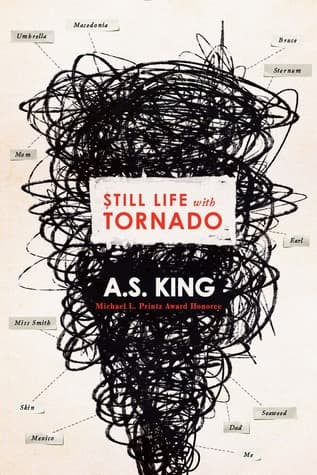
A.S. King (2016)
Genre
Psychology / Fantasy / Young Adult
Reading Time
240 min
Key Themes
See below
Sign in to track this book
A 16-year-old artist cannot create. She meets past and future versions of herself across Philadelphia, each holding a piece of the truth about a traumatic family vacation and her parents' disintegrating marriage.
Sixteen-year-old Sarah is a talented artist who suddenly cannot draw, not even her own hand. This creative paralysis happens as her parents' marriage becomes more volatile and emotionally abusive, which she tries to ignore. One day, while walking in Philadelphia, she meets a younger version of herself, a ten-year-old Sarah with a sunburn and a foul mouth, who remembers a family vacation to Mexico. Soon after, an older, twenty-three-year-old Sarah, with highlights and a cynical attitude, also appears. These other Sarahs are not hallucinations but seem to be physical manifestations, interacting with the world and each other, all around the present-day sixteen-year-old Sarah, urging her to confront something she has buried.
As the various Sarahs move through Philadelphia, they repeatedly meet a seemingly homeless man named Earl, who says he is an artist. Earl often speaks in philosophical riddles and offers strange but meaningful observations about art, truth, and reality. He seems to understand Sarah's problem, encouraging her to 'see' and 'tell the truth' through her art, even when she cannot draw. The ten-year-old Sarah is drawn to Earl, while the twenty-three-year-old Sarah is more skeptical. Earl becomes a guide, subtly pushing Sarah towards self-discovery and confronting the trauma that has led to her artistic block and fragmented self.
The ten-year-old Sarah continuously brings up fragmented, disturbing memories of a family vacation to Mexico, focusing on a 'tornado' she says happened there. Sixteen-year-old Sarah has suppressed these memories, but the younger Sarah's insistence and vivid descriptions slowly start to break down her denial. The younger Sarah recounts specific arguments between their parents, the oppressive heat, and a sense of unease that filled the trip. These recollections suggest that the Mexico vacation was a traumatic event that significantly affected the family dynamics and Sarah's emotional state, leading to her current artistic and emotional paralysis.
A forty-year-old version of Sarah, who makes good queso dip and is more grounded but equally concerned, joins the group of Sarahs. This older Sarah, while not having the direct emotional baggage of the younger versions, brings a mature perspective to the situation, especially regarding the lasting impact of parental expectations and the importance of telling one's own truth. She is particularly interested in sixteen-year-old Sarah's relationship with her art teacher, hinting at an unspoken truth that needs to be revealed. Her presence emphasizes the long-term consequences of unresolved trauma and how past events can shape an individual's entire life.
The forty-year-old Sarah, in particular, pushes the sixteen-year-old Sarah to confront her former art teacher, Mr. Ramirez. It becomes clear that an incident occurred between them, something that made Sarah uncomfortable but which she minimized at the time. The older Sarahs understand that this unresolved interaction, combined with the ongoing family dysfunction, is contributing to Sarah's artistic block. The pressure from her other selves forces sixteen-year-old Sarah to acknowledge Mr. Ramirez's subtle manipulation and boundary-crossing behavior, which she had previously rationalized. This shows a pattern of dismissing her own feelings and experiences.
Throughout the story, the background to Sarah's internal struggle is the increasingly toxic relationship between her parents. Her father is emotionally abusive, often belittling her mother and controlling her, while her mother is passive, enabling, and constantly tries to maintain a facade of normalcy. Their arguments escalate, creating a tense and suffocating atmosphere at home. Sarah witnesses these interactions, which are often dismissed by her parents, leading her to internalize the dysfunction. The other Sarahs observe this dynamic with a clearer, less biased perspective, allowing sixteen-year-old Sarah to slowly recognize the true nature of her parents' marriage.
The 'tornado' that ten-year-old Sarah keeps referencing is eventually revealed to be a metaphor for a disturbing event that occurred during the Mexico vacation. It was not a literal tornado, but rather a violent outburst from Sarah's father, directed at her mother, that traumatized the young Sarah. The younger Sarah's fragmented memories, combined with the older Sarahs' insights, piece together the truth: Sarah's father physically assaulted her mother during the trip. This revelation is a turning point, as it shatters sixteen-year-old Sarah's denial about her family's dysfunction and the true extent of her father's abusive behavior.
With the truth about the 'tornado' and Mr. Ramirez finally acknowledged, sixteen-year-old Sarah slowly starts to integrate her fragmented selves. She realizes that her artistic block is not just about lack of inspiration, but a deep inability to express herself honestly due to years of suppressing uncomfortable truths and minimizing her own experiences. The presence of the other Sarahs, while initially disorienting, forces her to confront these buried memories and feelings. This acceptance marks a significant step towards healing, as she begins to understand that her artistic voice is linked to her authentic self and her ability to process trauma.
As Sarah comes to terms with her past and present, the distinct personalities of the ten-year-old, twenty-three-year-old, and forty-year-old Sarahs begin to blur and merge back into her. This integration symbolizes her psychological healing and the reunification of her fragmented self. With the weight of denial lifted, her artistic block starts to disappear. She finds herself able to draw again, not just simple images, but powerful, truthful representations of her experiences. Her art becomes a way to process her trauma and express her authentic voice, no longer limited by the need to conform or suppress.
By the end of the book, Sarah has undergone a transformation. She understands that her identity is defined not by her parents' expectations or past traumas, but by her own truth and her ability to express it. She continues to meet Earl, whose wisdom helps solidify her understanding of art as a means of living truthfully. Sarah's artistic ability returns, stronger and more authentic than before, as she learns to draw from her entire, complex experience. She is no longer just 'sixteen years old' but a whole human being, ready to navigate her future with self-awareness and integrity, using her art as a tool for self-discovery and communication.
The Protagonist
From a state of denial and artistic paralysis, Sarah develops into a self-aware artist who embraces her full, complex identity and expresses her truth through art.
The Supporting/Aspect of Protagonist
Initially a distinct, persistent voice of trauma, she gradually integrates back into sixteen-year-old Sarah as memories are processed.
The Supporting/Aspect of Protagonist
Serves as a critical, truth-telling voice, eventually merging with the protagonist as she accepts her past.
The Supporting/Aspect of Protagonist
Offers a mature perspective and specific guidance, particularly regarding Mr. Ramirez, before integrating back into the protagonist.
The Supporting
Maintains a consistent role as a wise, enigmatic guide, offering timeless artistic and life advice.
The Supporting
Remains largely static in her denial and enabling behavior, serving as a catalyst for Sarah's self-discovery.
The Supporting
Remains largely unchanged, embodying the toxic environment Sarah must escape and understand.
The Mentioned
His past actions serve as a catalyst for Sarah's confrontation of buried truths.
The novel explores identity through Sarah's fragmented self. Her inability to draw reflects her struggle to understand who she is amidst family dysfunction and repressed trauma. The appearance of her past and future selves symbolizes the different parts of her identity that need to be integrated. By confronting her parents' abusive marriage and the incident with Mr. Ramirez, Sarah pieces together an understanding of herself, moving from denial to self-acceptance and artistic truth. Her journey is about finding her true voice and reclaiming her sense of self.
““I am a human being. I am sixteen years old. That should be enough.””
A central theme is the impact of trauma and the psychological cost of repression. Sarah's artistic block is a direct result of her suppressed memories of her parents' abusive relationship, particularly the 'tornado' incident in Mexico, and the discomfort she felt with Mr. Ramirez. The younger Sarahs embody these repressed memories, forcing the sixteen-year-old Sarah to confront what she has tried to bury. The novel shows how unresolved trauma can fragment the self and hinder personal growth, and how acknowledging these difficult experiences is essential for healing.
““It was a tornado, I tell you. A real tornado.””
Art is both a metaphor for Sarah's internal state and a way for her healing. Her inability to draw signifies her inability to express her truth, while her eventual return to art symbolizes her psychological integration and newfound voice. Earl, the artist, consistently reinforces the idea that true art comes from seeing and telling the truth, however difficult. The novel argues that art is not merely about aesthetics but about authentic self-expression and processing reality. Sarah's journey shows art's power in confronting and communicating personal truth.
““You have to look. And then you have to tell the truth.””
The novel portrays emotional abuse and denial within a family. Sarah's parents' marriage is a toxic environment with her father's verbal aggression and her mother's passive enabling. This dysfunction creates a climate of fear and silence that forces Sarah to suppress her own perceptions and feelings. The 'tornado' in Mexico is a representation of the father's violence, and the parents' subsequent denial of this event continues the cycle of abuse. The story highlights the impact of such an environment on a child's psychological development and self-worth.
““They want me to be a perfect artist, a perfect daughter. They want me to be whatever they need me to be, as long as it’s not me.””
The literal appearance of past and future versions of the protagonist.
This is the central fantastical element of the novel. Sarah's ten-year-old, twenty-three-year-old, and forty-year-old selves are not just internal voices but physically manifested beings who interact with each other and the world. This device externalizes Sarah's internal psychological fragmentation caused by trauma and repression. Each 'Sarah' represents a different stage of her life and a different aspect of her personality or suppressed memory, allowing the protagonist to literally confront and integrate these parts of herself as she processes her trauma. It's a powerful visual metaphor for psychological healing.
A symbolic representation of a traumatic, violent event.
The 'tornado' that ten-year-old Sarah repeatedly references is a key metaphor. Initially ambiguous, it's eventually revealed to be a non-literal event: a violent outburst by Sarah's father towards her mother during a family vacation in Mexico. This metaphor effectively conveys the overwhelming, destructive, and deeply traumatizing nature of the event from a child's perspective, while also symbolizing the 'storm' of family dysfunction. Its gradual unveiling is central to Sarah's process of confronting repressed memories and understanding the true nature of her family's past.
Sarah's artistic ability and block symbolize her emotional state and drive her journey.
Art is not just a hobby for Sarah; it's a profound symbol of her inner life and a catalyst for her transformation. Her artistic block directly mirrors her emotional paralysis and her inability to express her authentic self due to trauma and repression. The act of drawing, or failing to draw, becomes a barometer of her psychological well-being. The philosophical discussions about art with Earl, and the eventual return of her ability to create, signify her healing and her rediscovery of her true voice and identity. Art is both the problem and the solution in her journey.
A wise, enigmatic character who guides the protagonist.
Earl, the homeless artist, serves as a classic mentor figure. He appears at crucial moments, offering cryptic but profound advice about art, truth, and observation. He doesn't directly solve Sarah's problems but provides the philosophical framework and encouragement she needs to confront her own truths. His role is to challenge Sarah's perceptions, push her towards honesty, and remind her of the intrinsic value of seeing and expressing reality, regardless of external circumstances. He represents an uncorrupted artistic spirit and a beacon of wisdom.
“I am sixteen years old and I have never had a real friend.”
— Sarah's reflection on her isolated life and struggles with loneliness.
“Art is the only thing that makes sense when nothing else does.”
— Sarah finds solace in creating art amidst family turmoil.
“Sometimes the truth is a tornado that destroys everything in its path.”
— Sarah grapples with uncovering painful family secrets.
“I am not broken. I am a collection of pieces that don't fit together yet.”
— Sarah's realization about her identity and healing process.
“Memory is a tricky thing. It changes shape when you're not looking.”
— Reflection on how Sarah's memories shift as she processes trauma.
“You can't run away from yourself, but you can try to outsmart your own mind.”
— Sarah's attempt to navigate her psychological struggles.
“Family is the first lie we're told about how the world works.”
— Sarah's disillusionment with her family's dysfunction.
“There are days when I feel like I'm living in a painting that's slowly being erased.”
— Sarah describes her sense of fading identity and reality.
“The past isn't something you leave behind. It's something you carry with you.”
— Sarah comes to terms with how her history shapes her present.
“Sometimes you have to break things to see how they were put together.”
— Sarah's approach to understanding her life and art.
“I am not the tornado. I am the eye of the storm.”
— Sarah finds a moment of clarity amidst chaos.
“Growing up means learning that some questions don't have answers.”
— Sarah's maturation and acceptance of life's uncertainties.
“Art doesn't have to be beautiful. It just has to be true.”
— Sarah's philosophy about creating meaningful art.
“You can't fix what you don't understand is broken.”
— Sarah's insight into her family's denial and dysfunction.
Ready to see how well you understood this book? Take our interactive quiz with 10 questions.

A.S. King is an award-winning author of young adult fiction, recognized for her unique voice and exploration of complex themes. Her notable works include 'Everybody Sees the Ants,' 'Please Ignore Vera Dietz,' and 'Still Life with Tornado,' which have earned critical acclaim for their blend of realism and surrealism. King's writing often delves into identity, family, and societal pressures with unflinching honesty.
Rhonda Byrne
4.3

Menno Henselmans
4.3

Sylvia Plath
4.3
Elliot Aronson
4.3

Joseph Campbell
4.3
Erich Fromm
4.3
Irvin D. Yalom
4.2

Lucy Strange
4.2