“Sometimes you have to burn something to the ground to see what rises from the ashes.”
— Kristi's journey of overcoming her past and finding a new beginning.

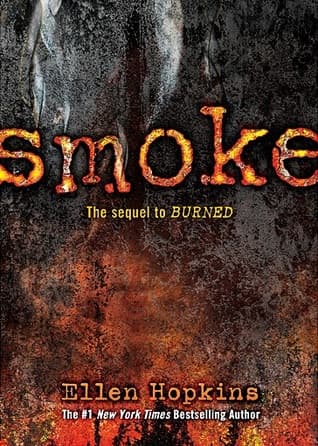
Ellen Hopkins (2013)
Genre
Psychology / Young Adult / Romance
Reading Time
600 min
Key Themes
See below
Sign in to track this book
Haunted by a past of abuse and loss, Pattyn flees her oppressive community to find a new life as a migrant worker, only to discover that outrunning her ghosts is far harder than escaping her family.
After her abusive father's death, Pattyn Von Stratten, seventeen, makes a desperate escape from her fundamentalist Mormon community in Redemption, Nevada. She leaves behind her younger sister, Jackie, who witnessed their father's death. Pattyn is haunted by memories of her father's cruelty, the loss of her beloved Ethan, and the miscarriage of their child. Dressed in plain clothes and with dyed hair, Pattyn hitchhikes, determined to disappear and start a new life, far from the judgment and control of her past. She carries the weight of her trauma and the secret of her father's death, fearing both discovery and returning to her old life.
Back in Redemption, Jackie navigates the aftermath of her father's death. Their mother, desperate to save appearances and avoid scandal, denies the abuse and lets church leaders control the story, framing Pattyn as a runaway and her father's death as an accident. Jackie, burdened by the truth and the loss of her sister, feels increasingly alone. Her mother's emotional fragility and the community's rules stop her from speaking out. She misses Pattyn terribly and begins to question her church's teachings and her family's hypocrisy, feeling trapped in her grief and anger.
Pattyn, now calling herself 'Pat' and using a new surname, eventually finds herself in California, working as a migrant laborer on a large ranch owned by the wealthy Mr. Wilson. She keeps to herself, avoiding questions about her past and focusing on the hard physical labor of picking fruit. The anonymity and demanding work offer a temporary escape from her inner turmoil. She finds a small, rundown trailer to live in and begins to appreciate the simple rhythm of farm life, far from Redemption's rules. However, the scars of her past, especially the loss of Ethan, continue to haunt her dreams.
On the ranch, Pattyn gradually begins to interact with her fellow migrant workers. She observes their camaraderie and resilience, a stark contrast to the rigid community she left. She is drawn to Manny, a kind and observant young man who works alongside her. Manny is patient and understanding, sensing Pattyn's guarded nature but not pressing her for details. Their interactions are hesitant at first but slowly grow into a quiet friendship. Pattyn also meets other workers like Rosa, who offers a maternal presence, and Mateo, a more cynical but decent man. These new relationships provide a fragile sense of belonging she hasn't felt in a long time.
Back in Redemption, Jackie's frustration with her mother's denial and the church's control grows. She begins to secretly read books and question the strict doctrines she's been taught. Her mother, increasingly withdrawn and dependent on the church's support, does not notice Jackie's internal rebellion. Jackie starts to push back against expectations, expressing her anger and grief more openly. She struggles with her faith, feeling betrayed by a God who allowed her father's abuse and her sister's suffering. A new, charismatic young elder in the church further complicates her feelings, making her question the true intentions of those in power.
As Pattyn and Manny's relationship deepens, she confides in him, slowly revealing parts of her traumatic past. She talks about her father's abuse, the loss of Ethan, and the baby she miscarried. Manny listens without judgment, offering comfort and support. He encourages her to confront her pain rather than bury it. Pattyn's trust in Manny grows, and she begins to imagine a future where she might not have to hide. However, the fear of her past catching up to her remains, making her hesitant to fully embrace this new connection and the potential for happiness.
Driven by guilt, fear of community judgment, and a complicated love for her daughter, Pattyn's mother eventually gives in to pressure from the church to find Pattyn. She hires a private investigator, believing that bringing Pattyn back will restore order and reputation to their family. Unbeknownst to her, this action puts Pattyn in greater danger, as the investigator's methods are not always ethical. Jackie, aware of the search, feels a mix of hope and dread, knowing that Pattyn's return could either bring healing or further expose their family's secrets.
The private investigator eventually tracks Pattyn down at the ranch. The confrontation is sudden and terrifying, forcing Pattyn to relive her fear of being controlled. Manny stands by her side, offering protection and support. The investigator threatens to expose Pattyn's past and the circumstances of her father's death, demanding her return to Redemption. Pattyn faces an agonizing choice: run again, abandoning her new life and Manny, or face the truth and the potential consequences of her actions, including legal repercussions for her father's death. This moment shatters the fragile peace she had built.
Meanwhile, in Redemption, Jackie reaches her breaking point. Unable to bear the lies and injustice any longer, she decides to act. She confronts her mother and the church elders, revealing the full extent of her father's abuse and the truth behind his death. Her brave confession, though met with initial disbelief and anger from some, begins to dismantle the carefully constructed facade of their community. Jackie's actions are a desperate plea for justice for Pattyn and for herself, hoping to clear her sister's name and expose the hypocrisy that has plagued their lives.
The truth about Pattyn's father and the family's history of abuse finally comes to light, shocking Redemption. Pattyn, supported by Manny, decides to return and face the consequences, determined to tell her story and seek justice. While the future is uncertain and full of legal and emotional challenges, both sisters find strength in each other and in their allies. The book ends with cautious optimism, as Pattyn and Jackie begin the difficult process of healing, confronting their trauma, and rebuilding their lives on a foundation of truth and resilience, looking towards a future free from their past.
The Protagonist
Pattyn transforms from a terrified, secretive runaway into a resilient woman who confronts her past and reclaims her voice, learning to trust and accept love.
The Supporting
Jackie evolves from a silenced, obedient girl into a courageous truth-teller, challenging her community and family for justice.
The Supporting
Manny remains a steady, supportive presence, helping Pattyn to heal and trust again without undergoing significant personal transformation himself.
The Supporting
Her arc is one of gradual, painful realization, as she is forced to confront the truth she long suppressed, leading to a breakdown of her denial.
The Supporting
Mr. Wilson provides a stable environment for Pattyn but does not undergo a significant personal arc.
The Mentioned
Ethan's memory serves as a catalyst for Pattyn's emotional journey, though he is not a living character.
The Antagonist
The private investigator's arc is limited to his pursuit of Pattyn, acting as an external threat.
The novel explores the lasting psychological effects of child abuse and trauma. Pattyn's entire being is shaped by her father's cruelty, leading to her flight, her distrust of others, and her grief over Ethan and her lost child. Jackie also bears the scars of witnessing the abuse and living in a household of denial. The story shows how trauma appears as fear, secrecy, and a struggle for identity, as seen when Pattyn changes her name and appearance to escape her past, or when Jackie suffers in silence in Redemption.
““Every breath I take is a battle against the past, a fight to keep the smoke from choking me.””
A main theme is the human need for freedom from oppressive circumstances. Pattyn's journey is a literal and metaphorical escape from her abusive home, her fundamentalist community, and the expectations placed upon her. Her flight to California and her attempts to create a new identity show her desire for self-determination and peace. This theme also appears in Jackie's internal rebellion against the church's doctrines and her mother's denial, as she seeks intellectual and emotional freedom from the lies that bind her family.
““I wanted to disappear, to shed my skin and be someone new, someone unburned.””
The conflict between truth and denial drives the story. Pattyn's mother and the Redemption community actively suppress the truth about the father's abuse and his death, choosing to maintain a facade of normalcy and piety. This denial causes suffering for both Pattyn and Jackie. Jackie's decision to speak out against this denial is a turning point, showing the necessity of confronting painful truths for healing and justice to begin. The novel suggests that denial, while offering temporary comfort, ultimately leads to deeper wounds and prevents real reconciliation.
““Lies are easy. Truth is a wildfire.””
Amidst the trauma and isolation, the novel highlights the healing power of genuine human connection and the difficult process of learning to trust again. Pattyn's gradual relationship with Manny shows this, as his unwavering support and acceptance slowly break down her defenses. Similarly, Jackie's bond with Pattyn, even when separated, gives her strength. These connections offer a lifeline, showing that even after deep betrayal and abuse, it is possible to form healthy relationships and find comfort in the empathy and understanding of others, paving the way for recovery.
““He didn't ask me to be fixed. He just asked me to be.””
The story is told through free-verse poetry from Pattyn's and Jackie's alternating perspectives.
The novel employs a unique first-person narrative style, predominantly in free-verse poetry, alternating between Pattyn's and Jackie's perspectives. This device allows for a deeply intimate and raw exploration of their inner thoughts, emotions, and trauma. The poetic form enhances the emotional intensity and allows for powerful imagery and metaphor to convey the sisters' pain, fear, and nascent hope. It also creates a sense of immediacy and urgency, drawing the reader directly into their psychological landscapes and making their experiences visceral and impactful.
Representing the destructive past, hidden truths, and the potential for rebirth.
The recurring symbols of 'smoke' and 'fire' are central to the novel's themes. 'Smoke' often represents the lingering effects of trauma, the obfuscation of truth, and the suffocating memories of the past that Pattyn tries to escape. 'Fire,' while destructive (referencing the previous novel 'Burned' and the burning away of her old life), also symbolizes purification, transformation, and the potential for rebirth from the ashes. Pattyn's journey is about moving through the smoke of her past to find a clearer, unburned future, acknowledging that sometimes destruction is necessary for new growth.
A restrictive and hypocritical setting that acts as an antagonist.
The fundamentalist Mormon community of Redemption, Nevada, serves as a significant plot device, acting almost as an antagonist itself. It is a place of rigid rules, enforced conformity, and a culture of silence that enables abuse and punishes those who deviate. Its judgmental nature and emphasis on appearances over truth force Pattyn to flee and keep Jackie trapped. The community's pressure on the mother to maintain a facade and find Pattyn drives much of the external conflict, highlighting the suffocating power of religious extremism and societal judgment.
“Sometimes you have to burn something to the ground to see what rises from the ashes.”
— Kristi's journey of overcoming her past and finding a new beginning.
“The hardest part of saying goodbye is knowing you might never say hello again.”
— A reflection on the finality of certain departures.
“Love isn't always pretty. Sometimes it's messy and complicated, and you have to fight for it.”
— Kristi and Grant's tumultuous relationship.
“We all have secrets, the ones we keep, and the ones that keep us.”
— The characters dealing with hidden truths and their impact.
“Sometimes the only way out is through the fire.”
— A character facing a difficult and painful situation head-on.
“Hope is a dangerous thing. It can make you believe in things that aren't real.”
— A character's cynical view on hope after experiencing disappointment.
“It's easy to judge someone until you've walked a mile in their ashes.”
— Emphasizing empathy for those who have endured hardship.
“The past is like smoke; you can try to contain it, but it always finds a way to escape.”
— Kristi grappling with her history and its lingering effects.
“Sometimes the bravest thing you can do is ask for help.”
— A character overcoming pride to seek support.
“We are all just trying to find our way back home, even if we don't know where home is anymore.”
— The characters' search for belonging and stability.
“Forgiveness isn't about forgetting; it's about letting go of the anger.”
— A character's struggle to forgive someone who hurt them.
“The truth has a way of burning through everything, eventually.”
— The inevitable revelation of secrets and lies.
“You can't outrun your demons. Eventually, you have to turn around and face them.”
— A character confronting their internal struggles.
Ready to see how well you understood this book? Take our interactive quiz with 10 questions.

Biography coming soon.

Rhonda Byrne
4.3

Menno Henselmans
4.3

Sylvia Plath
4.3

Elliot Aronson
4.3

Joseph Campbell
4.3

Erich Fromm
4.3
Irvin D. Yalom
4.2

Lucy Strange
4.2