BookBrief
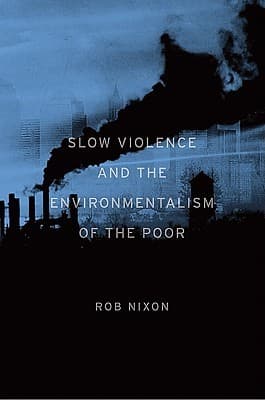
Slow Violence and the Environmentalism of the Poor cover
Archivist's Choice

Slow Violence and the Environmentalism of the Poor

Rob Nixon (2011)

Genre

Politics / Philosophy

Reading Time

10-12 hours

Key Themes

See below

Track Your Reading

Sign in to track this book

Rob Nixon's 'slow violence' concept explains how gradual environmental harm affects the global poor most, requiring new ways to see and address crisis.

Core Idea

Rob Nixon's "Slow Violence and the Environmentalism of the Poor" argues that many environmental and social crises are not sudden events but "slow violence." This violence happens gradually and out of sight, with delayed destruction spread across time and space. It often is not newsworthy and affects the poor and marginalized most. Nixon says this hidden nature makes slow violence hard to show, get support for, and fix using traditional media and politics. He suggests that understanding and fighting slow violence needs new imaginative and narrative ways. These ways can make the unseen visible and help create a more expansive, justice-focused environmentalism that links local problems to global issues. The book supports a change from typical, often dramatic environmental stories to an "environmentalism of the poor." This view recognizes and values the long-term struggles of communities facing slow violence. Nixon stresses that writer-activists are important for creating stories that bridge the time and space gaps in slow violence, helping to build empathy and action. He calls for new environmental ethics and political responses to these drawn-out disasters, moving from despair to group resistance and a more fair future.
Reading time
10-12 hours
Difficulty
Hard
✓ Read this if...
You are interested in environmental justice, critical theory, postcolonial studies, or understanding how long-term environmental degradation disproportionately affects vulnerable populations and challenges traditional notions of violence and representation.
✗ Skip this if...
You are looking for a light, introductory read on environmental issues or prefer solutions-oriented policy discussions without deep theoretical engagement.

Core idea

The central argument and framework that powers the entire book.

Rob Nixon's "Slow Violence and the Environmentalism of the Poor" argues that many environmental and social crises are not sudden events but "slow violence." This violence happens gradually and out of sight, with delayed destruction spread across time and space. It often is not newsworthy and affects the poor and marginalized most. Nixon says this hidden nature makes slow violence hard to show, get support for, and fix using traditional media and politics. He suggests that understanding and fighting slow violence needs new imaginative and narrative ways. These ways can make the unseen visible and help create a more expansive, justice-focused environmentalism that links local problems to global issues.

The book supports a change from typical, often dramatic environmental stories to an "environmentalism of the poor." This view recognizes and values the long-term struggles of communities facing slow violence. Nixon stresses that writer-activists are important for creating stories that bridge the time and space gaps in slow violence, helping to build empathy and action. He calls for new environmental ethics and political responses to these drawn-out disasters, moving from despair to group resistance and a more fair future.

At a glance

Reading time

10-12 hours

Difficulty

Hard

Read this if...

You are interested in environmental justice, critical theory, postcolonial studies, or understanding how long-term environmental degradation disproportionately affects vulnerable populations and challenges traditional notions of violence and representation.

Skip this if...

You are looking for a light, introductory read on environmental issues or prefer solutions-oriented policy discussions without deep theoretical engagement.

Key Takeaways

1

The Insidious Nature of Slow Violence

Environmental catastrophes unfold gradually, often escaping immediate public notice and political urgency.

Quote

Slow violence is a violence that occurs gradually and out of sight, a violence of delayed destruction that is dispersed across time and space, an attritional violence that is typically not newsworthy.

Nixon introduces 'slow violence' as a way to understand environmental degradation. Unlike sudden events like tsunamis, slow violence—such as climate change, deforestation, or toxic build-up—happens gradually, often unseen, and over long periods. This slow nature makes it hard to get public attention, create immediate anger, or start quick policy changes. With no clear beginning or end, or a single villain, these destructive processes continue and get worse, affecting vulnerable people who lack resources to cope. Recognizing slow viole...

Supporting evidence

Nixon contrasts the media's focus on instantaneous disasters with the slow, creeping devastation of phenomena like the melting polar ice caps or persistent pesticide exposure, which rarely generate the same sensational headlines.

Apply this

When evaluating environmental issues, look beyond immediate impacts to identify the long-term, cumulative harms that may be less visible but ultimately more devastating. Advocate for policies that address systemic, gradual environmental degradation rather than solely reacting to crises.


attritional-violenceenvironmental-justicemedia-attention-bias
2

Disparity and Environmental Injustice

Slow violence disproportionately burdens the poor and disempowered, exacerbating existing inequalities.

Quote

The environmentalism of the poor is a movement of communities and individuals who are disproportionately affected by environmental degradation, yet often lack the voice and power to address it.

Nixon argues that slow violence is not neutral; it is linked to social and economic inequality. The 'environmentalism of the poor' comes from the experiences of communities in the Global South and other marginalized groups. They are often the first and most affected by climate change, toxic waste, and resource depletion. These groups often lack political voice, economic power, and information, making them vulnerable to displacement, illness, and loss of livelihood from gradual environmental changes. Their struggles show the need to in...

Supporting evidence

Nixon discusses communities in the Niger Delta, whose livelihoods and health have been systematically undermined by decades of oil spills and gas flaring, with little recourse or compensation from powerful corporations and governments.

Apply this

Support organizations and policies that center the voices and needs of frontline communities affected by environmental injustice. Understand how economic disparities amplify environmental harm and advocate for equitable solutions that address both.

environmental-racismglobal-southvulnerable-populations
3

The Challenge of Representing the Unrepresentable

Giving visibility to slow, incremental environmental harm requires innovative narrative strategies.

Quote

How do we represent a violence that is not spectacular, a violence that is anonymous and unphotogenic, a violence that doesn't have a clear beginning or end?

A main challenge of slow violence is that it resists typical ways of being shown. Unlike dramatic images of an earthquake, the slow damage of desertification or rising sea levels often lacks a strong visual story that can move public opinion. Nixon explores how writer-activists from the Global South use new literary and artistic methods—like metaphor, layered storytelling, and personal accounts—to make these unseen harms visible and emotionally impactful. Their work aims to connect people with the effects of slow violence, turning abs...

Supporting evidence

Nixon analyzes the work of authors like Ken Saro-Wiwa, who used literature and activism to expose the slow violence of oil extraction in the Niger Delta, translating complex environmental degradation into compelling human stories of suffering and resistance.

Apply this

When communicating about environmental issues, seek creative and empathetic ways to illustrate gradual changes and their long-term impacts. Utilize personal stories, art, and diverse media to make abstract threats tangible and relatable to a broader audience.

environmental-narrativesactivist-literaturevisibility-strategies
4

Beyond National and Local Frames

A transnational perspective is essential to understanding and addressing slow violence.

Quote

Environmental problems today are, almost without exception, transnational in scope, defying local or even national solutions.

Nixon criticizes limiting environmental discussions to national or local areas, saying that slow violence goes beyond these boundaries. Climate change, toxic spread, and resource depletion are global issues with linked causes and effects that do not stop at political borders. By taking a global view, Nixon shows how policies and consumption in one part of the world can have severe, delayed effects in another, often far-off, region. This wider view shows how environmental struggles are connected and highlights the need for internationa...

Supporting evidence

The author discusses the global impact of climate change, where industrialized nations' emissions contribute to rising sea levels and extreme weather events in distant island nations and developing countries, demonstrating a clear transnational link.

Apply this

Advocate for international agreements and collaborative solutions to environmental challenges. Educate yourself on the global dimensions of local environmental issues and support policies that recognize interconnectedness across borders.

transnational-environmentalismglobal-interconnectednessborderless-threats
5

Displacement as a Consequence of Slow Violence

Environmental degradation increasingly leads to forced migration and the creation of 'climate refugees'.

Quote

Slow violence, in its incremental devastation, often produces slow displacement, compelling people to move not through a sudden, dramatic event, but through the gradual erosion of their life-sustaining conditions.

One of the most significant and underreported effects of slow violence is the gradual movement of people. Unlike refugees fleeing sudden conflicts, 'climate refugees' often have to move because their environment slowly deteriorates—desertification, salinization, rising sea levels, or ongoing pollution making their homes unlivable. Nixon notes that this 'slow displacement' is often ignored by international law and aid, which focus on sudden crises. This leaves a gap in protection and support for those whose lives are disrupted by envir...

Supporting evidence

Nixon points to the inhabitants of low-lying island nations, whose homelands are slowly disappearing due to sea-level rise, forcing them to consider migration as their only long-term option.

Apply this

Support policies that recognize and assist climate refugees. Consider the long-term human cost of environmental degradation and advocate for proactive solutions to mitigate displacement and support affected communities.

climate-refugeesenvironmental-migrationslow-displacement
6

The Spectacle vs. The Attritional

Our media and political systems favor immediate, dramatic events over drawn-out environmental crises.

Quote

The spectacle of catastrophe often eclipses the slow, grinding catastrophes that are far more widespread and consequential.

Nixon argues that modern media and political systems favor 'spectacle'—events that are sudden, dramatic, and easy to understand. This bias makes it hard to address slow violence, which, by its nature, lacks immediate visual drama or a clear story that gets public attention. The 'attritional lethality' of slow violence, like long-term exposure to toxins or gradual habitat loss, is often seen as 'unnewsworthy' or too complex for short news reports. This media approach keeps the public uninformed and leads to political inaction, letting ...

Supporting evidence

Nixon contrasts the intense media coverage of a major oil spill (like the Exxon Valdez) with the much less reported, but cumulatively more damaging, routine pollution and gas flaring in the Niger Delta over decades.

Apply this

Critically evaluate media coverage of environmental issues, looking for stories that delve into long-term trends and systemic problems. Support investigative journalism that uncovers slow violence and challenges the spectacle-driven news cycle.

media-biasspectacle-cultureattritional-lethality
7

The Role of the Writer-Activist

Literature and art are vital tools for making slow violence visible and fostering empathy.

Quote

In the face of slow violence, the writer-activist becomes a crucial witness, a storyteller who can translate the abstract into the tangible, the gradual into the urgent.

Given the challenges of showing slow violence, Nixon supports the role of writer-activists, especially those from the Global South. These individuals—often risking much—use their writing and art to give a voice to the voiceless, make the unseen visible, and turn abstract scientific data into compelling human stories. By combining personal accounts, cultural context, and ecological insight, they create 'environmental justice literature' that not only records suffering but also inspires empathy, mobilizes resistance, and demands account...

Supporting evidence

Nixon highlights the work of numerous authors and poets, such as Rachel Carson's 'Silent Spring,' which transformed the scientific understanding of pesticide harm into a powerful public narrative that sparked the environmental movement.

Apply this

Engage with literature, art, and documentaries that explore environmental themes from diverse perspectives. Support artists and writers who are working to raise awareness about slow violence and environmental justice.

environmental-literatureeco-criticismart-as-activism
8

Connecting the Dots: From Local to Global

Understanding slow violence requires recognizing the systemic connections between seemingly disparate events.

Quote

To address slow violence effectively, we must learn to connect the dots between distant perpetrators and proximate victims, between historical injustices and contemporary suffering.

Nixon stresses that slow violence is rarely isolated. It often comes from complex, connected systems—economic policies, historical injustices, global supply chains, and power imbalances—that link distant actors and local effects. For example, consumer choices in one country can cause deforestation in another, or industrial emissions can contribute to climate change affecting communities thousands of miles away. An important part of fighting slow violence is learning to 'connect the dots,' tracing these complex cause-and-effect chains ...

Supporting evidence

The book illustrates how the demand for certain resources in developed nations fuels environmentally destructive extraction practices in developing countries, creating a direct, albeit often invisible, link between consumer and victim.

Apply this

Research the origins of products you consume and advocate for ethical supply chains. Support policies that promote corporate accountability and challenge economic models that externalize environmental costs onto vulnerable populations.

systemic-issuescausal-chainsglobal-supply-chains
9

The Urgency of a New Environmental Ethic

Confronting slow violence demands a shift in our temporal and ethical frameworks.

Quote

We need to cultivate an ethics of the long haul, an ethics that can contend with the dispersed, incremental, and often invisible nature of slow violence.

Nixon calls for a new way of thinking about ethics and time. The current short-term focus of politics, media, and consumer culture is not good at addressing the long-term, spread-out effects of slow violence. We need an 'ethics of the long haul'—one that values justice for future generations, ecological strength, and a deep understanding of our connection to distant places and future people. This means moving beyond immediate satisfaction and individual gain to embrace a deeper sense of shared responsibility and care, recognizing that...

Supporting evidence

Nixon highlights the struggle to gain political traction for climate change policies, often due to elected officials' short electoral cycles and the public's preference for immediate benefits over long-term planetary health.

Apply this

Adopt a long-term perspective in your personal choices and advocacy. Support political leaders and policies that prioritize sustainability and intergenerational equity over short-term economic gains. Engage in discussions about the ethical dimensions of environmental challenges.

intergenerational-justiceenvironmental-ethicslong-term-thinking
10

From Despair to Action: The Power of Collective Resistance

Despite the overwhelming nature of slow violence, organized resistance offers pathways to hope and change.

Quote

Even in the face of such relentless, attritional violence, resistance movements, fueled by the environmentalism of the poor, demonstrate an extraordinary capacity for resilience and hope.

While the scale and hidden nature of slow violence can cause despair, Nixon's work shows the power of human strength and group action. He explains how communities, especially those most affected by environmental harm, are not just victims but active agents of change. Through organized resistance, legal challenges, local activism, and strategic storytelling, they challenge powerful groups, demand accountability, and work toward more fair and sustainable futures. The 'environmentalism of the poor' offers a model for how even the most ma...

Supporting evidence

Nixon details examples of indigenous communities and local activists who have successfully resisted large-scale resource extraction projects through persistent advocacy, legal battles, and international solidarity.

Apply this

Identify and support grassroots environmental justice organizations. Participate in local and global movements advocating for environmental protection and social equity. Recognize that individual actions, when collectivized, can create significant change.

grassroots-activismcollective-actionenvironmental-resistance

Critical analysis

Notable Quotes

Slow violence is a violence that occurs gradually and out of sight, a violence of delayed destruction that is dispersed across time and space, an attritional violence that is typically not viewed as violence at all.

Nixon's central definition of the concept that underpins the book.

The environmentalism of the poor is often a struggle for the right to stay put, to inhabit one's own place, to sustain a livelihood and a culture.

Describing the grassroots movements of marginalized communities.

How do we bring home—and bring emotionally to life—threats that take time to wreak their havoc, threats that never materialize in one spectacular, explosive, cinematic scene?

Questioning the representational challenges of slow violence.

The poor are often the first to suffer and the last to be heard in the long, slow dramas of environmental degradation.

Highlighting the disproportionate impact on marginalized groups.

Catastrophe is more readily grasped when it is event-based, when it is focused in time and space, when its agency is visibly dramatic.

Contrasting sudden disasters with gradual environmental harm.

The struggle for environmental justice is, in part, a struggle over who gets to tell the story of a place and its people.

Emphasizing the narrative dimensions of environmental conflicts.

Displacement is not just a spatial phenomenon; it is also a temporal one, a theft of time as well as place.

Discussing the long-term impacts of environmental degradation.

The environmentalism of the poor is frequently a defense of the commons—of forests, rivers, and oceans—against the enclosures of corporate and state power.

Linking grassroots movements to historical struggles over shared resources.

We need to cultivate a more patient, less spectatorial form of attention to the slow-paced dramas of environmental change.

Calling for new ways of perceiving and responding to gradual crises.

The violence of climate change is not just in the storms and droughts, but in the slow unraveling of ecosystems and livelihoods.

Applying the concept of slow violence to climate change.

Memory becomes a form of resistance when it preserves the stories of places and peoples threatened with erasure.

Highlighting the role of memory in environmental struggles.

The environmentalism of the poor often emerges from a deep, embodied knowledge of place, a knowledge that is systematically devalued by dominant institutions.

Valuing local and indigenous knowledge in environmentalism.

Slow violence is compounded by the slow response of political and legal systems, which often lag far behind the pace of environmental damage.

Critiquing institutional failures to address gradual crises.

To witness slow violence is to commit to an act of sustained attention, to a vigilance that defies the distractions of the spectacular.

Emphasizing the ethical imperative of attentive witnessing.

Quiz

Test Your Knowledge

Ready to see how well you understood this book? Take our interactive quiz with 10 questions.

10
Questions
~5
Minutes
?
Best Score

Key Questions (FAQ)

Slow violence is a concept coined by Rob Nixon to describe environmental harms that occur gradually and often invisibly over long periods, such as climate change, toxic pollution, deforestation, and the aftermath of wars. Unlike immediate, sensational disasters, slow violence unfolds incrementally, making it easier to ignore despite its devastating cumulative impacts on ecosystems and vulnerable communities.

About the author