“I was never in a house since I was born, where I had not the liberty of laughing when I pleased.”
— Tony Lumpkin's declaration about his freedom to mock.

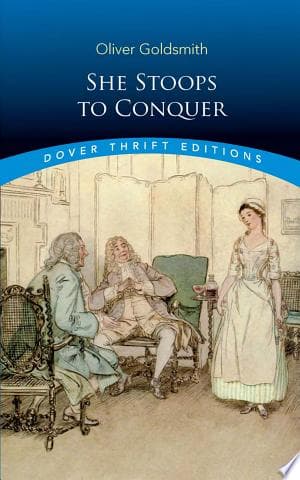
Oliver Goldsmith (1991)
Genre
General
Reading Time
80 min
Key Themes
See below
Sign in to track this book
In a delightful twist of fate, a quick-witted heiress masquerades as a barmaid to disarm a suitor whose shyness with gentlewomen is matched only by his audacious flirtations with commoners.
The play opens at Mr. Hardcastle's country house, where he complains about the decline of old-fashioned hospitality and his wife's obsession with urban fashions. He discusses his daughter Kate's future, hoping she will marry Charles Marlow, the son of his old friend Sir Charles Marlow. Mrs. Hardcastle, however, is more concerned with her son Tony Lumpkin's inheritance and his lack of interest in her plans for him to marry his cousin, Constance Neville. Tony is a boisterous, mischievous youth who prefers the company of the local tavern, 'The Three Pigeons', and enjoys pranks and singing. His mother constantly favors him, much to Mr. Hardcastle's annoyance. The scene shows the contrasting values and domestic tensions within the Hardcastle household.
Charles Marlow and his friend George Hastings are traveling to the Hardcastle estate. Marlow is known for his extreme shyness around women of his own class, yet is a notorious womanizer with women of lower social standing. Hastings is in love with Constance Neville, who is also traveling to the Hardcastle's. They stop at 'The Three Pigeons' to ask for directions. There, they encounter Tony Lumpkin, who, recognizing them as his stepfather's guests and always eager for a prank, tells them that Mr. Hardcastle's house is a dilapidated inn about a mile away. He assures them they will find good accommodation there, knowing the confusion this will cause. Marlow and Hastings, misled, set off for the 'inn' with high expectations of a comfortable stay.
Marlow and Hastings arrive at the Hardcastle residence, completely convinced it is an inn. Mr. Hardcastle, eager to welcome his guests, tries to be hospitable, but his attempts are misinterpreted as the officiousness of an innkeeper. Marlow, accustomed to ordering servants, treats Mr. Hardcastle with disrespect and demands, while Hastings, though slightly more polite, also behaves as a guest at an inn. Mr. Hardcastle, initially bewildered by their rudeness, realizes they have mistaken his house for a public establishment. He decides to play along, hoping to teach Marlow a lesson in humility and good manners, while observing his future son-in-law's true character.
Kate Hardcastle, dressed in her fashionable town clothes, meets Marlow. As her father predicted, Marlow is so overcome with shyness that he can barely speak to her, stammering and avoiding eye contact. He finds her intimidating and reserved. Kate is initially disappointed by his awkwardness but is intrigued by her father's description of Marlow's dual personality. She resolves to discover the truth for herself. Meanwhile, Constance Neville and Hastings secretly discuss their plan to elope, as Constance fears her aunt, Mrs. Hardcastle, will force her to marry Tony to secure her inheritance of jewels.
Following her father's advice and her own curiosity, Kate changes into a plain, country-style dress, which she wears in the evenings, resembling a serving maid. She encounters Marlow again, who, believing her to be a lower-class servant, immediately sheds his shyness and becomes confident, charming, and even a little flirtatious. Kate is astonished by this transformation and realizes the extent of his social anxiety. She plays along with her disguise, allowing Marlow to court her freely, while learning more about his true character and intentions. This interaction is the central 'stooping to conquer' element of the play.
Constance Neville's valuable jewels, which are her inheritance and the key to her financial independence, are kept in a casket by Mrs. Hardcastle. Hastings, eager to elope with Constance, persuades Tony Lumpkin to steal the jewels and help them escape. Tony, always ready for mischief and disliking the idea of marrying Constance himself, agrees. He takes the casket and pretends to dispose of it in the horse pond, but secretly gives it to Hastings. However, Mrs. Hardcastle later discovers the jewels missing and raises an alarm, leading to confusion and frantic searching. Tony's involvement in the scheme adds to the comedic chaos.
Hastings and Constance prepare to elope, believing they have secured the jewels. They plan to meet a carriage and flee. However, Mrs. Hardcastle, alerted to the missing jewels and suspicious of Hastings, pursues them. She catches them just as they are about to depart. In anger and determination to keep Constance's inheritance within the family, Mrs. Hardcastle reclaims the jewels and prevents their escape. This dramatic interception highlights Mrs. Hardcastle's control over Constance and the obstacles facing the young lovers. Tony, despite his earlier help, remains somewhat detached, enjoying the unfolding drama.
Sir Charles Marlow, Charles Marlow's father, arrives at the Hardcastle estate. He is a respected gentleman and an old friend of Mr. Hardcastle. His arrival adds scrutiny and expectation, particularly regarding his son's potential marriage to Kate. Sir Charles observes the strange goings-on, the mistaken identities, and his son's perplexing behavior. He is initially puzzled by Charles's apparent rudeness towards Mr. Hardcastle and his seemingly unchivalrous attitude towards Kate, whom he believes his son is meant to court. His presence creates pressure for the truth to be revealed and for misunderstandings to be resolved.
Mr. Hardcastle, deciding the charade has gone on long enough, finally reveals to Marlow that he is not an innkeeper and that Marlow has been staying in his intended's father's house. Marlow is mortified, realizing the extent of his rude behavior and the social blunder he has committed. He is deeply embarrassed, especially when he considers how he has treated Mr. Hardcastle and the implications for his courtship of Kate. This revelation marks a turning point, forcing Marlow to confront his own prejudices and the consequences of his social anxieties. His pride is wounded, and he feels immense shame.
Kate, still in her 'serving maid' disguise, confronts Marlow. She reveals her true identity as Miss Hardcastle, much to Marlow's shock and embarrassment. He is devastated by his mistaken behavior but also relieved to learn that the charming, confident woman he fell for was indeed Kate. Despite his initial mortification, Marlow realizes he has genuinely fallen in love with Kate's wit and charm, which he only saw when he believed her to be of a lower class. He confesses his love, acknowledging his earlier shyness and expressing his desire to overcome it for her sake. Kate, having successfully 'conquered' his shyness, accepts his proposal.
It is revealed that Tony Lumpkin is, in fact, of age and can therefore make his own decisions about his marriage and inheritance. Tony, always resistant to his mother's plans, declares he has no intention of marrying Constance Neville. This declaration frees Constance from the obligation to marry her cousin and allows her to claim her inheritance of jewels. With Tony's refusal, Mrs. Hardcastle loses her power over Constance's future and her jewels. Tony's unexpected maturity in this moment, though driven by self-interest, paves the way for Constance and Hastings to finally be together without familial opposition.
With Tony's declaration, Constance Neville is free to marry Hastings, and her jewels are returned to her. Sir Charles Marlow, having witnessed his son's transformation and the genuine affection between Charles and Kate, gives his blessing to their union. The Hardcastles are pleased with the outcome, despite the initial chaos. The play concludes with the promise of two happy marriages, the resolution of all mistaken identities, and a general sense of comedic order restored. The characters have learned valuable lessons about appearance versus reality, social class, and the importance of genuine affection over superficial judgments. Everyone, even Mrs. Hardcastle, accepts the new arrangements.
The Protagonist
Kate transforms from a dutiful daughter to a confident woman who engineers her own courtship, revealing Marlow's true character and securing his love.
The Protagonist
Marlow learns to overcome his social prejudices and shyness, recognizing genuine affection over superficial class distinctions, leading to a more authentic self.
The Supporting
Remains largely consistent, serving as a wise and patient observer who orchestrates the resolution of the central conflict.
The Antagonist/Supporting
Remains largely static, her vanity and ambition consistently driving her actions, though she is ultimately outmaneuvered by others.
The Supporting
Initially a source of chaos, he ultimately asserts his independence by refusing to marry Constance, leading to her freedom.
The Supporting
Struggles against her aunt's control to secure her inheritance and marry the man she loves, eventually succeeding through Tony's intervention.
The Supporting
Works to overcome obstacles to his marriage with Constance, ultimately achieving his goal.
The Supporting
Observes and eventually approves of the matches, ensuring the play's happy resolution.
This theme is central to the entire play, seen primarily through the mistaken identity of the Hardcastle home as an inn and Kate's disguise as a serving maid. Marlow's behavior drastically shifts based on his perception of a person's social standing, highlighting how outward appearances and assumed social roles can hide or show true character. The 'inn' deception lets Mr. Hardcastle see Marlow's true, unvarnished personality, while Kate's 'stooping' reveals Marlow's genuine affection and wit, which his shyness otherwise conceals. The play constantly challenges the audience to look beyond superficial judgments.
““I find that a good deal may be learned by stooping.””
The play satirizes the rigid social distinctions and prejudices of 18th-century England. Marlow's inability to speak to women of his own class, contrasted with his flirtatious ease with those he perceives as lower class, directly addresses this theme. His behavior at the 'inn' also shows the entitlement and condescension that can arise from class snobbery. The humor often comes from the subversion of these class expectations, as characters behave in ways contrary to their assumed social stations. Goldsmith suggests that genuine character and affection should go beyond artificial social barriers.
““The very rich, the very poor, the very wise, or the very ignorant, are the only people that are never out of humour.””
The struggle between parental authority and children's desires for autonomy is clear in several plotlines. Mrs. Hardcastle's efforts to force Constance to marry Tony for her inheritance, and her general control over Tony's life, represent oppressive parental control. In contrast, Mr. Hardcastle takes a more liberal approach, allowing Kate to form her own judgment of Marlow. The eventual triumph of the young lovers and Tony's assertion of his own will suggest a critique of overly strict or self-serving parental interference, advocating for children's right to choose their own partners and paths.
““I vow, Mr. Hardcastle, you’re for ever giving lessons of morality.””
Goldsmith draws a clear distinction between the values of rural country life and urban city life. Mr. Hardcastle embodies traditional country hospitality and values, regretting the loss of these virtues to 'the town'. Mrs. Hardcastle, conversely, desires the fashion and perceived sophistication of the city. Marlow and Hastings, as city gentlemen, initially bring their urban prejudices and manners to the country. The play subtly suggests that while the city offers refinement, it can also breed affectation, snobbery, and a loss of genuine connection, while the country, despite its perceived rusticity, fosters sincerity and true character.
““I love everything that’s old: old friends, old times, old manners, old books, old wine.””
Characters are perceived as someone or something they are not, driving the plot.
The entire comedic engine of the play is powered by mistaken identity. The Hardcastle house is mistaken for an inn by Marlow and Hastings, leading to their rude behavior towards Mr. Hardcastle. Crucially, Kate Hardcastle is mistaken for a common serving maid by Marlow, which allows him to overcome his shyness and reveal his true personality. This device creates hilarious misunderstandings, allows for character development, and ultimately facilitates the central romance by enabling characters to interact outside of their usual social constraints.
The audience is aware of information that characters within the play are not.
Dramatic irony is prevalent throughout the play, enhancing its comedic effect. The audience knows from the outset that the Hardcastle house is not an inn, and that Kate is not a serving maid, while Marlow and Hastings remain blissfully unaware for much of the play. This creates humor in their interactions, as the audience anticipates the eventual revelation and the characters' reactions. It also allows the audience to appreciate the cleverness of Mr. Hardcastle and Kate in playing along with the deception, and to observe Marlow's dual nature with a full understanding of the context.
Characters speak their thoughts directly to the audience, revealing inner feelings.
While not as frequent as in earlier drama, characters occasionally deliver asides or short soliloquies to express their true feelings or plans, which they cannot voice to other characters. For instance, Mr. Hardcastle often comments on the rudeness of his 'guests' in an aside, revealing his amusement or exasperation. Kate uses asides to reflect on Marlow's contrasting behavior and to strategize her next move in her disguise. This device provides insight into character motivations and adds depth to their reactions, allowing the audience to be privy to their private thoughts.
A character whose self-serving actions inadvertently create humor and propel the plot.
Tony Lumpkin functions as a comic villain (or more accurately, a mischievous obstacle) in the play. His initial misdirection of Marlow and Hastings is a deliberate act of mischief that sets the entire plot in motion. His subsequent involvement in the jewel theft and the elopement attempt, while driven by his desire to avoid marrying Constance, also creates chaos and drives the secondary plotline. His actions are not truly malicious but are self-serving and prankish, leading to humorous complications that ultimately contribute to the happy resolution for other characters.
“I was never in a house since I was born, where I had not the liberty of laughing when I pleased.”
— Tony Lumpkin's declaration about his freedom to mock.
“I love everything that's old: old friends, old times, old manners, old books, old wine.”
— Mr. Hardcastle expresses his traditional values.
“The greatest triumph of art is to conceal art.”
— Kate Hardcastle reflects on the art of appearing simple.
“An inn, by my Lord, an inn! Why, this is my father's house, and I am his only child!”
— Kate Hardcastle's exasperated realization of Marlow's mistake.
“We are all of us a medley of foibles and virtues.”
— A general reflection on human nature.
“I'm a mere lump of inert matter, a log, a stock, a stone.”
— Tony Lumpkin feigning disinterest or stupidity.
“To be plain with you, sir, I am a man of few words; but I am a man of honour.”
— Mr. Hardcastle introducing himself to Marlow.
“Our blunders are our chief instructors.”
— A reflection on learning from mistakes.
“I find that I have been deceived, abused, ridiculed, and imposed upon.”
— Marlow's realization of the trick played on him.
“Modesty seldom resides in a breast that is not enriched with nobler virtues.”
— A observation on the nature of modesty.
“He who refuses to choose, has chosen.”
— A philosophical point about decision-making.
“I wonder what any of them see in her. She's as ugly as an owl, and as proud as a peacock.”
— Tony Lumpkin's unflattering description of Miss Neville.
“The very best in this house, and I hope you'll find it so.”
— Mr. Hardcastle's welcoming words, believing he's hosting guests at an inn.
“I'm sure I don't know what to say. I was never so confused in my life.”
— Marlow's reaction to Kate's different personas.
Ready to see how well you understood this book? Take our interactive quiz with 10 questions.
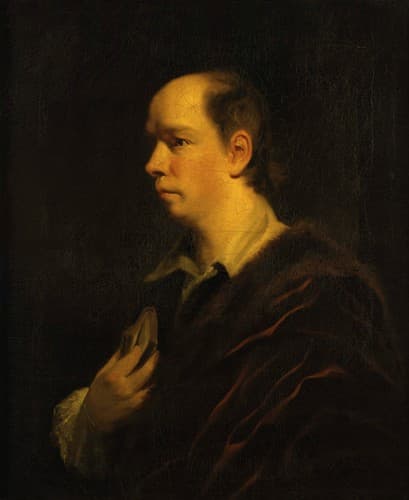
Oliver Goldsmith was a well known Anglo-Irish novelist, playwright, dramatist and poet, who is noted for his novel The Vicar of Wakefield (1766), his pastoral poem The Deserted Village (1770), and his plays The Good-Natur'd Man (1768) and She Stoops to Conquer. He is thought by some to have written the classic children's tale The History of Little Goody Two-Shoes (1765).