“Food is the enemy. It's the thing that takes away from your beauty, your perfection.”
— Main character, Isabella, internalizing her eating disorder.

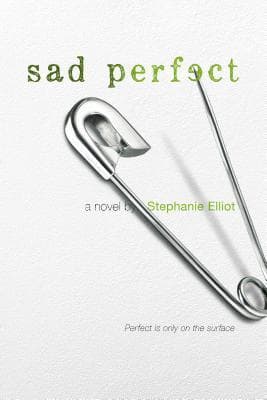
Stephanie Elliot (2017)
Genre
Psychology / Young Adult / Romance
Reading Time
6-7 hours
Key Themes
See below
Sign in to track this book
A sixteen-year-old with a hidden eating disorder finds that new love can't silence her inner struggles; only family and a devoted boyfriend can help her reclaim her life.
Sixteen-year-old Isabella 'Pea' Utterson lives with Avoidant/Restrictive Food Intake Disorder (ARFID), which she calls 'the monster' inside her. Her diet is very limited, mostly plain pasta, bread, and certain crackers, because of a strong fear of new foods, textures, and choking. This disorder controls her social life, making school lunches and family dinners very stressful. Her parents, especially her mother, worry constantly, while her younger brother, Gus, often teases her but also shows care. Pea regularly sees a therapist, Dr. Grant, and takes medication for anxiety and depression, but often feels overwhelmed and alone by her condition.
One day at the coffee shop where she works part-time, Pea meets Ben. He is a new employee, charming and relaxed, and Pea feels a real connection with someone outside her family for the first time in a long while. Ben's presence distracts her from her constant struggle with ARFID, and she starts to hope that a life without her disorder might be possible. She carefully hides her eating habits from him, afraid he would judge her if he knew the truth.
As Pea and Ben spend more time together, their relationship quickly grows into a strong romance. Ben's affection and acceptance make Pea feel normal and loved, something she greatly wants. She focuses less on her ARFID, believing Ben's love is a cure. Trying to fully embrace this new, 'normal' life and escape the constant reminder of her illness, Pea impulsively decides to stop taking her anxiety and depression medication without talking to Dr. Grant or her parents. She thinks Ben's presence is enough to keep 'the monster' away.
Pea's decision to stop her medication has bad results. Her anxiety gets worse, and 'the monster' returns strongly, controlling every part of her life. She has intense panic attacks, a strong fear of food, and no appetite. Social situations become unbearable, and even being with Ben, though she still loves him, becomes hard as she tries to act normal. Her family notices her worsening condition, but Pea pushes them away, becoming more withdrawn and easily annoyed as she fights her inner demons alone.
The stress of hiding her ARFID from Ben becomes too much. During a date, Pea's anxiety peaks, and she cannot eat, leading to a visible breakdown. Ben, confused and worried, asks for answers. Unable to keep pretending, Pea tells him the truth about her ARFID and her decision to stop her medication. Ben is shocked and hurt by her deception, feeling betrayed that she did not trust him. This truth creates a big problem between them, leaving Pea devastated and feeling more alone than ever, sure she has ruined everything.
After the fight with Ben and her ARFID fully returning, Pea's condition quickly worsens. She loses a lot of weight, her energy drops, and she struggles to even get out of bed. Her parents are terrified, and Dr. Grant is very worried about her health. Pea feels trapped, overwhelmed by the monster's control, and struggles with thoughts of hopelessness. She cuts herself off from friends and family, convinced no one can understand what she is going through, and that there is no way out of her suffering. Her physical and mental health are at their lowest point.
Despite Pea's attempts to push them away, her family does not give up on her. Her mother researches ARFID a lot, her father offers quiet strength, and even Gus, her younger brother, shows real concern. Ben, after some initial distance, contacts Pea. He learns about ARFID and expresses his renewed commitment to supporting her, apologizing for how he first reacted. Their combined understanding and strong support, though Pea resisted at first, slowly start to break down her isolation, making her feel less alone in her struggle.
With new support from her family and Ben, Pea decides to get treatment again. She restarts her medication and attends therapy sessions with Dr. Grant more regularly, openly discussing her struggles and fears. Dr. Grant helps Pea understand the physical and mental parts of ARFID, emphasizing that it is not her fault. This new commitment to treatment, though hard, marks a turning point. Pea starts to see her recovery not as an impossible task, but as a series of small, manageable steps she can take with her support system.
Pea's recovery is not a straight line; it is a journey with both small wins and frustrating setbacks. She celebrates trying a new food, even a small bite, or eating a full meal in a social setting. However, she also has moments of strong anxiety, panic attacks, and the monster's whispers tempting her back to her restrictive habits. Ben remains a constant source of encouragement, patiently supporting her through her struggles and celebrating her successes. Her family also continues to learn and adapt, creating a more supportive home for her healing.
Near the end of the book, Pea realizes that ARFID may always be a part of her, but it does not have to control her. She learns ways to cope, strategies for managing her anxiety, and how to speak up for her needs. She and Ben grow stronger as a couple, based on honesty and mutual support. Pea begins to try new foods, slowly, and finds joy in activities that her disorder once overshadowed. While the monster still whispers, Pea now has the tools, the support, and the self-awareness to face it, allowing her to live a more fulfilling and hopeful life.
The Protagonist
Pea evolves from a girl consumed by her eating disorder and prone to self-deception into a young woman who accepts her condition, learns to manage it, and embraces the support of her loved ones.
The Supporting
Ben transforms from an unwitting catalyst for Pea's self-sabotage into an informed, empathetic, and unwavering pillar of support in her recovery journey.
The Supporting
She evolves from a mother struggling with the unknowns of ARFID to an informed and understanding caregiver, learning to balance concern with effective support.
The Supporting
He remains a consistent source of quiet strength and support for Pea throughout her illness and recovery.
The Supporting
Gus matures from a teasing sibling to a more empathetic and concerned brother, showing deeper understanding of Pea's struggles.
The Supporting
Dr. Grant consistently provides professional support and guidance, helping Pea to understand and manage her ARFID.
The novel explores how an invisible illness like ARFID isolates someone. Pea's struggles are internal, making it hard for others to understand, which makes her feel very alone and misunderstood. She goes to great lengths to hide her disorder from Ben and friends, fearing judgment and rejection. This theme is clear in her thoughts about 'the monster' and her constant anxiety during social events involving food, like school lunches or dates with Ben, before he knows her secret.
“The monster was my secret, and secrets were meant to be kept hidden, even if they ate you alive.”
Pea's story shows the dangerous illusion of control that can come with mental illness, especially her choice to stop her medication. She believes Ben's love can 'cure' her, giving her a false sense of control over her ARFID and anxiety. This act of self-sabotage leads to a serious relapse, showing that real healing needs professional help and a commitment to treatment, not just outside factors. Her initial belief that love alone could fix her is a strong example of this theme.
“I thought Ben could fix me. I thought love was a magic pill. I was wrong.”
A main theme is the power of understanding and strong support from loved ones. While Pea's first attempts to hide her disorder lead to isolation, the eventual acceptance and active support from her family and Ben become key to her recovery. Their willingness to learn about ARFID, be patient, and celebrate small wins helps Pea feel seen and less alone, creating an environment where healing can begin. This is most clear when Ben learns about ARFID and recommits to their relationship after Pea's confession.
“Sometimes, the strongest thing you can do is let people help you.”
The book shows recovery from an eating disorder as a complex process, not a straight line, with both progress and setbacks. Pea has moments of hope and success, only to be followed by strong anxiety and relapses. This theme emphasizes that healing is a journey, not a final point, and needs persistence, self-compassion, and ongoing support. The story does not offer a quick fix but rather a slow, often difficult, path towards managing the disorder and living a fuller life.
“Recovery wasn't a straight line. It was a messy, winding road with potholes and detours.”
Pea's internal personification of her eating disorder.
Pea consistently refers to her Avoidant/Restrictive Food Intake Disorder as 'the monster.' This device externalizes her internal struggle, making the abstract illness feel like a tangible antagonist. It allows readers to understand the pervasive, controlling, and terrifying nature of ARFID from Pea's perspective. The monster's 'whispers' and 'grip' vividly illustrate the psychological torment and the feeling of being trapped by her condition, intensifying the emotional impact of her struggle.
The story is told entirely from Pea's perspective.
The use of a first-person narrative provides intimate access to Pea's thoughts, fears, anxieties, and internal monologue. This allows readers to deeply empathize with her struggle with ARFID, understand her motivations, and experience the world through her unique lens. It highlights the isolating nature of her illness and makes her emotional journey, from despair to gradual hope, more immediate and impactful, especially regarding her relationship with 'the monster' and her perceptions of others.
Food represents both fear and connection.
Food in 'Sad Perfect' is highly symbolic. For Pea, it primarily symbolizes fear, anxiety, and the monster's control, as evidenced by her extremely limited diet and panic attacks during meals. However, as she progresses in her recovery, food gradually transforms into a symbol of connection, normalcy, and overcoming her fears. Sharing meals with Ben or trying a new food, however small, becomes a significant milestone, representing her reclaiming control and building relationships.
“Food is the enemy. It's the thing that takes away from your beauty, your perfection.”
— Main character, Isabella, internalizing her eating disorder.
“The mirror never lies, but it also never tells the whole truth.”
— Isabella reflecting on her perception of herself versus reality.
“Love isn't supposed to hurt like this. It's supposed to heal.”
— Isabella grappling with the painful aspects of her relationship with Alex.
“Every bite felt like a betrayal, a step backward from the person I wanted to be.”
— Isabella describing her internal struggle with eating.
“You can't fix someone who doesn't want to be fixed, no matter how much you love them.”
— A character's realization about Isabella's resistance to help.
“The silence was louder than any argument, filled with all the things we weren't saying.”
— Describing the unspoken tensions in Isabella's family.
“Being perfect felt like the only way to be loved, the only way to be seen.”
— Isabella's motivation behind her pursuit of an unhealthy ideal.
“Sometimes the hardest thing to do is to let go of what you think you should be.”
— A moment of insight about self-acceptance.
“My reflection was a stranger, a ghost of who I used to be, or who I thought I was becoming.”
— Isabella's distorted self-perception due to her illness.
“Hope is a fragile thing, easily shattered, but sometimes, it's all you have.”
— Isabella clinging to the possibility of recovery.
“The biggest lies we tell are often the ones we tell ourselves.”
— Isabella acknowledging her self-deception.
“You don't just wake up one day and decide to be okay. It's a fight, every single day.”
— Describing the ongoing battle with mental illness.
“Being loved means being seen, even the parts you try to hide.”
— A character expressing the true nature of love and acceptance.
“The weight of expectations can crush you, especially when they're your own.”
— Isabella feeling overwhelmed by her self-imposed standards.
Ready to see how well you understood this book? Take our interactive quiz with 10 questions.

Rhonda Byrne
4.3

Menno Henselmans
4.3

Sylvia Plath
4.3
Elliot Aronson
4.3
Joseph Campbell
4.3

Erich Fromm
4.3
Irvin D. Yalom
4.2

Lucy Strange
4.2