BookBrief
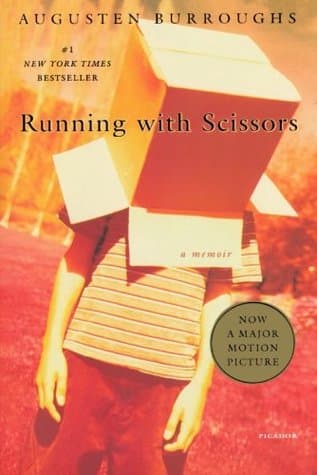
Running with Scissors cover
Archivist's Choice

Running with Scissors

Augusten Burroughs (2002)

Genre

Psychology / Biography / Memoir

Reading Time

6-8 hours (approx. 304 pages)

Key Themes

See below

Track Your Reading

Sign in to track this book

Abandoned to the care of his mother's eccentric, pill-popping psychiatrist, a twelve-year-old boy navigates a bizarre Victorian household, befriending a shed-dwelling pedophile and finding his own brand of normal amidst electroshock therapy and year-round Christmas trees.

Core Idea

Augusten Burroughs's "Running with Scissors" argues that childhood trauma is not just a story of victimhood. It can be a strange, dark, and even formative experience where the lines of care, sanity, and societal norms disappear. The book suggests that to survive such an environment, one must adapt extremely, redefine reality, and eventually confront the unreliability of adult authority. This often leads to a complex, almost fond, relationship with the very dysfunction that shaped one's identity. It proposes that when the idea of care consistently fails, a person must build their own moral and practical framework, no matter how unusual, to get through a chaotic world.
Reading time
6-8 hours (approx. 304 pages)
Difficulty
Medium
✓ Read this if...
You are fascinated by extreme memoirs, dark humor, and the psychological resilience (or lack thereof) required to navigate a truly unconventional and dysfunctional upbringing. It's for those who appreciate stories where the absurd and the tragic intertwine.
✗ Skip this if...
You prefer conventional narratives, are easily disturbed by child neglect/abuse (even when presented with dark humor), or find a lack of traditional moral judgment unsettling. This book is not for the faint of heart or those seeking clear-cut resolutions.

Core idea

The central argument and framework that powers the entire book.

Augusten Burroughs's "Running with Scissors" argues that childhood trauma is not just a story of victimhood. It can be a strange, dark, and even formative experience where the lines of care, sanity, and societal norms disappear. The book suggests that to survive such an environment, one must adapt extremely, redefine reality, and eventually confront the unreliability of adult authority. This often leads to a complex, almost fond, relationship with the very dysfunction that shaped one's identity. It proposes that when the idea of care consistently fails, a person must build their own moral and practical framework, no matter how unusual, to get through a chaotic world.

At a glance

Reading time

6-8 hours (approx. 304 pages)

Difficulty

Medium

Read this if...

You are fascinated by extreme memoirs, dark humor, and the psychological resilience (or lack thereof) required to navigate a truly unconventional and dysfunctional upbringing. It's for those who appreciate stories where the absurd and the tragic intertwine.

Skip this if...

You prefer conventional narratives, are easily disturbed by child neglect/abuse (even when presented with dark humor), or find a lack of traditional moral judgment unsettling. This book is not for the faint of heart or those seeking clear-cut resolutions.

Key Takeaways

1

The Illusion of Care

Beneath a veneer of 'therapy,' profound neglect and abuse festered.

Quote

The house was a place where adults pretended to be doctors and therapists, but mostly they just existed, untethered to reality, with me caught in their wake.

Burroughs's memoir shows how the environment he was placed in, supposedly for therapy by Dr. Finch, was anything but helpful. His mother, herself deeply troubled, gave him to a household where adults were dysfunctional, self-absorbed, and often harmful. This was not a home; it was a chaotic place where the children, especially Augusten, had to raise themselves and deal with extreme psychological and physical dangers. The 'therapy' was a cover for the adults' own problems, creating a very unstable and damaging upbringing that ironicall...

Supporting evidence

The constant presence of psychotropic drugs (Valium, Miltown, etc.) consumed recreationally by adults and even offered to children, the lack of basic supervision, and the complete disregard for Augusten's education or well-being are stark examples.

Apply this

Recognize that 'unconventional' or 'alternative' approaches, especially in mental health, can sometimes mask severe neglect or outright abuse. Always scrutinize the actual care provided, not just the labels or intentions.


neglectchild-abusedysfunctional-familiestherapeutic-misconduct
2

Survival Through Adaptation

Children possess an astonishing capacity to normalize the abnormal to survive.

Quote

I was twelve, and I was learning that in this house, the rules were whatever we made them up to be, and sometimes, there were no rules at all.

One of the most unsettling parts of Burroughs's story is his almost calm acceptance of the strange situations he faces. Children adapt incredibly well, and without a 'normal' framework, they will create their own reality. This often means internalizing and accepting deeply unhealthy patterns and relationships just to cope. Augusten learns to live in a world where a pedophile lives in the shed, his 'sister' eats dog food, and his 'father' is a manipulative, boundary-less psychiatrist. His survival instinct shows up as calm observation ...

Supporting evidence

His casual interactions with the pedophile, Norman, the way he internalizes the family's bizarre rituals (like the perpetually decorated Christmas tree), and his efforts to find food or warmth demonstrate this adaptation.

Apply this

Understand that extreme environments can warp a child's perception of normalcy. When observing children from chaotic backgrounds, recognize that their behaviors, which may seem strange, are often logical survival mechanisms developed in response to their unique circumstances. Avoid judgment and seek to understand the underlying needs.

resiliencetrauma-responsechild-psychologynormalization
3

The Allure of the Unconventional

Freedom from rules can be intoxicating, even when it's dangerous.

Quote

There were no rules. No curfews, no 'eat your vegetables,' no 'don't talk to strangers.' It was terrifying and exhilarating all at once.

Burroughs often describes a strange, almost freeing quality to the complete lack of boundaries in the Finch household. For a child, having no rules, structure, or supervision can at first feel like ultimate freedom. This 'outlaw childhood' allowed for unchecked exploration, instant gratification (like taking Valium like candy or doing strange experiments), and a feeling of being special or unique. This freedom, however, had a downside, leading to deep emotional wounds and physical dangers. The book highlights the complex psychological...

Supporting evidence

The freedom to experiment with electroshock therapy, the lack of any educational structure, and the adults' indifference to his whereabouts or activities illustrate this 'freedom.'

Apply this

When evaluating environments, especially for children, consider that 'freedom' without structure or safety can be detrimental. Boundaries, while sometimes perceived as restrictive, are crucial for healthy development and security. Distinguish between healthy autonomy and dangerous neglect.

autonomyboundary-settingrisk-takingchildhood-development
4

The Cycle of Dysfunction

Unresolved trauma and mental illness often perpetuate across generations.

Quote

My mother was a poet, and she was crazy. And Dr. Finch was her doctor, and he was crazier.

The book clearly shows how mental illness and dysfunctional patterns affect families. Augusten's mother, who clearly has severe mental health issues, seeks help from Dr. Finch, who is arguably more disturbed and manipulative than she is. This creates a cycle where problems are not only ignored but made worse and passed down. The Finch household itself is a center of intergenerational trauma and pathology, with each member showing their own deep problems. Burroughs, as a child, is caught in the middle, inheriting the psychological mess...

Supporting evidence

His mother's delusions and erratic behavior, Dr. Finch's manipulative 'therapy' practices, and the various peculiar behaviors of the Finch children (like Natalie's dog food consumption) all point to this pervasive dysfunction.

Apply this

Recognize that mental health issues within families are rarely isolated incidents. Seek to understand the historical and systemic patterns of dysfunction. Interventions should consider the entire family system, not just individual members, to break cycles of harm.

intergenerational-traumafamily-systemsmental-illnesspathology
5

The Power of Narrative

Humor can be a profound tool for processing and communicating trauma.

Quote

Sometimes, the only way to deal with the absolute horror of it all was to find something, anything, to laugh at.

Despite its disturbing content, Running with Scissors is very funny. Burroughs's sharp wit, dark humor, and calm delivery are key to the book's appeal and its power as a memoir. This use of humor does not make light of his trauma; instead, it is a sophisticated coping mechanism and a strong storytelling tool. By presenting the absurdities and horrors through comedy, Burroughs makes an almost unbearable story readable, relatable, and deeply impactful. It allows the reader to engage with the material without being overwhelmed, while a...

Supporting evidence

His descriptions of the electroshock therapy machine as entertainment, his mother's dramatic pronouncements, and the casual oddities of the Finch family are often rendered with comedic timing.

Apply this

Consider humor as a valid and powerful tool in communication, especially when discussing difficult or painful subjects. It can disarm, create connection, and make complex realities more accessible. In personal processing, dark humor can be a sign of resilience and a way to gain agency over past trauma.

dark-humormemoirtrauma-narrativecoping-mechanisms
6

The Subjectivity of Reality

What one person considers normal, another finds utterly bizarre.

Quote

I often wondered if they knew that what they were doing, how they were living, was considered insane by the rest of the world. Or if they even cared.

The book explores the idea that 'normal' is a concept shaped by one's immediate environment. For the Finch family, their quirks—the poor hygiene, the unusual 'pets,' the year-round Christmas tree, the casual drug use—were simply their way of life. They lived in their own reality, seemingly unaware of or indifferent to societal norms. Burroughs, as the outsider, provides the important perspective, showing the clear difference between this internal world and outside expectations. This raises questions about sanity and the changing limit...

Supporting evidence

The description of the house's squalor, the 'pet' rats, the perpetual Christmas tree, and the adults' self-proclaimed medical authority despite their clear instability.

Apply this

Cultivate empathy and critical thinking when encountering different lifestyles or belief systems. Recognize that 'normal' is culturally and environmentally relative. Avoid imposing your own definitions of sanity or normalcy without first understanding the context from which others operate.

social-normscultural-relativismperception-of-realitysanity
7

The Search for Belonging

Even in the most toxic environments, the human need for connection persists.

Quote

I wanted to be loved, to belong, to be part of something. Even if that 'something' was completely insane.

Despite the terrible circumstances, Augusten constantly seeks connection and belonging within the Finch household. He forms bonds, however unhealthy, with various family members and even the pedophile, Norman. This shows a basic human need: the desire to be seen, accepted, and to belong to a group, especially for a child. Without healthy attachments, children will often cling to whatever is available, even if it is abusive or harmful. This search for belonging, even in a twisted form, is a poignant theme throughout his chaotic upbring...

Supporting evidence

His attempts to connect with Dr. Finch, his relationships with the Finch daughters, and his strange 'friendship' with Norman, the shed dweller, all demonstrate this underlying need.

Apply this

Understand the profound human need for connection and belonging. When working with individuals who have experienced trauma or neglect, recognize that their past attempts to form bonds, however maladaptive, were often driven by this core need. Foster healthy, safe attachments to counteract past deficits.

attachment-theoryhuman-connectionbelongingchildhood-needs
8

The Enduring Scars of Childhood

Early experiences, no matter how absurd, leave indelible marks.

Quote

You don't just walk away from a childhood like that. It lives in you, forever.

Burroughs's memoir, while often funny, never avoids the lasting impact of his childhood. The book shows the deep and lasting effects of early trauma and neglect on a person's psychological development. Even after leaving the Finch household, these experiences shape his adult life, relationships, and coping methods. The 'outlaw childhood' may be over, but its scars—the difficulty with trust, the tendency toward self-destruction, the unique worldview—are permanent. It highlights how important a stable, nurturing environment is during ch...

Supporting evidence

The book itself, written years later, is evidence of the lasting impact. His later struggles, hinted at in the memoir's epilogue and in his subsequent works, further illustrate this.

Apply this

Advocate for and invest in early childhood development programs and mental health support. Recognize that addressing childhood trauma is not a 'fix-it' solution but a lifelong process of healing and integration. Be patient and compassionate with yourself and others navigating the aftermath of difficult childhoods.

childhood-traumalong-term-effectspsychological-developmenthealing
9

The Unreliability of Adult 'Authority'

Adults, even those in positions of trust, can be deeply untrustworthy and damaging.

Quote

The adults were the children, and I was the one trying to figure out how to survive them.

A recurring, horrifying theme is the complete failure of adult figures in Augusten's life to provide safety, guidance, or even basic care. His mother is emotionally unstable and abandons him; Dr. Finch, the supposed therapist, is a predatory, manipulative, and deeply troubled person who exploits everyone around him, especially the children under his 'care.' The other adults in the house are equally dysfunctional and self-absorbed. This shatters the traditional idea of adults as protectors and authority figures, leaving Augusten to nav...

Supporting evidence

Dr. Finch's 'therapy' sessions, which are more about his own gratification; the adults' constant drug use; and their complete lack of concern for Augusten's education, health, or safety.

Apply this

Challenge unquestioning deference to authority, especially when it concerns the well-being of vulnerable individuals like children. Empower children and young people to voice concerns about adult behavior. Implement robust oversight and accountability for those in positions of care and trust.

authority-figureschild-protectiontrust-issuesabuse-of-power

Critical analysis

Notable Quotes

I was six years old when I saw my mother for the first time.

The opening line of the book, immediately establishing a sense of detachment and unusual family dynamics.

Normal people, I quickly learned, were not allowed into the Finch house.

Describing the eccentric and often alarming nature of the Finch household where he was sent to live.

I realized that the world was more than just my mother and me, and that was a very good thing.

Reflecting on his initial experiences living away from his mother and the expansion of his world view.

It was like living in a house where the walls were made of Jell-O.

A vivid metaphor used to describe the chaotic and unpredictable environment of the Finch home.

You can't have a normal family and be a writer.

A statement from his mother, highlighting her own struggles and the unconventional path she envisioned for him.

I understood then that you could not please other people. You could only please yourself.

A realization about self-acceptance and the futility of trying to conform to others' expectations.

The greatest gift my mother ever gave me was her madness.

A paradoxical reflection on how his mother's mental illness, while difficult, shaped him profoundly.

I was like a stray dog who'd found a home, even if the home was a little crazy.

Describing his feeling of belonging, despite the unconventional and often bizarre nature of the Finch family.

It was a house where everything was upside down, but somehow, it made sense to me.

Further illustrating the unique logic and comfort he found within the chaotic Finch household.

The world was a scary place, but at least I had my own room.

A simple statement highlighting a small comfort amidst significant turmoil and instability.

I learned that sometimes, the most insane people are the most sane.

A profound observation about the nature of sanity and madness, particularly in the context of the Finch family.

My life was a series of bizarre accidents and lucky escapes.

A summary of his life experiences, emphasizing the unpredictable and often perilous journey he undertook.

I realized that the biggest prison was the one inside my own head.

A personal revelation about overcoming internal struggles and self-imposed limitations.

There was no such thing as normal, only different shades of weird.

A concluding thought on the diversity of human experience and the rejection of a singular 'normal'.

Quiz

Test Your Knowledge

Ready to see how well you understood this book? Take our interactive quiz with 10 questions.

10
Questions
~5
Minutes
?
Best Score

Key Questions (FAQ)

'Running with Scissors' is a memoir by Augusten Burroughs detailing his unconventional and often bizarre childhood. It recounts his experiences after his mentally unstable mother sent him to live with her eccentric psychiatrist and his dysfunctional family.

About the author

Augusten Burroughs

Augusten Burroughs is a bestselling author known for his darkly humorous and often shocking autobiographical fiction. His most famous work, 'Running with Scissors,' chronicles his unconventional childhood and became a cultural phenomenon. Burroughs's other notable books include 'Dry' and 'A Wolf at the Table,' all characterized by his distinctive, unflinching voice and exploration of family dysfunction.