“I was like a ghost, haunting my own life.”
— Maddy reflecting on her life before rehab.

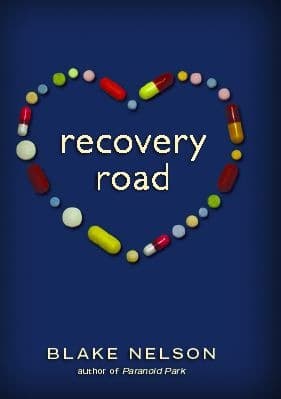
Blake Nelson (2011)
Genre
Psychology / Young Adult / Romance
Reading Time
6-7 hours
Key Themes
See below
Sign in to track this book
In teen rehab, Madeline finds forbidden love with Stewart, but their shared struggles threaten to consume them both as they pursue sobriety in the outside world.
Seventeen-year-old Madeline goes to Spring Meadows, a residential treatment center for teens, after breaking a mirror and her mother's car. Her parents, fed up with her drinking and rage, enroll her against her will. Madeline is defensive and resistant, clashing with staff and other residents. She struggles to accept her situation, believing she is different and better than the other 'addicts' and 'crazies.' Her first days are marked by resentment and a refusal to participate in therapy or group sessions, convinced she does not belong.
The Spring Meadows program includes supervised outings, like a weekly movie night at the local theater, attended by residents from other treatment centers. Madeline meets Stewart at one of these movie nights. He is from a nearby boys' rehab. Their first interaction is brief, but there is an immediate, unspoken connection. Stewart's quiet intensity and their shared rehab experience create a bond that draws Madeline in, offering a glimpse of something beyond her self-pity and anger. Their glances and stolen smiles become a highlight of her otherwise dull week.
Over subsequent movie nights, Madeline and Stewart exchange notes and brief conversations, building a secret relationship. They share stories of their lives before rehab, their struggles, and their hopes. Stewart, despite his own issues, offers Madeline understanding and validation she has not found elsewhere. Their connection becomes an anchor for Madeline, a secret source of strength and excitement in the restrictive environment of Spring Meadows. They find ways to communicate and support each other, falling deeper in love each week.
After months of therapy, group sessions, and self-reflection, Madeline makes progress. She learns to identify triggers for her anger and drinking and starts to develop coping mechanisms. Her relationship with Stewart, though complicated, also motivates her to work toward a healthier future. Madeline eventually reaches a point where the staff at Spring Meadows believes she is ready to return to the outside world. She graduates from the program, feeling relief, apprehension, and hope, especially for a future with Stewart.
Madeline returns home, determined to stay sober and use the lessons from Spring Meadows. She enrolls in community college, attends AA meetings, and tries to fix her relationships with her family. The transition is not easy. Temptations from her old life linger, and she struggles with the isolation of her new sober existence. Her old friends do not understand her, and making new, healthy connections is hard. She frequently calls Stewart, who is still in rehab, finding comfort and encouragement in their shared commitment to recovery, but the distance strains their growing relationship.
Weeks after Madeline's release, Stewart also completes his program and moves home. He and Madeline are thrilled to finally be together in the 'real world.' However, sobriety's challenges hit Stewart harder and faster than Madeline expected. He quickly returns to old habits, struggling with intense cravings and emotional instability. Madeline, still fragile in her own recovery, tries to support him, attending meetings with him and trying to keep him accountable. But Stewart's decline is clear, and his behavior becomes erratic and concerning, putting immense pressure on their relationship.
As Stewart's addiction worsens, their relationship changes. Madeline constantly worries about him, trying to prevent relapses and often covering for his behavior. His mood swings, dishonesty, and increasing substance use create a toxic environment that threatens to pull Madeline back into her own destructive patterns. She feels torn between her love for Stewart and her need to protect her hard-won sobriety. Arguments become frequent, and Madeline experiences frustration and despair, questioning if their love can survive the weight of addiction.
The situation reaches a critical point when Stewart's behavior becomes dangerous. He disappears for long periods, lies about where he is, and shows little regard for their commitment to sobriety. Madeline, pushed to her emotional limits, realizes she cannot save him if he does not want to save himself. She confronts Stewart, expressing her heartbreak and the impossibility of continuing their relationship if he does not recommit to recovery. The conversation is raw and painful, showing the gap addiction has created between them, forcing Madeline to make a difficult decision about her own well-being.
After the difficult confrontation, Madeline makes the painful decision to separate from Stewart. She realizes that his active addiction directly threatens her sobriety and mental health. This decision is hard, as she still loves him deeply, but her therapist and support group help her understand that she cannot sacrifice her own recovery for someone else's. She sets boundaries, refusing to enable him, and focuses intensely on her own program, attending more meetings and leaning on her support system. This shows her growth, as she can make such a difficult, self-preserving choice.
After her breakup with Stewart, Madeline experiences grief but also a renewed determination to live a healthy, sober life. She continues to attend AA meetings, builds a stronger support network, and focuses on her studies and personal growth. She learns to find joy in simple things and rebuilds her self-esteem, independent of any romantic relationship. While the pain of losing Stewart remains, Madeline emerges stronger and more resilient, understanding that recovery is a lifelong journey. The novel ends with Madeline facing the future with cautious optimism, committed to her own well-being, and open to what life may bring.
The Protagonist
Madeline transforms from a rebellious, self-destructive teen into a self-aware young woman who prioritizes her own recovery and well-being, even when faced with heartbreak.
The Love Interest / Supporting
Stewart's arc highlights the brutal reality of relapse in recovery, serving as a catalyst for Madeline's growth rather than achieving his own sustained sobriety.
The Supporting
She moves from a place of desperation and conflict to cautious hope and support as Madeline progresses in her recovery.
The Supporting
His arc is subtle, reflecting a gradual shift from exasperation to cautious optimism as Madeline makes progress.
The Supporting
She helps Madeline see the shared experience of rehab, contributing to Madeline's initial softening.
The Supporting
She guides Madeline through the difficult stages of recovery, witnessing her transformation from a defiant patient to a committed individual.
The Supporting
The group consistently offers a safe space and a framework for Madeline's ongoing sobriety, becoming a cornerstone of her new life.
The novel shows addiction as a complex disease needing constant attention. It illustrates the cravings, emotional changes, and destructive behaviors of active addiction, especially through Stewart's relapse. Recovery is a difficult, lifelong process, with setbacks and personal sacrifice, as seen in Madeline's struggles and her painful choice to prioritize her own well-being over her love for Stewart. The book removes romanticized ideas of overcoming addiction, emphasizing the daily effort and the ongoing threat of relapse. This appears in Madeline's initial resistance to rehab, believing she is not 'like them,' and then her slow realization of her own vulnerability.
“Recovery isn't just about not drinking; it's about changing everything, even the parts of you that feel like you.”
Madeline's journey is about self-discovery. Without her old coping mechanisms and forced to face her inner problems in rehab, she begins to understand the causes of her anger and addiction. She grapples with who she is without alcohol and rebellion, slowly building a new, healthier identity. This theme is clear in her internal thoughts and her talks with Dr. Miller, where she learns to express her feelings instead of acting out. Her growth culminates in her ability to make difficult, self-preserving choices, showing a mature understanding of her own needs and boundaries, separate from her romantic relationships.
“I didn't know who I was without the anger, without the drink. It was like I had to learn how to be a person all over again.”
The novel explores how addiction affects romantic relationships. Madeline and Stewart's love story, born in rehab, is initially a source of hope and mutual understanding. But as Stewart relapses, their relationship becomes a struggle where love clashes with addiction's realities. Madeline's love is tested by Stewart's dishonesty, mood swings, and self-destructive behavior, forcing her to confront the truth that love alone cannot cure addiction. The theme highlights the need to detach with love, showing that sometimes, the most loving act is to prioritize one's own recovery.
“I loved him, but I couldn't save him. And if I tried, I'd just drag myself down with him.”
Throughout Madeline's recovery, the story emphasizes the role of support systems. Spring Meadows provides the initial structured environment, therapists, and peer groups. After rehab, AA meetings and her connection with Stewart (at first) become important. When Stewart struggles, Madeline relies on her AA sponsor, her therapist, and her family, showing that recovery is rarely a solitary effort. The group's shared experience offers a sense of belonging and accountability that is important for staying sober, especially when personal relationships become strained.
“You can't do this alone, Madeline. Nobody can.”
The story subtly contrasts Madeline's and Stewart's paths in recovery.
While primarily told from Madeline's perspective, the narrative implicitly follows the parallel journeys of both Madeline and Stewart through their respective rehab programs and post-rehab lives. This device allows the author to highlight the differing outcomes and challenges of recovery, showing that even with shared experiences and love, individual paths can diverge dramatically. Stewart's relapse serves as a stark contrast to Madeline's more sustained (though still challenging) sobriety, emphasizing the highly personal and often unpredictable nature of addiction recovery.
The clandestine relationship between Madeline and Stewart.
The initial romance between Madeline and Stewart is a 'forbidden' one, conducted under the strict supervision of their rehab centers. This device creates immediate tension and excitement, drawing the reader into their secret world. It also serves a thematic purpose: the intensity of their early connection, forged in a place of vulnerability and shared struggle, initially feels like a lifeline. However, the 'forbidden' nature foreshadows the difficulties of sustaining such an intense, dependent relationship in the less structured 'real world,' especially when one partner struggles more profoundly with addiction.
The initial euphoria and false sense of security in early recovery.
This plot device, common in addiction narratives, refers to the period of intense optimism and well-being that some individuals experience in early sobriety. Madeline experiences elements of this after leaving Spring Meadows, feeling a renewed sense of hope and control. However, the novel subtly subverts this, particularly through Stewart's rapid decline, showing how this euphoria can be fragile and quickly give way to the harsh realities of maintaining sobriety. It highlights the deceptive nature of early recovery and the ongoing work required to stay clean.
“I was like a ghost, haunting my own life.”
— Maddy reflecting on her life before rehab.
“The hardest part of getting sober isn't the cravings; it's learning to live with yourself without the crutch.”
— Maddy realizing the deeper challenges of recovery.
“He saw something in me that I couldn't see in myself yet, and that made all the difference.”
— Maddy's feelings about meeting Stewart.
“You can't outrun your past, but you can choose how you face it.”
— A piece of advice Maddy receives in group therapy.
“Sometimes the bravest thing you can do is ask for help.”
— Maddy's internal struggle with admitting she needs support.
“Love isn't about fixing someone; it's about standing by them while they fix themselves.”
— Maddy's evolving understanding of her relationship with Stewart.
“Every day clean is a victory, no matter how small.”
— A mantra Maddy learns in rehab.
“The truth hurts, but it's the only thing that sets you free.”
— Maddy confronting her denial about her addiction.
“I used to think my addiction was my secret; now I know it was just a cage.”
— Maddy's realization about the nature of her addiction.
“Falling in love when you're broken is complicated, but maybe it's also the most real.”
— Maddy reflecting on her feelings for Stewart during her recovery.
“It's not about being perfect, it's about being honest.”
— A lesson Maddy learns about living a sober life.
“My choices got me here, and my choices will get me out.”
— Maddy taking ownership of her situation and her future.
“Sometimes the people who need help the most are the hardest to reach.”
— Maddy observing other residents in the rehab facility.
“The future wasn't a given anymore; it was something I had to build, piece by careful piece.”
— Maddy's newfound perspective on her life after recovery.
Ready to see how well you understood this book? Take our interactive quiz with 10 questions.

Rhonda Byrne
4.3

Menno Henselmans
4.3

Sylvia Plath
4.3

Elliot Aronson
4.3

Joseph Campbell
4.3

Erich Fromm
4.3
Irvin D. Yalom
4.2

Lucy Strange
4.2