BookBrief
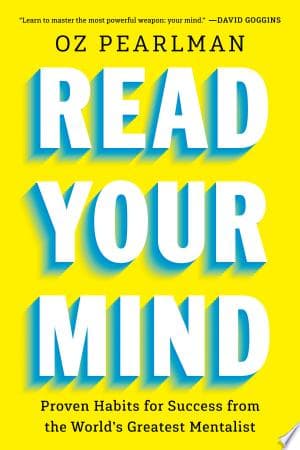
Read Your Mind cover
Archivist's Choice

Read Your Mind

Oz Pearlman (2025)

Genre

Self-Help

Reading Time

240 min

Key Themes

See below

Track Your Reading

Sign in to track this book

Learn to read people, build trust, and overcome self-doubt by using psychological principles from a world-class mentalist to improve your influence and reach your full potential.

Core Idea

Oz Pearlman's "Read Your Mind" explains the 'mentalist mindset' as a way to improve thinking and emotional skills for better daily life and interactions. The book argues that the main skills mentalists use—observing well, understanding how people connect, using memory, and being present—are things anyone can learn. These skills help people understand others better, overcome personal mental blocks, and handle social situations with more confidence and influence. It shows that what seems like magic is actually a practical use of human psychology and sharp observation.
Reading time
240 min
Difficulty
Medium
✓ Read this if...
You want to improve your observational skills, better understand human behavior and psychology, enhance your memory, and cultivate a stronger sense of presence and connection in your interactions.
✗ Skip this if...
You are looking for a book purely on magic tricks or quick-fix social hacks without a deeper dive into cognitive and emotional intelligence development.

Core idea

The central argument and framework that powers the entire book.

Oz Pearlman's "Read Your Mind" explains the 'mentalist mindset' as a way to improve thinking and emotional skills for better daily life and interactions. The book argues that the main skills mentalists use—observing well, understanding how people connect, using memory, and being present—are things anyone can learn. These skills help people understand others better, overcome personal mental blocks, and handle social situations with more confidence and influence. It shows that what seems like magic is actually a practical use of human psychology and sharp observation.

At a glance

Reading time

240 min

Difficulty

Medium

Read this if...

You want to improve your observational skills, better understand human behavior and psychology, enhance your memory, and cultivate a stronger sense of presence and connection in your interactions.

Skip this if...

You are looking for a book purely on magic tricks or quick-fix social hacks without a deeper dive into cognitive and emotional intelligence development.

Key Takeaways

1

The Mentalist Mindset

Adopt a mentalist's perspective to unlock hidden potential and influence.

Quote

You don't need to be a mentalist to create real, lasting change—you just need to think like one.

Pearlman says that the ideas behind mentalism—careful observation, understanding human psychology, and mastering perception—are useful not just for magic but for daily success. This way of thinking means being very aware of your own thoughts and feelings, and of others' subtle signals. It means moving from just receiving information to actively understanding and shaping reality. By thinking this way, people can find opportunities, predict problems, and handle social and work interactions well. It is less about 'tricks' and more about ...

Supporting evidence

The entire premise of the book, drawing on Pearlman's thirty years of experience captivating audiences, suggests that his 'craft' is built on these psychological insights, not just sleight of hand. His success in entertainment is evidence of the power of applied psychological understanding.

Apply this

Start by observing a conversation for 60 seconds, focusing only on the non-verbal cues of the person speaking. What do their hands, eyes, and posture tell you beyond their words? Practice 'active listening' by trying to predict the speaker's next point based on their emotional tone and body language.


mentalist-mindsetperception-masteryapplied-psychology
2

Mastering Observational Intelligence

Sharpen your ability to 'read' people by decoding subtle cues.

Quote

Success starts with understanding people.

Pearlman stresses that real influence comes from truly understanding others, which starts with careful observation. This is not about mystical mind-reading, but about noticing small expressions, body language, changes in voice, and behavior patterns. By purposely looking for these often-missed signals, you can learn a lot about a person's true feelings, intentions, and reasons. This skill allows for more understanding communication, more convincing arguments, and the ability to predict reactions, which helps shape outcomes better. It ...

Supporting evidence

Pearlman's own career as a mentalist relies heavily on his ability to 'read' audience members and adapt his performance based on their reactions and subtle cues, making his entire profession a testament to observational intelligence.

Apply this

When meeting someone new, consciously note three specific non-verbal cues within the first minute (e.g., eye contact consistency, hand gestures, posture). Later, reflect on what those cues might have communicated about their personality or current state.

observational-intelligencenon-verbal-cuesreading-people
3

The Psychology of Connection

Build authentic relationships by tapping into shared human drives.

Quote

If you want to close deals, build real relationships, and take control of any room, this book is your playbook.

Beyond just 'reading' people, Pearlman explores how to build real connections. This means understanding basic human desires for feeling valued, belonging, and being understood. By honestly trying to understand others' views, showing empathy, and finding common ground, you can move past superficial interactions and build trust. This is not about manipulating people, but about creating a situation where people feel seen, heard, and valued. When people feel a strong connection, they are more open to influence, working together, and share...

Supporting evidence

The book promises to teach how to 'connect more authentically with others,' implying a methodology rooted in psychological principles of rapport and trust-building, essential for a mentalist's audience engagement.

Apply this

In your next conversation, actively listen for a shared interest or value. Once identified, subtly pivot the conversation to explore that commonality, fostering a sense of mutual understanding and connection.

authentic-connectionrapport-buildingempathetic-listening
4

Overcoming Mental Blocks

Identify and dismantle self-doubt, procrastination, and fear.

Quote

Read Your Mind helps you turn your focus inward, teaching you how to identify and overcome the mental blocks that hold you back, building habits that stick.

Pearlman points out that influencing others starts with mastering yourself. The book offers ways to face and overcome common mental barriers like self-doubt, fear of rejection, and putting things off. These mental blocks often come from old thought patterns and limiting beliefs. By understanding where they come from and using mentalist-inspired methods—like changing negative thoughts, imagining success, and breaking down big tasks—people can get rid of these internal problems. This self-awareness and mental toughness are basic. Withou...

Supporting evidence

The book explicitly states it will teach readers to 'overcome rejection, procrastination, and self-doubt,' indicating practical methods are provided for these common internal struggles.

Apply this

When facing a daunting task, instead of focusing on the entire project, identify the absolute smallest first step you can take (e.g., 'open the document'). Commit to only that step. This small victory can break the cycle of procrastination.

self-doubt-overcomeprocrastination-strategiesmental-resilience
5

Sharpening Cognitive & Emotional Intelligence

Develop a dual mastery of logic and feeling for holistic understanding.

Quote

Sharpen your cognitive and emotional intelligence.

The book supports developing both thinking intelligence (IQ) and emotional intelligence (EQ). Thinking intelligence involves logical reasoning, solving problems, and memory. Emotional intelligence includes understanding and handling your own feelings, and noticing and influencing the feelings of others. Pearlman's approach suggests that truly mastering influence requires combining both seamlessly. A mentalist, for example, needs to remember complex routines (thinking) and also sense the audience's mood and adjust (emotional). By worki...

Supporting evidence

The explicit mention of sharpening both 'cognitive and emotional intelligence' as a key outcome of the book directly supports this takeaway, highlighting its importance in Pearlman's methodology.

Apply this

After an emotionally charged interaction, take five minutes to journal: What emotions did you feel? What emotions did you perceive in the other person? How did these emotions influence the conversation's direction? This builds EQ. For CQ, try memory exercises like recalling a list of 10 items after a single read.

cognitive-intelligenceemotional-intelligenceholistic-understanding
6

Influence as a Skill, Not a Trick

Learn persuasion as a systematic, ethical process.

Quote

Read Your Mind isn’t about tricks—it’s about tools.

Pearlman redefines influence not as a manipulative 'trick' but as a set of learnable 'tools' or methods based on ethical psychological ideas. This view simplifies persuasion, making it accessible and practical for anyone. It involves understanding what drives human behavior—reciprocity, social proof, authority, consistency, liking, and scarcity—and using them thoughtfully and responsibly. The aim is not to force an outcome, but to guide others toward mutually beneficial decisions by presenting information in a convincing and trustwort...

Supporting evidence

Mark Cuban's endorsement, stating the book 'isn't about tricks—it's about tools' and is a 'playbook' for closing deals and building relationships, directly supports the idea of influence as a strategic skill set.

Apply this

Before your next important conversation (e.g., a proposal, a request), identify one principle of persuasion (e.g., reciprocity by offering help first) and consciously integrate it into your approach.

ethical-persuasioninfluence-strategieshuman-behavior-levers
7

Memory as a Foundation for Confidence

Strengthen recall to boost self-assurance and presence.

Quote

You’ll build confidence, sharpen your memory...

A good memory is not just for academics; Pearlman highlights its important role in building confidence and improving presence in any interaction. Being able to recall names, faces, past talks, or key facts allows you to engage more deeply, avoid awkward silences, and show genuine attention. For a mentalist, memory is essential for complex routines and audience interaction. For everyday people, better memory means feeling more prepared, clear, and in control, which reduces worry and builds more self-assurance. Practical memory techniqu...

Supporting evidence

The book explicitly states that readers will 'sharpen your memory' as a means to 'build confidence,' directly linking the two concepts.

Apply this

Practice the 'Name-Repetition' technique: when introduced to someone, repeat their name immediately ('Nice to meet you, [Name]'), then try to use it naturally once or twice more during the conversation. Visualize their name written on their forehead.

memory-techniquesconfidence-buildingmental-acuity
8

The Power of Presence

Command attention and connect deeply by being fully 'in the room.'

Quote

If you want to... take control of any room, this book is your playbook.

Pearlman implicitly teaches that real influence and connection require being fully present. A mentalist cannot perform well if distracted; they must focus completely on their audience and the moment. This applies to everyone: being fully present means actively listening, observing, and engaging without internal distractions or doing multiple things at once. When you are truly focused, you show confidence, authenticity, and respect, which naturally draws others in and makes your words more powerful. It is about reducing mental clutter ...

Supporting evidence

The ability to 'take control of any room,' as mentioned by Cuban, inherently requires a strong sense of presence and focus, a skill central to a successful mentalist's performance.

Apply this

Before entering a meeting or an important conversation, take three deep breaths, consciously releasing any thoughts unrelated to the upcoming interaction. Make eye contact with everyone present within the first minute, acknowledging their presence.

mindful-presenceactive-engagementcommanding-attention

Critical analysis

Notable Quotes

The greatest magic trick you can ever perform is changing your own mind.

Early in the book, setting the stage for self-transformation.

Your thoughts are not just yours; they are the architects of your reality.

Discussing the power of internal monologue and its external impact.

Fear is the ultimate illusionist, creating obstacles where none truly exist.

Chapter on overcoming mental blocks and anxieties.

To truly read your mind, you must first learn to listen to its whispers, not just its shouts.

Emphasizing the importance of introspection and subtle self-awareness.

The only limits that truly bind you are the ones you place upon yourself.

A central theme on breaking self-imposed limitations.

Every setback is merely a setup for a greater comeback, if you choose to see it that way.

Reframing challenges and failures as opportunities.

Gratitude is the lens through which ordinary moments become extraordinary experiences.

Highlighting the transformative power of a grateful mindset.

Don't just observe your thoughts; interact with them. Question them. Challenge them.

Encouraging active engagement with one's internal dialogue.

The path to clarity is often paved with the debris of discarded assumptions.

Discussing the need to let go of preconceived notions to gain insight.

Your intuition is a compass, often pointing to truths your logical mind hasn't yet processed.

Exploring the role and value of trusting one's gut feelings.

The present moment is your most powerful stage. Don't let past regrets or future worries steal the show.

Advocating for living in the present and focusing energy there.

True mental agility isn't about having all the answers, but about being able to adapt to any question.

Defining mental strength as adaptability rather than rigid knowledge.

Self-compassion is not a weakness; it's the foundation upon which true resilience is built.

Emphasizing the importance of kindness to oneself.

The greatest 'aha!' moments often come when you're willing to look at things from an entirely new angle.

Encouraging a shift in perspective to unlock breakthroughs.

Quiz

Test Your Knowledge

Ready to see how well you understood this book? Take our interactive quiz with 10 questions.

10
Questions
~5
Minutes
?
Best Score

Key Questions (FAQ)

'Read Your Your Mind' by Oz Pearlman offers a modern twist on classic self-help, blending mentalism's intrigue with practical strategies for personal and professional success. It teaches you to master your mind, build confidence, improve relationships, and overcome mental blocks using simple, easy-to-learn techniques.

About the author