“It is a truth universally acknowledged, that a single man in possession of a good fortune, must be in want of a wife.”
— Opening line of the novel, setting the stage for the themes of marriage and social expectations.


Jane Austen (2018)
Genre
General
Reading Time
17 hr 15 min
Key Themes
See below
Sign in to track this book
Elizabeth Bennet and Mr. Darcy navigate love and misunderstanding, learning that first impressions can be wrong.
The Bennet family, living in rural Longbourn, consists of Mr. and Mrs. Bennet and their five unmarried daughters: Jane, Elizabeth, Mary, Kitty, and Lydia. Mrs. Bennet wants to marry off her daughters well. News arrives that the wealthy Mr. Bingley has rented Netherfield Park, a nearby estate. He brings his two sisters, Caroline and Louisa, and his aristocratic friend, Mr. Darcy. At the first public ball in Meryton, Bingley likes the beautiful and kind Jane Bennet, dancing with her often. Mr. Darcy, despite his wealth, seems distant and proud, refusing to dance with Elizabeth Bennet and saying something negative about her appearance, which she overhears. This first meeting makes Elizabeth strongly dislike Darcy.
Bingley's liking for Jane grows quickly, and she is invited to Netherfield. During her visit, she gets sick from a rainstorm, causing Elizabeth to walk three miles through muddy fields to care for her. While at Netherfield, Elizabeth has lively discussions with Mr. Darcy. He becomes interested in her wit and spirit, which he finds different from the other women there. Miss Bingley, however, is very jealous of Darcy's attention to Elizabeth and tries to put her down. Darcy's continued proud manner and Elizabeth's knowledge of his negative remarks strengthen her bad opinion of him, creating tension between them. Jane gets better, and the sisters return home.
Mr. Collins, a self-important clergyman and heir to the Bennet estate (due to a legal rule), arrives in Longbourn looking for a wife from among the Bennet daughters. He first considers Jane but quickly turns his attention to Elizabeth. Meanwhile, the local militia arrives in Meryton, bringing the charming Mr. Wickham. Elizabeth is immediately attracted to Wickham. He, learning of her acquaintance with Darcy, tells a made-up story about how Darcy unfairly deprived him of his inheritance and a church position, further increasing Elizabeth's dislike for Darcy. Elizabeth rejects Mr. Collins's awkward proposal, upsetting her mother, but her practical friend Charlotte Lucas accepts him.
Bingley and his group suddenly leave Netherfield for London, with no plans to return. Jane is heartbroken. Elizabeth believes Bingley's sisters, especially Caroline, and Mr. Darcy are responsible for separating the couple because of Jane's lower social status and lack of money. Jane later visits London hoping to see Bingley, but his sisters ignore her, and he does not try to contact her. This separation, combined with Wickham's story, confirms Elizabeth's belief in Darcy's arrogance and harmful interference, strengthening her resolve to dislike him. The Bennet family is disappointed by the loss of a good marriage prospect for Jane.
Elizabeth visits Charlotte and Mr. Collins at Hunsford Parsonage in Kent, near Rosings Park, the estate of Lady Catherine de Bourgh, Mr. Darcy's demanding aunt. Darcy often visits Rosings and so sees Elizabeth frequently. Despite their past hostility, Darcy finds himself deeply in love with Elizabeth and, to her surprise, proposes marriage. He does so in a rude way, emphasizing her inferior connections and his own feelings of lowering himself by overcoming his objections to her family. Elizabeth, angry at his proposal and still believing Wickham's story and Darcy's role in separating Jane and Bingley, strongly rejects him. She accuses him of pride, arrogance, and bad behavior, and tells him she hates his character.
The day after his rejected proposal, Darcy gives Elizabeth a long letter. In it, he explains why he separated Jane and Bingley: he truly thought Jane was not interested in Bingley and that her family's social misbehavior would harm Bingley's reputation. More importantly, he reveals Wickham's real character, showing that Wickham is a dishonest gambler who tried to elope with Darcy's fifteen-year-old sister, Georgiana, to get her money, after having lost his own inheritance. Darcy also clarifies that Wickham was offered a generous amount of money instead of the promised church position, which he refused. Elizabeth feels deep shame and embarrassment for her own biased judgment and realizes how wrong she was about both men, recognizing Darcy's honesty and Wickham's bad nature.
Months later, Elizabeth travels with her aunt and uncle, the Gardiners, through Derbyshire. They visit Pemberley, Darcy's grand estate, thinking he is away. Elizabeth is impressed by the beauty of the grounds and the good character of his housekeeper, who speaks highly of Darcy. To her surprise, Darcy suddenly appears. He acts politely and humbly, a contrast to his earlier pride. He introduces her to his younger sister, Georgiana, and treats the Gardiners with respect, further breaking down Elizabeth's earlier prejudices. This meeting at Pemberley significantly softens Elizabeth's feelings towards Darcy, as she sees his true character and kindness at his home.
While Elizabeth is still at Pemberley, she receives two urgent letters from Jane, revealing a family scandal: her youngest sister, Lydia, has run off with Mr. Wickham. This news is terrible, as an elopement without marriage would bring permanent disgrace upon the entire Bennet family, making it impossible for any of the other daughters to marry well. Elizabeth immediately returns home to Longbourn, feeling guilty and fearing for her family's reputation. The Bennet household is in chaos, with Mrs. Bennet distraught and Mr. Bennet desperately searching for Lydia and Wickham, expecting the worst.
Mr. Gardiner eventually finds Lydia and Wickham in London. Wickham agrees to marry Lydia only after Mr. Gardiner promises him a small annual income, supposedly paid by Mr. Bennet. However, the truth is later revealed: Mr. Darcy, learning of Lydia's elopement, secretly found Wickham and Lydia himself. To save the Bennet family's honor and spare Elizabeth pain, he paid off Wickham's large debts, bought him an army commission, and arranged their marriage, all at great personal cost and without seeking recognition. This discovery greatly increases Elizabeth's gratitude and admiration for Darcy, confirming his noble character.
Soon after Lydia's marriage, Mr. Bingley returns to Netherfield, with Mr. Darcy. This time, Bingley decides to pursue Jane. With Darcy's earlier interference gone and his own renewed conviction, Bingley proposes to Jane, who happily accepts. The Bennet family, especially Mrs. Bennet, is thrilled by this good match, which helps lessen the recent shame of Lydia's elopement. Jane's gentle nature and Bingley's kind disposition ensure their future happiness, and their engagement brings stability and joy back to Longbourn.
Rumors of Darcy's affection for Elizabeth reach Lady Catherine de Bourgh. She is horrified at the idea of her nephew marrying someone of lower social standing, especially since she wants him to marry her own daughter, Anne. She makes an unannounced, angry visit to Longbourn and confronts Elizabeth, demanding that she promise never to marry Darcy. Elizabeth, while respectful, firmly refuses to make such a promise, asserting her independence and right to choose. Lady Catherine leaves in a rage, unknowingly helping bring Darcy and Elizabeth together, as her report of Elizabeth's defiance makes Darcy hope that Elizabeth's feelings for him have changed.
After Lady Catherine's visit, Darcy returns to Longbourn. He explains that his aunt's report gave him hope that Elizabeth's feelings had softened. He proposes again, this time expressing his love and respect for her without any of his former pride. Elizabeth, having completely overcome her prejudice and now deeply in love with Darcy, joyfully accepts. She admits her initial misjudgment and thanks him for his help in Lydia's affair. Mr. Bennet is at first surprised by Elizabeth's change of heart but becomes convinced of Darcy's worth. The novel ends with the double wedding of Jane and Bingley, and Elizabeth and Darcy, setting up their happy future.
The Protagonist
Elizabeth evolves from a prejudiced young woman to one who acknowledges her own flaws and learns to judge character more accurately, leading her to a fulfilling marriage based on mutual respect and love.
The Protagonist/Love Interest
Darcy's character arc involves shedding his social pride and learning to express his true feelings and humility, earning Elizabeth's respect and love.
The Supporting
Jane's arc is less about internal change and more about enduring heartbreak and eventually finding happiness through her steadfast nature and Bingley's renewed commitment.
The Supporting
Bingley overcomes external influences to pursue his true affections, ultimately marrying Jane.
The Antagonist
Wickham's true villainous nature is gradually exposed, revealing him as a manipulative opportunist.
The Supporting
Mrs. Bennet remains largely static, consistently focused on advantageous marriages for her daughters.
The Supporting
Mr. Bennet remains largely consistent, providing a cynical counterpoint to the family's social ambitions, though he shows genuine concern during Lydia's crisis.
The Supporting
Lady Catherine remains static, a symbol of aristocratic pride and social snobbery, ultimately failing to impose her will.
The Supporting
Mr. Collins remains a static, comically absurd character throughout the novel.
The Supporting
Charlotte makes a pragmatic choice for security, finding a measure of contentment within her circumstances.
The central theme is in the title and shows how these two traits prevent understanding and cause misjudgment. Elizabeth's initial prejudice against Darcy, based on his arrogant manner and Wickham's lies, keeps her from seeing his real self. Darcy's pride in his social standing and family stops him from acting kindly and makes him initially look down on Elizabeth's family. Their journey is about overcoming these personal faults to see each other's true value, ending in love built on mutual respect. The novel suggests that both pride and prejudice block real connection and self-awareness.
“''I cannot tell what to say to it. I feel that I have been behaving in a most improper way, and I am ashamed of myself. But I must say, that I am not afraid of you, and I shall not be afraid of you, for all that you have said and done to me.''”
The novel carefully looks at the strict social structure of 19th-century England and the great importance of reputation, especially for women. The Bennet family's lower social standing and lack of money are constant problems, particularly for the younger daughters. Darcy's initial hesitation to associate with the Bennets and Lady Catherine's anger at his possible marriage to Elizabeth come directly from class prejudice. Lydia's elopement with Wickham threatens to ruin the whole family's reputation, showing how quickly social standing can be lost and the severe consequences for marriage prospects and future security. The novel ultimately criticizes the superficiality of class differences, valuing character over birthright.
“''It is a truth universally acknowledged, that a single man in possession of a good fortune, must be in want of a wife.''”
Austen explores different reasons for marriage: love, financial security, social advancement, and convenience. Mrs. Bennet shows the money-focused view, desperate to secure good marriages for her daughters. Charlotte Lucas marries Mr. Collins for security and a respectable home, acknowledging the practical needs for women without money. In contrast, Elizabeth and Jane look for partners they truly love and respect. The novel favors marriage based on mutual affection, understanding, and intellectual compatibility, as Elizabeth and Darcy, and Jane and Bingley, ultimately achieve. It contrasts this with the problems of marrying for superficial reasons or social pressure.
“''I am not to be intimidated into anything so horrid as marrying you.''”
The Bennet family interactions are important to the story. Mrs. Bennet's constant search for husbands for her daughters, while often embarrassing, comes from a sense of duty to secure their futures. Mr. Bennet's distance and failure to properly supervise his younger daughters, especially Lydia, causes the family's biggest crisis. The novel shows the responsibility of parents in guiding their children and how individual actions affect the entire family's reputation and prospects. Darcy's help in Lydia's elopement is a deep act of duty and loyalty, not just to Elizabeth but to the social order threatened by scandal.
“''The death of your father, or the marriage of your mother, might have been a relief to you, but no such thing ever happened to them.''”
Despite the restrictive social rules for women in the Regency era, Elizabeth Bennet stands out for her strong independence and refusal to conform. She rejects two marriage proposals, one from Mr. Collins for financial security and another from Mr. Darcy because of his pride, putting self-respect and real affection before social expectations. Her lively discussions, love of walking, and intellectual curiosity challenge traditional female roles. While limited in her choices, Elizabeth makes her own decisions within those limits, finally choosing a partner who respects her intelligence and individuality, rather than just her status or beauty.
“''I am determined to be a rich widow, and if I can, I will have a rich husband.''”
A narrative technique emphasizing the unreliability of initial judgments.
The novel's original title, 'First Impressions,' directly reflects this device. Austen masterfully uses initial encounters to establish strong, often misleading, perceptions of characters. Elizabeth's immediate dislike of Darcy due to his aloofness and her admiration for Wickham's charm are prime examples. The plot then unfolds by systematically dismantling these initial judgments, forcing both characters and readers to re-evaluate their understanding. This device highlights the theme of prejudice and the importance of looking beyond superficial appearances to discern true character, underscoring the novel's central message.
Letters used to reveal crucial plot details and character motivations.
Letters play a pivotal role in advancing the plot and revealing crucial information that would otherwise be inaccessible. Darcy's long letter to Elizabeth after his first proposal is the most significant example, serving as a turning point in the narrative. It clarifies his actions regarding Bingley and Jane, exposes Wickham's true villainy, and provides Elizabeth with the information needed to overcome her prejudice. Jane's letters about Lydia's elopement also drive the crisis. These letters allow characters to express their inner thoughts and provide exposition directly, often challenging previously held assumptions and changing the course of events.
The audience's knowledge of events or truths that characters in the story are unaware of.
Austen frequently employs dramatic irony, particularly concerning Elizabeth's misjudgments. The reader often perceives Darcy's underlying good character or Wickham's deceit before Elizabeth does, creating tension and anticipation. For instance, the reader might infer Darcy's growing admiration for Elizabeth even as she actively despises him. This device allows Austen to subtly critique societal superficiality and highlight the dangers of relying solely on outward appearances or gossip. It also enhances the reader's engagement, as they anticipate the moment when the characters will finally gain the same understanding.
Characters who highlight the qualities of other characters through contrast.
Foil characters are extensively used to emphasize the traits of the protagonists. Jane Bennet's gentle, unassuming nature serves as a foil to Elizabeth's spirited and independent personality, highlighting Elizabeth's wit and strength. Mr. Collins's obsequious and pompous character contrasts sharply with Darcy's genuine, albeit initially proud, integrity, making Darcy's eventual humility more striking. Similarly, the frivolous and imprudent Lydia and Kitty Bennet serve as foils to the more sensible Jane and Elizabeth, underscoring the dangers of unchecked youthful folly and lack of proper upbringing within the same family.
“It is a truth universally acknowledged, that a single man in possession of a good fortune, must be in want of a wife.”
— Opening line of the novel, setting the stage for the themes of marriage and social expectations.
“I cannot fix on the hour, or the spot, or the look, or the words, which laid the foundation. It is too long ago. I was in the middle before I knew that I had begun.”
— Elizabeth Bennet reflecting on when she began to fall in love with Mr. Darcy.
“Happiness in marriage is entirely a matter of chance.”
— Charlotte Lucas offering her pragmatic view on marriage to Elizabeth.
“Obstinate, headstrong girl! I am ashamed of you! Is this your gratitude for my condescension?”
— Lady Catherine de Bourgh's angry outburst at Elizabeth for refusing to promise not to marry Darcy.
“You must allow me to tell you how ardently I admire and love you.”
— Mr. Darcy's first proposal to Elizabeth, delivered with more pride than humility.
“To be fond of dancing was a certain step towards falling in love.”
— The narrator's observation on the social customs and romantic opportunities of the era.
“There is a stubbornness about me that never can bear to be frightened at the will of others. My courage always rises at every attempt to intimidate me.”
— Elizabeth Bennet expressing her independent spirit and resistance to intimidation.
“I could easily forgive his pride, if he had not mortified mine.”
— Elizabeth's initial reaction to Mr. Darcy after his first proposal, highlighting her own pride.
“A lady's imagination is very rapid; it jumps from admiration to love, from love to matrimony, in a moment.”
— Mr. Darcy making a generalization about women's romantic inclinations, which Elizabeth challenges.
“I have been a selfish being all my life, in practice, though not in principle.”
— Mr. Darcy's confession to Elizabeth about his past character flaws and his journey of self-awareness.
“The more I see of the world, the more am I dissatisfied with it; and every day confirms my belief of the inconsistency of all human characters, and of the little dependence that can be placed on the appearance of merit or sense.”
— Elizabeth expressing her disillusionment with society and human nature after various disappointments.
“Vanity and pride are different things, though the words are often used synonymously. A person may be proud without being vain. Pride relates more to our opinion of ourselves, vanity to what we would have others think of us.”
— Mary Bennet's philosophical observation on the distinction between pride and vanity.
“We are all fools in love.”
— Mr. Bennet's resigned remark to Elizabeth, acknowledging the irrationality of love, particularly concerning Lydia's elopement.
“She is tolerable; but not handsome enough to tempt me; and I am in no humour at present to give consequence to young ladies who are slighted by other men.”
— Mr. Darcy's initial dismissive judgment of Elizabeth at the Meryton ball, overheard by her.
Ready to see how well you understood this book? Take our interactive quiz with 10 questions.
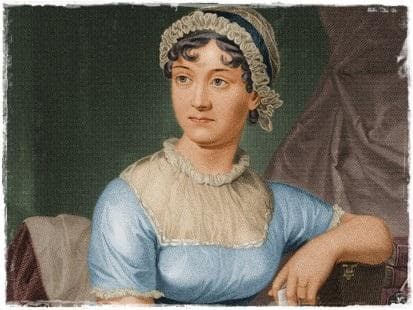
Jane Austen was an English novelist known primarily for her six major novels, which implicitly interpret, critique, and comment upon the British landed gentry at the end of the 18th century. Austen's plots often explore the dependence of women on marriage for the pursuit of favourable social standing and economic security. Her works are an implicit critique of the novels of sensibility of the second half of the 18th century and are part of the transition to 19th-century literary realism. Her deft use of social commentary, realism and biting irony have earned her acclaim among critics and scholars.