“But it's the truth even if it didn't happen.”
— Chief Bromden reflecting on the nature of reality in the asylum.


Ken Kesey (2002)
Genre
Psychology
Reading Time
313 min
Key Themes
See below
Sign in to track this book
In a mind-bending asylum, the boisterous Randle McMurphy wages a defiant war against the tyrannical Nurse Ratched, inspiring his fellow inmates, including the seemingly catatonic Chief Bromden, to reclaim their lost humanity.
“But it's the truth even if it didn't happen.”
— Chief Bromden reflecting on the nature of reality in the asylum.
“He's not just talking, he's preaching.”
— Chief Bromden describing McMurphy's charismatic influence on the patients.
“You're not a goddamn loony now. Don't act like one.”
— McMurphy challenging the patients to assert their humanity.
“The Combine. It's a huge organization that aims to adjust the Outside as well as she has the Inside.”
— Chief Bromden explaining his paranoid view of societal control.
“I'm a goddamn marvel of modern science.”
— McMurphy boasting about his vitality and defiance.
“She's able to set the wall clock at whatever speed she wants by just turning one of those dials in the steel door.”
— Chief Bromden describing Nurse Ratched's manipulative control over time.
“He's not just a patient, he's a man.”
— A patient recognizing McMurphy's humanity amidst institutionalization.
“You have to laugh at the things that hurt you just to keep yourself in balance, just to keep the world from running you plumb crazy.”
— McMurphy advising on coping with pain and oppression.
“The fog comes in and hides the world.”
— Chief Bromden describing his dissociative episodes.
“She's a bitch and a buzzard and a ball-cutter.”
— McMurphy's blunt criticism of Nurse Ratched.
“I tried and I lost, but I tried.”
— McMurphy reflecting on his failed rebellion.
“He's not a machine, he's a man.”
— Chief Bromden asserting McMurphy's humanity against dehumanization.
“The ward is a factory for the Combine. It's for fixing up mistakes made in the neighborhoods and in the schools and in the churches.”
— Chief Bromden's view of the asylum as a tool of societal control.
“You're not a rabbit, you're a man.”
— McMurphy encouraging a patient to stand up for himself.
Ready to see how well you understood this book? Take our interactive quiz with 10 questions.
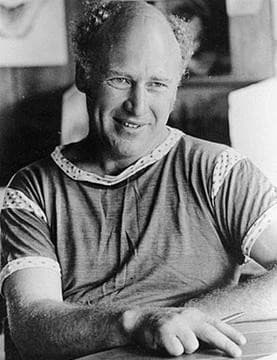
Ken Elton Kesey was an American novelist, essayist and countercultural figure. He considered himself a link between the Beat Generation of the 1950s and the hippies of the 1960s.

Rhonda Byrne
4.3

Menno Henselmans
4.3

Sylvia Plath
4.3
Elliot Aronson
4.3
Joseph Campbell
4.3
Erich Fromm
4.3
Irvin D. Yalom
4.2

Lucy Strange
4.2