BookBrief
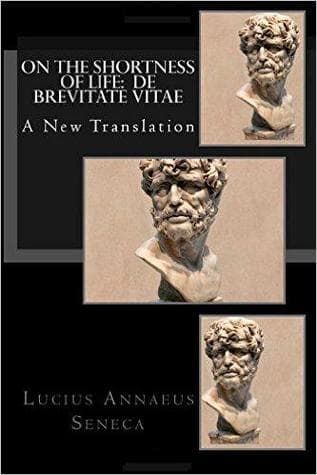
On the Shortness of Life cover
Archivist's Choice

On the Shortness of Life

Seneca (2005)

Genre

Psychology / History / Spirituality / Philosophy / Self-Help

Reading Time

90 min

Key Themes

See below

Track Your Reading

Sign in to track this book

Seneca's Stoic wisdom urges us to live in the present, explaining that life is not short, but often wasted through distraction.

Core Idea

Seneca argues that life is not inherently short; rather, we make it so through our own neglect, distraction, and misguided goals. He believes most people waste their time chasing unimportant ambitions, gathering wealth, or living for the future, instead of truly living now and engaging in meaningful, thoughtful activities. Real leisure, found in philosophical study and self-mastery, is the only way to a long and satisfying life. It lets one move past everyday existence and connect with lasting truths. Life seems short because we fail to control our time, letting it be taken by others' demands or our own unexamined desires.
Reading time
90 min
Difficulty
Medium
✓ Read this if...
You feel overwhelmed by modern life's demands, constantly busy but unfulfilled, or anxious about time passing too quickly, and are open to ancient wisdom on living a more intentional and philosophical life.
✗ Skip this if...
You are looking for a practical, step-by-step guide to time management, prefer contemporary self-help language over classical philosophical discourse, or are not interested in introspective reflections on mortality and purpose.

Core idea

The central argument and framework that powers the entire book.

Seneca argues that life is not inherently short; rather, we make it so through our own neglect, distraction, and misguided goals. He believes most people waste their time chasing unimportant ambitions, gathering wealth, or living for the future, instead of truly living now and engaging in meaningful, thoughtful activities. Real leisure, found in philosophical study and self-mastery, is the only way to a long and satisfying life. It lets one move past everyday existence and connect with lasting truths. Life seems short because we fail to control our time, letting it be taken by others' demands or our own unexamined desires.

At a glance

Reading time

90 min

Difficulty

Medium

Read this if...

You feel overwhelmed by modern life's demands, constantly busy but unfulfilled, or anxious about time passing too quickly, and are open to ancient wisdom on living a more intentional and philosophical life.

Skip this if...

You are looking for a practical, step-by-step guide to time management, prefer contemporary self-help language over classical philosophical discourse, or are not interested in introspective reflections on mortality and purpose.

Key Takeaways

1

Life's Apparent Brevity is a Misconception

We don't have a short life; we waste a lot of it.

Quote

It is not that we have a short time to live, but that we waste a lot of it. Life is long enough, and a sufficiently generous amount has been given to us for the accomplishment of the very greatest things if the whole of it is well invested.

Seneca questions the common complaint that life is short, arguing that our lives are actually long enough. Life seems brief because we use our time poorly. We waste hours, days, and years on unimportant activities, constant worries, and seeking approval from others, instead of spending time on meaningful things and self-improvement. He separates just existing from truly living, suggesting many people die without ever having truly lived, their time taken up by duties and distractions instead of actively engaging with life's opportuniti...

Supporting evidence

Seneca frequently uses the metaphor of a traveler who complains about the shortness of a journey, when in reality, they have spent most of their time loitering or going in circles. He also points to the common practice of people meticulously managing their property and finances, yet being utterly careless with their time, which is the most valuable and irreplaceable asset.

Apply this

Conduct a 'time audit' for a week. Track where your hours go, categorizing them into 'essential,' 'meaningful,' and 'wasteful.' Consciously reallocate time from 'wasteful' activities (mindless scrolling, excessive gossip, unnecessary errands) to 'meaningful' pursuits (learning, contemplation, deep work, genuine connection).
time-managementstoicismmindfulness
2

The Tyranny of Future Living

Many people postpone living, forever waiting for a 'better' future that never arrives.

Quote

The greatest impediment to living is expectancy, which hangs upon tomorrow and loses today. You are arranging what lies in fortune's control, and abandoning what lies in yours.

Seneca notes how people often put off happiness until an imagined future. We constantly say, 'I'll be happy when...' or 'I'll start living once...' — waiting for retirement, a promotion, a vacation, or some other event. This constant delay keeps us from the present moment, which is the only time we truly have. By living in anticipation, we give up control over our lives, placing our well-being in the hands of uncertain future events and outside situations. This way of thinking not only takes away present joy but often leads to regret ...

Supporting evidence

Seneca describes the 'busy men' who are always planning for leisure, but never actually experience it. They accumulate wealth for a future they may never see, or work tirelessly for a retirement that is constantly pushed further away. He also mentions those who live for their 'sixtieth year' or some other arbitrary milestone, only to find themselves exhausted and unfulfilled when they reach it.

Apply this

Identify one significant goal or pleasure you've been postponing. Find a way to incorporate a smaller, immediate version of it into your current life. For example, if you're waiting for a big trip, plan a local 'micro-adventure' this weekend. Practice savoring small moments daily, such as a meal, a walk, or a conversation, rather than rushing through them.

procrastinationpresent-momentgratification-delay
3

True Leisure vs. 'Busy' Distraction

Many who appear busy are merely distracted, not truly engaged in meaningful work or rest.

Quote

You must not think that a man has lived long because he has white hairs and wrinkles: he has not lived long, but has existed long.

Seneca examines the false idea of busyness, distinguishing between real involvement and simply being frantic. He says many people who claim to be 'busy' are actually just caught in a rush of unimportant things, social duties, or unproductive tasks. This is not real work, nor is it real leisure, which involves purposeful rest, thought, and self-improvement. Their lives are broken up, driven by outside demands rather than inner purpose. Such people are always tired but achieve little of lasting value; their days are full of noise and mo...

Supporting evidence

Seneca vividly describes the 'busy men' who attend endless meetings, manage other people's affairs, engage in pointless legal disputes, or pursue fleeting pleasures like gambling and banqueting. He points out that even those who seem to be enjoying themselves are often just escaping boredom or avoiding deeper introspection.

Apply this

Before committing to a new activity or obligation, ask yourself: 'Does this align with my core values and long-term goals, or is it merely a distraction?' Schedule dedicated 'uninterrupted deep work' blocks and 'contemplation/leisure' blocks, protecting them from interruptions and distinguishing them from mere entertainment.

deep-workproductivitydistraction
4

The Wisdom of Philosophic Retreat

Engaging with the wisdom of the past grants us access to an eternal, rich life.

Quote

Of all people, only those who are at leisure have time for philosophy, only they are truly alive. For they are not only guarding their own lifetime well, but they are annexing every age to their own.

Seneca supports the value of philosophical study and thought, seeing it not as an academic pursuit but as a way to a richer, longer life. By engaging with past thinkers, we essentially 'live' through their experiences and ideas, gaining wisdom without going through their struggles. This intellectual and spiritual 'annexation of every age' extends our own lifespan beyond its biological limits. It frees us from our own limited view and allows us to learn from humanity's shared wisdom, making us contemporaries with Socrates and Zeno. Thi...

Supporting evidence

Seneca encourages readers to make friends with Plato, Zeno, Epicurus, and other great philosophers. He states that these figures are always available, always willing to impart wisdom, and never demand anything in return. He contrasts this with the fleeting and often harmful relationships with living 'friends' who drain one's time and energy.

Apply this

Dedicate regular, uninterrupted time (e.g., 30 minutes daily) to reading and reflecting on classic philosophical texts or other profound works. Keep a journal to record insights and how they apply to your life. View this as an investment in your 'eternal' self, not just a hobby.

philosophycontemplationwisdomlearning
5

The Peril of Living for Others

Many people lose their own lives by constantly attending to the demands and opinions of others.

Quote

They lose their life in gaining it. They spend all their energy on making preparations for life, and they waste their whole life in making preparations.

Much of our valuable time is given over to the expectations, demands, and judgments of others. Seneca criticizes those who live not for themselves, but for public opinion, social duties, or the whims of powerful patrons. These people are always at the call of outside forces; their schedules are set by others' needs, and their peace of mind is disturbed by others' criticisms. They become tools in others' lives, never truly owning their own. This constant focus on the outside prevents self-reflection and true self-possession, leading to...

Supporting evidence

Seneca describes the sycophants who wait endlessly in the antechambers of powerful men, the lawyers who are consumed by others' disputes, and the socialites who are slaves to endless banquets and ceremonies. He argues that these people are not 'living' but merely performing roles assigned by society.

Apply this

Identify one area where you habitually prioritize others' demands over your own well-being or purpose. Practice setting a boundary or saying 'no' to a non-essential request. Reflect on what truly matters to you, independent of external validation, and allocate time accordingly.

people-pleasingboundariesauthenticityself-ownership
6

The Irreplaceability of Time

Time is our most valuable asset, unique in its irretrievability and constant depletion.

Quote

No one will bring back the years; no one will restore you to yourself. Life will follow the path it began, and will neither reverse nor check its course.

Unlike possessions, money, or even health (to some extent), time cannot be replaced. Every moment spent is gone forever, never to be recovered. Seneca highlights this basic truth to show how urgent it is to live consciously. While we might be careful with our money, we are often careless with our time, giving it away freely or letting it slip away without a second thought. This shortsightedness is a big mistake, as time is the very essence of life itself. To waste time is to waste life, and there are no second chances or refunds for l...

Supporting evidence

Seneca contrasts people's careful guarding of their property and money with their utter disregard for time. He notes that if someone tried to take money, people would fight, but if someone takes their time (by delaying them, gossiping, etc.), they passively allow it. He uses the analogy of a stream that flows onward, never returning.

Apply this

View your time as a finite, precious currency. Before agreeing to something or engaging in an activity, mentally 'cost-benefit' it in terms of your time. Regularly ask, 'Is this how I want to spend this irreplaceable moment of my life?'

scarcity-mindsetmortalitypresent-value
7

The Wise Live in the Present

Only those who are fully present can truly experience and appreciate life's fullness.

Quote

The life of a wise man is ample in space; he is not hemmed in by the narrow limits of human existence.

For Seneca, a wise person lives fully in the present, neither stuck in past regrets nor worried about future uncertainties. This does not mean ignoring the past or planning for the future, but rather centering oneself in the 'now.' By being present, the wise can get the most value and meaning from each moment, experiencing life with greater depth and awareness. This conscious engagement expands their personal experience of time, making life feel richer and more expansive. They control their own minds, not slaves to outside situations ...

Supporting evidence

Seneca praises those who 'recall the past without regret, manage the present with reason, and look forward to the future without fear.' He describes how those who live in the present have a sense of calm and self-possession that the 'busy men' lack.

Apply this

Practice mindfulness exercises daily, such as focused breathing or observing your surroundings without judgment. When engaging in an activity, try to fully immerse yourself in it, noticing sensory details and internal sensations, rather than letting your mind wander to past or future concerns.

mindfulnesspresent-moment-awarenessstoic-wisdom
8

The Futility of Ambition and Accumulation

Excessive pursuit of wealth and status often leads to a shorter, more anxious life.

Quote

Those who have given themselves to wine or lust or other passions have lived for pleasure, but this is a false and fleeting pleasure, for it soon passes away.

Seneca examines the common human drive for ambition, wealth, and status, arguing that these pursuits, when taken too far, actually lessen life rather than improve it. The climb to power or the gathering of riches often costs a great deal in time, peace of mind, and personal freedom. Such people become slaves to their possessions or their position, constantly fighting rivals, managing worries, and never truly feeling safe or satisfied. Their lives are marked by endless striving and a fear of loss, leaving little room for real living or...

Supporting evidence

Seneca provides numerous examples of powerful figures, like emperors and generals, who despite their immense power, lived lives filled with anxiety, fear, and a constant sense of being 'busy.' He highlights their lack of true leisure and their inability to enjoy their own success, always striving for more.

Apply this

Reflect on your own ambitions. Are they truly serving your well-being, or are they driving you into a cycle of endless striving and anxiety? Identify one area where you can intentionally reduce your pursuit of external validation or material gain, and redirect that energy towards inner development or meaningful relationships.

materialismambitioncontentmentminimalism
9

Mastery Over Desire and Emotion

Achieving tranquility requires conquering irrational desires and emotional turbulence.

Quote

It is not the man who has too little, but the man who craves more, that is poor.

A large part of our wasted time and mental energy is used up by uncontrolled desires, fears, and other strong emotions. Seneca, a Stoic founder, supports rational control over these inner states. By understanding that outside events are mostly beyond our control, but our reactions to them are not, we can build an inner strength of calm. This means recognizing that pleasure is fleeting, excessive fear is illogical, and envy and anger are destructive. Mastering one's inner world frees up a huge amount of mental space and time, allowing ...

Supporting evidence

Seneca frequently discusses the 'madness' of anger, the 'slavery' of lust, and the 'poverty' of insatiable greed. He offers examples of individuals whose lives were ruined by uncontrolled passions, contrasting them with the calm demeanor of the wise.

Apply this

Practice emotional regulation by observing strong emotions without immediate reaction. Use techniques like 'cognitive defusion' (e.g., 'I am having the thought that I am angry' instead of 'I am angry'). Identify one recurring irrational desire or fear and consciously work to detach from its hold through reasoned reflection.

emotional-intelligenceself-controlreasondetachment
10

The Philosophical Life as the Only True Life

Only through conscious self-reflection and wisdom can one truly live, rather than merely exist.

Quote

Only those who devote themselves to wisdom are at leisure, only they are truly alive.

Ultimately, Seneca says that the only way to truly live a long and fulfilling life, no matter its biological length, is to follow the philosophical path. This is not just about academic study, but a way of being – a commitment to self-knowledge, virtue, reason, and purposeful thought. Those who live without this conscious engagement are simply 'existing,' their lives passing by unnoticed and unexamined. The philosophical life is a deliberate choice, where time is invested in understanding oneself and the world, gaining a sense of cont...

Supporting evidence

Seneca consistently returns to the idea that philosophy is the 'guide' and 'guardian' of life. He states that 'without philosophy, no one can live without fear or worry,' and that it is the only path to true freedom and self-possession.

Apply this

Integrate daily philosophical reflection into your routine, perhaps through journaling, meditation on Stoic principles, or engaging in thoughtful discussions. Actively seek to align your actions with your values, making conscious choices about how you spend your time and energy, viewing it as a continuous practice of living wisely.

virtueself-actualizationexistentialismpurpose

Critical analysis

Notable Quotes

It is not that we have a short time to live, but that we waste a lot of it.

Opening argument against the common complaint about life's brevity.

Life is long enough, and a sufficiently generous amount has been given to us for the highest achievements if it were all well invested.

Emphasizing the potential of life if lived purposefully.

So it is: we are not given a short life but we make it short, and we are not ill-supplied but wasteful of it.

Reiterating the theme of self-imposed brevity of life.

The greatest obstacle to living is anticipation, which hangs on tomorrow and loses today.

Critiquing the habit of postponing living for the future.

No one will bring back the years; no one will restore you to yourself.

A stark reminder of the irreversible passage of time.

They lose the day in expectation of the night, and the night in fear of the dawn.

Describing those who are never truly present, always looking ahead or dreading what's next.

You will find no one who is willing to distribute his money, but to how many he distributes his life! For men are careful in guarding their estates, but as soon as it comes to time, they are most wasteful of the one thing in which it is right to be stingy.

Highlighting the paradox of valuing money over time.

To be everywhere is to be nowhere.

Advising against scattering one's focus and energies.

It is a narrow life we lead; in fact, it is not a life at all, but a journey.

Reflecting on the superficiality of a life lived without depth.

Only those are at leisure who devote their time to wisdom, only they live life.

Defining true leisure as the pursuit of knowledge and understanding.

How many men are plundered by their own passions, or by the crimes of others?

Observing the various ways people's lives are consumed by external and internal forces.

For what is more foolish than to be afraid of the future and be unhappy in the present?

Critiquing the irrationality of letting future fears ruin the present.

The life of the philosopher, therefore, is spacious; he is not confined by the same boundaries as others.

Describing the expansive nature of a life dedicated to philosophy and contemplation.

We are always getting ready to live, but never living.

A poignant observation on perpetual procrastination and delaying true living.

It is not the man who has too little, but the man who craves more, that is poor.

A redefinition of poverty, focusing on desire rather than material possessions.

Quiz

Test Your Knowledge

Ready to see how well you understood this book? Take our interactive quiz with 10 questions.

10
Questions
~5
Minutes
?
Best Score

Key Questions (FAQ)

Seneca argues that life is not inherently short, but rather we make it seem so by squandering our time on trivial pursuits, anxieties, and external distractions. He emphasizes the importance of living in the present and dedicating oneself to meaningful endeavors.

About the author