“I don't know how to be a person without my rituals.”
— Bea reflects on her identity tied to OCD compulsions.

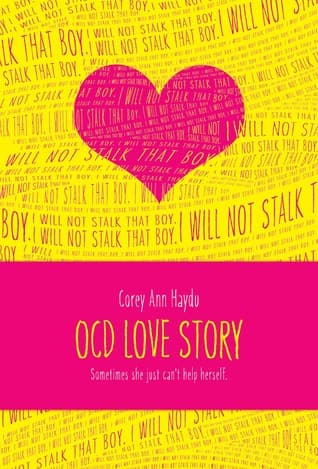
Corey Ann Haydu (2013)
Genre
Psychology / Young Adult / Romance
Reading Time
360 min
Key Themes
See below
Sign in to track this book
A teen with OCD struggles with her illness, an unexpected romance with a boy who understands her, and a secret obsession with another.
Bea, a high school student, lives with severe Obsessive-Compulsive Disorder (OCD). This shows in complex rituals, counting, and a constant need for order. Her life is a strict routine, often making it hard for her to function 'normally.' She has a long-standing, intense obsession with a boy named Gabe, whom she secretly watches, follows, and writes about in a journal. She believes they are meant to be together, though they have never spoken. Her best friend, Liz, often tries to get Bea to do more typical teenage things, but Bea's compulsions and her focus on Gabe take over. Bea's thoughts show a constant fight against her own mind, trying to control the urges and intrusive thoughts that direct her every move.
At a coffee shop, a place Bea often goes as part of her routine and to watch Gabe, she meets Beck. Beck, a kind and observant boy, quickly sees Bea's struggles, revealing he also has OCD. This shared experience creates an instant, strong connection for Bea, as Beck understands her in a way no one else, not even Liz, ever has. Their first talks are full of relief and friendship, as they discuss their specific compulsions, fears, and the isolating nature of their disorder. Beck's presence starts to give Bea comfort and a way to feel less alone in her struggles.
Bea and Beck spend more time together, their bond growing through shared experiences and understanding. They tell each other about their specific, often debilitating, OCD symptoms—Bea's counting, symmetry, and intrusive thoughts, and Beck's contamination fears, checking rituals, and need for order. Beck introduces Bea to a support group for teens with OCD, a place where Bea first feels overwhelmed but also a sense of belonging. Their talks mix everyday teenage life with the challenges of living with OCD. They find comfort in each other, and a romantic relationship slowly develops, marked by shared vulnerability and quiet acceptance.
Despite her growing connection with Beck, Bea's obsession with Gabe continues. She still watches him, collects 'data,' and fantasizes about a relationship with him, all while feeling guilty toward Beck. Bea starts to feel torn, caught between the comfort Beck offers and the intense, almost involuntary pull of her obsession with Gabe. She keeps her Gabe journal a secret from Beck, fearing his reaction and the potential end of their relationship. This internal conflict creates emotional trouble for Bea, as she tries to balance her growing love for Beck with the strong, addictive nature of her long-held obsession, which she knows is unhealthy but struggles to control.
As Bea's emotional conflict grows, so do her OCD symptoms. Her rituals become more demanding, her intrusive thoughts more widespread, and her ability to function outside her compulsions gets worse. She struggles to keep her normal appearance, especially with Liz, who notices Bea's increased distress. Bea also starts therapy, a difficult and often frustrating process where she is told to face her fears and resist her compulsions. The pressure of therapy, along with her secret obsession and guilt toward Beck, pushes Bea to her limit, making it harder for her to tell the difference between her real feelings and her compulsive behaviors.
During a very intense moment, Beck finds Bea's hidden journal, full of her detailed observations and fantasies about Gabe. The discovery breaks Beck, who feels betrayed and hurt by Bea's secret obsession. A painful argument happens, where Bea tries to explain the compulsive nature of her fixation, but Beck sees it as a deliberate choice and a lack of true affection for him. The trust between them breaks, and their relationship ends because of Bea's hidden life. This event devastates Bea, making her face the destructive impact of her untreated OCD and the pain it causes those she cares about.
After the breakup with Beck, Bea enters a severe emotional and psychological crisis. Her OCD gets out of control, making it almost impossible for her to leave her house, go to school, or even do basic daily tasks. She isolates herself, overwhelmed by guilt, shame, and the constant demands of her compulsions. During this vulnerable time, Liz becomes a strong support. Though she does not fully understand Bea's disorder, Liz offers unconditional friendship, patiently sitting with Bea, helping her through her rituals, and encouraging her to get help. Liz's steady presence becomes a lifeline for Bea, stopping her from giving in completely to her illness.
Driven by a need for closure and a desire to move forward, Bea finally confronts Gabe. The meeting is awkward, as Gabe is clearly unaware of Bea's deep obsession, showing the difference between her fantasy and reality. This confrontation, though painful, gives Bea a moment of clarity and a reason for change. She recommits to therapy, understanding that her OCD is a serious illness needing professional help. Bea starts to work harder with her therapist, facing her fears and practicing Exposure and Response Prevention (ERP) techniques, though the process is hard and has setbacks.
Bea's recovery is not a straight line; it is a slow, challenging process with small wins and frustrating relapses. She continues therapy, slowly learning to manage her compulsions and challenge her intrusive thoughts. She starts to get back into the world, going to school more often and spending time with Liz. Bea also thinks about her past actions and tries to apologize to those she hurt, especially Beck. While the immediate pain of their breakup remains, she starts to understand that healing her own mind is the most important step toward real connection. Her journey shows that recovery from OCD is ongoing and takes courage and persistence.
By the end of the book, Bea has made much progress in managing her OCD. She still has intrusive thoughts and urges, but she has developed ways to cope and understands her illness better. She learns to accept that her OCD is a part of her, but it does not completely define her. While her relationship with Beck is not fully restored, there is a sense of mutual respect and understanding that replaces the initial heartbreak. Bea looks to the future with cautious hope, knowing her journey continues, but with new self-awareness, resilience, and the support of her friends and family. She embraces the chance for a fuller life, despite her challenges.
The Protagonist
Bea moves from being completely consumed by her OCD and obsessions to a path of recovery, self-acceptance, and learning to manage her illness with professional help.
The Supporting/Love Interest
Beck serves as a catalyst for Bea's self-discovery and recovery, while also experiencing his own challenges in navigating a relationship with someone whose OCD manifests differently.
The Supporting
Liz's arc demonstrates her growth in understanding and supporting a friend with a mental illness, moving from frustration to deep empathy.
The Mentioned/Object of Obsession
Gabe remains static, serving primarily as a catalyst for Bea's internal conflict and eventual confrontation with her illness.
The Supporting
The therapist's arc is largely unseen, but their consistent presence guides Bea's journey towards self-awareness and recovery.
The Supporting
Her arc involves a gradual increase in understanding and acceptance of Bea's condition, learning to support her more effectively.
The Supporting
His arc is minimal, reflecting a steady, if somewhat distant, presence in Bea's life.
The Supporting
Melanie's arc is static, serving as a supporting figure in Bea's journey of understanding and acceptance.
The novel explores Bea's struggle to find an identity separate from her OCD. She first sees her disorder as her main characteristic, leading to isolation and a skewed self-image. Her journey involves accepting her condition as part of her, but not all of who she is. This theme is clear as Bea deals with the shame of her rituals and obsessions, especially her secret journal about Gabe, and eventually moves toward understanding that she can live a meaningful life despite her challenges. Her self-acceptance is hard-won, requiring her to face her deepest fears.
“Maybe I'm just a pile of compulsions and obsessions and there's nothing else left.”
A main theme is the unclear line between real love and compulsive obsession, especially through Bea's relationships with Gabe and Beck. Bea's focus on Gabe is a clear sign of her OCD, driven by an uncontrollable urge rather than true connection. In contrast, her feelings for Beck grow from shared understanding and vulnerability, showing a healthier attachment. The story shows the pain and damage that can happen when obsession is mistaken for love, and the hard process of telling the difference between real emotion and the demands of a mental illness. This theme is shown when Beck finds Bea's journal.
“I loved him with an urgency that felt like a secret language, one only I understood. But maybe it wasn't love at all. Maybe it was just the biggest, most beautiful compulsion I'd ever had.”
The novel shows the deep isolation people with severe mental illness feel. Bea's OCD makes her feel strange and misunderstood, leading her to hide her rituals and obsessions from almost everyone. This isolation contrasts with the connection she finds with Beck, who shares her disorder and offers understanding. The support group further shows how shared experience can create belonging and reduce the burden of secrecy, helping Bea feel less alone.
“I'd always felt like a planet orbiting a different sun, but with Beck, it felt like our orbits finally aligned.”
"OCD Love Story" is a story about the hard and uneven path to recovery from mental illness. Bea's journey is shown with honesty, displaying the setbacks, frustrations, and courage needed to face her disorder. Her commitment to therapy, especially Exposure and Response Prevention, shows the resilience needed to challenge deep-seated compulsions and intrusive thoughts. The theme emphasizes that recovery is an ongoing process, not a cure, and that learning to manage a chronic condition takes continuous effort, self-compassion, and support.
“Recovery wasn't a finish line. It was a winding path, and I was just learning how to walk it.”
The book shows how a severe mental illness like OCD can strain and change relationships. Bea's friendships, especially with Liz, are tested by her secretive nature and unpredictable behaviors. Her romantic relationship with Beck, while first strengthened by shared understanding, eventually breaks under the weight of her hidden obsession and inability to fully trust. The story shows the patience, empathy, and communication needed from loved ones, and the pain caused when the illness creates barriers to intimacy and honesty. It shows how mental illness affects a person's entire social life.
“How could I ask him to love me when I couldn't even trust myself?”
Provides direct access to Bea's internal world and the relentless nature of OCD.
The entire story is told from Bea's first-person perspective, offering an intimate and unfiltered look into her mind. This device is crucial for conveying the subjective experience of OCD, as readers are privy to her constant counting, her intricate rituals, and especially her intrusive thoughts and obsessive internal monologues. This narrative choice immerses the reader in Bea's anxiety and helps to build empathy, allowing them to understand the relentless and often irrational demands of her disorder, which she struggles to articulate to others. It makes her internal battle palpable and immediate.
A physical manifestation of Bea's obsession and a catalyst for conflict.
Bea's secret journal, filled with observations and fantasies about Gabe, serves as a powerful plot device. It physically embodies her long-standing, unhealthy obsession and the part of her life she keeps hidden. The journal is a symbol of her untreated OCD and her inability to distinguish between genuine connection and compulsive fixation. Its discovery by Beck acts as the major turning point in the plot, shattering their relationship and forcing Bea to confront the destructive nature of her secret life. It represents the externalization of her internal illness.
Creates a unique bond and highlights the varied manifestations of the disorder.
The shared experience of OCD between Bea and Beck is a significant plot device. It immediately establishes a deep, empathetic connection between them, offering Bea the first true understanding she's ever felt. However, it also highlights that OCD manifests differently, as Beck's compulsions (contamination, checking) contrast with Bea's (counting, symmetry, obsessions). This contrast prevents their relationship from being a simple 'fix' and underscores the complexity of the disorder, showing that even shared illness doesn't guarantee perfect understanding or a smooth relationship, especially when one partner has unaddressed issues like Bea's obsession with Gabe.
A therapeutic technique that serves as a framework for Bea's recovery journey.
ERP is a recognized therapeutic approach for OCD, and its principles are woven into Bea's recovery arc. As Bea begins therapy, the concept of confronting her fears (exposure) and resisting her compulsions (response prevention) becomes a guiding force. This device provides a realistic and hopeful framework for her progress, illustrating the difficult, step-by-step process of challenging her disorder. It grounds the narrative in authentic psychological treatment, showing that recovery is an active, often uncomfortable, process of learning to tolerate anxiety without resorting to rituals.
“I don't know how to be a person without my rituals.”
— Bea reflects on her identity tied to OCD compulsions.
“Sometimes love is just another kind of obsession.”
— Bea contemplates the blurry line between romance and fixation.
“I count my breaths to make sure I'm still alive.”
— Bea describes a compulsive counting ritual for anxiety.
“We're all a little broken, but some of us have sharper edges.”
— Bea compares her struggles with OCD to others' imperfections.
“The world feels safer when everything is in its place.”
— Bea explains the comfort she finds in order and control.
“Love shouldn't require a checklist.”
— Bea questions if her relationship expectations are healthy.
“My thoughts are a maze I can't escape.”
— Bea describes the intrusive thought patterns of OCD.
“We see the cracks in everything because we're looking for them.”
— Bea on how OCD shapes perception of flaws and dangers.
“Sometimes the bravest thing is to let go of control.”
— Bea learns about vulnerability in therapy or relationships.
“I'm not my diagnosis, but it's part of my story.”
— Bea asserts her identity beyond OCD while acknowledging it.
“Love is messy, but so am I.”
— Bea accepts imperfections in herself and relationships.
“The numbers in my head are louder than my heartbeat.”
— Bea illustrates the overwhelming nature of compulsive thoughts.
“We find each other in the quiet spaces between our fears.”
— Bea connects with someone who understands her struggles.
“Healing isn't a straight line; it's a spiral.”
— Bea reflects on the non-linear progress of managing OCD.
Ready to see how well you understood this book? Take our interactive quiz with 10 questions.

Corey Ann Haydu is a contemporary fiction author known for her raw and honest explorations of mental health and adolescence. Her debut novel, "OCD Love Story," garnered significant attention for its candid portrayal of living with Obsessive-Compulsive Disorder. Haydu's work often delves into complex emotional landscapes with a relatable and engaging voice.
Rhonda Byrne
4.3

Menno Henselmans
4.3

Sylvia Plath
4.3
Elliot Aronson
4.3

Joseph Campbell
4.3
Erich Fromm
4.3
Irvin D. Yalom
4.2
Lucy Strange
4.2