“I am a sick man.... I am a wicked man. An unattractive man. I believe my liver is diseased.”
— The opening lines of the novel, introducing the narrator's self-loathing and physical complaints.

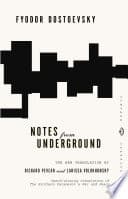
Fyodor Dostoevsky (2011)
Genre
Psychology / Philosophy
Reading Time
160 min
Key Themes
See below
Sign in to track this book
A bitter, reclusive former official rages from his 'underground' against utopian ideals and the very notion of human rationality, exposing the tormented, self-contradictory core of modern consciousness.
“I am a sick man.... I am a wicked man. An unattractive man. I believe my liver is diseased.”
— The opening lines of the novel, introducing the narrator's self-loathing and physical complaints.
“Oh, gentlemen, do you know what was the main point of my wickedness? The whole point of it lay precisely in the fact that I was ashamed of being wicked and kept hiding it from myself, and pretending that it was not wickedness at all but something else.”
— The narrator reflecting on his past actions and the hypocrisy of his self-deception.
“I say let the world go to hell, but I should always have my tea.”
— A stark declaration of the narrator's egoism and his preference for personal comfort over global concerns.
“Man is a creature that can get used to anything, and I think that is the best definition of him.”
— The narrator musing on human adaptability and resilience, even in the face of suffering.
“To love is to suffer, and there can be no love without suffering.”
— A cynical view on the nature of love, equating it directly with pain and struggle.
“The one reason why I could not be a hero was that I did not know how to be one.”
— The narrator's admission of his inability to embody heroic ideals, stemming from his own self-awareness and paralysis.
“What is to be done with the millions of facts that bear witness that men, consciously, that is, fully understanding their real interests, have left them in the background and plunged headlong on another path, on a risk, a chance, impelled by no one and by nothing, but as it were, precisely because they did not want the beaten track, and with obstinacy and willfulness forced their way on to another difficult, absurd path, seeking it almost in the darkness?”
— The narrator questioning rational egoism and the predictability of human behavior, suggesting a deeper, irrational drive.
“I swear to you, gentlemen, that to be overly conscious is a sickness, a real, thorough sickness.”
— The narrator's famous declaration on the burden of excessive self-awareness and introspection.
“And the more I was conscious of goodness and of all that was 'lofty and beautiful,' the more deeply I sank into my mire and the more ready I was to sink in it altogether.”
— The narrator describing the paradox of his moral awareness leading to deeper depravity, rather than improvement.
“Man needs nothing but independent will, at whatever cost that independence may come and wherever it may lead.”
— The narrator asserting the fundamental human desire for free will, even if it leads to self-destruction.
“All that is good and beautiful is only a dream.”
— A cynical dismissal of idealistic notions of beauty and goodness as mere illusions.
“Every man has some recollections which he would not tell to everyone, but only to his friends. He has others which he would not reveal even to his friends, but only to himself, and that in secret. But there are finally others which he is afraid to reveal even to himself, and every decent man has a considerable number of such things stored away.”
— The narrator reflecting on the layers of hidden thoughts and secrets within every individual.
“It is not only that I have failed to become anything, but that I have not even wished to become anything.”
— A profound statement on the narrator's deliberate inaction and his rejection of societal expectations for achievement.
“Reason, gentlemen, is an excellent thing, there's no disputing that, but reason is only reason and satisfies only man's rational faculty, while will is a manifestation of the whole of life, that is, of the whole of human life including reason and all the impulses.”
— The narrator arguing for the supremacy of will and irrational impulses over pure reason in human existence.
Ready to see how well you understood this book? Take our interactive quiz with 10 questions.

Fyodor Mikhailovich Dostoevsky, sometimes transliterated as Dostoyevsky, was a Russian novelist, short story writer, essayist and journalist. Numerous literary critics regard him as one of the greatest novelists in all of world literature, as many of his works are considered highly influential masterpieces.
Rhonda Byrne
4.3

Menno Henselmans
4.3
Sylvia Plath
4.3
Elliot Aronson
4.3
Joseph Campbell
4.3
Erich Fromm
4.3
Irvin D. Yalom
4.2
Lucy Strange
4.2