BookBrief
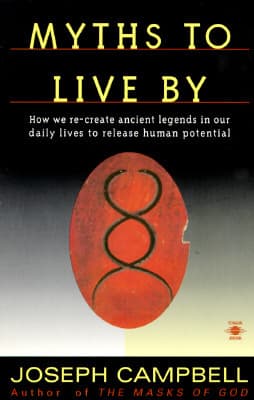
Myths to Live By cover
Archivist's Choice

Myths to Live By

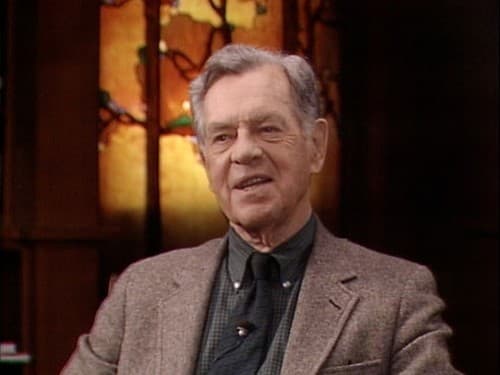
Joseph Campbell (1972)

Genre

Psychology / History / Spirituality / Philosophy

Reading Time

270 min

Key Themes

See below

Track Your Reading

Sign in to track this book

Joseph Campbell explains how ancient myths are universal guides for personal change and societal balance, offering answers to modern worries by connecting us to timeless human experiences.

Core Idea

Joseph Campbell argues that myths are not just old stories but provide essential guides for human psychological and spiritual growth. They offer wisdom on how to handle life's problems, understand our place in the world, and bring together different parts of ourselves. He believes that even if traditional myths have lost their literal power in a scientific age, their symbolic truths and psychological purposes remain important for individual and community well-being. Modern people must create and understand their own personal myths, using universal patterns like the Hero's Journey, to find meaning and purpose in a world that often lacks shared sacred stories.
Reading time
270 min
Difficulty
Hard
✓ Read this if...
You are seeking a deeper understanding of the universal patterns in human experience, the psychological functions of myth, and how ancient stories can provide guidance for modern life. Ideal for those interested in Jungian psychology, comparative religion, and personal meaning-making.
✗ Skip this if...
You are looking for a light, introductory read on mythology or prefer practical self-help over dense philosophical and psychological exploration. Not for those who are uncomfortable with abstract concepts or extensive cross-cultural analysis.

Core idea

The central argument and framework that powers the entire book.

Joseph Campbell argues that myths are not just old stories but provide essential guides for human psychological and spiritual growth. They offer wisdom on how to handle life's problems, understand our place in the world, and bring together different parts of ourselves. He believes that even if traditional myths have lost their literal power in a scientific age, their symbolic truths and psychological purposes remain important for individual and community well-being. Modern people must create and understand their own personal myths, using universal patterns like the Hero's Journey, to find meaning and purpose in a world that often lacks shared sacred stories.

At a glance

Reading time

270 min

Difficulty

Hard

Read this if...

You are seeking a deeper understanding of the universal patterns in human experience, the psychological functions of myth, and how ancient stories can provide guidance for modern life. Ideal for those interested in Jungian psychology, comparative religion, and personal meaning-making.

Skip this if...

You are looking for a light, introductory read on mythology or prefer practical self-help over dense philosophical and psychological exploration. Not for those who are uncomfortable with abstract concepts or extensive cross-cultural analysis.

Key Takeaways

1

The Four Functions of Mythology

Myths serve essential roles in individual and societal well-being.

Quote

Mythology is not a science; it is a poetry. It is metaphorical. It has to be understood not literally, but poetically.

Campbell states that a healthy mythology serves four main purposes. First, the mystical purpose awakens awe and wonder at the universe's mystery, connecting people to something beyond themselves. Second, the cosmological purpose offers a clear worldview, explaining the universe's form, origin, and aim, aligning human understanding with the cosmos. Third, the sociological purpose confirms and supports a social order, fitting people into their community and upholding moral rules. Last, the pedagogical purpose guides people through life'...

Supporting evidence

Campbell frequently references primitive societies where myths were not just stories but lived realities, integrating every aspect of life from hunting rituals to coming-of-age ceremonies. He contrasts this with modern secular societies where these functions are often fragmented or absent.

Apply this

Reflect on which of these four functions are most lacking in your own life or community. Seek out art, philosophy, or spiritual practices that address those specific needs, rather than expecting a single source to provide all answers.
mythical-functionssacred-profanecosmology
2

The Hero's Journey as a Universal Blueprint

Individual transformation mirrors the archetypal monomyth.

Quote

The hero's journey is a symbol of the spiritual adventure of being alive.

Campbell's most famous idea, the monomyth or Hero's Journey, shows a universal pattern of change found across cultures and times. It starts with a 'Call to Adventure,' followed by 'Refusal,' 'Meeting the Mentor,' 'Crossing the Threshold,' 'Tests, Allies, and Enemies,' 'Approach to the Inmost Cave,' 'Ordeal,' 'Reward,' 'The Road Back,' 'Resurrection,' and 'Return with the Elixir.' This cycle is not just a story method but a psychological map for personal growth and spiritual awakening. It shows that true heroism involves facing one's i...

Supporting evidence

Campbell meticulously analyzes myths from ancient Egypt (Osiris), Hinduism (Krishna), Buddhism (Buddha), and Christianity (Jesus), demonstrating how each narrative, despite its cultural specificities, follows the core stages of the monomyth.

Apply this

Identify a significant challenge or transition you're currently facing. Map your experience onto the stages of the Hero's Journey to gain perspective, identify your 'mentor' or 'elixir,' and understand the archetypal significance of your struggle.

monomythhero's-journeyarchetypesindividuation
3

The Death of Traditional Mythology

Modernity has fragmented the sacred, leading to existential anxiety.

Quote

The world has become a unity, but the mythological systems have not.

Campbell argues that the scientific revolution, globalization, and secularism have broken down the traditional myth systems that once gave collective meaning. Instead of a shared, clear sacred story, modern society offers many fragmented beliefs, consumerism, and individual pursuits. This 'death' of a unified mythology leaves people without direction, lacking clear rites of passage, communal purpose, and a sense of the transcendent. This void contributes to modern anxiety, as people deal with a complex and seemingly meaningless existe...

Supporting evidence

Campbell contrasts the holistic, integrated societies of pre-modern times, where myth permeated every aspect of life, with contemporary Western society where religion is often relegated to a specific day or private sphere, and science offers facts without meaning.

Apply this

Recognize that the search for meaning is not a personal failing but a universal human need that traditional structures no longer adequately address. Actively seek out sources of meaning beyond purely material or individualistic pursuits, whether through art, community engagement, or personal spiritual exploration.

secularismexistential-crisismeaning-crisisglobalization
4

The Personal Myth as Modern Necessity

Individuals must forge their own meaningful narratives.

Quote

The function of mythology is to put you in touch with the creative mystery of life.

Without a universally shared, working mythology, Campbell suggests that individuals must create their own myths. This does not mean making up random stories but consciously engaging with the archetypal patterns in their own lives and dreams, understanding their experiences through metaphor. By seeing personal challenges as 'trials' and successes as 'rewards' within their unique 'hero's journey,' people can give their lives deeper meaning and purpose. This personal myth-making builds resilience, self-understanding, and a sense of conne...

Supporting evidence

Campbell cites the importance of dreams and inner psychological work, drawing on Jungian concepts, as a source for understanding one's personal symbols and archetypal encounters.

Apply this

Keep a journal to record significant life events, dreams, and recurring themes. Look for patterns, symbols, and connections that might reveal your own unfolding personal myth. Consider what 'call to adventure' you might be currently facing or what 'elixir' you are seeking.

personal-mythself-discoveryinner-journeyindividuation
5

Transcending Cultural Boundaries: The Unity of Myth

Beneath diverse expressions lie universal human truths.

Quote

The different mythologies of the world are not to be regarded as a series of religions that are in conflict with each other, but rather as a series of different poems, all on the same theme.

A main idea in Campbell's work is the basic unity of world mythologies. Despite surface differences in gods, rituals, and stories, he shows that all myths come from a common psychological source and address universal human experiences: birth, death, love, struggle, change, and the search for meaning. Recognizing these shared archetypes across cultures—from the flood myth to the dying-and-resurrected god—creates a sense of global connection and understanding. It encourages us to look past strict dogma and appreciate the different 'lang...

Supporting evidence

Campbell provides numerous comparative examples, such as the worldwide prevalence of the 'dragon slayer' motif (St. George, Apollo, Indra) or the virgin birth narrative across various spiritual traditions.

Apply this

When encountering a new culture or religion, look beyond the specific forms and seek out the underlying human truths and archetypal patterns it expresses. This practice can foster empathy and dismantle ethnocentric biases.

archetypesuniversal-truthscomparative-mythologytranscendence
6

Following Your Bliss: The Inner Compass

Authenticity and passion are guides to a meaningful life.

Quote

Follow your bliss. Find where it is and don't be afraid to follow it.

'Follow your bliss' is Campbell's most famous and often misunderstood instruction. It is not an invitation to seek pleasure but a call to find and pursue what truly resonates with your soul, your authentic self, and your unique calling. This 'bliss' is a sign of the life force, the inner guide that connects you to your personal myth and larger universal patterns. By aligning your life with this inner passion, you unlock your potential, overcome difficulties, and find your place in the cosmic dance. Ignoring one's bliss leads to a life...

Supporting evidence

Campbell points to countless mythological heroes who, upon hearing their 'call to adventure,' abandon their comfortable lives to pursue a path that initially seems perilous but ultimately leads to self-realization and societal benefit.

Apply this

Identify what activities or ideas make you feel most alive, engaged, and purposeful, even if they seem impractical or unconventional. Take small, consistent steps towards integrating more of these 'blissful' pursuits into your daily life, trusting that your inner compass will guide you.

blissauthenticitycallingself-actualization
7

The Role of the Artist as Modern Mythmaker

Art provides new narratives for meaning in a secular age.

Quote

The artist is the one who has to go into the forest and find the new myths.

In a time without a unifying, collective mythology, Campbell gives a key role to the artist. He sees artists—writers, musicians, filmmakers, visual artists—as modern shamans. They explore the collective unconscious and bring forth new symbols, stories, and metaphors that can help people navigate modern life. By using universal archetypes and expressing them in new forms, artists can create personal and collective meaning, fostering wonder, connection, and purpose that traditional institutions often fail to provide. Their work can act ...

Supporting evidence

Campbell often discussed the power of modern literature, film, and music to touch upon the same deep psychological truths previously conveyed by ancient myths, citing examples of how stories like *Star Wars* (which he directly influenced) resonate archetypally.

Apply this

Engage deeply with art forms that resonate with you. Analyze how contemporary stories, films, or music might be addressing universal human experiences and offering new ways to understand your own journey. Consider how you, in your own creative expression, might contribute to this process.

art-as-mythcultural-renewalcollective-unconsciouscreativity
8

The Mythology of the Body

Our physical existence is a profound source of meaning.

Quote

The whole thing is a mystery, and the mystery is here in your body.

Campbell emphasizes that the human body itself is a living myth, a small version of the universe and a source of spiritual understanding. Our biological processes—birth, growth, reproduction, decay, and death—reflect the great cycles of nature and the cosmos. By respecting our physical existence, listening to its wisdom, and engaging with its natural rhythms, we can connect with a deep, intuitive knowledge beyond intellectual understanding. Ignoring the body or seeing it only as a machine leads to a disconnection from this basic sourc...

Supporting evidence

Campbell frequently references indigenous cultures and Eastern spiritual traditions that emphasize the body's connection to the divine, through practices like yoga, meditation, and ritual dance, where the body is a vehicle for mystical experience.

Apply this

Practice mindfulness and cultivate a deeper awareness of your physical sensations and natural rhythms. Engage in practices that connect you to your body—like walking in nature, dancing, or mindful eating—to tap into its inherent wisdom and sense of being part of a larger, living system.

embodimentmind-body-connectionsacred-bodynatural-cycles
9

The Cosmic Dance of Opposites

Meaning emerges from the dynamic interplay of dualities.

Quote

Life lives on life. This is the condition of the universe.

A repeated idea in Campbell's work is the mythological theme of the 'cosmic dance' or the active play of opposites as central to existence. Life and death, creation and destruction, light and shadow, male and female—these are not forces to be removed but essential parts of a unified whole. Meaning is not found in one triumphing over the other, but in their ongoing tension and cyclical interaction. Accepting this inherent duality, rather than fighting it, is important for psychological health and spiritual insight. Anxiety often comes ...

Supporting evidence

Campbell draws heavily on Eastern philosophies, particularly Hinduism's Shiva-Shakti dynamic and the Taoist concept of Yin and Yang, to illustrate how destructive and creative forces are inseparable and necessary for cosmic harmony.

Apply this

When facing difficult situations or internal conflicts, try to see them not as absolute good or evil, but as two sides of a necessary dynamic. Seek to understand the interplay and interdependence of opposing forces in your life, rather than striving for their complete elimination, finding balance in their tension.

dualityyin-yangintegrationshadow-work
10

Myth as a Guide, Not a Dogma

Myths offer metaphorical truth, not literal fact.

Quote

Myths are not to be taken literally, but rather as guides to the spiritual life.

A main point in Campbell's work is the difference between taking myths literally and understanding their metaphorical, psychological, and spiritual meaning. He argues that when myths are seen as historical or scientific facts, their true power is lost, and they become rigid dogma, often leading to conflict and intellectual stagnation. The value of myth is its ability to point beyond the tangible, to express the mysteries of existence, and to offer symbolic guidance for the soul's journey. Understanding myths as living metaphors keeps ...

Supporting evidence

Campbell critiques the literalistic interpretations of religious texts that lead to fundamentalism, contrasting them with the more fluid, symbolic understanding found in many mystical traditions and ancient cultures.

Apply this

Approach stories, religious texts, and even personal experiences with a 'poetic' eye, seeking the deeper symbolic and psychological meanings rather than getting caught up in literal interpretations. Ask what a story reveals about the human condition or the nature of reality, rather than whether it 'actually happened.'

metaphorsymbolismdogmaspiritual-guidance

Critical analysis

Notable Quotes

The cave you fear to enter holds the treasure you seek.

Discussing the hero's journey and confronting the unknown.

Mythology is not a lie, mythology is poetry, it is metaphorical. It has been well said that mythology is the penultimate truth—penultimate because the ultimate cannot be put into words.

Defining the nature and purpose of myth.

The first insight of the hero's journey is that the dark power that holds the world in thrall is not outside but within.

Exploring the internal struggles faced by heroes.

The ultimate aim of the human mind, after all, is not to know but to be.

Reflecting on the limitations of knowledge and the importance of experience.

We're so engaged in doing things to achieve purposes that we don't see the link between what we're doing and the purpose of the universe.

Critiquing modern society's focus on external achievement.

The function of mythology is to put you in accord with the universe, with yourself, with your own body.

Explaining the integrative power of myths.

The world is a wasteland, and we are its inhabitants. But the wasteland is also a garden, and we are its gardeners.

A paradoxical view of the world, emphasizing human agency.

When we quit thinking primarily about ourselves and our own self-preservation, we undergo a truly heroic transformation of consciousness.

Describing the shift from ego-centric to broader awareness.

The meaning of life is to find your gift. The purpose of life is to give it away.

A succinct summary of individual purpose and contribution.

Follow your bliss. If you do that, you put yourself on a kind of track that has been there all the while, waiting for you.

Encouraging individuals to pursue their deepest passions.

The hero is the one who has found or done something beyond the normal range of achievement and experience.

Defining the hero in terms of venturing beyond the ordinary.

Every myth is a mask of God through which he speaks in his own language.

Discussing the divine presence and communication within myths.

The problem of the twentieth century is the problem of the wasteland.

Addressing the spiritual and cultural void in modern times.

The experience of transcendence is the experience of going beyond yourself, of being carried away.

Explaining the feeling of being connected to something larger than oneself.

Quiz

Test Your Knowledge

Ready to see how well you understood this book? Take our interactive quiz with 10 questions.

10
Questions
~5
Minutes
?
Best Score

Key Questions (FAQ)

According to Campbell, a properly functioning mythology provides individuals and societies with a framework for understanding the universe, their place within it, and the moral codes by which to live. Its functions include reconciling consciousness with the unconscious, providing a cosmology, validating social order, and guiding individuals through life's stages.

About the author