“Living takes a lot of energy. It feels like I'm constantly running a marathon, and I'm just so tired.”
— Aysel describing her exhaustion with life and her desire for suicide.

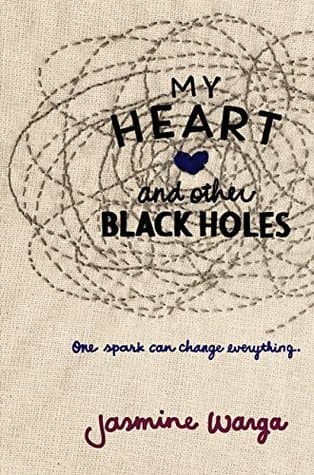
Jasmine Warga (2015)
Genre
Psychology / Young Adult / Romance
Reading Time
6 hours 2 min
Key Themes
See below
Sign in to track this book
Aysel, a physics-obsessed teen, finds a suicide pact partner in Roman, only to discover that their shared journey toward death might actually be a desperate plea for life and connection.
Sixteen-year-old Aysel Seran feels like a black hole, an empty space consuming everything around her. Plagued by depression, the recent memory of her father's violent crime, and the ostracism it brought upon her family, Aysel meticulously plans her own suicide. She believes her existence is a burden and that ending her life is the only logical solution. However, she lacks the courage to go through with it alone. Searching online, she discovers a pro-suicide website and a forum for 'Suicide Partners.' There, she finds FrozenRobot, a male user who has already set a date for their joint suicide: March 7th. Aysel, intrigued by his resolve, decides to contact him, seeing him as a potential solution to her dilemma.
Aysel arranges to meet FrozenRobot, who she learns is a boy named Roman Franklin. Their first meeting is tense and awkward. Roman is quiet, artistic, and clearly carrying his own heavy grief, which Aysel later learns stems from the death of his younger sister, Lily, and his mother's subsequent suicide. Despite their differing personalities – Aysel is analytical and scientific, Roman is artistic and melancholic – they find common ground in their shared desire to die. They begin to discuss the logistics of their suicide pact, agreeing to meet regularly to finalize their plans and ensure they both follow through on the agreed-upon date: March 7th, Roman's birthday.
Aysel's internal struggle is deeply intertwined with her father's past actions. Her father is in prison for a violent crime, and the town's judgment has left a mark on Aysel and her family. Her mother is withdrawn and emotionally distant, and her younger brother, who idolizes their father, creates a painful dynamic within their home. Aysel feels responsible for her father's 'evil,' believing it's a genetic trait she inherited. This belief fuels her self-loathing and reinforces her conviction that her death would be a relief to everyone. She struggles to articulate her pain to her family, leading to a profound sense of isolation.
As Aysel and Roman continue to meet, Roman slowly opens up about his past. He shares the devastating story of his younger sister, Lily, who died from an aneurysm, and how his mother, unable to cope with the grief, subsequently committed suicide. Roman blames himself for not noticing his mother's declining mental state and for not being able to save Lily. This profound guilt and trauma are the driving forces behind his desire for a suicide pact. Sharing their deepest wounds creates a fragile but significant connection between them, as they find solace in each other's understanding of their respective pain.
As the date of their pact approaches, Aysel finds herself increasingly drawn to Roman. Despite their initial agreement to remain detached, they spend more time together, visiting places like an abandoned house and a local diner. Aysel starts to notice small, beautiful details of life through Roman's eyes, and she begins to feel a connection she hasn't experienced before. His quiet strength and artistic sensibility challenge her bleak outlook. This growing intimacy and the unexpected joy she finds in his company plant seeds of doubt in Aysel's mind about her commitment to the suicide pact. She starts to wonder if there might be a reason to live after all.
During their time together, Aysel experiences brief but potent moments of happiness. She finds herself laughing with Roman, sharing intimate conversations, and even enjoying simple activities. She begins to see life through a different lens, recognizing the beauty in art, nature, and human connection that she had previously dismissed. These experiences make her question her long-held belief that her life is worthless. The idea of a future, once a terrifying void, slowly begins to take on a new, albeit uncertain, shape. She starts to imagine a life where she could be happy, even if it feels distant and fragile.
The closer they get to March 7th, the more Aysel's resolve to die wavers. She realizes she no longer wants to go through with the pact. She sees the potential for a different future and, more importantly, she recognizes Roman's goodness and wants him to live too. She attempts to talk to Roman about her change of heart, trying to convince him that there are reasons to live and that they can find a way to heal together. However, Roman, deeply entrenched in his grief and guilt, resists her arguments, viewing her change as a betrayal of their agreement and his only path to peace.
Despite Aysel's fervent pleas, Roman remains steadfast in his decision to die. His trauma and guilt are too deeply ingrained, and he sees the pact as his only escape from the pain. He interprets Aysel's change of heart as a sign of her weakness or a betrayal of their shared understanding. He reminds her of their agreement, emphasizing the importance of following through. Aysel is heartbroken and terrified, realizing that her own desire to live now puts her in a position where she must either abandon Roman to his fate or find a way to save him, even if he doesn't want to be saved.
March 7th arrives. Aysel, desperate to save Roman, goes to the abandoned house where they planned to die. Roman is already there, seemingly ready to go through with it. Aysel confronts him, pleading with him to reconsider, to choose life. She shares her own renewed hope and tries to show him the value of his own existence. The scene is emotionally charged, a desperate struggle between Aysel's newfound will to live and Roman's entrenched despair. She tries to physically prevent him from acting, demonstrating her unwavering commitment to his life.
In a climactic moment, Aysel speaks to Roman not just about living, but about the possibility of healing and finding meaning despite their pain. She acknowledges his suffering but also highlights his inherent worth. Her words, born from her own journey out of darkness, finally pierce through Roman's despair. He hesitates, torn between the allure of oblivion and the fragile hope Aysel offers. In a moment of profound vulnerability, he makes a choice, a decision that will determine both their futures. The immediate aftermath is uncertain, but a shift has occurred, a crack in his impenetrable grief.
Following the events of March 7th, both Aysel and Roman embark on a difficult path toward healing. Roman is hospitalized and begins therapy, slowly processing his grief and guilt with professional help. Aysel, having faced her own darkness and chosen life, continues to support Roman and work on her own mental health. She starts to communicate more openly with her family, beginning to mend the fractured relationships. While their journey is far from over, they have chosen to live, to face their black holes head-on, and to support each other in the arduous process of finding light and meaning in their lives.
The Protagonist
Aysel transforms from a suicidal, isolated girl into someone who chooses life, finds hope, and actively fights for the well-being of others, particularly Roman.
The Supporting/Co-Protagonist
Roman moves from a state of unwavering despair and a desire for death to a fragile acceptance of life and the beginning of a healing journey, influenced by Aysel's hope.
The Supporting
Her arc is subtle, showing a slight thawing in her emotional distance as Aysel begins to open up and seek help.
The Mentioned
Not applicable as he is a background figure.
The Mentioned
Not applicable as she is a background figure.
The Supporting
His arc is subtle, showing slight shifts in his understanding as Aysel begins to open up.
The Supporting
Helps facilitate Aysel's arc through therapy.
The novel explores how the actions of one generation can impact the next. Aysel is consumed by guilt and shame over her father's violent crime, believing she has inherited an 'evil gene.' This inherited trauma manifests as her depression and her conviction that her existence is a burden. Similarly, Roman carries immense guilt over his sister's death and his mother's suicide, believing he failed to protect them. Both characters are driven by a sense of responsibility for events beyond their control, showing how unresolved family trauma can lead to self-destructive impulses, as seen in Aysel's constant internal monologue about her father's 'darkness' and Roman's self-blame for Lily's aneurysm and his mother's depression.
“What if I can't outrun the black hole? What if I'm doomed to be just like my father?”
Initially, Aysel and Roman connect over their shared desire for death, but their relationship gradually becomes life-affirming. Through their interactions, they find a unique understanding and empathy that they lack in their other relationships. Roman's quiet presence and artistic perspective help Aysel see beauty in the world, while Aysel's unwavering belief in Roman's worth pulls him back from the brink. Their ability to truly see and validate each other's pain, without judgment, becomes the catalyst for Aysel's change of heart and Roman's eventual choice for life. This theme shows how human connection can be an antidote to isolation and despair, as exemplified when Aysel realizes she wants to live not just for herself, but for Roman too.
“I was a black hole, but you were a supernova. You burned so bright, and I just wanted to be close to you.”
At its core, the novel is a journey from the desire for death to the choice for life. Both Aysel and Roman begin the story convinced that suicide is their only escape from unbearable pain. However, as Aysel and Roman spend time together, Aysel slowly begins to see glimpses of hope and beauty in the world, leading her to question her initial resolve. Her internal struggle reflects the difficult process of overcoming suicidal ideation. Ultimately, Aysel makes a conscious and courageous decision to choose life, and then fights desperately to convince Roman to do the same, demonstrating that even in the darkest moments, there is always the potential for a different future, as seen in her desperate pleas on March 7th.
“Maybe there's a universe out there where I'm not a black hole. Maybe there's a universe where I can be a star.”
The novel addresses the realities of depression, suicidal ideation, and the importance of professional help. Aysel's internal monologue vividly portrays the debilitating effects of depression and self-loathing. The 'Suicide Partners' website highlights the dangerous allure of shared despair but also indirectly emphasizes the need for intervention. Dr. Sarah, Aysel's therapist, helps Aysel process her emotions and challenge her destructive thought patterns. The story normalizes seeking therapy and shows its effectiveness in navigating mental health challenges, particularly in Roman's eventual hospitalization and therapy, showing that healing is a process.
“You don't have to be a black hole. You can be a star. You just need to find your light.”
A shared agreement between Aysel and Roman to end their lives on a specific date.
The suicide pact serves as the central inciting incident and driving force of the narrative. It initially binds Aysel and Roman together, providing a concrete goal for their shared despair. However, as their relationship develops, the pact transforms from a solution into a ticking clock, creating immense dramatic tension. It forces Aysel to confront her own desires and ultimately to fight for Roman's life, turning a plan for death into a catalyst for choosing life. The pact also highlights the dangerous appeal of shared hopelessness and the isolation that can lead individuals to seek such extreme measures.
Aysel uses concepts from physics to describe her emotional state and the world around her.
Aysel, a self-proclaimed physics nerd, frequently uses physics concepts like 'black holes,' 'potential energy,' and 'nothingness' to articulate her depression and view of the world. This device provides insight into her analytical mind and how she attempts to rationalize her emotional pain. The 'black hole' is a recurring metaphor for her perceived emptiness and destructive nature, while the concept of 'potential energy' represents her untapped capacity for life and growth. As she heals, her understanding of these concepts shifts, reflecting her changing perspective on her own existence and purpose. It effectively externalizes her internal struggle.
A recurring location where Aysel and Roman meet and plan their suicide.
The abandoned house serves as a symbolic setting for Aysel and Roman's pact. Initially, it represents their shared desire for oblivion, a place where they can escape the world and its pain. Its desolate nature mirrors their internal landscapes. However, as their relationship deepens and Aysel begins to question the pact, the house takes on new meaning. It becomes a place where vulnerability is shared, where their connection grows, and ultimately, where Aysel makes her desperate plea for Roman to choose life. It evolves from a symbol of death to a crucible of their fight for survival.
The predetermined date for Aysel and Roman's suicide pact, Roman's birthday.
The March 7th deadline functions as a powerful ticking clock throughout the narrative, intensifying the suspense and urgency of Aysel's emotional journey. Its significance is heightened by being Roman's birthday, adding a layer of tragic irony and personal meaning to his chosen date for ending his life. As the date approaches, the tension mounts, forcing Aysel to confront her changing desires and act decisively. This device effectively propels the plot forward and underscores the high stakes of their agreement, making Aysel's struggle to save Roman feel increasingly desperate and critical.
“Living takes a lot of energy. It feels like I'm constantly running a marathon, and I'm just so tired.”
— Aysel describing her exhaustion with life and her desire for suicide.
“Sometimes I think the only reason I'm not dead is because I'm too afraid to die. And too afraid to live.”
— Aysel reflecting on her state of being stuck between life and death.
“The thing about suicide is that it’s like a black hole. It pulls you in, and once you’re in, there’s no getting out.”
— Aysel contemplating the inescapable nature of suicidal thoughts.
“I want to feel something. Anything. Even if it's pain.”
— Aysel expressing her numbness and longing for any emotion.
“Maybe the black hole is not a place, but a feeling. A feeling of being lost and alone, with no way out.”
— Aysel's internal monologue about the nature of her despair.
“There are some people who are just not meant to be happy. They're meant to be sad.”
— Aysel's fatalistic view on her own emotional state.
“You can’t just stop loving someone. You just… learn to live without them.”
— Aysel thinking about her father and the aftermath of his actions.
“It’s funny how you can be so miserable and still find comfort in the smallest things.”
— Aysel noticing small moments of solace despite her overall despair.
“I’m not afraid of dying. I’m afraid of living.”
— Aysel articulating her core fear, which isn't death itself but the continuation of a painful life.
“Maybe we are all just black holes, waiting to suck in anything that comes too close.”
— Aysel's dark introspection about human nature and the capacity for harm.
“Sometimes you have to let go of the life you planned and accept the one that is waiting for you.”
— Aysel realizing the need to adapt and move forward despite setbacks.
“It’s like I’m a broken record, playing the same sad song over and over again.”
— Aysel describing the repetitive nature of her depressive thoughts.
“Maybe the purpose of life isn't to be happy. Maybe it's to be useful. Or to be kind.”
— Aysel considering alternative meanings to life beyond personal happiness.
“You don't have to be perfect to be loved. You just have to be yourself.”
— Aysel beginning to understand self-acceptance through her relationship with Roman.
Ready to see how well you understood this book? Take our interactive quiz with 10 questions.

Biography coming soon.

Rhonda Byrne
4.3

Menno Henselmans
4.3

Sylvia Plath
4.3

Elliot Aronson
4.3
Joseph Campbell
4.3

Erich Fromm
4.3
Irvin D. Yalom
4.2

Lucy Strange
4.2