“I will never be more happy than not. I will never be more happy than not. I will never be more happy than not.”
— Aaron repeating a mantra to himself, reflecting his core struggle with depression and the memory-altering procedure.

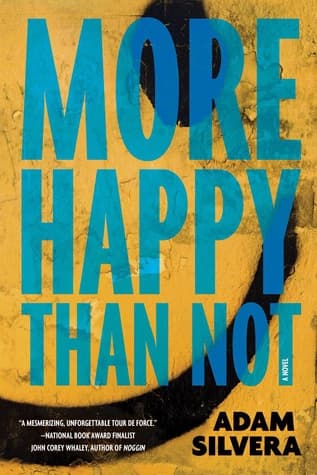
Adam Silvera (2015)
Genre
Psychology / Science Fiction / Young Adult / Romance
Reading Time
293 min
Key Themes
See below
Sign in to track this book
In a near-future Bronx, a heartbroken teen grapples with love, loss, and a memory-altering procedure that promises happiness but threatens to erase his true self and the boy he's falling for.
Sixteen-year-old Aaron Soto is still recovering from his father's suicide six months earlier, an event that deeply affected his family and left him with a scar on his wrist from a self-harm attempt. He lives in the Bronx with his mother, brother, and sister, feeling the weight of their grief. His girlfriend, Genevieve, offers comfort, but Aaron struggles to talk about his pain. During a summer art program, Aaron meets Thomas, a new kid in the neighborhood. Thomas is easygoing and understanding, and their friendship quickly grows. Aaron finds it surprisingly easy to open up to Thomas about his struggles and anxieties, something he finds difficult even with Genevieve.
As summer goes on, Aaron and Thomas spend more time together, sharing secrets, dreams, and vulnerabilities. They explore the city, talk for hours, and often end up at Aaron's apartment. Aaron feels drawn to Thomas in a way that goes beyond friendship, feeling a deep understanding and acceptance he hasn't experienced before. This growing closeness starts to stir confusing emotions in Aaron, making him question his feelings. He feels a deep connection to Thomas that is both exciting and unsettling, especially since he is in a committed relationship with Genevieve.
One evening, after a deep conversation and a shared moment of vulnerability, Aaron and Thomas kiss. This kiss, though brief, greatly impacts Aaron, confirming the romantic feelings he had been suppressing. Immediately afterward, however, Aaron is overwhelmed with shame, confusion, and fear. He pushes Thomas away, withdrawing and denying the importance of what just happened. The incident throws Aaron into deeper emotional turmoil as he grapples with his sexuality and the possible effects on his relationship with Genevieve and his family's expectations.
Distraught and desperate to 'fix' himself, Aaron remembers a conversation he overheard about the Leteo Institute, a controversial facility that offers memory alteration procedures. The institute promises to erase traumatic or unwanted memories, allowing people to forget painful experiences or undesirable parts of themselves. Aaron sees this as a possible solution to his current crisis – a way to erase his feelings for Thomas and his confusion about his sexuality, thereby keeping his relationship with Genevieve and his 'normal' life. The idea of a fresh start, free from his internal conflicts, becomes very appealing.
Conflicted, Aaron tries to confide in Genevieve, vaguely hinting at his internal struggles and confusion, but he cannot bring himself to reveal the full truth about Thomas. Genevieve, though concerned, doesn't fully understand the depth of his turmoil. Aaron also talks to his older brother, Eric, who has his own history of struggles and has also undergone the Leteo procedure. Eric, now seemingly happier and more stable, speaks positively of his experience, reinforcing Aaron's belief that Leteo might be the answer. This partial disclosure and Eric's approval further strengthen Aaron's decision to pursue memory alteration.
Aaron decides to go through with the Leteo procedure. He tells the institute that he wants to forget his feelings for Thomas and the kiss. The procedure is disorienting, and when he wakes up, there's a noticeable gap in his memory. He remembers Genevieve, his family, and his life, but the vividness of his recent friendship with Thomas is gone, replaced by a vague sense of emptiness. He feels a deep, unexplainable sadness, a ghost of a memory he can't quite grasp. The procedure seems to have worked, but at a cost – a part of himself feels missing.
Despite the Leteo procedure, Aaron finds that his past isn't as easily erased as he hoped. He starts having fleeting, vivid flashbacks and dreams involving Thomas, moments that feel intensely real but don't fit into his current understanding of his life. These fragmented memories are disorienting and upsetting, making him question what he truly knows and what he has forgotten. He sees Thomas around the neighborhood, and while he doesn't consciously recognize him, there's an undeniable pull, a sense of familiarity that further unsettles him. The suppressed truth begins to fight its way back to the surface.
Driven by the resurfacing memories and an unbearable sense of confusion, Aaron confronts Thomas. Thomas, who has been heartbroken and confused by Aaron's sudden distance, is initially hesitant but eventually confirms their past relationship, the kiss, and Aaron's subsequent decision to undergo the Leteo procedure. The full weight of what Aaron chose to forget crashes down on him. He realizes the extent of his self-deception and the pain he caused both himself and Thomas by trying to erase a fundamental part of his identity. The revelation is devastating, forcing Aaron to face the truth of his sexuality and his actions.
As Aaron grapples with the truth about Thomas, he makes a shocking discovery: his brother, Eric, was not just a recipient of Leteo, but has been actively involved in the institute, and Aaron himself has undergone the procedure multiple times before. He learns that the memories of his father's suicide, and even some aspects of his relationship with Genevieve, have been altered or selectively erased in the past. This revelation shatters his understanding of his own history and personal identity, making him question the authenticity of all his memories and who he truly is without the interventions of the Leteo Institute.
Overwhelmed by the layers of deception and the fragmented nature of his own past, Aaron begins a painful journey to piece together his true memories. He confronts his family, demanding answers about the extent of the Leteo procedures he underwent and the reasons behind them. This process is emotionally grueling, forcing him to relive past traumas and confront the parts of himself he tried to erase. He realizes that true happiness cannot come from forgetting, but from accepting all aspects of his identity, including his sexuality and his grief. This marks the beginning of his path toward self-acceptance and authenticity.
The Protagonist
Aaron evolves from a confused, self-denying individual to someone who bravely confronts his past, accepts his sexuality, and seeks genuine self-acceptance over manufactured happiness.
The Supporting/Love Interest
Thomas remains a steady and honest presence, navigating the pain of Aaron's choices while embodying the acceptance Aaron ultimately needs to find.
The Supporting/Girlfriend
Genevieve navigates the painful realization of Aaron's true feelings and identity, eventually finding her own path forward.
The Supporting/Antagonist
Eric's arc shifts from a supportive, reformed brother to a character whose hidden actions are exposed, forcing him to confront the consequences of his choices.
The Supporting
Her arc involves confronting the consequences of her choices and the pain her interventions caused Aaron.
The novel explores whether true happiness can be achieved by erasing painful memories. Aaron's journey shows that happiness from forgetting is fleeting and hollow, leading to a fragmented sense of self. His erased memories of Thomas and his father's suicide resurface, proving that suppressing the past only postpones its impact. True happiness, the book suggests, comes from confronting and integrating all experiences, both joyful and painful, into a cohesive identity. The Leteo Institute offers a deceptive shortcut that ultimately hinders genuine emotional growth, as Aaron feels a deep emptiness even after his initial procedure.
“Maybe it's not about being happy. Maybe it's about being more happy than not.”
A central theme is Aaron's struggle to understand and accept his true identity, especially his sexuality. His initial desire to erase his feelings for Thomas comes from internal conflict and societal pressures, reflecting a fear of being different. The repeated Leteo procedures, arranged by his family, further complicate his sense of self, as he loses touch with fundamental aspects of who he is. The novel argues that authentic identity is not something that can be manufactured or erased; it must be discovered and embraced, even if it's challenging. Aaron's journey is one of reclaiming his authentic self from layers of manufactured memories.
“I was erasing memories so I could be who I was supposed to be, not who I wanted to be.”
The lingering effects of Aaron's father's suicide are a foundational trauma throughout the story. The family's inability to fully process this grief, and their attempts to 'fix' Aaron through memory alteration, highlight the complexities of dealing with deep loss. The novel suggests that grief, while painful, is a necessary part of healing and that avoiding it artificially only prolongs suffering and creates new forms of trauma. Aaron's eventual confrontation with his father's death, clear of Leteo's influence, is a crucial step toward his emotional recovery.
“It was like trying to put a puzzle together without knowing what the picture was supposed to be.”
The Leteo Institute and its procedures raise ethical questions about the right to remember, the nature of personal history, and the potential for manipulation. The novel critiques the idea that pain can simply be removed without consequence, showing the psychological and emotional fallout of such interventions. It also explores the ethical implications of family members making such decisions for others, even with good intentions, as seen with Eric and Mrs. Soto's involvement in Aaron's past procedures. The story ultimately questions whether 'fixing' someone by altering their memories is ever truly beneficial or merely a form of control.
“Sometimes you have to break a heart to save a life. But whose life are we saving, and at what cost?”
A futuristic facility offering memory alteration services.
The Leteo Institute is the central plot device, serving as both a source of potential salvation and ultimate deception. It introduces the core science fiction element of memory alteration, driving Aaron's initial choices and the subsequent unraveling of his reality. It functions as a symbol of the human desire to escape pain and 'fix' perceived flaws, while simultaneously revealing the ethical complexities and inherent dangers of tampering with personal history and identity. The institute's existence allows for the exploration of themes like the nature of happiness, self-acceptance, and the unreliability of memory.
A physical manifestation of past trauma and a reminder of his father's suicide.
The scar on Aaron's wrist serves as a powerful physical symbol of his past self-harm attempt, directly linked to his father's suicide. It is a constant, visible reminder of his trauma and vulnerability, even when he tries to suppress the emotional pain. The scar functions as a tangible anchor to his history, a part of him that cannot be easily erased, mirroring the way his memories of Thomas and his father ultimately resurface despite the Leteo procedure. It represents the lasting impact of trauma and the difficulty of truly escaping one's past.
The story is told from Aaron's perspective, but his memory is later revealed to be compromised.
The novel employs a first-person narrative from Aaron's perspective, which initially presents his experiences as factual. However, this perspective becomes increasingly unreliable as Aaron undergoes the Leteo procedure and later discovers he has had multiple procedures in the past. This device creates suspense and confusion for the reader, mirroring Aaron's own disorientation, as the 'truth' of his past is gradually revealed to be a construct. It forces the reader to question what is real and what has been altered, enhancing the themes of memory, identity, and the ethics of the Leteo technology.
“I will never be more happy than not. I will never be more happy than not. I will never be more happy than not.”
— Aaron repeating a mantra to himself, reflecting his core struggle with depression and the memory-altering procedure.
“The problem with memories is that they’re not static. They change over time, they get embellished, they get distorted.”
— Aaron contemplating the nature of memory, especially in the context of the Leteo Institute's work.
“Sometimes the best way to get over someone is to just get under someone else.”
— Aaron's friend Thomas offering cynical advice about moving on from romantic relationships.
“Maybe it’s not about being happy. Maybe it’s about being real.”
— Aaron grappling with the artificial happiness offered by the Leteo procedure versus authentic, painful reality.
“You can’t erase who you are. Not really.”
— Aaron realizing the futility of trying to completely change his identity or past, even with memory alteration.
“Grief is a tricky thing. It’s not a straight line. It’s a messy, winding path.”
— Aaron reflecting on the complex and non-linear process of dealing with loss and trauma.
“Sometimes you have to break to become whole again.”
— A philosophical observation about the necessity of pain and struggle for personal growth.
“Love isn't supposed to be easy. It's supposed to be worth it.”
— Aaron's thoughts on the challenges and rewards of deep emotional connection.
“The worst kind of pain is the kind you can't talk about.”
— Aaron struggling with unspoken trauma and the isolation it brings.
“If you don't know who you are, how can you know where you're going?”
— Aaron questioning the foundation of his identity and future path after memory manipulation.
“We all have our own versions of happy. Mine just happens to be a little more complicated.”
— Aaron acknowledging his unique struggle with happiness and the factors that make it difficult for him.
“What if forgetting is just another way of lying to yourself?”
— Aaron pondering the ethical and psychological implications of deliberately erasing painful memories.
“Sometimes, the hardest thing to do is to forgive yourself.”
— Aaron's internal battle with self-blame and the path towards self-acceptance.
“You can't choose what you remember, but you can choose what you do with it.”
— A lesson learned about agency over one's past and how to move forward.
Ready to see how well you understood this book? Take our interactive quiz with 10 questions.
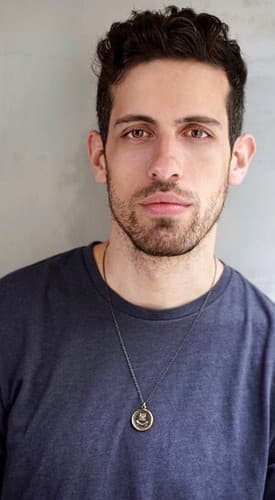
Adam Silvera is a contemporary LGBTQ+ author known for his poignant and emotionally resonant young adult fiction. His most acclaimed novel, "They Both Die at the End," explores themes of mortality, love, and living in the moment. Silvera's work often features diverse characters and tackles complex emotional landscapes, earning him a dedicated readership.

Rhonda Byrne
4.3

Menno Henselmans
4.3

Sylvia Plath
4.3
Elliot Aronson
4.3

Joseph Campbell
4.3
Erich Fromm
4.3
Irvin D. Yalom
4.2

Lucy Strange
4.2