BookBrief
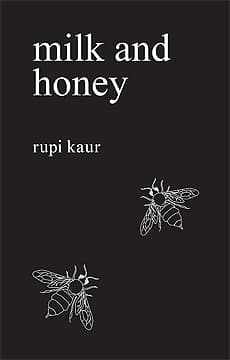
Milk and Honey cover
Archivist's Choice

Milk and Honey

Rupi Kaur (2014)

Genre

Psychology / Romance

Reading Time

90 min

Key Themes

See below

Track Your Reading

Sign in to track this book

Through stark poetry, "Milk and Honey" explores abuse, loss, and reclaiming womanhood, finding resilience in difficult experiences.

Core Idea

Rupi Kaur's "Milk and Honey" describes healing and self-discovery after abuse, love, loss, and womanhood. It argues that speaking up, often through art, helps process trauma and rebuild self-worth. The book shows that healing is a cycle, where good can be found in bad, and self-love helps overcome past suffering, turning vulnerability into strength.
Reading time
90 min
Difficulty
Easy
✓ Read this if...
You are seeking a raw, emotionally resonant exploration of trauma, healing, and self-empowerment through poetry, particularly if you appreciate accessible language and a focus on feminine strength.
✗ Skip this if...
You prefer traditional narrative structures, complex poetic forms, or a more academic approach to psychological themes, or if you are sensitive to graphic descriptions of abuse and sexual assault.

Core idea

The central argument and framework that powers the entire book.

Rupi Kaur's "Milk and Honey" describes healing and self-discovery after abuse, love, loss, and womanhood. It argues that speaking up, often through art, helps process trauma and rebuild self-worth. The book shows that healing is a cycle, where good can be found in bad, and self-love helps overcome past suffering, turning vulnerability into strength.

At a glance

Reading time

90 min

Difficulty

Easy

Read this if...

You are seeking a raw, emotionally resonant exploration of trauma, healing, and self-empowerment through poetry, particularly if you appreciate accessible language and a focus on feminine strength.

Skip this if...

You prefer traditional narrative structures, complex poetic forms, or a more academic approach to psychological themes, or if you are sensitive to graphic descriptions of abuse and sexual assault.

Key Takeaways

1

The Power of Compartmentalization for Healing

Breaking down trauma into digestible stages facilitates recovery.

Quote

The collection is divided into four chapters—the hurting, the loving, the breaking, the healing—each dealing with a different pain, healing a different heartache.

Kaur shows that complex emotional journeys, especially those with trauma and recovery, are not simple. By dividing the book into 'the hurting,' 'the loving,' 'the breaking,' and 'the healing,' she creates a structural metaphor for processing hard experiences. This division helps readers deal with specific emotions without feeling overwhelmed by all their pain. It suggests that healing is a cycle, not a straight line, where love and breaking can happen between hurt and final healing. This structure is both an artistic choice and a way ...

Supporting evidence

The very structure of 'Milk and Honey' itself, divided into four thematic chapters, serves as the primary evidence. Each chapter focuses on a specific emotional stage.

Apply this

When facing overwhelming emotional challenges, try to break them down into smaller, definable stages. Acknowledge and process one stage at a time, allowing for a structured approach to healing rather than feeling submerged by the whole experience.


trauma-processingemotional-segmentationhealing-stages
2

Reclaiming the Self After Abuse

Finding strength and self-worth by confronting and transcending past violations.

Quote

i am a forest / and a fire / and a whisper / and a roar

A main idea in 'Milk and Honey' is the hard but necessary journey of finding one's identity again after violence and abuse. Kaur's poetry expresses the deep feeling of violation and loss of self that victims often feel. However, she does not just focus on the pain but powerfully moves towards strength. The 'healing' section, in particular, shows how to rebuild self-esteem, set boundaries, and know one's worth beyond the trauma. It emphasizes that survival means not just enduring, but actively building a stronger, more real self, turni...

Supporting evidence

Poems in 'the hurting' chapter detail the pain and violation, while later poems, especially in 'the healing' chapter, depict self-acceptance and empowerment, such as 'i am a museum full of art / but you had your eyes shut'.

Apply this

For those who have experienced abuse, actively engage in practices that affirm your self-worth and autonomy. This could include journaling, therapy, setting clear personal boundaries, and consciously reframing past experiences as fuel for growth and resilience.

survivor-empowermentpost-traumatic-growthself-reclamation
3

The Dual Nature of Love and Loss

Love's profound beauty often coexists with the inevitability of heartbreak.

Quote

i didn't leave because i stopped loving you / i left because the more i stayed the less i loved myself

Kaur shows how love and loss are connected, not separate. Her 'the loving' and 'the breaking' chapters show how much love can enrich life, bringing connection and joy, but also how its end or damage can cause deep sadness. She explores the details of heartbreak, from the pain of a broken relationship to the quiet bravery of choosing self-protection over toxic love. This view normalizes the pain of loss as a natural result of loving deeply, while also encouraging people to put their own well-being first, even if it means leaving someth...

Supporting evidence

Poems in 'the loving' chapter celebrate intimacy and connection, while poems in 'the breaking' chapter vividly describe the agony of separation and the difficult decision to leave a relationship.

Apply this

Recognize that heartbreak is a valid and often necessary part of the human experience. Allow yourself to grieve losses fully, but also cultivate the self-awareness to distinguish between healthy love and relationships that diminish your self-worth, and have the courage to choose yourself.

heartbreak-resilienceself-love-boundariestoxic-relationships
4

Femininity as a Source of Strength and Vulnerability

Exploring womanhood as a multifaceted experience encompassing both power and pain.

Quote

i want to apologize to all the women i have called beautiful / before i've called them intelligent or brave

'Milk and Honey' looks deeply at modern womanhood, its joys, struggles, and power. Kaur questions society's expectations for women, criticizing the focus on looks over intelligence or strength. She speaks openly about sexual assault, body image, and the pressure to fit in, giving a voice to experiences often kept quiet. At the same time, she celebrates the strength, resilience, and sisterhood in womanhood. The collection says that true female power comes not from outside approval, but from self-acceptance, defiance, and the ability to...

Supporting evidence

Kaur's poems frequently address themes of sexual assault, body image ('my body is a museum of all the battles i have fought'), and the reclaiming of female sexuality, alongside celebrations of female strength and solidarity.

Apply this

Actively challenge societal beauty standards and internalize a broader definition of feminine strength that includes intellect, resilience, and emotional depth. Support and uplift other women, fostering a community of shared strength and understanding.

feminist-poetryfemale-empowermentbody-positivity
5

The Healing Power of Vulnerable Expression

Openly sharing pain transforms it into a pathway for connection and recovery.

Quote

how you love yourself is how you teach others to love you

Kaur's honest poetic style shows how expressing vulnerability can help heal. By sharing very personal experiences of trauma, love, and loss with direct honesty, she helps readers face their own emotions. Her willingness to share her soul invites others to do the same, building empathy and reducing feelings of loneliness. This act of speaking pain, instead of hiding it, is a key step in healing, turning individual suffering into a shared human experience. The book itself shows that our stories, no matter how painful, have great power f...

Supporting evidence

The entire book serves as evidence, as Kaur's confessional and direct style, particularly in detailing abuse and heartbreak, is central to its impact and popularity.

Apply this

Embrace vulnerability as a strength, not a weakness. Seek outlets for expressing your pain and emotions, whether through writing, art, speaking with trusted friends, or therapy. Understand that sharing your story can be a powerful act of self-healing and connection.

emotional-vulnerabilityexpressive-arts-therapyshared-trauma-healing
6

Finding Sweetness in Bitterness

Even the darkest experiences can yield lessons and growth.

Quote

there is sweetness everywhere if you are just willing to look

The title 'Milk and Honey' itself holds a main message of the collection: the ability to find good and sweetness even in the most bitter or painful experiences. Kaur does not avoid showing deep suffering, but she consistently leads the reader towards moments of strength, self-discovery, and eventual peace. This theme suggests that while pain is certain, it does not have to be the end. Instead, it can lead to growth, self-love, and a deeper appreciation for life's simple joys. It is a hopeful view that encourages finding meaning and be...

Supporting evidence

The progression from 'the hurting' to 'the healing' chapters, and the overarching message conveyed by the book's title and its concluding poems, exemplify this theme.

Apply this

After experiencing hardship, actively seek out lessons learned, moments of unexpected grace, or new strengths discovered. Practice gratitude for small joys and cultivate an optimistic mindset that looks for growth even in painful situations.

resilience-buildingpost-traumatic-wisdomoptimistic-reframing
7

The Cyclical Nature of Healing

Recovery is not a linear path but a journey with recurrences and renewed efforts.

Quote

we are all born / so beautiful / the greatest tragedy / is being convinced / we are not

Kaur's collection suggests that healing is not a simple, one-time process. The emotional journey in 'Milk and Honey' shows that healing is cyclical, with progress often mixed with setbacks or renewed pain. The chapters, though separate, are linked, meaning parts of 'hurting' can reappear even during 'healing,' and 'loving' can happen amidst 'breaking.' This nuanced view offers a more realistic and understanding look at recovery, acknowledging that setbacks are part of the journey and do not erase progress. It encourages patience and s...

Supporting evidence

The way themes and emotions from earlier chapters can subtly reappear or be referenced in later, supposedly 'healed' chapters, indicating that past experiences continue to shape the present.

Apply this

Be patient and compassionate with yourself during healing journeys. Understand that setbacks are normal and do not mean you've failed. Focus on consistent effort and self-care, recognizing that healing is an ongoing process of growth and integration.

non-linear-healingself-compassionemotional-integration
8

The Body as a Site of Memory and Resilience

Our physical selves hold the imprints of our experiences and our capacity for endurance.

Quote

my body is a museum of all the battles i have fought

Kaur often uses the body as a main metaphor, showing it not just as a container but as a living record of experiences—both painful and joyful. She explores how the body carries the weight of abuse, the memory of touch, and the scars of survival. Yet, importantly, she also presents the body as a source of strength, beauty, and resilience. Reclaiming one's body after violation is a powerful act of defiance and self-love. This theme highlights the deep connection between our physical and emotional selves, emphasizing the importance of li...

Supporting evidence

Numerous poems explicitly reference the body, its experiences of touch, violation, and eventual reclamation, such as 'my body is soft and round and lovely' or descriptions of physical pain and healing.

Apply this

Cultivate a mindful connection with your body. Practice self-care that honors its needs and boundaries. Engage in activities that help you feel safe and empowered in your physical self, and work to reframe any negative body image into one of appreciation for its strength and story.

embodied-traumabody-image-healingsomatic-experience
9

The Redemptive Power of Self-Love

Prioritizing one's own well-being is the ultimate act of liberation.

Quote

you must want to spend the rest of your life with yourself first

Ultimately, 'Milk and Honey' ends with the understanding that self-love is not extra but necessary for survival and success. After going through deep pain and complex relationships, Kaur's poetry always returns to the idea that true happiness and healing come from within. This is not selfish; instead, it is a strong act of self-protection that allows one to set healthy boundaries, leave toxic situations, and build a life based on personal integrity. It states that until one truly loves and accepts oneself, outside approval or relation...

Supporting evidence

Poems in 'the healing' chapter, particularly those focusing on independence, setting boundaries, and finding contentment alone, strongly emphasize the importance of self-love and self-reliance.

Apply this

Make self-love a daily practice. This includes setting boundaries, practicing self-compassion, pursuing personal passions, and prioritizing your mental and physical health. Understand that a strong relationship with yourself is the foundation for all other healthy relationships.

radical-self-careinner-peacepersonal-autonomy
10

Voice and Validation Through Art

Poetry serves as a powerful medium for giving voice to unspoken suffering and shared experience.

Quote

the world gives you so much pain / and here you are making gold out of it

Kaur's choice of poetry is central to the book's effect. The short, direct style of her verse allows for strong emotional focus, making complex feelings easy to understand and relate to. For many readers, 'Milk and Honey' confirms their own experiences, especially those related to trauma and abuse, which are often hard to talk about or are met with silence. By openly putting these experiences into words, Kaur creates a shared space for recognition and understanding. Her work shows how art, especially poetry, can help process pain, bui...

Supporting evidence

The direct, accessible poetic style and the widespread resonance of the book with a diverse audience, particularly young women, testify to its power in validating experiences.

Apply this

Explore creative outlets for processing your emotions and experiences. Whether through writing, drawing, music, or other forms of art, recognize the therapeutic and connective power of artistic expression. Seek out art that resonates with your own experiences, finding validation and solidarity.

poetry-as-therapycollective-healingartistic-expression

Critical analysis

Notable Quotes

How you love yourself is how you teach others to love you.

A reflection on self-love and its impact on relationships.

I am a museum full of art but you had your eyes shut.

Expressing the feeling of being unappreciated in a relationship.

The world gives you so much pain and here you are making gold out of it - there is nothing purer than that.

Acknowledging the strength in transforming pain into something beautiful.

You were my art. A masterpiece. And I was your canvas. A blank slate.

Describing a relationship where one person felt defined by the other.

What is stronger than the human heart which shatters over and over again and still lives.

Pondering the enduring strength of the human spirit despite heartbreak.

I want to apologize to all the women I have called beautiful before I've called them intelligent or brave. I am sorry I made it sound as though something as simple as what you're born with is the most you have to be proud of when your spirit has crushed mountains.

A powerful statement challenging societal norms of beauty and valuing inner strength.

You tell me to quiet down cause my opinions make me less beautiful but I was not made with a fire in my belly so I could be put out.

Rejecting the idea of conforming to others' expectations at the expense of one's voice.

Loneliness is a sign you are in desperate need of yourself.

Reframing loneliness as an opportunity for self-discovery and self-care.

The idea of beautiful is that it's whatever you want it to be.

A liberating perspective on the subjective nature of beauty.

If you are not enough for yourself you will never be enough for someone else.

Emphasizing the importance of self-sufficiency and self-acceptance in relationships.

Stay strong through your pain. Grow flowers from it. You have, after all, been through a lot.

Encouraging resilience and growth in the face of adversity.

There is a difference between giving up and knowing when you have had enough.

Distinguishing between defeat and the wisdom of setting boundaries.

Do not look for healing at the feet of those who broke you.

A cautionary reminder to seek healing from healthy sources, not from those who caused harm.

You have to stop searching for why at some point you have to just let it go.

Advising acceptance and moving on from past hurts without needing all the answers.

Quiz

Test Your Knowledge

Ready to see how well you understood this book? Take our interactive quiz with 10 questions.

10
Questions
~5
Minutes
?
Best Score

Key Questions (FAQ)

'milk and honey' is a collection of poetry and prose by Rupi Kaur that explores themes of survival, violence, abuse, love, loss, and femininity. It is divided into four chapters, each addressing different pains and heartaches, ultimately guiding readers to find sweetness amidst life's bitter moments.

About the author