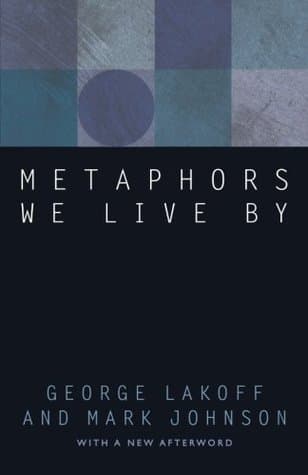
Metaphor is Not Just Poetic Device
Conceptual metaphors structure our thought and perception, not just our language.
Quote
Metaphor is pervasive in everyday life, not just in language but in thought and action. Our ordinary conceptual system, in terms of which we both think and act, is fundamentally metaphorical in nature.
Lakoff and Johnson change the traditional view of metaphor as just a linguistic or poetic decoration. They say metaphor is a main mechanism of the human mind, deeply part of our conceptual system. This means we use metaphors to understand and experience the world, not just to talk about it. Our abstract ideas—like time, arguments, or love—are mostly understood in terms of more concrete, physical experiences. This conceptual connection shapes our reasoning, decisions, and even our emotional responses, often without us knowing it. Seein...
Supporting evidence
The authors introduce numerous examples of 'conceptual metaphors' like ARGUMENT IS WAR ('He attacked my argument,' 'I shot down his claims'), TIME IS MONEY ('You're wasting my time,' 'How do you spend your time?'), and IDEAS ARE FOOD ('Let me chew on that idea,' 'That's a half-baked idea'). These aren't just figures of speech; they reflect how we structure our understanding of these abstract domains.
Apply this
Become a 'metaphor detective' in your daily life. Pay attention to the metaphors used in news, politics, advertising, and personal conversations. Ask yourself: What underlying conceptual metaphor is at play? How might this metaphor be shaping my perception or the perception of others? This awareness can reveal hidden biases and open up alternative ways of understanding a situation.