BookBrief
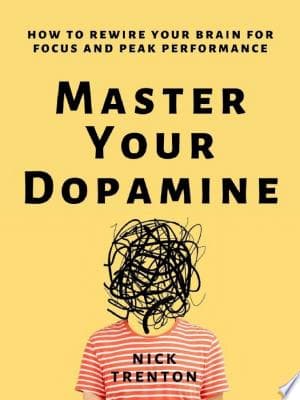
Master Your Dopamine cover
Archivist's Choice

Master Your Dopamine

Nick Trenton (2023)

Genre

Psychology / Self-Help

Reading Time

120 min

Key Themes

See below

Track Your Reading

Sign in to track this book

Improve performance and happiness by managing dopamine and your body's natural reward system.

Core Idea

Today, instant gratification overstimulates our dopamine systems, causing constant dissatisfaction, low motivation, and poor focus. This book explains that dopamine is vital for motivation but harmful in excess. By understanding this, we can intentionally reset and regulate our dopamine. Practical strategies—covering nutrition, sleep, mindfulness, and small behavioral changes—help individuals regain control of their reward system, improve focus, boost intrinsic motivation, and achieve lasting performance and well-being.
Reading time
120 min
Difficulty
Easy
✓ Read this if...
You feel overwhelmed by distractions, lack sustained motivation, or constantly seek external stimulation to feel engaged, and you're looking for actionable, science-backed strategies to regain control.
✗ Skip this if...
You are looking for deep philosophical discussions on consciousness, or you are already an expert in neurochemistry and have implemented advanced biohacking techniques for dopamine regulation.

Core idea

The central argument and framework that powers the entire book.

Today, instant gratification overstimulates our dopamine systems, causing constant dissatisfaction, low motivation, and poor focus. This book explains that dopamine is vital for motivation but harmful in excess. By understanding this, we can intentionally reset and regulate our dopamine. Practical strategies—covering nutrition, sleep, mindfulness, and small behavioral changes—help individuals regain control of their reward system, improve focus, boost intrinsic motivation, and achieve lasting performance and well-being.

At a glance

Reading time

120 min

Difficulty

Easy

Read this if...

You feel overwhelmed by distractions, lack sustained motivation, or constantly seek external stimulation to feel engaged, and you're looking for actionable, science-backed strategies to regain control.

Skip this if...

You are looking for deep philosophical discussions on consciousness, or you are already an expert in neurochemistry and have implemented advanced biohacking techniques for dopamine regulation.

Key Takeaways

1

The Dopamine Deluge

Modern life overstimulates our reward system, diminishing our capacity for simple joy.

Quote

In our modern age, we are constantly flooded with dopamine. That might sound like a good thing, but it means that we constantly require more and more stimulation to feel simple happiness.

The book says that modern society, with its instant gratification and constant digital stimulation, has created a 'dopamine rich' environment. While dopamine is necessary for motivation and pleasure, constant overexposure desensitizes our reward pathways. This means our baseline for happiness and satisfaction rises, needing stronger stimuli to feel anything. This affects our ability to focus, pursue long-term goals, and find contentment in daily life. It is an important insight into why many feel unfulfilled despite having access to m...

Supporting evidence

The author implicitly references the pervasive nature of smartphones, social media, fast food, and instant entertainment as sources of constant dopamine hits, leading to a higher 'set point' for pleasure.

Apply this

Recognize that the 'always-on' nature of modern life is actively working against your intrinsic reward system. Be mindful of how much stimulation you're consuming daily and its impact on your baseline happiness.


dopamine-overloadhedonic-treadmillreward-pathways
2

Dopamine is a Double-Edged Sword

It's the pleasure hormone, but more isn't always better; balance is key for true well-being.

Quote

It's the pleasure hormone, but that doesn't mean more is better.

Trenton clarifies a common misunderstanding: dopamine is not just about pleasure; it is mainly about motivation, anticipation, and seeking. While a surge can feel good, its main job is to drive us toward rewards. When this system is always active, it leads to constant seeking without true satisfaction. The book stresses that healthy dopamine regulation is not about removing it, but about finding a balance where our brains can appreciate small rewards and stay motivated for sustained effort, instead of chasing brief highs. This differe...

Supporting evidence

The author explains the fundamental neurobiology of dopamine, distinguishing its role in 'wanting' versus 'liking' and how an imbalance can lead to addictive behaviors or anhedonia.

Apply this

Shift your perspective from constantly seeking pleasure to fostering motivation for meaningful activities. Understand that the 'high' of achieving a goal is often more satisfying than passive consumption.

dopamine-regulationmotivation-systempleasure-vs-seeking
3

The Detox Principle

Strategic abstinence from high-dopamine activities resets your sensitivity to simple joys.

Quote

You'll get various techniques, all scientifically proven and validated, to regulate your dopamine to healthy levels. You'll see how 1, 3, and 7 day detoxes can work.

The main practical strategy is the 'dopamine detox.' This does not mean removing dopamine entirely, which is impossible and not wanted. Instead, it means temporarily avoiding highly stimulating activities (e.g., social media, video games, junk food, pornography, too much entertainment). By removing these strong external drivers, the brain's reward system slowly 'resets,' becoming more sensitive to lower-level stimuli. This lets people find pleasure and motivation in activities that were once unengaging, such as reading, walking in nat...

Supporting evidence

The book details the concept of a 'dopamine fast' or 'detox' as a scientifically validated method to downregulate dopamine receptors and increase sensitivity to natural rewards.

Apply this

Experiment with a 1-day dopamine detox. Choose a day to avoid all highly stimulating activities and observe how your appreciation for simple tasks or quiet moments changes. Gradually extend if beneficial.

dopamine-fastdigital-detoxsensory-deprivation
4

Biohacking Nutrition for Dopamine

Your gut biome and dietary choices directly influence dopamine production and brain health.

Quote

You'll also learn about the other ways you can prepare your body for peak performance, such as with your gut biome...

Trenton discusses more than behavioral changes, looking at the body's role in dopamine regulation, especially nutrition and the gut biome. The gut-brain axis is a strong communication path, and healthy gut flora can affect neurotransmitter production, including dopamine precursors. Specific nutrients, such as tyrosine (an amino acid precursor to dopamine), omega-3 fatty acids, and B vitamins, are essential for good dopamine synthesis and function. Ignoring these means even the best behavioral detox might not work, as the body lacks th...

Supporting evidence

The book references the 'gut-brain axis' and the importance of a diverse microbiome, along with specific dietary recommendations like foods rich in tyrosine (e.g., almonds, avocados, bananas) and probiotics.

Apply this

Incorporate gut-friendly foods (fermented foods, fiber-rich vegetables) and dopamine-precursor foods into your diet. Consider reducing processed foods that can negatively impact gut health.

gut-brain-axisneurotransmitterstyrosinemicrobiome
5

Mastering Energizing Sleep

Quality sleep is non-negotiable for dopamine regulation and peak cognitive function.

Quote

...and master the art of energizing sleep.

Sleep is not just rest; it is vital for brain repair, consolidation, and neurotransmitter regulation. Trenton emphasizes that poor sleep greatly harms dopamine sensitivity and production, leading to less motivation, focus, and more irritability. Chronic sleep deprivation can cause symptoms similar to dopamine deficiency, making it harder to do productive things or feel real pleasure. The book likely offers practical tips for improving sleep hygiene, recognizing that this basic element must be in place for any dopamine regulation effor...

Supporting evidence

The author connects sleep quality to neurotransmitter balance and cognitive function, likely citing studies on the impact of sleep deprivation on focus, mood, and decision-making.

Apply this

Prioritize a consistent sleep schedule, create a dark and cool sleep environment, and avoid screens an hour before bed. View sleep as a performance enhancer, not a luxury.

sleep-hygienecircadian-rhythmcognitive-function
6

Small Nudges, Big Changes

Incremental, consistent adjustments are more sustainable and effective than drastic overhauls.

Quote

...how small nudges can make you the healthiest person you know.

The book suggests a gradual, 'small nudges' approach to changing behavior instead of big, all-or-nothing transformations. This strategy comes from behavioral psychology, where small, consistent actions are more likely to become habits. For dopamine regulation, this means starting with a short detox, changing one part of your diet, or improving one aspect of sleep hygiene, rather than trying everything at once. This reduces resistance and builds momentum, making long-term success more likely. Trenton, with his background in behavioral ...

Supporting evidence

Trenton's background in behavioral psychology underpins this principle, likely drawing on concepts like habit formation, atomic habits, or the power of micro-changes.

Apply this

Instead of aiming for a perfect diet, start by replacing one sugary drink with water daily. Instead of a full digital detox, try one hour screen-free before bed. Focus on consistency over intensity.

habit-formationbehavioral-psychologymicro-habits
7

Presence and Mindfulness

Being present enhances the appreciation of low-dopamine activities, fostering genuine contentment.

Quote

Easy yet effective strategies to be present, mindful, and in the moment.

Beyond detoxing, the book stresses cultivating presence and mindfulness. When our dopamine system is overstimulated, we are always looking for the next 'hit,' pulling us away from the present. By practicing mindfulness, we can consciously focus our attention on the subtle sensations and experiences of daily life – a warm cup of coffee, a walk in the park, a conversation. This retrains our brain to find satisfaction in ordinary moments, rather than depending on external, high-intensity stimuli. It is a key complementary practice to dop...

Supporting evidence

The book provides 'easy yet effective strategies' for mindfulness, suggesting practical exercises to bring attention to the present moment.

Apply this

Practice a 5-minute mindfulness exercise daily. Focus on your breath, sounds, or sensations without judgment. During a low-dopamine activity, actively engage all your senses.

mindfulnesspresent-momentattention-training
8

Peak Performance is a Holistic Endeavor

Optimizing dopamine is part of a larger ecosystem of sleep, nutrition, and mindful living.

Quote

Discover the keys to peak performance in all aspects of life, in 10 minutes a day.

Trenton's approach to 'Master Your Dopamine' is not narrow; it is comprehensive. While dopamine is central, he acknowledges that peak performance in all life areas – focus, productivity, happiness – results from many interacting factors. He combines the importance of sleep, gut health, nutrition, and mindful presence as linked parts that together lead to a well-regulated dopamine system and overall well-being. This integrated view is essential, as addressing one area alone often gives limited results. The '10 minutes a day' promise su...

Supporting evidence

The book's structure itself, covering detoxes, nutrition, sleep, and mindfulness, demonstrates this holistic view.

Apply this

Instead of hyper-focusing on one area, identify one small improvement you can make in each of the key areas: dopamine detox, nutrition, sleep, and mindfulness. Implement them consistently.

holistic-wellnesspeak-performanceintegrated-health

Critical analysis

Notable Quotes

Dopamine is not just a pleasure chemical; it's a motivation chemical.

Explaining the fundamental misunderstanding of dopamine's role.

The modern world is designed to hijack your dopamine system.

Discussing the challenges of maintaining dopamine sensitivity in today's environment.

Delayed gratification isn't just about willpower; it's about training your dopamine system.

Linking the concept of delayed gratification to neurochemical processes.

The constant pursuit of novelty can desensitize you to genuine joy.

Warning against the pitfalls of always seeking new stimuli.

Boredom is not the enemy; it's the fertile ground for creativity and true desire.

Advocating for embracing boredom as a pathway to deeper engagement.

Your dopamine baseline is not fixed; it's a dynamic system you can influence.

Emphasizing personal agency in managing one's dopamine levels.

Small, consistent wins are more powerful for long-term motivation than sporadic grand achievements.

Highlighting the importance of incremental progress for sustained drive.

The 'dopamine detox' is not about deprivation, but about reset and recalibration.

Clarifying the purpose and methodology behind taking a break from dopamine-spiking activities.

True satisfaction comes from the pursuit, not just the attainment.

Discussing the reward pathway and the importance of the journey.

If you don't intentionally manage your dopamine, the world will manage it for you.

Stressing the need for proactive self-management in a stimulating environment.

The highest form of freedom is not doing whatever you want, but wanting what serves you.

Connecting dopamine mastery to a deeper sense of personal freedom and alignment.

Resilience is built not by avoiding discomfort, but by intentionally seeking it in controlled doses.

Explaining how controlled exposure to challenges strengthens the dopamine system and builds character.

Mindfulness isn't just about being present; it's about observing your urges without immediately acting on them.

Integrating mindfulness practices as a tool for dopamine regulation.

Quiz

Test Your Knowledge

Ready to see how well you understood this book? Take our interactive quiz with 10 questions.

10
Questions
~5
Minutes
?
Best Score

Key Questions (FAQ)

Dopamine is often called the 'pleasure hormone,' but its role extends far beyond simple pleasure. It's crucial for motivation, focus, learning, and reward-driven behavior. Understanding dopamine is key to regulating your capacity for happiness and productivity.

About the author