BookBrief
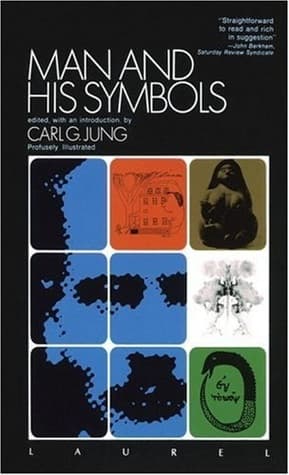
Man and His Symbols cover
Archivist's Choice

Man and His Symbols

C.G. Jung (1964)

Genre

Psychology / Reference / Spirituality / Science / Philosophy

Reading Time

9-12 hours

Key Themes

See below

Track Your Reading

Sign in to track this book

Explore the universal language of dreams and symbols, guided by Jung, to understand yourself and live a complete, productive life.

Core Idea

C.G. Jung's "Man and His Symbols" says the human mind is influenced by the unconscious, which communicates through symbols in dreams, myths, art, and religion. These symbols come from universal, inherited thought patterns and images called archetypes, found in the collective unconscious—a shared reservoir of human experience. The book states that understanding these symbolic messages, especially from the Shadow (our repressed aspects) and the Anima/Animus (our inner opposite-sex images), is important for psychological health and individuation: the journey toward becoming a complete and integrated self. Jung says ignoring these unconscious communications can lead to neurosis and a sense of meaninglessness. He suggests engaging with our inner symbolic world for personal growth and a deeper connection to humanity's shared spiritual and psychological heritage.
Reading time
9-12 hours
Difficulty
Hard
✓ Read this if...
You are curious about the deeper meanings behind dreams, myths, art, and religious symbols, and want to understand the profound influence of the unconscious mind on human behavior and personal development. Ideal for those seeking an introduction to Jungian psychology directly from the source.
✗ Skip this if...
You prefer a purely behavioral or cognitive approach to psychology, or are looking for a quick self-help guide with actionable steps rather than a deep dive into symbolic interpretation and the complexities of the psyche.

Core idea

The central argument and framework that powers the entire book.

C.G. Jung's "Man and His Symbols" says the human mind is influenced by the unconscious, which communicates through symbols in dreams, myths, art, and religion. These symbols come from universal, inherited thought patterns and images called archetypes, found in the collective unconscious—a shared reservoir of human experience. The book states that understanding these symbolic messages, especially from the Shadow (our repressed aspects) and the Anima/Animus (our inner opposite-sex images), is important for psychological health and individuation: the journey toward becoming a complete and integrated self. Jung says ignoring these unconscious communications can lead to neurosis and a sense of meaninglessness. He suggests engaging with our inner symbolic world for personal growth and a deeper connection to humanity's shared spiritual and psychological heritage.

At a glance

Reading time

9-12 hours

Difficulty

Hard

Read this if...

You are curious about the deeper meanings behind dreams, myths, art, and religious symbols, and want to understand the profound influence of the unconscious mind on human behavior and personal development. Ideal for those seeking an introduction to Jungian psychology directly from the source.

Skip this if...

You prefer a purely behavioral or cognitive approach to psychology, or are looking for a quick self-help guide with actionable steps rather than a deep dive into symbolic interpretation and the complexities of the psyche.

Key Takeaways

1

The Unconscious Speaks in Symbols

Dreams are the primary, universal language of the unconscious mind.

Quote

Man uses the term 'symbol' in a very restricted sense, but the word 'symbol' in its original use was not a designation or a sign, but an image which was pregnant with meaning.

Jung says the unconscious mind, a reservoir of psychic energy, communicates with the conscious ego through symbols. These symbols appear most clearly in dreams, which are direct messages from the deeper self. Understanding these symbolic expressions is important for psychological integration and self-awareness. Unlike signs, which have fixed meanings, symbols are dynamic and multi-layered, holding meaning that connects with universal human experiences and personal complexes. Not paying attention to this symbolic language leads to a di...

Supporting evidence

Jung's extensive clinical work, where he observed recurring symbolic patterns in the dreams of patients from diverse backgrounds, forming the basis for his theory of the collective unconscious and archetypes. He cites examples of patients whose dreams presented solutions to their conscious problems or revealed underlying psychological issues.

Apply this

Keep a dream journal to record dreams immediately upon waking. Instead of trying to 'decode' them literally, reflect on the feelings, imagery, and narrative. Consider what aspects of your waking life might be reflected or commented upon symbolically by the dream. Pay attention to recurring symbols or themes, as these often point to significant unconscious processes.


unconscious-minddreamssymbolscollective-unconscious
2

Archetypes: Universal Patterns of the Psyche

Deep within the collective unconscious lie universal patterns of experience and behavior.

Quote

The archetype represents a certain psychic tendency, and it is a pattern of behavior which exists in every human being.

Jung introduced archetypes as universal images and thought patterns that exist in the collective unconscious, an inherited psychic structure common to all humanity. These archetypes are not fully formed images but rather tendencies to respond to the world in certain ways, appearing in myths, religions, fairy tales, and personal dreams across cultures and history. Examples include the Hero, the Shadow, the Anima/Animus, the Great Mother, and the Wise Old Man. Recognizing these archetypal patterns in our lives helps us understand deeper...

Supporting evidence

Jung's comparative studies of mythology, religion, and folklore from diverse cultures, where he observed strikingly similar symbolic motifs and narrative structures (e.g., the hero's journey, the flood myth, the divine child). He also found these patterns recurring in the dreams and fantasies of his patients, even those with no prior exposure to such cultural narratives.

Apply this

When encountering a challenging situation or a significant life transition, consider which archetypal patterns might be at play. Are you embodying the 'Hero' facing a trial? Is the 'Shadow' manifesting as an unacknowledged personal flaw? Understanding these roles can provide perspective and guidance on how to navigate the situation with greater awareness.

archetypescollective-unconsciousmythologyanima-animus
3

The Shadow: Confronting Our Dark Side

Integrating the unacknowledged aspects of ourselves is vital for wholeness.

Quote

The shadow is a moral problem that challenges the whole ego-personality, for no one can become conscious of the shadow without considerable moral effort. To become conscious of it involves recognizing the dark aspects of the personality as present and real.

The Shadow is an archetype representing the unconscious, repressed aspects of the ego that we consider negative or unacceptable. It contains our primitive instincts, weaknesses, and unexpressed desires, but also latent positive qualities. The Shadow is not evil; it simply holds what the conscious ego has disowned. Projecting the Shadow onto others (blaming them for our own flaws) is a common defense mechanism that prevents self-awareness and causes conflict. Jung says confronting and integrating the Shadow is an important step towards...

Supporting evidence

Jung's observation of patients who would project their own unacknowledged anger, jealousy, or greed onto family members or society, leading to interpersonal conflicts and a lack of personal responsibility. He also noted how historical figures or political movements could embody collective shadow projections, leading to scapegoating and mass hysteria.

Apply this

Identify situations where you feel intense irritation or judgment towards others. Ask yourself if the quality you dislike in them might be a disowned part of yourself. Reflect on past mistakes or 'dark' impulses you've suppressed. Instead of condemning them, try to understand their origin and how they might be integrated constructively, rather than letting them fester in the unconscious.

shadow-selfprojectionindividuationrepression
4

Individuation: The Journey to Wholeness

Becoming a unique, integrated self by harmonizing conscious and unconscious.

Quote

Individuation is the process by which a person becomes a psychological 'in-dividual,' that is, a separate, indivisible unity or 'whole.'

Individuation is the main goal of Jungian psychology: a lifelong process of psychological development where the individual integrates the conscious and unconscious parts of their personality, leading to a unique, integrated, and whole self. It is not about being 'individualistic' but about becoming an 'indivisible' unity. This journey involves confronting archetypes like the Shadow, integrating the Anima/Animus, and relating to the Self archetype, which represents the totality of the mind. Individuation is a natural, though often chal...

Supporting evidence

Jung's own life journey, marked by intense inner experiences, dreams, and active imagination, which he documented extensively. He also observed patients, often in mid-life, experiencing a 'crisis of meaning' that propelled them towards a deeper exploration of their inner world and a reorientation of their life goals beyond material success.

Apply this

Engage in self-reflection through journaling, meditation, or creative expression. Pay attention to moments of synchronicity or profound insight. Consider your life's trajectory and whether it aligns with your deepest values and sense of purpose, rather than external expectations. Embrace challenges as opportunities for growth and integration, viewing them as catalysts in your unique journey.

individuationselfwholenesspersonal-growth
5

Anima and Animus: The Inner Opposite Sex

Our unconscious contains an inner figure of the opposite gender, crucial for balance.

Quote

The anima is the personification of all feminine psychological tendencies in a man, and the animus is the personification of masculine psychological tendencies in a woman.

Jung proposed that every person has an unconscious inner figure of the opposite sex: the Anima in men (the feminine aspect) and the Animus in women (the masculine aspect). These archetypes represent the undeveloped, often projected, qualities of the opposite gender within our mind. The Anima often shows up as moods, emotional sensitivity, and relational qualities in men, while the Animus can appear as opinions, assertiveness, and rationality in women. When not integrated, these figures can lead to projections onto real-life partners, ...

Supporting evidence

Clinical examples where men struggled with emotional expression or understanding women, often projecting their Anima onto a partner, leading to idealization or demonization. Similarly, women who struggled with assertiveness or logical thought might find their Animus manifesting as rigid, dogmatic opinions or a critical inner voice.

Apply this

For men, explore your emotional landscape, cultivate empathy, and engage in activities traditionally associated with the feminine (e.g., creative arts, nurturing relationships). For women, develop your assertiveness, independent thought, and rational decision-making. Pay attention to how you project these qualities onto others in your relationships and consciously try to embody them yourself.

animaanimusgender-identityrelationships
6

The Danger of Unconscious Power

Ignoring the unconscious can lead to destructive projections and societal harm.

Quote

The man who is not conscious of himself remains unconscious of the world, for he does not know himself as a world.

Jung warns about the dangers of remaining unconscious, for both the individual and society. When people fail to integrate their Shadow or understand their inner workings, these unacknowledged contents are projected onto external groups, individuals, or ideologies. This can appear as prejudice, scapegoating, mass hysteria, and collective delusions, as seen in political extremism or wartime propaganda. The book says many societal problems come from a collective lack of self-awareness. By understanding our own unconscious biases and moti...

Supporting evidence

The rise of totalitarian regimes in the 20th century, where collective unconscious fears and desires were exploited by charismatic leaders, leading to mass projections of the Shadow onto 'enemies of the state' and widespread atrocities. Jung also points to the phenomenon of 'groupthink' and how individuals lose their critical faculties within a collective, allowing unconscious forces to take over.

Apply this

Cultivate critical thinking and resist the urge to demonize or blindly follow. When strong emotions arise towards a political group or social issue, pause to examine if personal unconscious content (like your own Shadow) might be influencing your perception. Engage in self-reflection to understand your own prejudices and biases, rather than projecting them onto others.

collective-unconsciousprojectionsocietal-psychologymass-psychology
7

Dreams as Practical Guidance

Dreams offer compensatory and prospective messages for conscious life.

Quote

A dream is a self-portrayal of the unconscious, but it is not a wish-fulfillment, as Freud thought, but a natural attempt to re-establish the psychic balance.

Jung saw dreams not as disguised wish-fulfillments (as Freud did) but as vital, natural attempts by the unconscious to communicate with the conscious mind. Dreams balance our psyche, showing aspects of our mind that are neglected or overemphasized in waking life. They can also be prospective, offering insights or 'premonitions' about future psychological developments or solutions to current problems. Dreams speak in a symbolic language that needs careful attention and interpretation, not literal translation. By engaging with our dream...

Supporting evidence

Jung provides numerous case studies where patients' dreams offered clear, symbolic advice regarding their emotional conflicts, career decisions, or personal relationships. For instance, a patient obsessed with work might dream of being lost in a forest, compensating for their neglect of their natural, intuitive side. Another might dream of a specific object or animal that, upon reflection, provided a key insight into a waking problem.

Apply this

Approach your dreams with an attitude of curiosity, not judgment. When a dream presents a problem or a strong image, ask yourself what aspect of your waking life it might be commenting on. Don't force an interpretation; let the meaning emerge through reflection and association. Look for the compensatory message: what is the dream trying to balance or highlight that you're missing in your conscious life?

dreamscompensationunconscious-communicationdream-interpretation
8

The Symbol as a Living Entity

Symbols are dynamic, evolving expressions of meaning, not static signs.

Quote

The symbol is not a sign, but an image which is pregnant with meaning. It is something that points beyond itself to an unknown quantity.

Unlike a sign, which has a fixed and known meaning (e.g., a traffic light), a symbol is a living, dynamic entity that points to something largely unconscious and unknowable. Symbols are 'full of meaning,' carrying multiple layers of significance that connect with both personal and collective human experience. Their meaning is not static but changes with the individual's psychological development and cultural context. Jung says trying to reduce a symbol to a single, definitive interpretation kills its living essence. Instead, we should...

Supporting evidence

The evolution of religious symbols (e.g., the cross, the lotus) across different cultures and historical periods, where their core meaning persists but specific interpretations and associations change. Jung also observes how a personal dream symbol might change its meaning or significance for an individual over the course of their therapy as their understanding deepens.

Apply this

When encountering a powerful symbol (in a dream, art, or myth), resist the urge to immediately 'explain' it. Instead, sit with it. What feelings does it evoke? What personal memories or associations does it trigger? Explore its various facets and allow its meaning to unfold over time, rather than seeking a definitive answer. Understand that its 'truth' is experiential and personal.

symbolsmeaningarchetypesunconscious-communication
9

The Importance of Personal Myth

Discovering and living our unique life story provides meaning and direction.

Quote

The privilege of a lifetime is to become who you truly are.

Jung suggests that each person has a unique 'personal myth' or life story that unfolds through individuation. This myth is not a fictional tale but the deep, underlying narrative that gives meaning and purpose to one's existence. It is shaped by personal experiences, family history, and the archetypal patterns of the collective unconscious. Discovering and consciously living this personal myth involves aligning our conscious choices with our deepest inner truths and potentials. When we are disconnected from our personal myth, life can...

Supporting evidence

Jung's own extensive autobiography, 'Memories, Dreams, Reflections,' where he consciously constructed and reflected upon his life as a unique mythic journey, integrating his personal experiences with universal archetypal themes. He observed that patients who found a compelling narrative for their lives, often through dream analysis, experienced a profound sense of healing and purpose.

Apply this

Reflect on significant events, recurring dreams, and pivotal relationships in your life. What are the recurring themes or challenges? How do they connect? Try to articulate your own 'hero's journey' or the unique narrative that defines your life's unfolding. Consider what your 'destiny' or deepest calling might be, not in a rigid sense, but as a guiding principle for your choices.

personal-mythindividuationmeaning-of-lifeself-discovery
10

The Collective Unconscious: Shared Human Heritage

Humanity shares a common psychic substrate of inherited patterns and images.

Quote

The collective unconscious is a part of the psyche which can be negatively distinguished from a personal unconscious by the fact that it does not, like the latter, owe its existence to personal experience and consequently is not a personal acquisition.

Jung's most revolutionary concept, the collective unconscious, states that beyond our personal experiences and memories, there is a deeper layer of the unconscious mind shared by all humanity. This inherited psychic base contains universal archetypes and primordial images, much like our physical bodies share common biological structures. It is not learned but is an innate part of our psychological makeup, influencing our perceptions, emotions, and behaviors. The collective unconscious explains the recurring motifs in myths, religions,...

Supporting evidence

Jung's extensive cross-cultural research, demonstrating the presence of similar myths (e.g., the flood myth, the hero's journey), religious symbols (e.g., the mandala), and archetypal figures (e.g., the Wise Old Man, the Great Mother) in cultures that had no historical contact. He also observed these universal patterns emerging spontaneously in the dreams and fantasies of his patients.

Apply this

When you encounter a powerful story, myth, or symbol, consider its universal resonance. How does it connect to deeper human experiences beyond its specific cultural context? Reflect on how your own life experiences might be echoing ancient, shared human narratives. This can provide a sense of belonging and a broader perspective on personal challenges.

collective-unconsciousarchetypesmythologyuniversal-symbols

Critical analysis

Notable Quotes

The meeting of two personalities is like the contact of two chemical substances: if there is any reaction, both are transformed.

Jung discussing the transformative power of interpersonal relationships in psychological development.

Who looks outside, dreams; who looks inside, awakes.

Jung emphasizing the importance of introspection for self-awareness and psychological growth.

The dream is a little hidden door in the innermost and most secret recesses of the soul.

Jung explaining dreams as gateways to the unconscious mind.

As far as we can discern, the sole purpose of human existence is to kindle a light in the darkness of mere being.

Jung reflecting on the search for meaning and consciousness in human life.

The unconscious is not just evil by nature, it is also the source of the highest good.

Jung discussing the dual nature of the unconscious as both destructive and creative.

The symbol is the primitive expression of the unconscious, but it is also the idea that corresponds to the highest intuition of the conscious mind.

Jung defining symbols as bridges between conscious and unconscious realms.

Man's task is to become conscious of the contents that press upward from the unconscious.

Jung outlining the psychological process of integrating unconscious material.

The creation of something new is not accomplished by the intellect but by the play instinct acting from inner necessity.

Jung describing creativity as arising from unconscious drives rather than rational thought.

The psyche is not of today; its ancestry goes back many millions of years.

Jung explaining the collective unconscious as containing ancestral memories.

The symbol is always a product of an extremely complex nature, since data from every psychic function have gone into its making.

Jung analyzing how symbols synthesize multiple aspects of human experience.

The conscious mind allows itself to be trained like a parrot, but the unconscious does not.

Jung contrasting the trainable conscious mind with the autonomous unconscious.

The dream is the theater where the dreamer is at once scene, actor, prompter, stage manager, author, audience, and critic.

Jung using theatrical metaphor to describe the multifaceted nature of dreaming.

The symbol is the best possible expression for something unknown.

Jung defining symbols as representations of what cannot be fully understood consciously.

The psychological rule says that when an inner situation is not made conscious, it happens outside as fate.

Jung warning about the consequences of ignoring unconscious conflicts.

Quiz

Test Your Knowledge

Ready to see how well you understood this book? Take our interactive quiz with 10 questions.

10
Questions
~5
Minutes
?
Best Score

Key Questions (FAQ)

'Man and His Symbols' is Carl Jung's accessible exploration of the unconscious mind, focusing on how symbols in dreams reveal insights about the self. It aims to help general readers understand Jungian psychology for personal growth and self-awareness.

About the author

C.G. Jung

Carl Jung was a Swiss psychiatrist and psychoanalyst who founded analytical psychology. His extensive writings, including "Man and His Symbols" and "The Archetypes and the Collective Unconscious," explored the human psyche, dreams, and the concept of the collective unconscious. Jung's work profoundly influenced depth psychology, philosophy, and comparative religion.