First Visit and Memory's Return
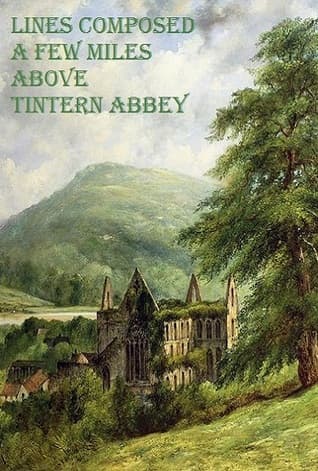
Five years have passed since William Wordsworth last visited the Wye River banks and the Tintern Abbey ruins. He returns with his sister, Dorothy, and the familiar landscape immediately brings back strong memories. He remembers the 'beauteous forms' of the steep cliffs, the farms, the orchards, and the 'wreaths of smoke' from the woods. These natural scenes, though not seen, have lived in his memory as a source of comfort and inspiration during his time in 'towns and cities.' They gave him 'sensations sweet' and a quiet renewal, even without him knowing it. He thinks about how these memories have shaped his character, encouraging kindness and love, and giving him a deeper spiritual understanding of humanity.
The Power of Nature in Absence
Wordsworth explains the deep effect the Wye landscape's memory has had on him. He describes how, even in the 'din of towns and cities,' these remembered scenes offered him 'sweet sensations' that are more than just sensory pleasure. They created a 'blessed mood' where the world's burdens lessen, and the spirit lifts. More than just temporary joy, these memories have led to a deeper, lasting peace. They have guided his morals and increased his ability for 'unremembered pleasure' in kind acts and love. He feels a 'genial mood' where he can see the 'sublime' in nature and people, a gift from his connection with the natural world.
A Past Self Recalled
The poet thinks about his earlier visit to the Wye, describing the strong, almost animal-like joy he felt as a young man. He remembers a time when nature was 'all in all,' and he rushed through the woods and over the mountains with thoughtless energy. He sought only 'appetite' and 'a feeling and a love, / That had no need of a remoter charm, / By thought supplied, nor any interest / Unborrowed from the eye.' He admits that this 'aching joy' and 'dizzy raptures' of youth have faded. He no longer experiences nature with the same raw intensity, feeling a loss for that pure, primary connection.
The Maturing Perspective
Wordsworth explains that while the 'coarser pleasures' of his youth are gone, he has gained something much deeper and more lasting. He now sees in nature 'a sense sublime / Of something far more deeply interfused,' a spiritual presence that connects everything. This 'presence' is felt in the 'light of setting suns,' the 'ocean and the living air,' the 'blue sky,' and the 'mind of man.' He has learned to look at nature not just with his eyes but with deep thought and spiritual understanding, hearing 'the still, sad music of humanity' and finding comfort and wisdom in nature's 'healing power.' This new view offers a 'joy / Of elevated thoughts; a sense sublime.'
Nature as a Spiritual Guide
For Wordsworth, nature is no longer just beautiful but a deep spiritual guide. He speaks of 'a presence that disturbs me with the joy / Of elevated thoughts; a sense sublime / Of something far more deeply interfused.' This 'something' is a living spirit, a 'motion and a spirit, that impels / All thinking things, all objects of all thought, / And rolls through all things.' Through this perception, he finds comfort and moral direction. He believes nature can 'so inform / The mind that is within us, so impress / With quietness and beauty, and so feed / With lofty thoughts, that neither evil tongues, / Rash judgments, nor the sneers of selfish men, / Nor greetings where no kindness is, nor all / The dreary intercourse of daily life, / Shall e'er prevail against us.'
Dorothy's Presence and Hope
Wordsworth turns to his younger sister, Dorothy, who is with him on this visit. He sees in her 'the shooting of my own sweet thoughts,' and in her 'wild eyes' and 'solitary pleasure,' he recognizes the strong, unthinking love of nature that was his own youth. He hopes she, too, will find in nature the same lasting comfort and spiritual support he has found. He believes that even when the 'coarser pleasures' of youth fade for her, the memory of these natural experiences will serve as a 'storehouse' for future comfort and wisdom, protecting her from the world's harshness and guiding her moral growth.
A Prayer for Dorothy
Addressing Dorothy directly, Wordsworth offers a strong prayer for her future, closely tied to nature. He hopes that 'Nature never did betray / The heart that loved her' and that she will always find 'in nature's healing power' a refuge from 'the sneers of selfish men' and 'the dreary intercourse of daily life.' He imagines nature as a constant companion and guide for her, a 'guardian of my heart, and soul of all my moral being.' He wishes for her to keep seeing nature with joy and wonder, and for the memory of these moments to sustain her, just as they have sustained him. He hopes that even when the 'coarser pleasures' of youth pass, 'the memory of what has been, / And never more will be, shall be a joy / To thee.'
Nature's Enduring Legacy
In his closing thoughts, Wordsworth confirms nature's lasting and transformative power. He reflects on how the 'beauteous forms' of the Wye valley have shaped his 'intellectual and moral being' over the years, giving him 'many a sweet emotion' and 'many a tranquil mood.' He hopes that for Dorothy, too, this landscape will become a treasured memory, a 'fountain of all her future years.' He believes that even when he is gone, the memory of this shared experience and nature's continued presence will ensure that she 'shall not want / The blessed mood in which she sees into the life of things.' He finds comfort in the idea that nature will remain a loyal friend to both of them, showing its deep and lasting influence.
The 'Spirit' of the Landscape
Wordsworth explains the 'presence' he feels in nature, describing it as 'a motion and a spirit, that impels / All thinking things, all objects of all thought, / And rolls through all things.' This is not just seeing beauty but a deep spiritual connection. He feels 'a sense sublime / Of something far more deeply interfused' in the 'light of setting suns,' the 'ocean and the living air,' and 'the blue sky.' This spiritual dimension lets him go beyond how things look and connect with a deeper, unifying force. This 'spirit' provides the deep 'joy / Of elevated thoughts' and the 'blessed mood' in which he can see the true 'life of things,' offering a feeling of universal connection.
Nature as a Moral Anchor
Wordsworth strongly believes in nature's power to protect the human spirit from the world's negative forces. He states that nature can 'so inform / The mind that is within us, so impress / With quietness and beauty, and so feed / With lofty thoughts, that neither evil tongues, / Rash judgments, nor the sneers of selfish men, / Nor greetings where no kindness is, nor all / The dreary intercourse of daily life, / Shall e'er prevail against us.' This protective quality comes from the deep peace and elevated thoughts that connection with nature inspires. It acts as a moral anchor, strengthening the person against societal pressures and building a strong inner life based on goodness and calm, ensuring the heart stays open to kindness and beauty.