BookBrief
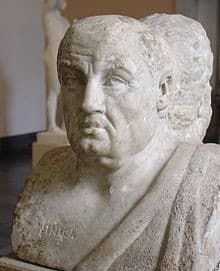
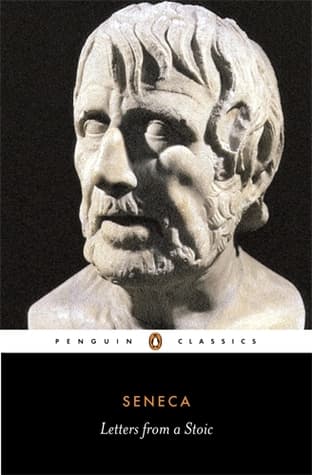
Letters from a Stoic cover
Archivist's Choice

Letters from a Stoic

Seneca (1969)

Genre

Psychology / History / Philosophy / Self-Help

Reading Time

256 min

Key Themes

See below

Track Your Reading

Sign in to track this book

In these letters, Seneca, a Roman thinker balancing imperial power with Stoic ideas, shares wisdom on virtue, humanity, and living well, even while criticizing the society he served.

Core Idea

Seneca's 'Letters from a Stoic' says that a calm and good life comes from applying Stoic philosophy daily. In these moral essays, written as letters, Seneca guides readers to build inner strength, control emotions, and see life's challenges, including death, with reason. The main idea is that real good is virtue, and by making one's actions and thoughts align with reason and nature, one can be free from outside problems and inner turmoil.
Reading time
256 min
Difficulty
Medium
✓ Read this if...
You are seeking timeless wisdom on resilience, emotional control, and finding tranquility amidst life's chaos, presented in an accessible, direct, and deeply personal philosophical style.
✗ Skip this if...
You prefer modern self-help books with actionable steps over reflective philosophical essays, or if you are looking for a light read rather than a challenging intellectual engagement with ancient thought.

Core idea

The central argument and framework that powers the entire book.

Seneca's 'Letters from a Stoic' says that a calm and good life comes from applying Stoic philosophy daily. In these moral essays, written as letters, Seneca guides readers to build inner strength, control emotions, and see life's challenges, including death, with reason. The main idea is that real good is virtue, and by making one's actions and thoughts align with reason and nature, one can be free from outside problems and inner turmoil.

At a glance

Reading time

256 min

Difficulty

Medium

Read this if...

You are seeking timeless wisdom on resilience, emotional control, and finding tranquility amidst life's chaos, presented in an accessible, direct, and deeply personal philosophical style.

Skip this if...

You prefer modern self-help books with actionable steps over reflective philosophical essays, or if you are looking for a light read rather than a challenging intellectual engagement with ancient thought.

Key Takeaways

1

Embrace Premeditation of Evils

Anticipate misfortune to diminish its sting.

Quote

He robs present ills of their power who has perceived their coming without flinching.

Seneca supports the Stoic practice of 'premeditatio malorum,' or thinking about bad events before they happen. This is not about being gloomy, but a way to build mental strength. By thinking about possible misfortunes—losing money, getting sick, death, public shame—we take away their power to surprise and overwhelm us when they occur. The fear of suffering is often worse than the suffering itself. By mentally going through these scenarios, we create a psychological shield, preparing our minds to accept what we cannot control and to fo...

Supporting evidence

Seneca repeatedly advises Lucilius to imagine poverty, exile, or physical pain, arguing that 'all the terms of man's estate should be before his eyes.' He discusses how sailors prepare for storms, and soldiers for battle, suggesting the same mental preparedness for life's adversities.

Apply this

Dedicate a short period each day to mentally rehearse potential negative events. Consider how you would respond if you lost your job, faced a serious illness, or experienced a significant personal loss. Focus on what remains within your control (your reaction, your character) rather than what is lost. This practice builds a mental fortress against life's inevitable setbacks.

premeditatio-malorumresilienceacceptance
2

The Only True Good is Virtue

External possessions are indifferent to our happiness.

Quote

Virtue is the only good, and there is no good without virtue.

For Seneca, true happiness and a 'good life' come only from virtue, not from outside things like wealth, power, health, or fame. Everything else is an 'indifferent,' meaning it does not affect our moral character or our ability to live reasonably. While some indifferents (like health or wealth) are 'preferred,' they are never needed for happiness. Chasing external goods leads to endless wanting and worry, as these things are temporary and beyond our control. Virtue, however, is an inner state, a way of thinking, and completely within ...

Supporting evidence

Seneca frequently contrasts the precariousness of external fortunes with the unassailable nature of virtue. He argues that a wise person can be happy even in chains or poverty, because their inner moral compass remains intact. He famously states that 'all good is in the mind.'

Apply this

Shift your focus from acquiring external goods to cultivating internal virtues like wisdom, justice, courage, and temperance. When faced with a choice, ask yourself: 'Which option aligns more with my virtuous character?' Recognize that true success is measured by your integrity and moral conduct, not by your possessions or social standing.

virtueindifferentseudaimonia
3

Value Time Above All Else

Time is our most precious and finite resource.

Quote

It is not that we have a short time to live, but that we waste a lot of it.

Seneca criticizes how people waste time, treating it as endless while carefully guarding their money. He says that time is the only thing we truly own, and it is gone forever once spent. Most people, he notes, are so busy with unimportant things, social duties, or chasing future gains that they do not live in the present or think about how they use their time. This oversight leads to a life of regret, as old age brings the realization of lost chances. To live well, one must protect their time, using it for meaningful activities and se...

Supporting evidence

In 'On the Shortness of Life,' Seneca scolds those who 'postpone living' and squander their days on idleness, ambition, or pleasure. He illustrates this by contrasting the careful management of money with the careless squandering of hours, days, and years.

Apply this

Conduct a 'time audit' to understand where your hours truly go. Prioritize activities that align with your values and contribute to your growth. Consciously reduce time spent on distractions (e.g., excessive entertainment, aimless scrolling). Practice mindfulness to be fully present in each moment, rather than constantly dwelling on the past or future.

time-managementmindfulnessmortality
4

Live in Accordance with Nature

Align your actions with universal reason and your true self.

Quote

To live according to nature is to live according to reason.

For Seneca, 'living in accordance with nature' is the basis of Stoic ethics. This does not mean hiding away, but aligning one's life with the universe's rational order and, by extension, with one's own rational human nature. It means accepting what cannot be changed, controlling desires and emotions, and doing one's duties as a person. When we live unnaturally, driven by irrational feelings, outside opinions, or fleeting pleasures, we create inner conflict and unhappiness. To live naturally is to live virtuously, using reason as our g...

Supporting evidence

Seneca frequently refers to 'Nature' as a guiding principle, often equating it with 'God' or 'Reason.' He argues that animals follow their instincts perfectly, and humans, endowed with reason, should follow theirs—which is to act rationally and virtuously.

Apply this

Before making decisions, pause and consider if your actions are driven by fleeting emotions, external pressures, or rational thought. Strive for self-awareness to understand your true motivations. Cultivate virtues like wisdom and justice to guide your interactions with the world and others, recognizing your role within a larger cosmic and social order.

natural-lawreasonself-awareness
5

Cultivate Inner Freedom

True liberty comes from mastering your desires, not your circumstances.

Quote

No man is free who is a slave to his body.

Seneca, though powerful in Rome, knew that external status does not equal true freedom. He says that many who seem free are actually controlled by their desires, fears, ambitions, or what others think. True freedom, he believes, is an inner state achieved by mastering one's feelings and not caring about outside circumstances. When we are not driven by the need for pleasure, wealth, or social approval, and are not paralyzed by fear of pain or loss, we become unaffected by luck. This inner strength makes us truly independent, able to ac...

Supporting evidence

Seneca's own life, serving Nero, was fraught with external pressures, yet his letters consistently advocate for internal detachment. He critiques the 'slavery' of those who chase wealth or reputation, showing how even the emperor could be a slave to his own vices and fears.

Apply this

Identify areas where you feel enslaved by external factors (e.g., addiction to social media, fear of others' judgment, relentless pursuit of material goods). Practice detachment by consciously choosing to act against these impulses, even in small ways. Cultivate self-sufficiency and contentment with less, recognizing that your happiness is not dependent on external validation or possessions.

autonomyself-masterydetachment
6

The Importance of Good Company

Our character is shaped by those we associate with.

Quote

Associate with those who will improve you, and welcome those whom you yourself can improve.

Seneca understood how much our social environment affects our character and moral growth. He advises choosing friends wisely, looking for those whose good qualities inspire us and whose wisdom can guide us. He also warns against spending time with those who might harm our morals, distract us from our principles, or encourage pointless activities. This is about protecting oneself and growing. We should also try to be a good influence on others, offering guidance and support. The best social interaction is one where both people improve.

Supporting evidence

Seneca frequently advises Lucilius to seek out virtuous friends and avoid the corrupting influence of the crowd or those engaged in trivialities. He compares the effect of bad company to a contagious disease that spreads moral decay.

Apply this

Evaluate your closest relationships: do they uplift you, challenge you to grow, and support your pursuit of virtue? If not, consider limiting your exposure to negative influences. Actively seek out mentors or join communities that align with your values. Be a positive influence yourself, offering encouragement and wisdom to those around you.

social-influencementorshipvirtuous-company
7

Practice Voluntary Hardship

Build resilience by occasionally enduring discomfort by choice.

Quote

Set aside a certain number of days, during which you shall be content with the scantiest and cheapest fare, with coarse and rough dress, saying to yourself the while: 'Is this the condition that I feared?'

Seneca promotes voluntary hardship, a way to build strength and appreciate what we have. By sometimes choosing to live with less—eating simple food, wearing plain clothes, dealing with minor discomforts—we prepare ourselves for the fear of real lack. This exercise shows that many of our 'needs' are just luxuries, and that we can handle discomfort more than we think. It reduces the power of outside circumstances over our happiness, making us more thankful for our current comforts and less worried about future losses. It is a mental pra...

Supporting evidence

Seneca famously encourages Lucilius to 'reserve certain days on which you shall withdraw from your affairs and make yourself at home with the scantiest fare, a hard bed, and coarse clothing.' This direct challenge aims to test and strengthen one's resolve.

Apply this

Regularly engage in small acts of voluntary discomfort: take a cold shower, fast for a day, walk instead of drive, sleep on the floor, or abstain from a usual luxury (e.g., coffee, internet) for a period. Reflect on how these experiences challenge your assumptions about comfort and necessity, and how they build your inner fortitude.

voluntary-discomfortresiliencegratitude
8

Master Your Emotions

Emotions, especially anger and fear, are destructive if uncontrolled.

Quote

The greatest remedy for anger is delay.

Seneca focuses on the destructive nature of uncontrolled emotions, especially anger. He sees passions as irrational urges that cloud judgment, lead to bad actions, and destroy inner peace. Instead of completely suppressing emotions, the Stoic goal is to understand them, question their assumptions, and stop them from controlling our reactions. By developing reason and practicing self-control, we can reach 'apatheia,' a state free from troubling passions, allowing us to respond to life's challenges with calm and wisdom. Delay, reflectio...

Supporting evidence

In 'On Anger,' Seneca meticulously dissects the mechanisms and consequences of anger, offering practical advice like 'delay is the best cure' and urging us to consider the triviality of many provocations. He also frequently discusses fear and grief as passions to be managed.

Apply this

When you feel a strong emotion rising, especially anger, practice the 'gap': pause, take a deep breath, and create a delay before reacting. Ask yourself: 'What is truly causing this emotion? Is my interpretation of the situation accurate? What would a wise person do?' Develop daily reflection practices to identify emotional triggers and develop more rational responses.

emotional-regulationapatheiaanger-management
9

Death is Not to Be Feared

Accept mortality as a natural and inevitable part of life.

Quote

The day which we fear as our last is but the birthday of eternity.

Seneca says that the fear of death is irrational and stops us from living fully. He reminds us that death is natural, an unavoidable part of life's cycle, and something that has happened to countless people before us. A wise person does not fear death but accepts it calmly, recognizing it is not evil but simply the end of sensation. By accepting our mortality, we are freed from its psychological hold and can live more genuinely and purposefully in the present, without always putting off happiness for an uncertain future. Each day live...

Supporting evidence

Seneca repeatedly discusses death as a natural end, comparing it to the conclusion of a drama or the end of a journey. He asserts that 'all of life is but a journey to death,' encouraging us to view it not as a terror but as a destination.

Apply this

Meditate on your mortality regularly. Write your own epitaph or consider what legacy you wish to leave. Focus on living each day as if it were your last, ensuring your actions align with your deepest values. When faced with the thought of death, remember that it is a natural process and that what truly matters is how you live, not how long.

mortalitymemento-moriacceptance-of-death
10

Philosophy as a Practical Guide

Philosophy is a tool for living, not just academic debate.

Quote

Philosophy is not a popular art; it is not for show. It is a medicine for the soul.

Seneca firmly states that philosophy is not just a theory or an intellectual exercise, but a practical guide for handling life's problems and finding inner peace. He criticizes philosophers who engage in endless, abstract debates without applying their wisdom to daily life. For Seneca, philosophy is a 'medicine for the soul,' providing cures for our worries, fears, and moral flaws. It teaches us how to live well, cope with hardship, and find contentment. His letters are not academic papers but direct, useful advice, emphasizing that t...

Supporting evidence

The entire format of 'Letters from a Stoic' exemplifies this. Seneca doesn't write abstract essays; he offers direct counsel to Lucilius on specific problems, demonstrating how Stoic principles apply to real-world dilemmas like grief, wealth, and social pressure.

Apply this

Don't just read philosophy; actively apply its teachings to your daily life. When facing a problem, ask: 'What would Stoic wisdom suggest here?' Keep a journal to reflect on how philosophical principles are guiding your actions and improving your character. See philosophy as a continuous practice, a way of life, rather than a subject to be merely studied.

practical-philosophystoicism-as-practicewisdom-in-action

Critical analysis

Notable Quotes

What is the result of all this? You will not be afraid of anything if you are not afraid of death.

Seneca discusses overcoming fear, particularly the fear of death, as a path to tranquility.

It is not the man who has too little, but the man who craves more, that is poor.

Seneca reflects on wealth, poverty, and contentment, arguing that true poverty lies in insatiable desire.

Every new beginning comes from some other beginning's end.

While not directly from 'Letters', this sentiment reflects Seneca's views on change and the cyclical nature of life and death, often attributed to his philosophy.

To be everywhere is to be nowhere.

Seneca advises against constantly changing locations or pursuits, emphasizing the importance of focus and stability for personal growth.

We suffer more often in imagination than in reality.

Seneca highlights the power of the mind to create suffering through anxiety and anticipation of future misfortunes.

No man is good by accident. Virtue is something you must learn.

Seneca asserts that virtue is not innate but a product of deliberate effort, study, and practice.

The greatest blessing of mankind are within us and within our reach. A wise man is content with his lot, whatever it may be, without wishing for what he has not.

Seneca emphasizes that true happiness and contentment come from within, independent of external circumstances.

Until we have begun to compose ourselves, we are not free.

Seneca links self-mastery and inner discipline to true freedom, suggesting that unchecked impulses enslave us.

The mind that is anxious about the future is miserable.

Seneca cautions against excessive worry about what is to come, advocating for living in the present and accepting what cannot be controlled.

Associate with those who will make a better man of you. Welcome those whom you yourself can improve.

Seneca advises on the importance of choosing one's companions wisely for mutual growth and improvement.

Every day, therefore, should be regulated as if it were the last; the closing of the day should be met with peace.

Seneca encourages living each day fully and mindfully, preparing for death not with fear but with acceptance and tranquility.

You ask what is the proper limit to a person's wealth? First, having what is necessary, and second, having what is enough.

Seneca defines appropriate wealth not by accumulation, but by sufficiency and meeting one's true needs.

It is not because things are difficult that we do not dare; it is because we do not dare that they are difficult.

Seneca challenges the notion that difficulty precedes inaction, suggesting that our lack of courage often creates the perceived difficulty.

No one can have a peaceful life who thinks too much about prolonging it.

Seneca argues that an excessive preoccupation with extending life can ironically lead to anxiety and prevent one from living peacefully in the present.

Show me a man who isn't a slave; one is a slave to lust, another to avarice, another to ambition, and all men are slaves to fear.

Seneca broadly defines slavery not just as physical bondage but as being controlled by passions, desires, and fears.

Quiz

Test Your Knowledge

Ready to see how well you understood this book? Take our interactive quiz with 10 questions.

10
Questions
~5
Minutes
?
Best Score

Key Questions (FAQ)

Stoicism, as depicted by Seneca, is a philosophy focused on virtue, reason, and living in harmony with nature. It emphasizes controlling one's reactions to external events and cultivating inner tranquility, rather than seeking happiness through material possessions or fleeting pleasures.

About the author