“The thing about monsters is, they’re not always under your bed. Sometimes they’re inside you.”
— A recurring theme about the internal struggles and demons characters face.

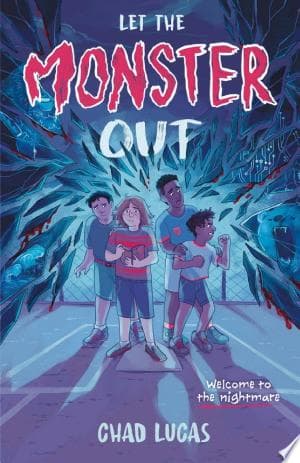
Chad Lucas (2022)
Genre
General
Reading Time
240 min
Key Themes
See below
Sign in to track this book
In a town where dreams become nightmares and adults turn into zombies, an anxious neurodivergent boy and a Black baseball player must confront their deepest fears and a sinister corporation to save their families and community.
Bones Malone, with his younger brothers, Nash and Rico, recently moved to Langille, a small, mostly white town. Bones feels out of place and isolated as one of the few Black kids. His frustration peaks when he almost fights Charlie, the son of their babysitter, Mrs. Bell. Bones, a talented baseball player, finds comfort on the field, but even that is short-lived when his team, the Langille Lynx, loses their first game. Meanwhile, his mother starts acting strangely, becoming distant and forgetful, almost like a zombie, which deeply worries Bones and his brothers. This change in his mother's behavior, combined with his struggles to fit in, makes Bones increasingly anxious and alone in their new home.
One night, Bones, Nash, and Rico all have the same vivid and terrifying dream. In the dream, they are chased by their deepest fears: Bones by an eerie cracked mirror, Nash by a menacing bear, and Rico by a shadowy figure. The shared dream deeply unsettles them, suggesting something supernatural or deeply wrong is happening. At the same time, their mother's condition worsens; she becomes even more detached and unresponsive, showing symptoms like a trance. The town itself seems to be under a strange spell, with other adults also showing similar signs of being spaced out. This increasing weirdness confirms Bones's growing suspicion that something sinister is happening in Langille.
Bones meets Kyle Specks, a neurodivergent boy who struggles with social cues but is very intelligent. Kyle, an amateur scientist and observer, has also noticed the unsettling changes in Langille, especially the odd behavior of the adults. At first, Bones is wary of Kyle, finding him peculiar, but Kyle's detailed observations and theories about the town's strange occurrences start to make sense to Bones. Despite their different personalities, they find common ground in their shared concern and a growing desire to find the truth behind the mysterious events. This unlikely partnership marks the start of their investigation into the town's unsettling phenomena.
During their investigation, Bones and Kyle find a hidden, cryptic journal belonging to Dr. Albright. The journal contains perplexing scientific notes, schematics, and observations about fear, dreams, and brainwave manipulation. It also mentions experiments in Langille and a shadowy corporation, 'The Lumina Group,' suggesting their involvement in the strange occurrences. The journal becomes a crucial piece of evidence, giving the boys their first concrete lead and hinting at a much larger, more dangerous conspiracy than they first imagined. Its contents confirm their suspicions that the town's problems are not just psychological but rooted in scientific experimentation.
As Bones and Kyle read Dr. Albright's journal, they start to piece together the chilling truth. They discover that Dr. Albright was involved in a secret project, 'The Fear Project,' which aimed to extract and amplify people's deepest fears. The journal describes how these extracted fears, seen as tangible 'monsters,' could then be controlled or even used as weapons. The strange behavior of the adults, including Bones's mother, is a side effect of their exposure to this technology, leaving them in a suggestible, zombie-like state. The Lumina Group is identified as the entity funding and overseeing these unethical experiments.
The journal's revelations bring a terrifying clarity to Bones and his brothers' shared dream. They realize that the dream was not just a nightmare; it was a direct result of 'The Fear Project,' projecting their deepest anxieties into their minds. For Bones, the cracked mirror symbolizes his fear of inadequacy and self-doubt; for Nash, the bear represents his fear of losing control; and for Rico, the shadowy figure embodies his fear of the unknown. This realization forces the boys to confront their personal fears, understanding that these are not just internal struggles but external threats that the Lumina Group is actively exploiting.
Armed with the knowledge from Dr. Albright's journal, Bones, Kyle, Nash, and Rico know they must act. They find the suspected Lumina Group facility, disguised as a research center on the outskirts of Langille. Together, they plan to infiltrate the facility, hoping to find a way to reverse the effects of 'The Fear Project' on the town's adults and stop the corporation's agenda. Their combined skills – Bones's courage and leadership, Kyle's scientific knowledge, and the brothers' loyalty – are essential for this dangerous mission. They prepare to face not only corporate security but also the monstrous manifestations of fear itself.
Inside the Lumina Group's hidden facility, the boys see the terrifying reality of 'The Fear Project.' They witness chambers where the town's collective fears are being extracted and amplified, appearing as grotesque, shadowy creatures. These 'monsters' are not just illusions but semi-physical entities, feeding on the fear they generate. The boys must navigate these fear-filled environments, constantly battling their own anxieties while trying to avoid security personnel. The air is thick with dread, and the stakes become clear: they are not just fighting a corporation, but fear itself, made real.
Deep within the facility, Bones and Kyle finally confront Dr. Albright. She reveals the full extent of 'The Fear Project,' explaining that the Lumina Group sought to harness fear for various uses, including mind control and military advantage. Dr. Albright expresses regret, admitting she became disillusioned with the project's unethical direction, but was too deeply involved to escape. The boys also face the corporate operatives of the Lumina Group, who want to protect their research and prevent the boys from interfering. This confrontation forces Bones and Kyle to use their wits and courage, not just against monsters, but against the human architects of fear.
With Dr. Albright's reluctant help, Bones and Kyle race against time to reverse the fear-extraction technology, aiming to shut down the project and free the town's adults from its influence. As they work, their own personal fear-monsters – Bones's cracked mirror, Nash's bear, and Rico's shadowy figure – appear with increased intensity, directly challenging them. They must confront these manifestations of their deepest anxieties, understanding that overcoming them is crucial not only for their own survival but for the success of their mission. It is a battle of will and courage against their internalized demons, made external and dangerous.
Through Kyle's quick thinking, Bones's determination, and Dr. Albright's guidance, they overload and reverse the fear-extraction device. A wave of energy washes over the facility and then Langille, causing the fear-monsters to disappear and the trancelike state of the adults to lift. Bones's mother, along with the other affected townspeople, slowly begins to regain her normal consciousness. The Lumina Group's operations are exposed, leading to their downfall and the dismantling of 'The Fear Project.' Langille is freed from its grip, though the experience leaves a lasting impact on everyone involved.
In the aftermath, Langille begins to heal. Bones, having faced his fears and saved the town, feels a sense of belonging he had not experienced before. He finds newfound confidence, on and off the baseball field, and his relationship with his mother begins to mend. Kyle, too, emerges from the ordeal with greater self-assurance, recognized for his intelligence and bravery. The experience creates a stronger bond between Bones and Kyle, and the Malone brothers grow closer. While the memory of the fear project lingers, the town, and especially the boys, move forward with a deeper understanding of courage, community, and the importance of facing one's fears rather than letting them consume you.
The Protagonist
Bones transforms from an insecure, isolated newcomer into a brave leader who confronts his deepest fears and finds his place in Langille.
The Supporting/Co-Protagonist
Kyle gains confidence in his unique abilities and learns to navigate social situations more effectively, finding validation in his intelligence and courage.
The Supporting
Nash learns to confront his anxieties and demonstrates courage alongside his brothers.
The Supporting
Rico, despite his youth, faces his fears alongside his brothers and contributes to their collective strength.
The Supporting
Mrs. Malone is initially a victim, but is eventually freed from the project's influence, allowing her to reconnect with her children.
The Supporting/Antagonistic (initially)
Dr. Albright transitions from an unwitting participant in an unethical project to a repentant ally who helps to undo the damage she contributed to.
The Antagonist
The Lumina Group is exposed and defeated, their unethical experiments brought to an end.
The Mentioned
Charlie's role is primarily to establish Bones's early frustrations and isolation in Langille.
The central theme is about confronting one's deepest anxieties rather than letting them control you. The 'Fear Project' literally makes the characters' fears real, forcing them to physically battle their internal demons. Bones must overcome his fear of inadequacy and not belonging, symbolized by the cracked mirror. Kyle, despite his social anxieties, finds the courage to act. The story suggests that true bravery is not the absence of fear, but the willingness to act despite it, leading to personal growth and freedom. This is clear when the boys must face their individual fear-monsters within the Lumina facility.
“But when faced with seemingly impossible situations, a shady corporation, and their own worst nightmares, will Kyle and Bones be brave enough to admit they’re scared? Or will the fear totally consume and control them?”
Bones's struggle to find his place as one of the few Black kids in Langille is a significant part of the story. He feels like an outsider, leading to frustration and isolation. His journey to defeat the Lumina Group and save the town helps him form connections and a sense of community he initially lacked. Kyle also struggles with identity, navigating his neurodivergence in a world that does not always understand him. Their shared mission allows them to find acceptance, both from others and within themselves, proving that true belonging comes from shared purpose and mutual respect, not just fitting in.
“Bones Malone feels like he can’t do anything right in his new small town: He almost punched the son of the woman who babysits him and his brothers, he’s one of the only Black kids in Langille, and now his baseball team (the one place where he really feels like he shines) just lost their first game.”
The Lumina Group and 'The Fear Project' are a cautionary tale about the ethical implications of scientific advancement when driven by corporate greed and a thirst for power. Dr. Albright's initial involvement shows how brilliant minds can be corrupted or exploited in the pursuit of unethical research. The project's disregard for human well-being, turning people into zombie-like subjects and weaponizing their fears, shows the potential for science to be used for destructive purposes. The boys' mission is not just to save their town, but to expose and dismantle a system that prioritizes profit and control over humanity.
“And then he and his brothers have the same dream—one where they’re running from some of their deepest fears, like a bear and an eerie cracked mirror that Bones would rather soon forget.”
The relationship between Bones, Nash, and Rico is a foundational element of the story. Their shared dream and their collective experience facing the fear-monsters strengthen their bond. Bones's deep concern for his mother and his protective instincts towards his younger brothers drive much of his motivation. The Malone family's unity, despite their individual fears and challenges, provides a powerful contrast to the isolating effects of the fear project. Their loyalty to each other, even in the face of immense danger, highlights the importance of family as a source of strength and courage.
“And then he and his brothers have the same dream—one where they’re running from some of their deepest fears, like a bear and an eerie cracked mirror that Bones would rather soon forget.”
A recurring, identical nightmare experienced by the Malone brothers.
The shared dream is a crucial plot device that initially signals that something supernatural or highly unusual is happening in Langille. It not only establishes the central conflict but also serves to externalize the individual fears of Bones, Nash, and Rico, introducing the 'fear-monsters' early on. This device creates a sense of shared urgency and mystery, bonding the brothers in their confusion and fear, and ultimately providing a tangible link to 'The Fear Project' once Dr. Albright's journal is discovered. It foreshadows the physical manifestations of fear they will later encounter.
A cryptic scientific journal providing clues to the town's strange occurrences.
Dr. Albright's journal functions as the primary expositional device, revealing the scientific basis behind the bizarre events in Langille. It provides Bones and Kyle with the necessary information about 'The Fear Project,' the Lumina Group, and the mechanics of fear extraction. Without the journal, the boys would be left to guess at the cause of their mother's condition and the town's strangeness. It transforms their vague suspicions into a concrete mystery to solve, outlining the stakes and guiding their investigation towards the Lumina facility.
Physical manifestations of characters' deepest anxieties.
The fear-monsters are a literalization of the theme of facing one's fears. They are not merely symbolic but become tangible, dangerous antagonists that the characters must confront. Bones's cracked mirror, Nash's bear, and Rico's shadowy figure force the boys to directly battle their internal struggles. This device makes the emotional journey of overcoming fear highly visual and action-oriented, elevating the stakes and providing clear, personal challenges for each character to conquer during the climax of the story.
The trancelike, unresponsive condition of the town's adults, including Bones's mother.
This device serves as the initial inciting incident and a constant source of concern for Bones. His mother's deteriorating condition is a highly personal motivation for him to investigate what's happening in Langille. It demonstrates the widespread and insidious effect of 'The Fear Project' on the community, raising the stakes and creating a sense of urgency. The adults' unresponsive state makes them vulnerable and highlights the helplessness of the children, thus emphasizing their bravery and resourcefulness in taking action.
“The thing about monsters is, they’re not always under your bed. Sometimes they’re inside you.”
— A recurring theme about the internal struggles and demons characters face.
“Fear can make you do strange things, can make you see things that aren’t there, and make you blind to what is.”
— Exploring how fear distorts perception and judgment.
“Sometimes the bravest thing you can do is admit you’re scared.”
— A moment of vulnerability leading to strength for a character.
“Secrets are heavy. They weigh you down until you can barely breathe.”
— The burden of keeping significant secrets throughout the story.
“It’s easier to believe in a monster you can fight than the one that lives in your own head.”
— Highlighting the preference for externalizing problems over internal reflection.
“Grief is a monster too, and it changes shape with every new day.”
— A poignant observation on the evolving nature of grief.
“We all have a darkness inside us. The trick is not letting it consume you.”
— A reflection on the dual nature of humanity and the fight against one's darker impulses.
“Sometimes the truth hurts more than any lie, but it’s still the only way to heal.”
— The painful process of confronting difficult truths for emotional recovery.
“You can’t outrun your past forever. Eventually, it catches up.”
— The inevitability of confronting past events and their consequences.
“It’s not about being fearless, it’s about doing what needs to be done even when you are terrified.”
— Defining true courage in the face of daunting challenges.
“Hope is a fragile thing, but it’s sometimes all you have left.”
— A character clinging to hope in desperate circumstances.
“The scariest monsters are the ones that look just like us.”
— A commentary on the human capacity for cruelty and evil.
“Forgiveness isn't just for the other person; it's for you too.”
— A character's journey towards self-forgiveness and releasing resentment.
“Sometimes you have to let the monster out to truly understand what you're fighting.”
— The central metaphor of the book, suggesting confrontation as a path to understanding.
Ready to see how well you understood this book? Take our interactive quiz with 10 questions.