BookBrief
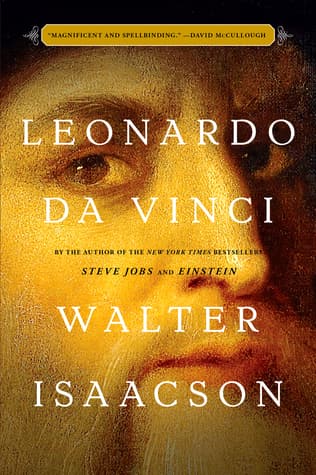
Leonardo da Vinci cover
Archivist's Choice

Leonardo da Vinci

Walter Isaacson (2017)

Genre

Biography / History / Creativity / Science

Reading Time

900 min

Key Themes

See below

Track Your Reading

Sign in to track this book

Walter Isaacson shows Leonardo da Vinci as the ultimate Renaissance man, whose curiosity and imagination joined art and science, from the Mona Lisa to flying machines, revealing a genius at the crossroads of humanistic creativity and scientific inquiry.

Core Idea

Walter Isaacson's "Leonardo da Vinci" argues that Leonardo's genius came from his interdisciplinary curiosity, which led him to observe the natural world and human experience. Instead of specializing, Leonardo connected art and science, understanding that anatomy informed painting and that flight mechanics could be found through artistic rendering and detailed sketches. Isaacson says Leonardo's method involved constant questioning, experimenting, documenting in his notebooks, and changing his work, accepting imperfection and delay as parts of his creative and scientific process. The book states that his ability to combine fields like engineering, painting, anatomy, and geology was not just a collection of talents but a basic way to understand the universe, driven by imagination and empathy.
Reading time
900 min
Difficulty
Medium
✓ Read this if...
You are fascinated by the life and mind of a true polymath, want to understand the origins of multidisciplinary thinking, or seek inspiration on how curiosity and observation can drive innovation across fields.
✗ Skip this if...
You prefer a purely academic art history text, are looking for a quick read, or dislike detailed biographical accounts that delve into personal life alongside professional achievements.

Core idea

The central argument and framework that powers the entire book.

Walter Isaacson's "Leonardo da Vinci" argues that Leonardo's genius came from his interdisciplinary curiosity, which led him to observe the natural world and human experience. Instead of specializing, Leonardo connected art and science, understanding that anatomy informed painting and that flight mechanics could be found through artistic rendering and detailed sketches. Isaacson says Leonardo's method involved constant questioning, experimenting, documenting in his notebooks, and changing his work, accepting imperfection and delay as parts of his creative and scientific process. The book states that his ability to combine fields like engineering, painting, anatomy, and geology was not just a collection of talents but a basic way to understand the universe, driven by imagination and empathy.

At a glance

Reading time

900 min

Difficulty

Medium

Read this if...

You are fascinated by the life and mind of a true polymath, want to understand the origins of multidisciplinary thinking, or seek inspiration on how curiosity and observation can drive innovation across fields.

Skip this if...

You prefer a purely academic art history text, are looking for a quick read, or dislike detailed biographical accounts that delve into personal life alongside professional achievements.

Key Takeaways

1

The Interconnected Genius

Leonardo's brilliance stemmed from seamlessly merging art and science.

Quote

Leonardo's genius was based on skills we can improve in ourselves, such as passionate curiosity, careful observation, and an imagination so playful that it flirted with fantasy.

Leonardo da Vinci's genius was not just about excelling in one field but his ability to see connections between different subjects. For him, art was a tool for scientific inquiry, and science informed his art. He did not just paint a human body; he dissected it to understand its mechanics, bone structure, and muscle function, then used that knowledge to create lifelike and anatomically precise figures. His scientific observations of light, shadow, and atmospheric perspective directly led to painting techniques like sfumato. This compl...

Supporting evidence

Isaacson repeatedly highlights Leonardo's notebooks, where anatomical drawings are interspersed with artistic sketches, engineering designs, and botanical studies. The Vitruvian Man, for instance, perfectly embodies this synthesis, combining artistic proportion with mathematical and anatomical understanding.

Apply this

Cultivate 'cross-disciplinary thinking' by actively seeking connections between your primary field and seemingly unrelated areas. Read widely, explore new hobbies, and challenge yourself to apply concepts from one domain to another. For example, a software engineer might study classical architecture for design principles, or a writer might delve into neuroscience to better understand human motivation.


interdisciplinary-thinkingholistic-approachsynthesis
2

Passionate Curiosity as a Driving Force

Leonardo's insatiable 'childlike' curiosity fueled his lifelong learning and discovery.

Quote

The greatest minds have a passionate, almost obsessive curiosity.

More than any natural talent, it was Leonardo's strong curiosity that drove him to explore, question, and document everything. He did not just observe; he focused on 'why' and 'how.' This was not a passive interest but an active wonder that led him to fill thousands of notebook pages with observations from bird flight to water flow, from the human heart to rock formations. This desire to understand the world, without set limits or practical needs, allowed him to see patterns and ask questions that others missed. His curiosity was abou...

Supporting evidence

Isaacson details countless examples from Leonardo's notebooks, such as his meticulous studies of bird flight, his extensive dissections to understand human anatomy, and his detailed observations of water eddies, all driven by a fundamental desire to understand natural phenomena.

Apply this

Actively cultivate and protect your natural curiosity. Ask 'why' constantly. Keep a notebook to jot down questions, observations, and ideas, no matter how trivial they seem. Dedicate time each week to explore a topic purely out of interest, without the pressure of productivity or immediate application.

curiosity-driven-learninglifelong-learningintellectual-exploration
3

The Power of Observation

Leonardo's meticulous and deliberate observation unlocked profound insights.

Quote

He trained himself to see things that others merely looked at.

Leonardo made observation a deep method. He did not just look at a subject; he studied it, drew it from many angles, dissected it, and documented its details with scientific care. This deep observation allowed him to capture human emotion in the Mona Lisa, the action of a battle scene, or the mechanics of a bird's wing. His notebooks have detailed sketches and notes, not just of what he saw, but of the processes and structures he found. This ability to truly 'see' the world, beyond surface appearances, was key to both his artistic rea...

Supporting evidence

Isaacson extensively discusses Leonardo's anatomical drawings, which often depict muscles, bones, and organs with unprecedented accuracy due to his direct observation during dissections. His studies of water flow, light, and shadow also show an incredible level of observational detail.

Apply this

Practice 'active observation' daily. Spend 5-10 minutes intensely observing something mundane – a leaf, a coffee cup, a person's expression – and try to notice details you've never seen before. Sketch what you observe, or write detailed descriptions, focusing on texture, light, form, and underlying structure.

active-observationvisual-thinkingattention-to-detail
4

Embracing Imperfection and Iteration

Leonardo's process was one of continuous experimentation, learning from 'failures.'

Quote

He was a master of the unfinished, the iterative, the perpetually evolving idea.

Against the idea of a perfect genius, Leonardo's work showed constant experimentation, revision, and often, incompletion. He saw projects not as ends but as chances for learning and further questions. His 'failures,' such as the Last Supper fresco technique or his unbuilt flying machines, were not problems but sources of data and new questions. He was always improving his understanding, changing designs, and willing to leave an approach if it did not work, always looking for a better solution. This acceptance of change allowed him to ...

Supporting evidence

Isaacson details Leonardo's experimental fresco technique for The Last Supper, which ultimately failed to adhere to the wall, and his numerous, unbuilt flying machine designs, which he continually revised based on his observations and calculations.

Apply this

Adopt an iterative mindset in your own work. See projects as opportunities for learning and improvement rather than final products. Break down large goals into smaller experiments, and be willing to pivot or revise based on feedback and results. Don't fear 'failure'; see it as data.

iterative-designexperimentationgrowth-mindsetlearning-from-failure
5

The Power of Notebooks and Documentation

Leonardo's meticulous record-keeping captured and externalized his thought process.

Quote

His notebooks were not just a record of his genius, but a tool for generating it.

Leonardo's thousands of notebook pages were more than a simple diary; they were an extension of his mind, a workspace where he could capture ideas, document observations, sketch designs, and connect different thoughts. This habit of writing, drawing, and noting allowed him to make his thinking tangible and changeable. It helped him return to ideas years later, see connections, and build on past insights. The amount and variety of his notes show the importance of consistent documentation for creative and scientific breakthroughs, provi...

Supporting evidence

The entire book is built upon Isaacson's analysis of Leonardo's surviving notebooks, which contain everything from shopping lists and financial accounts to detailed anatomical studies, engineering designs, and philosophical musings.

Apply this

Maintain a personal notebook or digital note-taking system. Use it not just for tasks, but for capturing ideas, questions, observations, and reflections. Practice sketching, mind-mapping, and writing freely to externalize your thoughts and make connections. Review your notes regularly to spark new insights.

knowledge-managementexternalized-thinkingdocumentationidea-capture
6

The Art of Procrastination (Strategic Delay)

Leonardo often delayed projects, allowing ideas to incubate and evolve.

Quote

His 'procrastination' was often a period of incubation, where ideas were allowed to marinate and evolve.

While often frustrating to his patrons, Leonardo's 'procrastination' was not just idleness. Isaacson argues it was often a strategic delay, a period where he let ideas develop, did more research, or waited for new insights. The Mona Lisa, for example, was worked on over many years, allowing for subtle changes and deeper psychological meaning. This 'slow thinking' process, where he was not rushing to finish but allowing for continuous learning and refinement, was important to the depth and complexity of his masterpieces. It suggests th...

Supporting evidence

Isaacson details how Leonardo worked on the Mona Lisa for years, carrying it with him and continuously refining it. He also highlights the extended periods between commissions where Leonardo would pursue his scientific inquiries, which often indirectly informed his artistic work.

Apply this

Recognize the difference between unproductive procrastination and strategic incubation. For complex problems, allow time for ideas to sit and evolve. Don't rush to a solution. Engage in tangential activities or allow your mind to wander; often, solutions emerge when you're not actively forcing them. Schedule 'thinking time' without immediate output expectations.

incubation-periodslow-thinkingdeliberate-delaycognitive-processing
7

Empathy and Psychological Depth

Leonardo's art captured the inner lives of his subjects through deep empathy.

Quote

He understood that the human soul could be revealed through the subtle expressions of the face and gestures of the body.

Beyond anatomical accuracy, Leonardo had an ability to show psychological depth and human emotion in his portraits and narrative paintings. He did this through empathy, observing and understanding people's minds and hearts. His studies of human expression, gesture, and the interplay of light and shadow allowed him to give figures like the Mona Lisa an enigmatic, living quality that goes beyond just representation. This focus on the 'soul' or inner state of his subjects makes his art captivating, showing that mastery in art requires un...

Supporting evidence

The Mona Lisa's famous enigmatic smile, The Last Supper's portrayal of individual emotional reactions to Jesus's pronouncement, and his numerous studies of human physiognomy and expression all serve as evidence.

Apply this

Develop your empathy by actively listening to others, observing body language, and trying to understand different perspectives. In your own work, whether creative or professional, consider the emotional impact and psychological nuances of your message or product. Ask: 'How will this make people feel?'

emotional-intelligencepsychological-realismempathy-in-arthuman-centered-design
8

The Value of Mentorship and Apprenticeship

Leonardo's foundational skills were honed through a rigorous apprenticeship.

Quote

He was fortunate to be apprenticed to a master who fostered creativity and allowed him to pursue diverse interests.

While Leonardo's genius was unique, Isaacson states that his basic skills were learned during his apprenticeship with Andrea del Verrocchio. Verrocchio's workshop was a center of creativity, where art, metallurgy, engineering, and sculpture met. This environment gave Leonardo hands-on experience, technical training, and exposure to many subjects. Verrocchio allowed Leonardo the freedom to explore and experiment, encouraging his curiosity. This shows the role of good mentorship and a stimulating learning environment in developing even ...

Supporting evidence

Isaacson details Leonardo's training in Verrocchio's workshop, where he learned painting, sculpture, metalworking, and engineering, and how Verrocchio recognized and encouraged Leonardo's burgeoning talent.

Apply this

Seek out mentors who not only possess expertise but also encourage your unique approach and allow for experimentation. If you are a mentor, create an environment that fosters curiosity and exploration for your mentees. Actively seek out learning environments that offer diverse opportunities and hands-on experience.

apprenticeshipmentorshipskill-developmentlearning-environment
9

The Playfulness of Imagination

Leonardo's 'fantasy' sketches were crucial for radical innovation.

Quote

His imagination was so playful that it flirted with fantasy, yet it was grounded in meticulous observation.

Leonardo's notebooks have fantastical creatures, elaborate machines, and imaginative scenarios that mix science fiction and engineering. This playful part of his imagination, often seen as just doodling, was a component of his innovative process. By letting his mind explore the impossible, he could imagine solutions and designs that were far ahead of his time – from flying machines to complex hydraulic systems. This ability to 'play with fantasy' while still basing his ideas in observation allowed him to break from conventional thinki...

Supporting evidence

Isaacson describes Leonardo's designs for flying machines, war engines, and even theatrical contraptions, which often began as highly imaginative sketches before evolving into more practical, albeit often unbuilt, designs.

Apply this

Integrate 'play time' into your creative or problem-solving process. Allow yourself to brainstorm wildly, without immediate judgment or constraints. Engage in activities that stimulate your imagination, like reading fantasy, sketching surreal ideas, or simply daydreaming. Don't be afraid to explore 'impossible' solutions – they can often lead to unexpected breakthroughs.

imaginative-thinkingdivergent-thinkingcreative-playconceptual-design
10

Mastery of Light and Shadow (Sfumato)

Leonardo revolutionized painting by capturing the subtlety of light.

Quote

He understood that the true art was not in drawing outlines, but in capturing the ephemeral play of light and shadow.

Leonardo's most distinct artistic innovation, sfumato, came from his scientific observation of light and how it interacts with forms. He understood that in reality, there are no harsh outlines, but a gradual blending of tones and colors. By layering thin glazes of paint, he achieved a soft, smoky effect that allowed figures to emerge from shadow and blend into the background. This technique added realism and gave his subjects a sense of life, mystery, and psychological depth, as seen in the Mona Lisa's smile. His use of sfumato showed...

Supporting evidence

Isaacson details the technique of sfumato in the Mona Lisa and other portraits, explaining how Leonardo achieved the soft, blurred outlines and subtle transitions of light and shadow through painstaking layering of glazes, a technique informed by his studies of human vision and atmospheric perspective.

Apply this

In any visual medium or presentation, pay close attention to how light and shadow define form and create mood. Observe how natural light falls on objects and people. In communication, understand that nuances and subtle shifts in tone can be more powerful than stark contrasts. Practice creating smooth transitions in your work, avoiding abrupt changes.

sfumatochiaroscurolight-in-artvisual-nuanceatmospheric-perspective

Critical analysis

Notable Quotes

He wanted to know everything there was to know about everything that could be known.

Describing Leonardo's insatiable curiosity across disciplines.

Genius starts with individual brilliance. It requires singular vision. But executing it often entails working with others.

On Leonardo's collaborative efforts in art and engineering projects.

He was not just a genius but also very human, which makes his story more interesting.

Isaacson's reflection on Leonardo's personal flaws and struggles.

The ability to make connections across disciplines—arts and sciences, humanities and technology—is a key to innovation, imagination, and genius.

Analyzing Leonardo's interdisciplinary approach as central to his achievements.

He saw patterns and connections that others missed because he looked at the world with a childlike wonder and a systematic mind.

Explaining how Leonardo's observational skills fueled his discoveries.

His notebooks are the greatest record of curiosity ever created, a testament to the power of observing, questioning, and imagining.

Highlighting the significance of Leonardo's extensive journals and sketches.

Leonardo's life reminds us of the importance of instilling in both ourselves and our children not just received knowledge but a willingness to question it.

Isaacson's takeaway on the value of skepticism and inquiry.

He blurred the lines between art and science, seeing beauty in both a flying machine and a woman's smile.

Describing how Leonardo integrated aesthetics with empirical study.

The Mona Lisa is not just a portrait; it's a culmination of his studies of optics, geology, and human emotion.

Analyzing the painting as a product of Leonardo's diverse research.

His greatest legacy is not any single work but the example he set: a life of passionate curiosity and relentless observation.

Summarizing Leonardo's enduring influence beyond his artworks.

In an age of specialization, Leonardo da Vinci stands as a reminder that creativity often flourishes at the intersections.

Reflecting on the relevance of Leonardo's interdisciplinary mindset today.

He failed as much as he succeeded, but his failures were as instructive as his triumphs.

Noting how Leonardo's unfinished projects and setbacks contributed to his growth.

To understand the world, he believed, one must look closely, think deeply, and never stop questioning.

Capturing Leonardo's philosophical approach to knowledge and exploration.

Quiz

Test Your Knowledge

Ready to see how well you understood this book? Take our interactive quiz with 10 questions.

10
Questions
~5
Minutes
?
Best Score

Key Questions (FAQ)

Walter Isaacson argues that Leonardo da Vinci's genius stemmed from skills accessible to everyone, such as passionate curiosity, careful observation, and playful imagination. He connects Leonardo's art and science, showing how his interdisciplinary approach made him history's most creative genius.

About the author