“When you have a secret, it feels like it’s in your head, but it’s really in your whole body.”
— Relating the burden of keeping a secret, especially about OCD rituals.

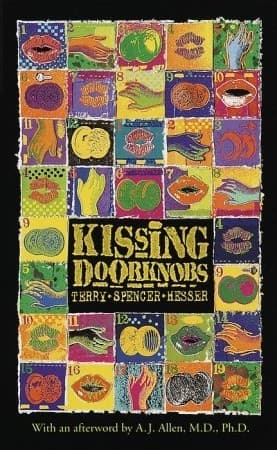
Terry Spencer Hesser (1998)
Genre
Psychology / Children's / Young Adult
Reading Time
150 min
Key Themes
See below
Sign in to track this book
An 11-year-old girl's world becomes a minefield of cracks, prayers, and doorknob kisses as she fights an unseen enemy threatening her mother's safety, driven by escalating compulsions.
From a young age, Tara Sullivan shows significant anxiety, especially about her mother's safety. In preschool, she feels intense distress when separated from her mother, fearing something bad will happen. This anxiety continues into grade school, appearing as panic during fire drills, which Tara sees as signs of actual disaster. The key moment comes when Tara is eleven and hears the rhyme, 'Step on a crack, break your mother's back.' This seemingly harmless phrase connects to her existing fears, making her count and avoid every crack on the sidewalk, convinced that not doing so will hurt her mother. This starts her compulsive behaviors.
As Tara enters her pre-teen years, her initial fear of sidewalk cracks quickly grows into many rituals. She feels forced to arrange her food carefully on her plate before eating, believing that wrong arrangement will cause bad things to happen. Her anxiety also shows up as constant prayer rituals, where she feels a strong need to pray for certain times or in specific ways to stop harm. The most noticeable ritual appears when she starts kissing her fingers and then touching doorknobs — an act she feels forced to do to keep her family safe. These rituals become more time-consuming and disruptive, filling her thoughts and actions daily.
Tara becomes more aware that her behaviors are unusual. She tries hard to hide her rituals from her parents, Mr. and Mrs. Sullivan, and her friends, fearing judgment and misunderstanding. This secrecy creates deep isolation, as she spends huge energy hiding her compulsions. She makes excuses for her delays, careful actions, and frequent trips to touch doorknobs. The effort to keep up this pretense is tiring and makes her anxiety worse, stopping her from fully joining social activities and enjoying a normal childhood. Her inner world is controlled by her rituals.
As Tara moves into her early teens, her rituals grow stronger, needing more time and having stricter rules. Her parents notice her increasingly odd behaviors, such as long bathroom visits for hand-washing rituals, her inability to leave the house without specific acts, and her withdrawn mood. While they first dismiss some behaviors as 'quirks,' the size and frequency of her compulsions start to worry them. Arguments happen when Tara's rituals get in the way of family outings or daily routines. Her mother, especially, tries to understand but often gets frustrated, leading to a tense home life.
The turning point for Mrs. Sullivan comes when Tara's rituals become so disruptive that they greatly affect her daughter's ability to function. Tara is late for school, struggles with homework, and avoids social interaction. Mrs. Sullivan, deeply worried and unsure how to help, starts researching Tara's symptoms. She talks to family doctors and eventually finds information about Obsessive-Compulsive Disorder (OCD). Seeing the strong similarities between OCD descriptions and Tara's behaviors, Mrs. Sullivan realizes that Tara's struggles are not just 'quirks' but a serious condition needing professional help. She makes the hard decision to seek specialized help for Tara.
Tara goes to a psychologist who specializes in childhood anxiety disorders. After several sessions, the psychologist officially diagnoses Tara with Obsessive-Compulsive Disorder. This diagnosis brings a mix of relief and fear for Tara — relief that there's a name for what she's feeling, but fear about what it means for her future. Therapy begins, focusing on cognitive-behavioral techniques, especially Exposure and Response Prevention (ERP). Tara finds the first sessions very hard. The idea of intentionally facing her fears by not doing her rituals is terrifying, and she often resists, struggling to see how purposefully causing her anxiety could help her.
With her therapist's guidance, Tara slowly starts Exposure and Response Prevention (ERP). This means purposefully exposing herself to situations that trigger her obsessions while stopping herself from doing the related compulsions. For example, she might be asked to touch a 'dirty' doorknob and then resist the urge to kiss her fingers or wash her hands too much. These exercises are very difficult and anxiety-provoking, but with the therapist's encouragement and her mother's steady support, Tara begins to make small steps. She learns to handle the discomfort and anxiety, realizing that the bad things she imagines do not happen.
Through therapy, Tara learns coping mechanisms and gains a deeper understanding of OCD. Her therapist explains the neurological basis of the disorder, helping Tara realize that her thoughts and compulsions are not her fault, but symptoms of a medical condition. This understanding is important for Tara, as it helps reduce the huge guilt and shame she has carried for years. She begins to accept that while she has OCD, it does not define her completely. This acceptance helps her view her struggles with more compassion and less self-blame, changing her focus from hiding her condition to actively managing it.
Recovery from OCD is not a straight path, and Tara experiences relapses and times of intense struggle. There are days when her anxiety feels overwhelming, and she gives in to her compulsions, feeling disheartened. However, her therapist stresses that relapses are a normal part of the process and not a sign of failure. Tara learns to use the coping strategies she learned in therapy, such as mindfulness techniques and cognitive restructuring, to get through these hard times. With each setback, she practices strength, applying her tools and continuing her journey toward managing her OCD, understanding that progress is often slow and needs ongoing effort.
By the end of the book, Tara has made good progress in managing her Obsessive-Compulsive Disorder. While OCD remains part of her life, she has developed effective strategies to lessen its impact. She is no longer controlled by her rituals and can participate more fully in school, friendships, and family life. She understands that managing OCD is an ongoing process, but she has gained the tools and self-awareness to cope with its challenges. Tara's journey shows the importance of early diagnosis, consistent therapy, and a supportive environment in helping people with OCD live full and independent lives.
The Protagonist
Tara transforms from a child consumed by secret fears and rituals into a resilient individual who understands and actively manages her OCD, reclaiming control over her life.
The Supporting
Mrs. Sullivan evolves from a puzzled and sometimes frustrated mother to an informed and unwavering advocate for her daughter's mental health.
The Supporting
Mr. Sullivan maintains his role as a supportive father, adapting to the challenges of Tara's diagnosis and contributing to her stable home environment.
The Supporting
The therapist remains a consistent, expert guide, facilitating Tara's understanding and management of her OCD.
The Supporting/Mentioned
Their roles remain largely static, serving as a backdrop against which Tara's social struggles and eventual integration are measured.
Tara's journey is shaped by the heavy burden of keeping her rituals secret. From avoiding sidewalk cracks to carefully arranging food and kissing doorknobs, each compulsion is done alone or hidden, driven by deep shame and fear of judgment. This secrecy leads to deep isolation, stopping her from getting help and making her anxiety worse. For example, her elaborate excuses for being late or her frequent bathroom trips for hand-washing rituals show the emotional cost of hiding her true struggles. The relief she feels after diagnosis and opening up to her therapist highlights the freedom that comes from breaking this cycle of secrecy.
“It was exhausting, keeping all the rules and rituals a secret. It was like I had a whole other life going on inside my head, a life no one else could ever see.”
The book carefully explores the subtle nature of OCD through Tara's experience. It shows how seemingly harmless fears, like 'step on a crack,' can grow into complex, disabling rituals. The story details the intrusive thoughts (obsessions) that trouble Tara's mind — the fear of harm coming to her mother — and the compulsive behaviors she feels forced to do to stop these fears, even when she knows they are illogical. The book shows OCD as a disorder that takes over logical thought and creates a cycle of anxiety and temporary relief, making it hard for Tara to tell the difference between real threats and her disorder's demands.
“It wasn't that I believed the crack would actually break Mom's back. It was just that I couldn't risk it. Not with Mom. Not with anything.”
Key to Tara's eventual recovery is the steady support and growing understanding of her family, especially her mother. Initially, her parents are confused and sometimes frustrated by Tara's behaviors. However, Mrs. Sullivan's dedication to researching Tara's symptoms and her efforts to find professional help are important. The family's willingness to learn about OCD, adjust their routines, and offer emotional encouragement during Tara's difficult therapy sessions creates a vital safety net. This theme shows that while a person must do the internal work, a supportive and informed family environment is often essential for managing chronic conditions like OCD.
“My mom didn't always understand, but she never stopped trying. And that, more than anything, made me feel like I wasn't completely alone.”
The book shows recovery from OCD not as a quick cure but as a hard, non-linear journey needing great strength. Tara's work with Exposure and Response Prevention (ERP) therapy is difficult, marked by fear, resistance, and occasional relapses. However, her persistence in facing her fears, handling anxiety, and using coping strategies shows her growing inner strength. The story emphasizes that while OCD may be a lifelong condition, effective management allows people to reclaim their lives. Tara's ability to learn from setbacks and continue her therapy shows the strong human capacity for strength when facing mental health challenges.
“It wasn't a magic cure. It was hard work, every single day. But slowly, inch by inch, I was taking my life back.”
Allows direct access to Tara's internal thoughts, fears, and compulsions.
The story is told from Tara's perspective, immersing the reader directly into her experience of living with OCD. This device is crucial for conveying the intense anxiety, intrusive thoughts, and the compelling urge to perform rituals that characterize the disorder. Readers gain an intimate understanding of her internal struggles, her attempts to rationalize her behaviors, and her shame, making her journey relatable and empathetic. It highlights the isolating nature of her condition by showing how her inner world is often disconnected from her outward appearance.
Everyday actions transformed into powerful, fear-driven compulsions.
The various rituals Tara develops – avoiding sidewalk cracks, arranging food, kissing doorknobs – serve as symbolic manifestations of her underlying anxiety and her desperate need for control. These seemingly mundane actions become loaded with immense personal significance and fear, representing her attempt to ward off perceived danger. The 'kissing doorknobs' ritual, in particular, becomes the central symbol of her struggle, encapsulating the illogical yet overwhelming nature of her compulsions and the lengths she goes to 'protect' her family.
Drives Tara's obsessions and fuels her compulsive behaviors.
The persistent 'what if' question is a fundamental plot device that illustrates the core of Tara's OCD. Her obsessions are constantly framed by scenarios of potential disaster if she doesn't perform a ritual: 'What if Mom gets hurt if I step on this crack?' or 'What if something bad happens if I don't touch this doorknob just right?' This device highlights the relentless, intrusive nature of obsessive thoughts and how they compel Tara to perform compulsions as a means to alleviate the unbearable uncertainty, even if only temporarily. It shows the irrational fear that dictates her actions.
“When you have a secret, it feels like it’s in your head, but it’s really in your whole body.”
— Relating the burden of keeping a secret, especially about OCD rituals.
“It’s like my brain is a bully, always telling me what to do, and if I don’t, something bad will happen.”
— Describing the intrusive thoughts and compulsive nature of OCD.
“The hardest part wasn’t doing the rituals, it was trying to hide them.”
— Highlighting the social anxiety and shame associated with OCD.
“Sometimes I wished I could just be normal, whatever normal was.”
— A common sentiment from children struggling with mental health conditions.
“Every time I touched a doorknob, I had to kiss it. Not just any kiss, a special kind of kiss.”
— Illustrating a specific, prominent compulsion experienced by the protagonist.
“Fear can make you do strange things, especially when you’re a kid and you don’t understand why you’re doing them.”
— Reflecting on the power of fear as a driving force behind unexplained behaviors.
“It wasn’t that I wanted to do these things; it was that I *had* to.”
— Explaining the involuntary and compelling nature of OCD rituals.
“The more I tried to stop, the stronger the feeling got, like a giant rubber band pulling me back.”
— Describing the escalating pressure of resisting compulsions.
“Talking about it was like letting the air out of a balloon I didn’t even know I was holding.”
— The relief experienced when finally confiding in someone about her struggles.
“My mom always said, 'Worrying is like a rocking chair. It gives you something to do but gets you nowhere.'”
— A parental attempt to provide perspective on anxiety, though not always effective for OCD.
“It’s hard to tell someone about something you don’t even understand yourself.”
— The difficulty in articulating the experience of OCD, especially for a child.
“The pills didn’t make the thoughts go away, but they made them quieter, like someone turned down the volume.”
— Describing the effect of medication on managing OCD symptoms.
“Learning to live with it wasn’t about making it disappear, but about making it smaller.”
— A key realization about managing chronic conditions like OCD.
“Sometimes the bravest thing you can do is ask for help.”
— The overarching message about seeking support for mental health challenges.
Ready to see how well you understood this book? Take our interactive quiz with 10 questions.

Rhonda Byrne
4.3

Menno Henselmans
4.3

Sylvia Plath
4.3

Elliot Aronson
4.3

Joseph Campbell
4.3

Erich Fromm
4.3
Irvin D. Yalom
4.2

Lucy Strange
4.2