BookBrief
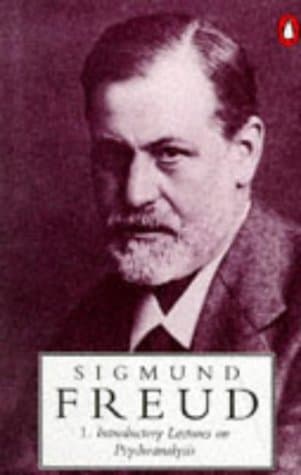
Introductory Lectures on Psychoanalysis cover
Archivist's Choice

Introductory Lectures on Psychoanalysis

Sigmund Freud

Genre

Psychology / Science / Philosophy

Reading Time

15-20 hours

Key Themes

See below

Track Your Reading

Sign in to track this book

Sigmund Freud's groundbreaking lectures reveal the hidden depths of the human mind, changing our understanding of consciousness, dreams, and sexuality.

Core Idea

Freud's "Introductory Lectures on Psychoanalysis" explains the core ideas of psychoanalysis. It argues that human actions, thoughts, and emotions come from unconscious processes, repressed desires, and early childhood experiences. He states that psychological symptoms are not random but show unresolved inner conflicts, often from the struggle between instinctual drives and societal rules. The book introduces concepts like the unconscious mind, dreams as symbolic wish fulfillment, the id, ego, and superego, defense mechanisms, and the therapeutic roles of transference and resistance. It presents psychoanalysis as a way to understand and lessen psychological suffering by exploring these hidden mental forces.
Reading time
15-20 hours
Difficulty
Hard
✓ Read this if...
You are a student of psychology, philosophy, or medicine interested in the origins of psychoanalytic thought directly from its founder, or if you want a comprehensive, albeit challenging, introduction to Freud's major theories.
✗ Skip this if...
You are looking for a quick, modern overview of psychology, are averse to dense, lecture-style prose, or are specifically seeking contemporary, empirically validated psychological treatments.

Core idea

The central argument and framework that powers the entire book.

Freud's "Introductory Lectures on Psychoanalysis" explains the core ideas of psychoanalysis. It argues that human actions, thoughts, and emotions come from unconscious processes, repressed desires, and early childhood experiences. He states that psychological symptoms are not random but show unresolved inner conflicts, often from the struggle between instinctual drives and societal rules. The book introduces concepts like the unconscious mind, dreams as symbolic wish fulfillment, the id, ego, and superego, defense mechanisms, and the therapeutic roles of transference and resistance. It presents psychoanalysis as a way to understand and lessen psychological suffering by exploring these hidden mental forces.

At a glance

Reading time

15-20 hours

Difficulty

Hard

Read this if...

You are a student of psychology, philosophy, or medicine interested in the origins of psychoanalytic thought directly from its founder, or if you want a comprehensive, albeit challenging, introduction to Freud's major theories.

Skip this if...

You are looking for a quick, modern overview of psychology, are averse to dense, lecture-style prose, or are specifically seeking contemporary, empirically validated psychological treatments.

Key Takeaways

1

The Unconscious Mind's Tyranny

Much of our mental life and behavior is driven by forces beyond our conscious awareness.

Quote

The ego is not master in its own house.

Freud challenged the idea of human rationality by suggesting the unconscious mind exists and has great influence. He argued that our thoughts, feelings, and actions are shaped by hidden desires, memories, and conflicts in the unconscious. These unconscious elements appear in dreams, slips of the tongue, and neurotic symptoms. Understanding this is basic to psychoanalysis because it means true self-knowledge and solving psychological problems require looking beyond surface awareness to find unconscious causes.

Supporting evidence

Freud's analysis of neurotic symptoms, particularly hysteria, where physical ailments had no organic basis but were linked to repressed traumatic memories. He observed that patients could not consciously recall these memories, yet their symptoms persisted until the unconscious material was brought to light.

Apply this

Pay attention to 'slips of the tongue' (Freudian slips), recurring dreams, or inexplicable emotional reactions as potential windows into unconscious processes. Journaling about these phenomena can provide clues to hidden thoughts or desires.

unconsciousrepressionneurosis
2

Dreams as Royal Road

Dreams are not random but symbolic expressions of our unconscious desires and conflicts.

Quote

The interpretation of dreams is the royal road to a knowledge of the unconscious activities of the mind.

Freud thought dream analysis was a main part of psychoanalytic technique. He separated 'manifest content' (what we remember from a dream) from 'latent content' (the underlying unconscious thoughts and desires). He believed that during sleep, defenses relax, allowing repressed wishes to appear, though in disguised, symbolic forms due to 'dream-work' like condensation, displacement, and symbolization. By interpreting these symbols, analysts can learn about a patient's hidden conflicts, wishes, and early experiences, which are often too ...

Supporting evidence

Freud's detailed analyses of his own dreams and those of his patients, such as the 'Irma injection dream,' where he meticulously deconstructed its manifest content to reveal his professional anxieties and personal wishes concerning a patient's prognosis.

Apply this

Keep a dream journal. Instead of dismissing strange dreams, try to identify recurring themes, strong emotions, or unusual symbols. Consider what waking life concerns or feelings might be metaphorically represented in the dream's narrative.

dream-analysismanifest-contentlatent-contentdream-work
3

The Power of Early Experiences

Childhood experiences, particularly sexual development, profoundly shape adult personality and psychological well-being.

Quote

The child is father of the man.

Freud changed how we view childhood by stating its importance in forming adult personality. He proposed a theory of psychosexual development with stages (oral, anal, phallic, latency, genital) where psychic energy focuses on different body areas. According to Freud, unresolved conflicts or fixations at any stage, from too much or too little gratification, can lead to specific personality traits and neurotic patterns later in life. This focus on early life, especially before adolescence, meant that many adult psychological issues come ...

Supporting evidence

Freud's case studies, like 'Little Hans,' a five-year-old boy with a horse phobia, which Freud interpreted as a displacement of his unconscious fear of his father (Oedipus complex) and anxieties related to castration, rooted in the phallic stage of development.

Apply this

Reflect on your own childhood experiences and relationships with primary caregivers. Consider how early patterns of interaction or significant events might still influence your current fears, desires, or relational dynamics.

psychosexual-developmentoedipus-complexfixationchildhood-trauma
4

The Tripartite Psyche

Our mind is a dynamic battleground between the primitive Id, the moral Superego, and the mediating Ego.

Quote

The ego serves three severe masters and does its best to bring their demands into harmony with one another.

Freud's model of the psyche introduced the Id, Ego, and Superego. The Id, fully unconscious, works on the 'pleasure principle,' seeking immediate satisfaction of basic drives (libido and aggression). The Superego, partly conscious, holds internalized societal and parental moral standards, acting as our conscience. The Ego, mostly conscious, works on the 'reality principle,' balancing the Id's demands, the Superego's moral limits, and the outside world. Mental health depends on the Ego's ability to balance these forces; imbalance leads...

Supporting evidence

Freud's explanation of neurotic anxiety as a signal to the Ego that the Id's impulses are threatening to overwhelm its control or that the Superego's condemnation is imminent. He observed patients' struggles with guilt and self-sabotage, attributing them to an overbearing Superego.

Apply this

When facing a difficult decision, consciously identify the impulses (Id), moral obligations (Superego), and practical realities (Ego) at play. Aim for a solution that acknowledges all aspects rather than suppressing one entirely.

idegosuperegopleasure-principlereality-principle
5

Defense Mechanisms

The Ego employs unconscious strategies to protect itself from anxiety and uncomfortable truths.

Quote

The ego is afraid of the external world, of the libido, and of the severity of the superego.

To handle the constant conflict between the Id, Superego, and external reality, the Ego uses defense mechanisms. These are unconscious strategies that lower anxiety by distorting reality. Examples include repression (pushing thoughts into the unconscious), projection (blaming others for one's own impulses), and denial (refusing to accept a painful reality). While helpful at first, too much or rigid use of defenses can stop personal growth and lead to bad behaviors, as they prevent facing and solving underlying problems. Psychoanalysis...

Supporting evidence

Patients exhibiting strong resistance during therapy sessions, changing topics, or suddenly forgetting appointments, which Freud interpreted as unconscious repression or avoidance of painful material. Also, individuals who consistently blame others for their own shortcomings (projection).

Apply this

Become aware of your own common reactions to stress or criticism. Do you tend to blame others, rationalize, or avoid the issue? Identifying your go-to defense mechanisms is the first step towards choosing more conscious and constructive responses.

defense-mechanismsrepressionprojectiondenialanxiety
6

The Nature of Libido

Psychic energy, primarily sexual in nature, fuels our drives, desires, and creative endeavors.

Quote

We have formed the idea that the energy of the sexual instinct (libido) is not something that is discharged in a single way, but can be displaced and transformed.

Freud's idea of libido goes beyond simple genital sexuality, including a wide range of life instincts (Eros) that drive pleasure, self-preservation, and creativity. He saw libido as a measurable psychic energy that can be directed towards objects, people, or activities. When direct sexual satisfaction is blocked, this energy can be turned into socially acceptable forms, such as art, science, or helping others. However, its repression or misdirection can cause neurotic symptoms. This broad view of sexuality as a basic life force was co...

Supporting evidence

Freud's observation that artists and intellectuals often channel intense personal drives into their work. He also noted how individuals with inhibited sexual lives might develop obsessions or compulsions as a displaced manifestation of their unfulfilled libido.

Apply this

Identify areas where you feel a strong drive or passion. Consider how this energy might be connected to your fundamental desires for connection, pleasure, or creation, and explore healthy outlets for its expression, even if not directly sexual.

libidoerossublimationcathexispsychic-energy
7

Transference and Countertransference

Therapeutic relationships become a stage for re-enacting past relational patterns.

Quote

He transfers onto the person of the analyst his expectations, his wishes, his demands, and his reactions to authority.

Freud saw transference as a key part of psychoanalysis. Patients unconsciously direct feelings and desires (often from childhood relationships with parents or important figures) onto the analyst. This re-enactment helps understand and work through past conflicts in a safe setting. Countertransference is the analyst's emotional reactions to the patient, influenced by their own unconscious. Recognizing and managing both is important for effective therapy, as they show the patient's inner world and relationship patterns.

Supporting evidence

Patients frequently treating Freud as a father figure, expressing either intense admiration, rebellion, or dependency, mirroring their childhood relationships. He also discussed how his own emotional responses to patients could reveal aspects of their unconscious dynamics.

Apply this

In any close relationship, observe if you find yourself reacting to someone as if they were a past figure in your life. Understanding this 'transfer' can help you respond more appropriately to the present relationship rather than an old dynamic.

transferencecountertransferencetherapeutic-relationshiprelational-patterns
8

The Symptom as a Compromise

Neurotic symptoms are not random but meaningful, representing a disguised expression of repressed conflict.

Quote

A neurotic symptom is the symbolic expression of a repressed psychical conflict.

Freud disagreed with the idea that mental illness was purely organic. He proposed instead that neurotic symptoms (like phobias, obsessions, or hysterical paralysis) are compromise formations. They are the psyche's attempt to partly satisfy a repressed unconscious wish while also defending against it. The symptom thus serves a purpose, though an unhelpful one, in managing inner conflict. For example, a phobia might shift an unconscious fear to an external object. Psychoanalysis aims not just to ease the symptom but to find its underlyi...

Supporting evidence

Freud's work with Anna O., whose hysterical symptoms (paralysis, speech disturbances) were found to be linked to unresolved emotional reactions and traumatic memories that she could not consciously process. Her symptoms diminished as these unconscious connections were brought to light ('talking cure').

Apply this

If you experience recurring emotional or physical symptoms without a clear medical explanation, consider if they might be linked to unresolved stress, conflict, or unexpressed feelings. Explore the 'story' behind the symptom rather than just trying to suppress it.

neurotic-symptomcompromise-formationrepressionpsychosomatic
9

Resistance to Cure

Patients often unconsciously resist therapeutic progress due to the discomfort of confronting repressed truths.

Quote

The patient wants to get well, but the resistances stand in his way.

A seemingly odd idea, Freud noticed that patients, despite wanting relief from suffering, often resisted therapy. This resistance appeared in many ways: forgetting appointments, changing the topic, doubt, or even new symptoms. Freud saw resistance not as a lack of cooperation, but as an unconscious defense. The Ego, used to its current (though painful) coping methods, fears the anxiety that would come from facing repressed memories or unacceptable impulses. Overcoming resistance is a crucial part of therapy, as it shows the analyst is...

Supporting evidence

Patients who would consistently arrive late, 'forget' to bring relevant information, or suddenly become very argumentative or dismissive when approaching a particularly sensitive topic in therapy. Freud saw these as direct manifestations of the patient's unconscious desire to avoid painful insights.

Apply this

When you find yourself procrastinating on a task that you know is good for you, or avoiding a difficult conversation, consider if there's an underlying emotional resistance or fear at play. Acknowledge the resistance before trying to push through it.

resistanceunconscious-resistancedefense-mechanismstherapeutic-process
10

Psychoanalysis as a Science

Despite its controversial nature, Freud presented psychoanalysis as a rigorous scientific method for understanding the mind.

Quote

Psychoanalysis is a science of the unconscious mind.

Freud, a doctor by training, always presented psychoanalysis as a science, even if it dealt with the psyche, which needed special investigative methods. He stressed careful observation, detailed case studies, and creating theories to explain mental events. While acknowledging the difficulty of proving unconscious processes, he believed his theories offered a coherent and testable way to understand mental life, neuroses, and even cultural phenomena. His lectures aimed to introduce these ideas clearly, showing the logical path from obse...

Supporting evidence

Freud's methodical presentation of clinical observations, the development of terms like 'repression' and 'fixation' as explanatory concepts, and his consistent effort to link psychological phenomena to underlying biological drives, even if metaphorically, to ground his theories in a scientific framework.

Apply this

Approach complex human behaviors, your own or others', with a curiosity to understand the underlying causes rather than just judging the surface manifestation. Look for patterns, inconsistencies, and what might be driving actions beyond conscious intent.

scientific-methodclinical-observationtheoretical-frameworkpsychology-as-science

Critical analysis

Notable Quotes

The patient's ego reacts to the demands of the analytic treatment by trying to make the illness into something new, into a fresh symptom.

Discussing resistance during psychoanalytic treatment.

Dreams are the royal road to a knowledge of the unconscious activities of the mind.

Introducing the importance of dream analysis.

Neuroses have their origin in sexuality.

Presenting a core tenet of his theory on neurosis.

The neurotic is a person who has failed to resolve certain problems of his childhood.

Explaining the developmental roots of neurotic conditions.

We are driven by instincts that lie beyond the reach of our conscious will.

Describing the influence of unconscious drives.

The ego is not master in its own house.

Challenging the idea of full conscious control, highlighting the influence of the unconscious.

Every dream is a wish-fulfillment.

A fundamental assertion about the nature and purpose of dreams.

The interpretation of dreams is in fact the royal road to the unconscious.

Reiterating the significance of dream analysis for understanding the unconscious.

The analyst must be able to tolerate a considerable degree of uncertainty.

Discussing the challenges and necessary qualities for a psychoanalyst.

Civilization is built upon the renunciation of instinct.

Exploring the societal demands on individual desires and drives.

What we call happiness in the strictest sense comes from the satisfaction (on the whole, sudden) of long-dammed-up needs.

Defining the nature of happiness from a psychological perspective.

The neurotic symptom is a substitute-satisfaction of an instinctual demand.

Explaining the underlying function of neurotic symptoms.

The human individual must be understood as a being subject to the laws of both nature and culture.

Emphasizing the dual influences on human psychology.

The aim of psychoanalysis is to strengthen the ego, to make it more independent of the superego, to widen its field of perception and enlarge its organization, so that it can appropriate fresh portions of the id.

Summarizing the therapeutic goals of psychoanalysis.

Quiz

Test Your Knowledge

Ready to see how well you understood this book? Take our interactive quiz with 10 questions.

10
Questions
~5
Minutes
?
Best Score

Key Questions (FAQ)

Freud introduces psychoanalysis as a method for investigating mental processes inaccessible by other means, a therapeutic method for neurotic disturbances, and a body of psychological insights gained by these means. It delves into the unconscious mind, dreams, and the origins of neuroses.

About the author