“Living isn't always good. Sometimes it's just living.”
— Tony reflects on the bleakness of his existence prior to the hospital.

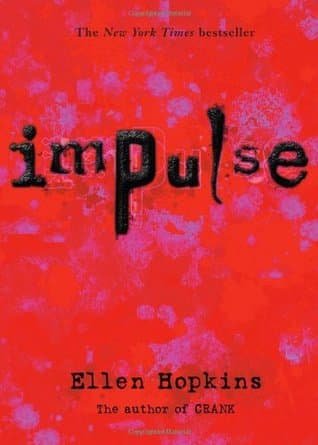
Ellen Hopkins (2007)
Genre
Psychology / Young Adult / Romance
Reading Time
660 min
Key Themes
See below
Sign in to track this book
Three teenagers, each recovering from suicide attempts, find unexpected hope and connection in a psychiatric hospital.
Vanessa, a seemingly perfect girl, arrives at Aspen Springs after a suicide attempt with a razor blade. She is driven by intense pressure and the secret of her mother's affair. Tony, a quiet artist, comes after overdosing on pills, dealing with neglect and abuse from his father. Conner, from a wealthy background, is admitted after a violent fight with his parents led him to attempt suicide with his father's gun, feeling trapped by their expectations. Each character shares their recent past and the events that brought them to the facility.
At Aspen Springs, Vanessa, Tony, and Conner learn the strict routines and meet other patients. They start attending group therapy, where they are encouraged to share their stories. Vanessa initially stays guarded, while Tony remains quiet, drawing to cope. Conner expresses his anger more openly, often clashing with staff and other patients. These early sessions are difficult, making them face their situations and slowly break down their defenses.
As weeks pass, Vanessa, Tony, and Conner start to connect. Vanessa is drawn to Tony's quiet nature and artistic talent, and he finds comfort in her presence. Conner, despite his initial harshness, begins to open up to both of them, seeing their shared pain. They often interact during free time or in therapy, offering each other silent support and, eventually, a sense of belonging they had not known before. This new friendship becomes important in the hospital's isolating environment.
Through therapy and private talks, the characters begin to reveal their pasts. Vanessa confesses her mother's affair with her best friend's father, and the guilt she felt to maintain a perfect image. Tony slowly talks about the years of abuse from his alcoholic father and his feelings of worthlessness. Conner shares the overwhelming pressure from his demanding parents, who controlled his life, leading to deep rebellion and hopelessness. These painful revelations are essential steps toward healing.
Tony's love for drawing and painting becomes central to his healing. He often sketches other patients and scenes from Aspen Springs, using art to process emotions when words fail. Vanessa, at first reserved, is moved by Tony's artistic openness and begins to explore her own expression, mainly through writing. Conner, less artistic, finds his voice by speaking out and challenging the rules, often inspired by his friends' honesty. Art becomes a tool for self-discovery and communication within their group.
Family visiting days bring both anxiety and anticipation. Vanessa's mother visits, still struggling to acknowledge her affair's impact, leading to tense interactions. Tony's father, initially absent, eventually appears, bringing the same distant and critical attitude that caused Tony's trauma. Conner's parents arrive with their usual controlling ways, trying to dictate his future even in the hospital, reigniting his anger. These visits show the deep family issues that continue to affect their recovery, making them wonder if they can truly heal and return to their old lives.
Despite their growing bonds, the characters face setbacks. Vanessa deals with renewed urges to self-harm, especially after difficult family visits, and struggles with being vulnerable. Tony experiences deep depression and withdrawal, triggered by memories of abuse. Conner, always rebellious, clashes with staff and almost jeopardizes his treatment by breaking rules. These regressions are painful, showing the deep roots of their problems and the fragility of their progress, requiring them to rely more on each other and therapy.
A gentle romance slowly develops between Vanessa and Tony. Their shared vulnerability, understanding, and comfort in each other lead to a deeper bond. Tony's kind nature and artistic soul connect with Vanessa, who finds in him a genuine acceptance she longed for. Vanessa's intelligence and quiet strength draw Tony out of his shell. Their relationship, marked by shared secrets and comforting touches, becomes a source of emotional support and hope for a future outside the hospital, showing them a different kind of love.
Conner's journey changes when he realizes he must either give in to his parents' wishes or create his own path. Inspired by Vanessa and Tony's authenticity, he begins to express his desire for a life free from his parents' control. An intense therapy session with his parents forces a confrontation where Conner, with new courage, asserts his individuality and rejects their plans for his future. This moment marks a shift in his recovery, as he starts to imagine a future where he can be true to himself, even if it means alienating his family.
The thought of discharge brings a mix of excitement and worry. Vanessa, Tony, and Conner discuss their future plans. Vanessa plans to live with her aunt and write, while Tony hopes to attend art school. Conner, having decided to separate from his overbearing parents, plans to live independently and work toward his own goals. They acknowledge the challenges ahead but also recognize their growth and strength gained at Aspen Springs. They promise to stay in touch and support each other.
One by one, the friends leave. Vanessa goes first, feeling both free and anxious. Tony follows, determined to pursue his art. Conner, having made the hard choice to truly break free from his parents' control, faces the most uncertain future but also the most freedom. The goodbyes are emotional, marking the end of an intense, shared time. They step back into a world that is both familiar and changed by their experiences, carrying lessons learned, bonds formed, and fragile hope for a healthier future. The transition is not easy, but they are better prepared.
After leaving Aspen Springs, Vanessa, Tony, and Conner continue to face challenges but use the coping skills and self-awareness they gained. Vanessa dedicates herself to writing, finding a healthy way to express emotions. Tony pursues his art, finding peace and purpose. Conner, having forged his own path, experiences the difficulties and rewards of independence, gradually building a life on his own terms. They stay in contact, offering each other ongoing support. Their journey is not a complete cure, but one of continuous healing and growth, showing that a second chance, with support, can lead to a more meaningful life.
The Protagonist
Vanessa transforms from a secretive, self-harming individual trapped by external pressures into a more open, self-accepting young woman who finds her voice through writing and genuine connection.
The Protagonist
Tony evolves from a withdrawn, self-destructive individual into someone who embraces his artistic talent as a healing tool and finds the courage to form meaningful relationships, including a romantic one.
The Protagonist
Conner transforms from an angry, rebellious, and dependent young man into an independent individual who confronts his parents and courageously chooses his own path in life.
The Supporting
Dr. Stone consistently provides guidance and support, acting as a catalyst for the characters' self-discovery and growth.
The Supporting
Her character remains largely static, representing the unresolved family issues Vanessa must learn to navigate.
The Antagonist
Tony's father remains a consistent source of pain, forcing Tony to find strength within himself to break free from his influence.
The Antagonist
Conner's parents remain resistant to his independence, prompting Conner to make a definitive break from their control.
The Supporting
The staff collectively provides consistent and structured care, facilitating the overall therapeutic process for all patients.
A main theme is the characters' struggle to define themselves apart from outside pressures and past traumas. Conner fights his parents' control, trying to create his own path. Vanessa deals with the 'perfect girl' image from her family's secrets, wanting to be authentic. Tony, defined by his father's abuse, seeks self-worth based on his art and inner peace. Aspen Springs becomes a place where they learn to shed imposed identities and embrace their true selves, often through rebellion and self-expression, as seen in Conner's eventual break from his parents.
“Maybe it's not about finding a reason to live, but about making the choice to live, and then figuring out the reasons as you go.”
The novel shows how real human connection can help heal trauma. Vanessa, Tony, and Conner arrive isolated, but their shared experiences at Aspen Springs create a strong bond. They find understanding, empathy, and non-judgmental support in each other, which was missing in their previous lives. This friendship, and the romance between Vanessa and Tony, provides a safe space for vulnerability and growth. For instance, Tony's art helps Vanessa open up, and Conner's rebellious spirit often strengthens the others, showing that shared struggle can lead to deep personal recovery.
“Sometimes, the only way to heal is to let someone else see your broken pieces and not be afraid.”
The book explores the psychological effects of various traumas—abuse, neglect, family problems, and societal pressure—that lead to mental health crises and suicide attempts. It shows the raw struggles of depression, anxiety, and self-harm, and the complex recovery journey in a psychiatric setting. The story demystifies mental illness, showing it can affect anyone. By showing the therapy process, the book highlights the importance of professional help, self-awareness, and coping skills, emphasizing that suicide is often a desperate response to pain.
“The blade isn't the answer, but sometimes it feels like the only question I know how to ask.”
The novel examines the deep and often damaging influence of family dynamics on adolescent mental health. Vanessa's mother's affair and need for perfection, Tony's father's abuse and neglect, and Conner's parents' control all contribute to their children's suicide attempts. The book shows how unresolved family issues, lack of emotional support, and unrealistic expectations can create environments where young people feel trapped. The characters' recovery often involves confronting these family traumas, either by seeking understanding or, like Conner, by choosing distance for their own well-being.
“Parents are supposed to be your safe place. What happens when they're the ones you're running from?”
The story is told through the alternating viewpoints of Vanessa, Tony, and Conner.
This device allows the reader to deeply inhabit the minds of all three protagonists, providing intimate access to their individual traumas, internal struggles, and evolving thoughts. Each chapter or section is narrated by one of the characters, often in a distinct poetic, free-verse style that reflects their personality and emotional state. This not only builds empathy for each character but also highlights the diverse pathways to mental health crises and the subjective experience of recovery, creating a rich, multi-faceted understanding of their shared journey.
The entire novel is written in a poetic free-verse style.
The use of free verse poetry is a distinctive and powerful stylistic choice that enhances the emotional intensity and raw honesty of the narrative. The fragmented lines, varied stanza lengths, and lack of traditional punctuation mimic the fractured mental states of the characters, their racing thoughts, and their difficulty articulating complex emotions. This poetic form allows for a more visceral and immediate experience of their pain, anger, and eventual hope, making the characters' internal monologues particularly impactful and evocative, resonating deeply with the young adult audience.
The setting functions as both a sanctuary and a crucible for the characters' transformation.
Aspen Springs serves as a crucial plot device, acting as a contained environment that forces the characters to confront their issues without the distractions of the outside world. It is a place of forced introspection and structured healing, but also a crucible where they are stripped bare of their defenses. The hospital's rules, therapy sessions, and communal living force interaction and self-disclosure, making it both a physical setting and a symbolic space for their journey from brokenness to a fragile sense of wholeness. It is the catalyst for their initial connections and subsequent growth.
Tony's artistic expression, and subsequently Vanessa's writing, serve as vital tools for processing trauma.
Art, particularly Tony's drawing and painting, functions as a powerful non-verbal coping mechanism and a means of communication. For Tony, who struggles with verbal expression due to his trauma, art becomes his voice, allowing him to process and externalize his pain and hopes. This inspires Vanessa to turn to writing, using words to articulate her own complex emotions. This device highlights the therapeutic benefits of creative expression, showing how channeling difficult feelings into art can be a pathway to understanding, healing, and connecting with others when direct communication is too difficult.
“Living isn't always good. Sometimes it's just living.”
— Tony reflects on the bleakness of his existence prior to the hospital.
“Hope is a dangerous thing. It can drive a man insane.”
— Vanessa contemplates the false hope she once held for her family.
“When you're broken, you stay broken, even if they put you back together.”
— Connor expresses his deep-seated feelings of irreparable damage.
“Love is like a drug. You get addicted, and then you crash.”
— Tony describes the intensity and eventual downfall of his past relationships.
“Some scars don't show. Some wounds never heal.”
— Vanessa thinks about her internal struggles that are not visible to others.
“The truth is a weapon. It can save you, or it can destroy you.”
— Connor weighs the consequences of revealing his past secrets.
“We're all just trying to find a way to breathe.”
— A general reflection on the universal struggle for survival and peace.
“Sometimes the only way out is through.”
— A recurring theme about facing one's problems head-on.
“Silence can be louder than any scream.”
— Vanessa experiences the oppressive weight of unspoken feelings and secrets.
“You can't outrun your past. It always catches up.”
— Tony realizes the futility of trying to escape his history.
“Maybe being crazy isn't so bad. Maybe it's just a different way of seeing things.”
— Connor ponders the nature of his mental state and societal labels.
“We all wear masks. Some are just better at hiding.”
— A general observation about people's tendency to conceal their true selves.
“The hardest part of letting go is realizing you never really had it.”
— Vanessa reflects on her efforts to move on from a relationship that was never truly stable.
“Sometimes the people who need help the most are the ones who push it away.”
— A nurse or therapist's perspective on the patients in the psychiatric hospital.
Ready to see how well you understood this book? Take our interactive quiz with 10 questions.

Biography coming soon.

Rhonda Byrne
4.3

Menno Henselmans
4.3

Sylvia Plath
4.3

Elliot Aronson
4.3

Joseph Campbell
4.3

Erich Fromm
4.3
Irvin D. Yalom
4.2

Lucy Strange
4.2