“The thing about invisible boxes is that you can't see them, so you don't know you're in one until you try to get out.”
— Rhode contemplating the unseen constraints in her life and the nature of mental traps.

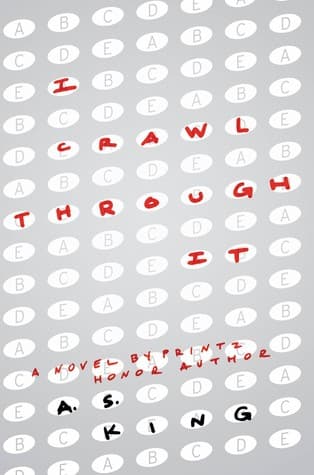
A.S. King (2015)
Genre
Psychology / Fantasy / Young Adult
Reading Time
420 min
Key Themes
See below
Sign in to track this book
Four traumatized teenagers build an invisible helicopter to escape their difficult lives, only to learn that real freedom comes from facing the problems they tried to leave behind.
The story begins with Stan, a quiet teenager, starting to build an invisible helicopter in his backyard. His best friend, Gustav, an artist, soon joins him, as does China, a new girl with a mysterious air. Later, Lansdale, good at math but socially awkward, also becomes part of the group. Each teen battles private struggles: Stan with test pressure and his parents' neglect, Gustav with the trauma of seeing a sexual assault, China with the effects of date rape, and Lansdale with grief over his sister's death and feeling like an outsider. The helicopter symbolizes a shared, imaginary escape from their overwhelming lives.
Gustav is haunted by seeing a date rape, feeling guilt and helplessness for not acting. This trauma influences his art, as he draws unsettling images that show his inner pain. His parents, unaware of his suffering, see his art as a sign of his talent, further isolating him. The invisible helicopter offers him temporary relief, a place where he feels some control and shared understanding, even if unspoken. His art becomes a silent plea for help, a way to process the unspeakable event that torments him.
China arrives in town with a past she wants to leave behind. She was a victim of date rape, which has left her feeling detached and judged. She struggles to connect with new peers, feeling her trauma defines her. The invisible helicopter becomes a safe place where she can exist without the burden of her past, where the other builders accept her. Her interactions with the group, especially Stan, offer glimpses of hope for healing and connection, though she remains guarded, fighting her inner battle alone.
Lansdale is a math whiz, using numbers as a defense against the deep grief from his younger sister's recent death. He struggles to connect with his parents, who are lost in their own sorrow, leaving him feeling alone and unheard. The invisible helicopter gives him an outlet for his anxieties, a project where his mathematical precision can be applied to a shared, imaginary goal. He sees the helicopter as a way to escape the constant reminder of his loss, a place where logic and emotion can exist in a strange, comforting balance. His contributions to the helicopter's design are practical, yet filled with a longing for a different reality.
Stan is a smart student burdened by intense standardized test pressure. His parents, both educated and focused on their own lives and careers, offer little emotional support, only caring about his grades. This neglect makes Stan feel unseen and unheard, leading to anxiety and a desire to escape his reality. The invisible helicopter becomes his personal project, a physical representation of his desire for freedom and a place where he feels a sense of purpose and belonging missing from his home life. He finds comfort in the shared, unspoken understanding among the helicopter builders.
As the invisible helicopter nears 'completion,' the four teenagers spend more time in Stan's backyard. They do everyday things, sharing snacks and quiet company, but also experience deep moments of connection. While their individual traumas are rarely discussed, a deep, unspoken understanding grows between them. Building and 'flying' the invisible helicopter becomes a shared ritual, a strong symbol of their collective wish to escape their painful lives. During these 'flights,' they feel a temporary lightness, a sense of being understood and safe, far above the world that weighs on them.
The school intensifies the anxieties of Stan, Gustav, China, and Lansdale. The constant focus on standardized testing, especially for Stan, creates an atmosphere of competition and performance anxiety. Social dynamics and a lack of real adult support further isolate the teenagers. Teachers and counselors often dismiss their struggles or offer unhelpful advice, failing to see the depth of their inner battles. This environment makes the invisible helicopter even more appealing as a sanctuary, a contrast to the rigid, unsympathetic reality of their academic lives. The school becomes a symbol of the external pressures they want to escape.
A recurring idea is the deep indifference and misunderstanding of adults. Stan's parents are focused on their careers, Gustav's parents are unaware of his trauma, China's parents are distant, and Lansdale's parents are lost in their own grief. Teachers and other adults often give superficial advice or fail to notice the teens' distress. This adult neglect forces the four to rely only on each other, creating a unique bond but also deepening their isolation from the wider world. The invisible helicopter becomes a secret world, safe from adult scrutiny and incomprehension.
Despite the comfort of the invisible helicopter, reality starts to intrude, creating cracks in their shared illusion. Gustav's art becomes more disturbing, showing his unresolved trauma. China struggles with flashbacks and perceived social stigma. Lansdale's grief shows as anger and withdrawal. Stan continues to battle test anxiety, and his parents' pressure remains. These intrusions remind them that their imaginary escape is temporary and their underlying issues still need facing. The helicopter, while a strong coping mechanism, cannot shield them indefinitely from the difficult truths of their lives.
As the story progresses, the true nature of the invisible helicopter becomes clearer. It is not a literal escape vehicle but a strong symbol of the teenagers' collective desire to flee their pain and the overwhelming pressures of their lives. It represents a mental space, a shared fantasy where they can process their traumas, anxieties, and grief in a safe, imaginative way. The 'building' and 'flying' are symbolic acts of coping and connection. They realize that true escape is not about physically leaving, but about finding ways to face and integrate their experiences, a journey that must ultimately be faced within themselves.
While direct talks about their traumas are rare, the teenagers subtly begin to confront their individual struggles within their shared escape. Gustav's art, initially a symptom of his pain, starts to become a way to express and understand it. China finds small ways to assert herself, gaining a fragile sense of control. Lansdale, through his mathematical view, begins to articulate his grief more clearly, even if still abstractly. Stan, seeing these changes, starts to question if constant escape works, sensing that true resolution requires engaging with the real world, not just flying from it. The helicopter, while still there, begins to feel less like a destination and more like a stepping stone.
Near the end of the novel, each teenager begins their own path to healing. Gustav, encouraged by his friends' unspoken support, channels his trauma into more constructive artistic expression, finding a voice for his pain. China, empowered by the group's unity, starts to reclaim her story and find strength in her vulnerability. Lansdale slowly processes his grief, realizing his sister's memory does not have to be a source of paralyzing pain. Stan, seeing their individual growth, finds the courage to address his own anxieties, realizing that avoidance only makes them worse. The invisible helicopter, while a cherished memory, becomes less necessary as they learn to navigate their realities.
The most powerful part of the teenagers' journey is the deep connection they form. Despite their different traumas and anxieties, their shared understanding and unspoken support create a safe space where they can be vulnerable without judgment. This bond, born from their collective desire to escape, becomes the foundation for their ability to face reality. They learn that while an invisible helicopter can offer temporary relief, true strength comes from human connection, empathy, and knowing they are not alone. Their friendship becomes a real force, more enduring than any imaginary escape.
Ultimately, Stan, Gustav, China, and Lansdale learn that real escape is not about flying away from problems. Instead, it is about finding the inner strength and courage to face their realities, process their traumas, and live authentically. The invisible helicopter served its purpose as a coping mechanism, a symbol of hope and shared understanding. However, the true work of healing happens when they start to let go of the illusion and engage with their lives, armed with the resilience they have built and the strong support of their friends. They understand that while pain is inevitable, so is the ability to grow and recover.
The Protagonist
Stan evolves from seeking escape to understanding the need to confront his anxieties and find his own voice amidst external pressures.
The Protagonist
Gustav moves from internalizing his trauma to finding a voice for his pain through his art and the support of his friends.
The Protagonist
China transitions from isolation and guardedness to finding a sense of belonging and beginning to reclaim her narrative.
The Protagonist
Lansdale begins to process his grief, realizing that emotional expression is as vital as logical understanding.
The Supporting
They remain largely static, serving as a representation of adult indifference and the pressures placed on teenagers.
The Supporting
They remain largely static, representing the theme of adult misunderstanding.
The Supporting
They remain largely static, embodying the isolating nature of unaddressed grief.
The Mentioned
Static, providing a contrast to the main characters' inner lives.
The invisible helicopter is the main symbol for the teenagers' shared desire to escape their overwhelming lives. For Stan, it is a refuge from school pressure; for Gustav and China, a sanctuary from trauma; and for Lansdale, an escape from grief. Building and 'flying' it lets them process pain in a safe, imaginary space. This theme shows how imagination can be a vital coping mechanism, offering temporary relief and a sense of control when facing difficult situations, as seen in their 'flights' and shared building ritual.
“It’s not invisible, Stan thought. It’s just not there. And because it’s not there, it can be anything we want it to be.”
A common theme is the adult world's failure to understand, support, or even notice the teenagers' deep emotional struggles. Stan's parents are career-focused and distant, Gustav's parents are unaware of his trauma, China's parents are absent, and Lansdale's parents are consumed by their own grief. Teachers and counselors often give superficial advice or cannot get through to the teenagers. This neglect forces the young characters to rely only on each other, showing the isolation many adolescents feel when dealing with complex issues without proper adult guidance, making their invisible helicopter a necessity.
“Adults were like that. They heard what they wanted to hear and saw what they wanted to see. And if what they heard or saw didn’t fit into their worldview, they just dismissed it.”
Each of the four main characters deals with significant trauma: Gustav and China with sexual assault, Lansdale with grief, and Stan with intense anxiety and neglect. The novel shows how these traumas appear, from Gustav's disturbing art to China's guardedness and Lansdale's reliance on logic. The invisible helicopter becomes their main, shared coping mechanism, a way to collectively process and temporarily escape their pain. The story illustrates the varied and often unconventional ways young people try to manage overwhelming emotions, and the importance of finding healthy outlets and support, even if it starts in an imaginary space.
“The thing about trauma, China knew, was that it didn’t just happen. It stuck to you. It changed the way you saw everything.”
Despite their initial isolation, the bond between Stan, Gustav, China, and Lansdale becomes their strongest tool for healing. Their shared project, the invisible helicopter, creates an unspoken understanding and empathy that goes beyond their individual traumas. They do not always talk about their pain, but their presence and shared fantasy provide a vital sense of belonging and validation. This theme emphasizes that human connection, especially peer support and mutual understanding, is essential for dealing with difficult experiences and ultimately finding the courage to face reality, as shown by their slow, collective move towards addressing their issues.
“They didn't need to talk about it. They just needed to be there. That was enough.”
The novel often blurs the lines between what is real and what is imagined. The invisible helicopter is a powerful illusion, yet it greatly affects the teenagers' emotional states and their ability to cope. The story questions how much of our reality is built by our perceptions and coping mechanisms. As the plot unfolds, the characters slowly begin to understand that while illusion can offer temporary comfort, true healing requires facing the real parts of their lives, showing the journey from pure fantasy to a more integrated understanding of their internal and external worlds.
“Sometimes, Stan thought, the things you couldn't see were the most real of all.”
A central extended metaphor for escape, coping, and shared understanding.
The invisible helicopter is the most significant plot device, serving as an extended metaphor for the teenagers' collective desire to escape their individual traumas and anxieties. It's a tangible symbol of their shared fantasy, a safe mental space where they can process difficult emotions. The act of 'building' and 'flying' it allows for profound, unspoken connections and temporary relief from reality. It functions as a catalyst for their interactions and a physical manifestation of their psychological states, ultimately guiding them towards understanding that true escape is an internal process, not a physical flight.
The blending of a fantastical element (the invisible helicopter) into an otherwise realistic setting.
The novel employs magical realism by introducing the invisible helicopter, a fantastical element, into the otherwise mundane and realistic setting of a suburban town and high school. This device allows the author to explore the characters' psychological states and coping mechanisms in a unique and symbolic way. The helicopter is never explicitly explained as real or imagined, blurring the lines of reality and reflecting the characters' internal worlds. It enables a deeper exploration of trauma, grief, and anxiety without resorting to purely literal interpretations, inviting the reader to engage with the story on a metaphorical level.
The narrative shifts between the internal thoughts and experiences of the four main protagonists.
The novel uses a limited omniscient perspective that shifts between Stan, Gustav, China, and Lansdale. This device allows the reader intimate access to each character's unique internal struggles, traumas, anxieties, and coping mechanisms. By experiencing the story through their individual lenses, the reader gains a comprehensive understanding of their isolation and the nuanced ways they perceive their shared reality and the invisible helicopter. This shifting perspective highlights the subjective nature of experience and deepens the empathy for each character, while also revealing the subtle ways their lives intersect and influence one another.
Gustav's artwork serves as a visual representation of his internal trauma and evolving emotional state.
Gustav's drawings are a powerful symbolic device. Initially, his art is disturbing and abstract, directly reflecting the unprocessed trauma of witnessing a sexual assault and his profound guilt. As the story progresses and he begins to heal, his art subtly shifts, becoming a more constructive outlet for his emotions. The changes in his artistic style and subject matter visually track his psychological journey, providing a non-verbal narrative of his internal landscape. His art is a raw, unfiltered expression of the unspeakable, allowing the reader to 'see' his pain and progress.
A recurring symbol of external pressure, societal expectations, and the dehumanizing aspects of the education system.
Standardized testing, particularly for Stan, functions as a recurring symbol throughout the novel. It represents the external pressures placed upon teenagers by society and the education system, often at the expense of their mental and emotional well-being. It highlights the dehumanizing aspect of reducing individuals to scores and the anxiety it creates. For Stan, it's a direct source of stress and a driver for his desire to escape, embodying the rigid, unforgiving reality he wishes to transcend with the invisible helicopter. It underscores the theme of adult indifference and misplaced priorities.
“The thing about invisible boxes is that you can't see them, so you don't know you're in one until you try to get out.”
— Rhode contemplating the unseen constraints in her life and the nature of mental traps.
“Sometimes the only way to figure out what you believe is to argue with someone who believes the opposite.”
— Stan's internal monologue about the importance of contrasting viewpoints for personal growth.
“The universe doesn't care about your feelings, but it's also made of the same stuff you are.”
— Carla's musings on the indifference of the cosmos versus the inherent connection of all things.
“People build walls not to keep others out, but to see who cares enough to break them down.”
— Rhode's reflection on defensive behaviors and the desire for genuine connection.
“You can't solve a problem you don't admit you have.”
— A recurring theme when characters are confronted with their own denial.
“The truth is a slippery thing. It changes depending on who's holding it.”
— Stan's cynical observation about subjective reality and narrative control.
“If you keep waiting for someone else to make you happy, you'll be waiting forever.”
— Carla's advice about taking responsibility for one's own happiness.
“Fear is just a story we tell ourselves.”
— Rhode trying to overcome her anxieties by reframing them.
“We're all just trying to figure out how to be people in a world that doesn't always make sense.”
— A general sentiment shared by the main characters as they navigate adolescence and complex realities.
“The greatest prison is the one you build for yourself inside your own head.”
— Rhode realizing the extent of her self-imposed limitations.
“Sometimes the best way to move forward is to acknowledge you're standing still.”
— Stan's moment of introspection, understanding the importance of recognizing stagnation.
“What if the monster isn't under the bed, but inside us?”
— A character's internal struggle with their own darker impulses or fears.
“Growing up is realizing that not everything has a neat answer, and sometimes the best you can do is ask the right questions.”
— A character's developing understanding of life's complexities and ambiguities.
Ready to see how well you understood this book? Take our interactive quiz with 10 questions.

A.S. King is an award-winning author of young adult fiction, recognized for her unique voice and exploration of complex themes. Her notable works include 'Everybody Sees the Ants,' 'Please Ignore Vera Dietz,' and 'Still Life with Tornado,' which have earned critical acclaim for their blend of realism and surrealism. King's writing often delves into identity, family, and societal pressures with unflinching honesty.

Rhonda Byrne
4.3

Menno Henselmans
4.3

Sylvia Plath
4.3
Elliot Aronson
4.3

Joseph Campbell
4.3
Erich Fromm
4.3

Irvin D. Yalom
4.2

Lucy Strange
4.2