“The wind is whistling, and the house is cold.”
— From the poem 'High Windows', describing a sense of bleakness and the passage of time.

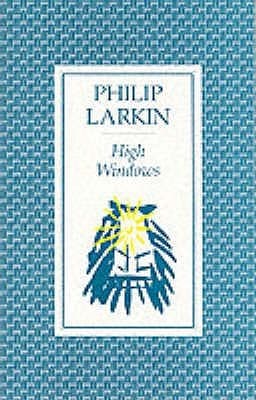
Sign in to track this book
In 'High Windows,' Philip Larkin looks through everyday life to reveal the often sad truths of aging, lost innocence, and the quiet desperation of human existence with clear honesty and dark humor.
The speaker, likely Larkin himself, watches a young couple experiencing what he sees as unrestrained sexual freedom. This is shown by the 'high windows' of their apartment where they are visible. This leads to a thought about changing social norms around sex, contrasting it with the more restricted expectations of his own youth, where 'sex was a sort of bargaining.' He considers the 'bliss' and 'paradise' that this new generation seems to get without effort or consequence. The poem ends with the speaker looking up at the sky, feeling both awe and detachment from this modern freedom, seeing it as something 'new, and hard to understand.'
The poem famously states 'Sexual intercourse began / In nineteen sixty-three / (Which was rather late for me)'. The speaker humorously, yet wistfully, identifies 1963 as the year of a major cultural shift, specifically regarding sexual freedom, caused by events like the Chatterley ban and The Beatles' rise. He compares this new freedom with the 'fumbling' and 'embarrassment' of his own generation's youth. The poem suggests that while this change brought more openness, it also brought a different kind of 'sadness' or 'loneliness,' implying that seeking pleasure does not always guarantee happiness or connection. The tone is a mix of cynicism, nostalgia, and an observational detachment from the evolving world.
The speaker describes a large, modern hospital, a 'glass and steel' building where people go to face illness and death. He observes the diverse crowd entering and leaving, all connected by a shared weakness. The poem emphasizes the anonymity and efficiency of the institution, where individual suffering becomes part of a larger, impersonal process. There is a sense of waiting, of a shared fate, as patients and visitors move through its sterile halls. The speaker reflects on the ultimate destination of all who enter — a confrontation with death — and the 'silence' that awaits everyone. The building becomes a symbol for the human condition, a place where life's fragility is clearly shown.
The poem offers a stark and clear picture of old age, focusing on the mental and physical decline of 'the old fools.' Larkin describes their memory loss, their repetitive talks, and their shrinking ability for independent thought. He notes their empty stares and how their past selves seem to have been 'erased' by time. The speaker struggles with the horror of this decline, asking what remains of a person when their abilities fade. He acknowledges the 'courage' it takes to live such an existence but ultimately paints a grim picture, stressing the loss of dignity and the certain move towards oblivion, a 'darkness' that slowly takes over.
Larkin famously begins, 'They fuck you up, your mum and dad. / They may not mean to, but they do.' This powerful opening sets the tone for a reflection on the damaging effects of parental influence and the cycle of problems passed down through families. The speaker compares this with the choice to remain childless, which he presents as a deliberate act of self-protection and a break from this cycle. He argues that by not having children, one avoids causing similar 'deep and narrow' wounds. While recognizing the social expectation to marry and have children, the speaker finds comfort and a type of freedom in his solitary life, suggesting that 'man hands on misery to man' and he chose not to take part.
The poem describes a coal mine explosion that kills a group of miners. Before the disaster, the men are shown as having an almost supernatural sense of their coming death, shown by 'eggs unbroken' and 'a light / Not only in their eyes but in their hands.' This mystical element adds a tragic irony to their fate. The explosion itself is a sudden, violent event that shatters the morning. The poem then moves to the aftermath, focusing on the wives and families waiting for news, their grief clear. Larkin emphasizes the shared nature of the tragedy and the common feeling of loss, ending with the image of the men's spirits 'walking' together in a final, united journey.
A follow-up to his earlier poem 'Toads,' this poem shows the speaker observing people in a park and thinking about the 'toad' of work and its unavoidable demands. He compares the apparent leisure of those in the park with his own feeling of obligation and the 'toil' of earning a living. While he acknowledges the freedom of not always being at work, he also realizes that even in leisure, the 'toad' of existence, with its worries and duties, is never truly absent. The poem explores the tension between wanting freedom and the practical needs of life, suggesting that complete freedom from 'toads' is an illusion and that even in 'free' moments, life's inherent burdens remain.
The speaker addresses money directly, treating it as a powerful, almost living thing that both enables and complicates life. He acknowledges its need and its ability to provide comfort and opportunity, but also its power to cause worry and dissatisfaction. Money is shown as something that 'cannot be found / In any of the books.' The poem explores the speaker's complex relationship with wealth, recognizing its practical value while also regretting its widespread influence and how it shapes desires and decisions. He feels an almost physical desire for it, a 'great hunger,' while also understanding its limits in bringing true happiness or meaning.
The poem describes a scene of men playing cards, likely in a pub or common room. The speaker observes their focused involvement, the routine of the game, and the subtle interactions among them. There is a sense of quiet contentment and routine in their activity, a small world created by the cards and their shared pastime. Larkin captures the ordinary yet meaningful details of their interaction, emphasizing the simple pleasure gained from this predictable, self-contained activity. The scene offers a look into a form of male friendship and a way of passing time that provides a temporary escape from the larger world's complexities, finding meaning in the small, repeated actions of everyday life.
The poem describes a funeral procession in Dublin, known for a 'hired mourner' or 'keener' who performs a dramatic show of grief. This person, with 'hair as white as cloud,' wails and gestures dramatically, drawing attention to herself. The speaker observes this performance, comparing it with what might be more genuine, private sorrow. The scene highlights cultural differences in showing grief and the sometimes performative aspects of public mourning. It raises questions about truth and spectacle in the face of death, presenting a poignant yet somewhat detached observation of a ritual that is both old and, in this situation, strikingly theatrical.
The Protagonist
The speaker's arc is less about dramatic change and more about a deepening understanding and acceptance of life's inherent limitations and sadness, often finding quiet dignity in resignation.
The Supporting
They remain static, serving as a symbolic representation of a cultural moment.
The Supporting
Their arc is one of terminal decline, illustrating the universal process of aging.
The Mentioned
They are a static, symbolic force representing the past and inherited traits.
The Supporting
Their arc is a tragic one, moving from life to a fated, collective death and spiritual continuation.
The Supporting
Their arc is one of receiving tragedy and enduring its immediate aftermath.
The Mentioned
Money is a static force, its power and influence unchanging.
The Supporting
She is a static, symbolic figure, representing a particular cultural practice.
A constant theme throughout the collection, Larkin clearly faces the certainty of aging, illness, and death. Poems like 'The Old Fools' show mental and physical decay, while 'The Building' turns a hospital into a universal symbol of human weakness and the final destination of all. 'The Explosion' explores sudden, violent death and its aftermath, highlighting life's fragility. This theme is often explored with a sense of stark realism, without romance, focusing on the indignities and ultimate forgetting that await.
“And the mind is just a kind of/Glassed-in activity, a sort of/Waiting-room, for the dark to come.”
Larkin often observes and comments on the changing social world, especially the sexual revolution of the 1960s. 'High Windows' and 'Annus Mirabilis' directly discuss the change in attitudes towards sex and relationships, often with a mix of dry amusement, sadness, and a feeling of being left behind. The speaker compares his own generation's carefulness with the perceived freedom of youth, questioning whether this new liberation truly brings happiness. This theme shows the speaker's struggle to match traditional values with the evolving world.
“Sexual intercourse began / In nineteen sixty-three / (Which was rather late for me)”
Many poems in 'High Windows' explore individual isolation, often despite or because of social expectations. The speaker's choice to remain childless in 'This Be The Verse' is presented as a choice for a solitary life, free from inherited sadness but also implicitly alone. Even when observing others, like the card-players or the hospital visitors, there is often a sense of the speaker's detachment. The collection suggests that a basic loneliness underlies human existence, a condition that neither love nor social participation can fully ease.
“Man hands on misery to man. / It deepens like a coastal shelf. / Get out as early as you can, / And don't have any kids yourself.”
Larkin finds deep philosophical ideas within everyday observations. A simple scene of 'The Card-Players' reveals the quiet routines that give life meaning, while 'Toads Revisited' explores the common burdens of work and existence through a park stroll. The collection raises ordinary settings—a hospital, a pub, an apartment window—into places for thinking about life's biggest questions: death, freedom, and happiness. This theme emphasizes the inherent worth and importance in common experience, even when it seems unremarkable.
“What do they think has happened, the old fools, / To make them like this?”
The use of language that signifies the opposite, often for humorous or critical effect.
Larkin frequently employs irony, especially in 'Annus Mirabilis,' where the declaration of sexual intercourse beginning in 1963 is both literally absurd and metaphorically trenchant. This device allows him to comment on societal shifts and human follies with a detached, often cynical wit, creating a tension between what is said and what is implied. It sharpens his critique of modern life and his observations on the human condition, often undercutting sentimentality with a dose of harsh reality.
The use of objects or concepts to represent abstract ideas.
The collection is rich in metaphor and symbolism. 'High Windows' themselves symbolize the visibility and uninhibited nature of modern sexuality. 'The Building' is a metaphor for the human body and the journey towards death. The 'toads' in 'Toads Revisited' symbolize the burdens of work and existence. These devices allow Larkin to imbue everyday scenes and objects with deeper philosophical meaning, making his observations resonate beyond their immediate context and creating memorable, evocative imagery.
The use of a consistent 'I' voice, often identifiable with the poet but distinct.
The consistent use of a first-person speaker, often a persona closely aligned with Larkin himself, allows for intimate, subjective reflection. This voice is typically observant, reflective, and often melancholic, providing a direct lens through which to view the poems' themes. It fosters a sense of personal confession and direct address, drawing the reader into the speaker's internal world of contemplation, doubt, and dry wit. This creates a strong, identifiable presence throughout the collection.
The continuation of a sentence without a pause beyond the end of a line, couplet, or stanza.
Larkin often uses enjambment to create a conversational, natural flow in his poems, breaking the traditional rhythm of lines to mimic speech. This technique can build suspense, emphasize certain words, or create a sense of ongoing thought, as seen in 'The Old Fools' where sentences stretch across lines, mirroring the rambling thoughts of the elderly. It helps to blur the line between prose and poetry, making his verse feel accessible and immediate while maintaining its poetic structure.
“The wind is whistling, and the house is cold.”
— From the poem 'High Windows', describing a sense of bleakness and the passage of time.
“When I see a couple of kids / Who've just got married, I feel they're at the beginning of a long tunnel.”
— From 'High Windows', reflecting on marriage and the future.
“Rather than words comes the thought of high windows: / The sun-comprehending glass, / And beyond it, the light, the sky, the endless / Capacity of happiness.”
— The concluding lines of 'High Windows', offering a fleeting glimpse of hope or possibility.
“Sexual intercourse began / In nineteen sixty-three / (Which was rather late for me) - / Between the end of the Chatterley ban / And the Beatles' first LP.”
— From 'Annus Mirabilis', satirizing the perceived cultural shifts of the 1960s.
“Man hands on misery to man. / It deepens like a coastal shelf.”
— From 'This Be The Verse', a stark observation on inherited unhappiness.
“They fuck you up, your mum and dad. / They may not mean to, but they do. / They fill you with the faults they had / And add some extra, just for you.”
— The opening lines of 'This Be The Verse', a famously blunt statement on parental influence.
“The less we parade our limitations, / The likelier we are to be loved.”
— From 'The Building', discussing the human tendency to conceal vulnerabilities.
“Nothing, like something, happens anywhere.”
— From 'The Building', a line that captures the mundane reality of life.
“And the sun shines, and the cars stream by, / And the world goes on, and so do I.”
— From 'The Old Fools', contemplating aging and the continuity of life.
“What do they think has happened, the old fools, / To make them like this?”
— From 'The Old Fools', questioning the decline associated with old age.
“Life is an affair of people not keeping their promises.”
— From 'To the Sea', reflecting on the unreliability of human nature.
“We shall be nothing, and that will be all.”
— From 'Going, Going', a stark acknowledgement of mortality and the future.
“I often think it's comical / How love can make you beautiful.”
— From 'The Card-Players', a brief, almost lighthearted observation on the transformative power of love.
“All we are caught in is a web of time / That is the past and future.”
— From 'The Building', contemplating the inescapable nature of time.
Ready to see how well you understood this book? Take our interactive quiz with 10 questions.