BookBrief
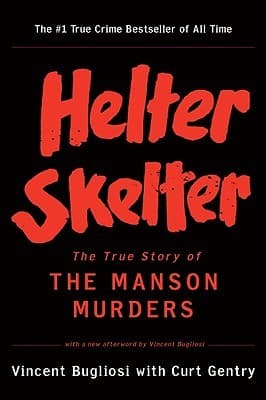
Helter Skelter: The True Story of the Manson Murders cover
Archivist's Choice

Helter Skelter: The True Story of the Manson Murders

Vincent Bugliosi (1974)

Genre

Psychology / Biography / History / Mystery

Reading Time

18-25 hours

Key Themes

See below

Track Your Reading

Sign in to track this book

This is the prosecutor's account of the Charles Manson murders, exposing Manson's psychological control over his followers and the Tate-LaBianca murders.

Core Idea

Helter Skelter reconstructs the Manson Family murders, showing how Charles Manson, a charismatic but disturbed person, used vulnerable young people to commit crimes. He did this under the delusion of an upcoming race war. The book covers the psychological manipulation, the cult of personality, and the societal factors that allowed such acts. It details the prosecution's effort to bring Manson and his followers to justice, focusing on how evidence was gathered and witness testimony was used to solve a complex case.
Reading time
18-25 hours
Difficulty
Medium
✓ Read this if...
You are fascinated by true crime, cult psychology, judicial processes, and the dark side of human nature, and are prepared for a detailed, lengthy, and often disturbing account of one of America's most infamous criminal cases.
✗ Skip this if...
You are sensitive to graphic descriptions of violence, find lengthy legal procedural details tedious, or prefer books with a more detached, academic analysis rather than a narrative-driven, first-person account from a prosecutor.

Core idea

The central argument and framework that powers the entire book.

Helter Skelter reconstructs the Manson Family murders, showing how Charles Manson, a charismatic but disturbed person, used vulnerable young people to commit crimes. He did this under the delusion of an upcoming race war. The book covers the psychological manipulation, the cult of personality, and the societal factors that allowed such acts. It details the prosecution's effort to bring Manson and his followers to justice, focusing on how evidence was gathered and witness testimony was used to solve a complex case.

At a glance

Reading time

18-25 hours

Difficulty

Medium

Read this if...

You are fascinated by true crime, cult psychology, judicial processes, and the dark side of human nature, and are prepared for a detailed, lengthy, and often disturbing account of one of America's most infamous criminal cases.

Skip this if...

You are sensitive to graphic descriptions of violence, find lengthy legal procedural details tedious, or prefer books with a more detached, academic analysis rather than a narrative-driven, first-person account from a prosecutor.

Key Takeaways

1

The Cult of Personality as a Weapon

Manson's charismatic manipulation transcended typical influence, becoming a tool for murder.

Quote

Manson's extraordinary ability to dominate and control his followers was perhaps the most frightening aspect of the entire case.

Charles Manson was a psychological predator. He created a cult of personality that allowed him to command his followers to commit terrible acts. His charisma, combined with drug use, sexual manipulation, and a distorted view of counter-culture ideas, removed his recruits' individual freedom. This was not just persuasion; it was a systematic breakdown of critical thinking and morals, turning young, often vulnerable people into extensions of his will. The book details how Manson's magnetism was the main reason for the murders, showing t...

Supporting evidence

Bugliosi's detailed accounts of Manson's hypnotic gaze, his philosophical ramblings that resonated with disenfranchised youth, and the testimonies of Family members describing their complete subservience to 'Charlie.'

Apply this

Develop critical thinking skills to evaluate charismatic figures, especially those promising radical change or demanding absolute loyalty. Recognize warning signs of undue influence, such as isolation from external support systems, demands for unquestioning belief, and the dehumanization of 'outsiders.'


cult-psychologycharismatic-leadershipsocial-influencemind-control
2

Helter Skelter: The Prophecy of Race War

Manson's twisted interpretation of a Beatles song fueled his vision of apocalyptic racial conflict.

Quote

Manson believed that 'Helter Skelter' was coming, a bloody, apocalyptic race war that would leave him, and the Family, in charge of a new world.

The main reason for the Tate-LaBianca murders, as uncovered by Bugliosi, was Manson's apocalyptic vision of 'Helter Skelter.' This was not random violence but a calculated attempt to start a race war by blaming Black individuals for the murders. Manson, using distorted inspiration from the Beatles' White Album, especially the song 'Helter Skelter,' convinced his followers that a violent uprising between Black and white populations was coming. He believed that after this war, the Family, hidden in a desert 'bottomless pit,' would emerg...

Supporting evidence

The meticulous tracing of Manson's 'Helter Skelter' prophecies through witness testimonies, particularly those of Family members like Paul Watkins, and the specific staging of the crime scenes (e.g., writing 'PIG' and 'Healter Skelter' in blood) to implicate Black individuals.

Apply this

Examine the sources and interpretations of information critically, especially when it's used to justify violence or hatred. Understand how pre-existing biases and vulnerabilities can be exploited by those who offer simplistic, albeit destructive, answers to complex societal problems.

apocalyptic-cultsracial-tensiondelusional-ideologymass-hysteria
3

The Banality of Evil's Enablers

Ordinary individuals and societal failings inadvertently paved the way for Manson's rise.

Quote

The tragic truth is that many people, through indifference or misguided compassion, contributed to the environment that allowed Manson to thrive.

While Manson was the architect of the murders, Bugliosi shows how various societal factors and individual actions, or lack thereof, unintentionally allowed his terror. This includes some parents' lax attitudes toward their runaway children, the permissive drug culture of the late 1960s, and law enforcement's initial underestimation of Manson. The book suggests that evil is not just about the perpetrators, but also about the environment that allows such figures to grow. It was not a grand conspiracy but a series of overlooked warnings,...

Supporting evidence

Descriptions of how Family members were initially dismissed as harmless hippies, the failure of authorities to connect early clues, and the general societal climate that often overlooked the darker side of the counter-culture movement.

Apply this

Be vigilant and question seemingly harmless or unconventional groups, especially when vulnerable individuals are involved. Support community structures and resources that protect at-risk youth and address societal issues that can be exploited by predatory figures. Don't dismiss 'fringe' groups without careful scrutiny.

societal-responsibilitybystander-effectcounter-culturemoral-negligence
4

The Prosecutor's Relentless Pursuit of Justice

Bugliosi's unwavering dedication to truth unraveled a complex web of deceit and murder.

Quote

We were confronted not just with murder, but with a philosophy, a way of life, that had to be exposed and defeated.

Vincent Bugliosi's narrative is not just a recounting of facts; it shows the difficult process of seeking justice against great odds. Facing a case with no clear motive, no direct witnesses, and defendants who seemed to lack remorse, Bugliosi and his team had to piece together a complex puzzle from clues, cryptic statements, and the changing loyalties of Family members. His dedication to understanding Manson's twisted idea — 'Helter Skelter' — was key to establishing motive and getting convictions. The book offers a detailed look into...

Supporting evidence

Bugliosi's detailed descriptions of the investigation, the legal strategies employed to overcome Manson's attempts to derail the trial, and the exhaustive efforts to connect seemingly unrelated crimes and motives.

Apply this

Appreciate the dedication and rigor required in the legal system to uphold justice, especially in complex cases. Understand the importance of thorough investigation and strategic thinking in overcoming challenges and establishing truth.

criminal-justicelegal-strategyprosecutioninvestigative-journalism
5

The Vulnerability of the Disenfranchised

Manson preyed on the psychological and emotional voids of young, often runaway individuals.

Quote

Many of Manson's followers were young, impressionable, and searching for belonging, a sense of purpose he readily provided, however twisted.

A critical, often overlooked part of the Manson Family tragedy is the vulnerability of the people who joined it. Many were young runaways, disillusioned by society, estranged from their families, and seeking acceptance, meaning, or identity. Manson, a master manipulator, expertly found and used these psychological voids. He offered them a 'family,' a seemingly utopian communal life, a sense of belonging, and a grand, though delusional, purpose within his 'Helter Skelter' prophecy. This shows how people without strong support systems, ...

Supporting evidence

The biographical sketches of various Family members, revealing their backgrounds of neglect, abuse, or alienation before encountering Manson, such as Leslie Van Houten's story.

Apply this

Foster supportive environments for young people and those at risk of social isolation. Be aware of the signs of vulnerability in others and offer genuine support, rather than allowing them to fall prey to exploitative groups. Prioritize mental health and community engagement.

youth-vulnerabilitysocial-alienationpsychological-manipulationcult-recruitment
6

The Enduring Scars on American Psyche

The Manson murders shattered the innocence of the 1960s, leaving a lasting cultural trauma.

Quote

The Manson murders marked the end of an era, a violent punctuation mark on the dreams and ideals of the 1960s.

Beyond the immediate horror, the Manson murders left a lasting mark on the American mind, especially on the fading idealism of the 1960s. The brutal, seemingly senseless nature of the killings, along with the involvement of Charles Manson and his 'Family,' shattered the idea of a peaceful counter-culture movement. It exposed a dark side, showing that even amidst calls for love and peace, extreme hatred and violence could grow. The book suggests that the Manson crimes were a grim wake-up call, forcing society to confront the potential ...

Supporting evidence

The widespread public shock and fear documented in the book, the shift in public perception of hippie culture, and the immediate impact on Hollywood and the broader cultural landscape.

Apply this

Reflect on how historical events shape collective memory and cultural narratives. Understand that societal shifts, even those with positive intentions, can have unintended and dangerous consequences if not critically examined.

cultural-traumasixties-countercultureloss-of-innocencecollective-memory
7

The Unpredictability of Human Depravity

The case defies easy explanation, highlighting the terrifying capacity for evil within humanity.

Quote

To truly comprehend the Manson murders is to confront the chilling realization that such evil is not merely fictional, but profoundly, terrifyingly real.

One of the most unsettling aspects of the Manson murders, as Bugliosi conveys, is the difficulty in fully understanding the depravity. While 'Helter Skelter' provided a motive, the brutality and complete lack of remorse from the perpetrators challenged human understanding. The book does not offer a comfortable psychological profile that neatly explains away the evil; instead, it confronts the reader with the raw, inexplicable nature of human depravity. It suggests that some acts of evil defy simple categorization or psychological diag...

Supporting evidence

The graphic details of the murders, the callousness of the Family members during and after the crimes, and the difficulty of both the prosecution and psychiatric experts in fully explaining Manson's motivations in conventional terms.

Apply this

Acknowledge the existence of profound evil in the world without becoming desensitized. Strengthen personal moral frameworks and empathy to counteract tendencies towards dehumanization or rationalization of cruelty. Support mental health initiatives but understand that some actions transcend typical pathology.

human-evilmoral-relativismpsychopathyexistential-dread
8

Justice Through Meticulous Detail

The successful prosecution hinged on an exhaustive collection of minute, seemingly insignificant details.

Quote

Every scrap of evidence, every inconsistent statement, every seemingly trivial detail became a vital thread in the tapestry of truth.

The 'Helter Skelter' case was a success of detailed investigative and prosecutorial work. With no clear 'smoking gun' and a web of lies and changing stories from the defendants, Bugliosi's team had to carefully gather and connect hundreds of seemingly small details. From finding obscure witnesses to analyzing Manson's ramblings, every piece of information was important. This takeaway highlights the power of thoroughness in legal proceedings, showing how minor inconsistencies or overlooked facts can, when put together, form a clear pic...

Supporting evidence

The detailed accounts of how specific pieces of evidence, like Linda Kasabian's testimony, the discovery of the bloody clothes, or the analysis of Manson's 'Helter Skelter' prophecies, were painstakingly gathered and integrated into the prosecution's case.

Apply this

Cultivate attention to detail in all aspects of life, recognizing that small pieces of information can be critical to understanding larger contexts. Value thoroughness and diligence in problem-solving and decision-making, rather than relying on superficial assessments.

forensic-investigationevidence-collectionlegal-diligenceproblem-solving
9

The Power of Witness Testimony, Imperfect as it May Be

Despite flaws and fears, key witnesses were instrumental in unraveling the Manson Family's crimes.

Quote

Without the courage, however reluctant, of witnesses willing to speak, justice would have remained elusive.

The Manson trial relied heavily on witness testimony, especially from former Family members like Linda Kasabian, who testified for the state. Bugliosi vividly describes the challenges with these witnesses: their fear of Manson, their own involvement in the Family, and the psychological impact of their experiences. Despite these imperfections — inconsistencies, memory lapses, and the constant threat of intimidation — their testimonies were crucial for convictions. This takeaway emphasizes the vital, but often difficult, role of human w...

Supporting evidence

The detailed recounting of Linda Kasabian's testimony, her struggles with memory and fear, and how Bugliosi strategically used her account to connect the crimes and implicate Manson.

Apply this

Understand the complexities and challenges of eyewitness testimony in legal and everyday contexts. Recognize the courage it takes for individuals to speak out against powerful or dangerous figures, and support mechanisms that protect whistleblowers and witnesses.

eyewitness-testimonywitness-protectionjudicial-processhuman-fallibility
10

The Allure and Peril of Escapism

The Family's communal lifestyle, initially appealing as an escape, devolved into a terrifying prison.

Quote

What began as a search for freedom and community ultimately became a cage of fear, manipulation, and murder.

Many of Manson's followers were initially drawn to the Family by the promise of an alternative lifestyle — a rejection of mainstream society, communal living, and a sense of freedom and belonging. This ideal, however, quickly became a terrifying reality. The 'freedom' became subservience to Manson, the 'community' became a tool for isolation and control, and 'love' was conditional on unquestioning obedience, enforced by fear and violence. The book shows how the initial appeal of radical escapism, when separated from ethics and critica...

Supporting evidence

Descriptions of the initial appeal of the Spahn Ranch commune, the drug use and free love that attracted new members, and the gradual, insidious transformation into a fear-ridden, violent environment controlled by Manson.

Apply this

Critically evaluate any group or ideology that promises absolute freedom or an escape from all societal problems. Prioritize individual autonomy, critical thinking, and healthy boundaries, even within communal or counter-cultural settings. Recognize that true freedom comes with responsibility and ethical considerations.

escapismcommunal-livingfreedom-vs-controlcult-dynamics

Critical analysis

Notable Quotes

These murders are going to live in infamy, and I'm going to be famous.

Charles Manson's chilling declaration to his followers.

Helter Skelter is coming down!

The phrase Manson believed signaled an apocalyptic race war, taken from a Beatles song.

I'm the king of the world, and I'm going to prove it.

Manson's grandiose self-perception and ambition.

Everybody is God. We're all God.

Manson's deceptive spiritual rhetoric used to manipulate his followers.

If you're going to do something, do it right or don't do it at all.

A paradoxical statement from Manson, applied to the brutal efficiency of the murders.

These are beautiful people, and they're doing what they believe in.

Leslie Van Houten's defense of the Family's actions.

I am the devil, and I am here to do the devil's work.

Manson's self-identification, particularly to new recruits or those he wished to intimidate.

The only way to be free is to be totally free.

Manson's philosophy on absolute freedom, which often meant freedom from societal norms and laws.

We were just trying to start a revolution.

Many Family members believed their actions were part of a larger revolutionary movement.

You can't kill me, I'm already dead.

Manson's defiant statement, reflecting his nihilistic worldview.

Nobody understands me, and nobody ever will.

Manson's sense of isolation and unique self-perception.

I didn't kill anyone. I just told them to do it.

Manson's attempt to distance himself from the direct act of murder during his trial.

There is no good, there is no bad, there is only now.

Manson's rejection of conventional morality and embrace of an amoral present.

You people have killed me already. You've killed me for years.

Manson's outburst in court, claiming he was a victim of society.

Quiz

Test Your Knowledge

Ready to see how well you understood this book? Take our interactive quiz with 10 questions.

10
Questions
~5
Minutes
?
Best Score

Key Questions (FAQ)

'Helter Skelter' provides an in-depth account of the Tate-LaBianca murders committed by Charles Manson and his followers, told from the perspective of lead prosecuting attorney Vincent Bugliosi. It explores the events leading up to the crimes, the investigation, and the subsequent trial, aiming to unravel the motivations behind these horrific acts.

About the author