“Of course it is happening inside your head, Harry, but why on earth should that mean that it is not real?”
— Dumbledore's spirit to Harry in the King's Cross limbo.

Genre
General
Reading Time
10-12 hours
Key Themes
See below
Sign in to track this book
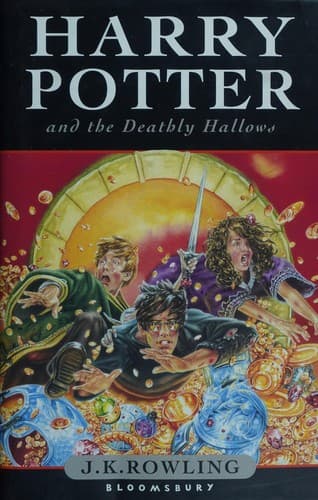
In a climactic battle between good and evil, Harry Potter must confront his destiny and defeat Lord Voldemort, even if it means sacrificing himself.
Harry, Ron, and Hermione are forced to flee the Dursleys' home for the final time, aided by members of the Order of the Phoenix in a dangerous aerial battle against Death Eaters. Mad-Eye Moody is tragically killed during this chaotic flight. Shortly after, the trio attends Bill Weasley and Fleur Delacour's wedding at The Burrow, a moment of fleeting happiness amidst the rising darkness. However, the festivities are abruptly shattered by the arrival of the Patronus of Kingsley Shacklebolt, warning everyone that the Ministry of Magic has fallen and Voldemort now controls the wizarding world, forcing the trio to immediately go into hiding.
After the wedding's disruption, Harry, Ron, and Hermione apparate to Grimmauld Place, where they discover that Mundungus Fletcher had stolen Salazar Slytherin's locket Horcrux from Kreacher. They learn that Dolores Umbridge now possesses it. Their infiltration of the Ministry of Magic, disguised with Polyjuice Potion, is a tense and dangerous operation. They successfully retrieve the locket, but their escape is fraught with peril, marking the beginning of their lonely, nomadic existence as they camp in various remote locations while trying to discern how to destroy the powerful dark object.
The locket Horcrux exerts a powerful negative influence on the trio, particularly on Ron, exacerbating his insecurities and fears. Overwhelmed by the constant danger, the lack of progress, and the perceived closeness between Harry and Hermione, Ron angrily abandons his friends. His departure leaves Harry and Hermione devastated and struggling even more. However, guided by the Deluminator left to him by Dumbledore, Ron eventually finds his way back to Harry and Hermione, returning just in time to save Harry from a deadly attack and destroy the locket with Godric Gryffindor's sword.
After destroying the locket, the trio seeks out Xenophilius Lovegood, Luna's eccentric father, to learn more about a mysterious symbol they've encountered. He explains the legend of the Deathly Hallows: the Elder Wand, the Resurrection Stone, and the Cloak of Invisibility, three powerful artifacts that, when united, are said to make one the Master of Death. While at his home, they are betrayed to Death Eaters, forcing them to flee once more, now with a new, potentially distracting, objective in mind alongside their Horcrux hunt.
Harry, Ron, and Hermione, along with Dean Thomas and Griphook, are captured by Snatchers and taken to Malfoy Manor. Bellatrix Lestrange tortures Hermione for information about Gryffindor's sword, which she believes they stole from her vault. Dobby the house-elf bravely apparates into the manor to rescue them, leading a daring escape that involves disarming Bellatrix and Narcissa Malfoy. Tragically, during their escape, Bellatrix throws a knife that fatally wounds Dobby, who dies in Harry's arms, a profound loss that deeply affects the trio.
To find another Horcrux, Hufflepuff's Cup, the trio, with the unwilling help of Griphook the goblin, infiltrates Gringotts Wizarding Bank. They use Polyjuice Potion to impersonate Bellatrix Lestrange and break into her high-security vault. Despite numerous magical defenses, including the dragon guarding the lower levels, they manage to retrieve the Horcrux. Their escape from the bank is dramatic, riding out on the back of the dragon, leaving a trail of chaos and alerting Voldemort to their ongoing mission to destroy his Horcruxes.
Having destroyed four Horcruxes, Harry realizes that the final two, the Diadem of Ravenclaw and Nagini, are likely at Hogwarts. They return to the school, now under the oppressive rule of the Carrows and Snape. Neville Longbottom leads the resistance within the school, and upon Harry's arrival, Dumbledore's Army mobilizes. Professor McGonagall bravely defends Harry from Snape, who flees. The Battle of Hogwarts begins as Voldemort and his forces lay siege to the castle, while the trio frantically searches for the remaining Horcruxes.
As the battle rages, Harry, Ron, and Hermione search for Ravenclaw's Diadem. Luna Lovegood helps Harry recall its hiding place in the Room of Requirement. During the desperate fight, Crabbe unleashes Fiendfyre, a powerful dark magic, which accidentally destroys the Diadem and kills Crabbe. Meanwhile, Voldemort, realizing his Horcruxes are being destroyed, retreats to the Shrieking Shack, where he brutally murders Severus Snape, believing it will make him the true master of the Elder Wand.
After witnessing Snape's death, Harry collects his tears and uses the Pensieve. He discovers Snape's true loyalties: he was always on Dumbledore's side, driven by his lifelong love for Lily Potter. Snape was the one who sent the Patronus to guide Harry to the sword, and he was acting under Dumbledore's orders to kill him, a mercy killing to prevent Dumbledore's painful death from the curse of the Horcrux ring. Harry also learns that he himself is a Horcrux and must die for Voldemort to be truly defeated.
Accepting his fate, Harry walks into the Forbidden Forest to confront Voldemort. He uses the Resurrection Stone to briefly see his deceased loved ones – James, Lily, Sirius, and Lupin – who offer him comfort and strength. Voldemort casts the Killing Curse, and Harry falls. However, due to Lily's protective charm and the fact that Voldemort used Harry's blood to regenerate, Harry is not truly dead, but rather stripped of the Horcrux within him. He enters a limbo state, meeting Dumbledore, who explains the intricacies of his survival.
Harry returns to the Great Hall, feigning death, and is carried back by Hagrid. Neville Longbottom bravely defies Voldemort and kills Nagini, the final Horcrux, with Gryffindor's sword. Harry reveals himself, and a final duel ensues between Harry and Voldemort. Harry explains that he is the true master of the Elder Wand, having disarmed Draco Malfoy, who had disarmed Dumbledore. The Elder Wand refuses to kill its true master, and Voldemort's own Killing Curse rebounds, finally ending his reign of terror. The wizarding world is free.
Nineteen years after the Battle of Hogwarts, Harry and Ginny Potter, along with Ron and Hermione Weasley, are at King's Cross Station, seeing their children off to Hogwarts. Harry's son, Albus Severus, expresses anxiety about being sorted into Slytherin, but Harry reassures him, revealing that Snape was the bravest man he ever knew. The wizarding world has rebuilt, marked by peace and the enduring bonds of friendship and family, a testament to the sacrifices made to defeat the darkness.
The Protagonist
Harry's arc culminates in his acceptance of his own mortality and his role as a Horcrux. He transitions from seeking answers about Dumbledore's past to understanding that his own sacrifice is paramount. He fully embraces the role of 'Master of Death' not by conquering it, but by accepting it, ultimately triumphing over Voldemort through selflessness and the power of love.
The Deuteragonist, Harry's best friend
Ron's arc is about overcoming his deepest insecurities and proving his unwavering loyalty. He grapples with jealousy and feelings of being overshadowed, but ultimately chooses friendship and love, returning to fight alongside Harry and Hermione. He matures into a confident and courageous wizard, fully embracing his value within the trio.
The Deuteragonist, Harry's best friend
Hermione's arc solidifies her role as the indispensable strategist and moral compass. While she doesn't undergo a dramatic internal struggle like Ron, her steadfastness and resourcefulness are constantly tested and proven. She becomes more decisive and fearless, willing to break rules and use dark magic when necessary for survival, without compromising her core values.
The Antagonist
Voldemort's arc is one of sustained power leading to ultimate destruction. He believes himself invincible, but his growing desperation as his Horcruxes are destroyed foreshadows his demise. His quest for the Elder Wand, driven by a misunderstanding of its true allegiance, ultimately seals his fate, proving that his pursuit of power without love is inherently self-destructive.
The Anti-hero / Secondary Antagonist (initially)
Snape's arc is the most profound revelation of the series. He is transformed from a despised antagonist into a tragic hero. His true motivations, driven by love and remorse, are unveiled, showing his immense bravery and sacrifice as a double agent. His 'Prince's Tale' provides crucial context, demonstrating his profound impact on the war and his ultimate redemption.
The Supporting Character
Dobby's arc concludes with his ultimate sacrifice. Having gained freedom, he uses it to protect Harry, fulfilling his loyalty even at the cost of his life. His death is a powerful testament to his growth from an abused, fearful house-elf to a courageous, self-sacrificing hero.
The central theme revolves around the necessity of sacrifice for the greater good. Harry's willingness to walk to his death, knowing he is a Horcrux, is the ultimate act of selflessness, echoing his mother's sacrifice. Many characters, from Dobby to Snape, make profound sacrifices, demonstrating that love and courage are more powerful than fear and self-preservation in the fight against evil.
“"Do not pity the dead, Harry. Pity the living, and above all, those who live without love."”
This theme explores the fundamental conflict between the destructive pursuit of power (embodied by Voldemort) and the redemptive, protective force of love. Voldemort's inability to understand love is his ultimate downfall, while Harry's survival and victory are repeatedly attributed to the power of love, both from his mother and his friends. Love provides strength, protection, and the motivation to fight against tyranny, proving to be the most potent magic of all.
“"It is a curious thing, Harry, but perhaps those who are best suited to power are those who have never sought it."”
The Deathly Hallows directly address the human fear of death and the desire for immortality. Voldemort's fear of death drives his creation of Horcruxes, fragmenting his soul. Harry, by contrast, becomes the 'Master of Death' by accepting it, understanding that death is a natural part of life. The story suggests true immortality lies not in defying death, but in the legacy of love and good deeds left behind.
“"The last enemy that shall be destroyed is death."”
The unwavering loyalty of characters like Ron, Hermione, and Dobby is contrasted with the devastating betrayals, both perceived and real. Ron's temporary departure tests the bonds of friendship, while Snape's complex loyalty, initially appearing as betrayal, is revealed as the ultimate fidelity. The theme explores the profound impact of trust and treachery on the characters' journey and the ultimate triumph of steadfast loyalty.
“"Always."”
Fragments of a soul hidden in objects.
The Horcruxes are the central plot device driving the trio's mission. These dark magical objects contain fragments of Voldemort's soul, rendering him immortal until they are all destroyed. Their hunt for and destruction of the locket, cup, diadem, and ultimately Nagini and the fragment within Harry, forms the primary narrative structure. Each Horcrux presents unique challenges for discovery and destruction, forcing the characters to confront their fears and develop new strategies, directly propelling the plot towards its climax.
Three powerful magical artifacts: the Elder Wand, the Resurrection Stone, and the Cloak of Invisibility.
The Deathly Hallows introduce a secondary, parallel quest that initially distracts Harry but ultimately becomes crucial to his victory. The legend of these artifacts, particularly the Elder Wand, influences Voldemort's final actions and strategy. Harry's eventual mastery of the Hallows, especially his true ownership of the Elder Wand and his use of the Cloak, provides the means for his final confrontation and triumph over Voldemort, revealing the true meaning of 'Master of Death' as acceptance, not conquest.
A magical basin used to review and store memories.
The Pensieve serves as a critical expositional device, allowing Harry to delve into Snape's memories. This enables the dramatic revelation of Snape's true loyalties and Dumbledore's overarching plan, completely altering Harry's understanding of past events and his own destiny. Without the Pensieve, Harry would not have understood his role as a Horcrux or Snape's tragic heroism, making it indispensable for the plot's resolution and the emotional impact of the story's climax.
A device capable of extinguishing and reabsorbing light, and guiding its owner.
The Deluminator, bequeathed to Ron by Dumbledore, initially appears as a quirky object but becomes a powerful symbol of connection and a crucial plot device. It not only provides light but also guides Ron back to Harry and Hermione after his abandonment. Its unique ability to hear voices and project light directly leads Ron to his friends, demonstrating Dumbledore's foresight and the enduring magic of connection, ensuring the trio is reunited for the final stages of their quest.
“Of course it is happening inside your head, Harry, but why on earth should that mean that it is not real?”
— Dumbledore's spirit to Harry in the King's Cross limbo.
“Do not pity the dead, Harry. Pity the living, and, above all those who live without love.”
— Dumbledore's spirit to Harry in the King's Cross limbo.
“It is a curious thing, Harry, but perhaps those who are best suited to power are those who have never sought it.”
— Dumbledore's spirit to Harry in the King's Cross limbo.
“The scar had not pained Harry for nineteen years. All was well.”
— The very last lines of the book.
“Words are, in my not-so-humble opinion, our most inexhaustible source of magic. Capable of both inflicting injury, and remedying it.”
— Dumbledore's spirit to Harry in the King's Cross limbo.
“We're with you whatever happens.”
— Ron and Hermione to Harry before going to find the Horcruxes.
“I open at the close.”
— Engraved on the Snitch Dumbledore left Harry.
“He was going to die. It was a strange thought, not in the least frightening.”
— Harry's thoughts as he walks to face Voldemort in the forest.
“Let us step into the night and pursue that flighty temptress, adventure.”
— Dumbledore's spirit to Harry in the King's Cross limbo.
“I've always wanted to use that spell!”
— Professor McGonagall after casting 'Piertotum Locomotor' to animate the statues of Hogwarts.
“You'll stay with me? Until the very end?”
— Harry to his parents, Sirius, and Lupin using the Resurrection Stone.
Ready to see how well you understood this book? Take our interactive quiz with 10 questions.