“A life is made up of a great number of small incidents and a small number of great ones.”
— Reflecting on the nature of life experiences during his time in Africa.

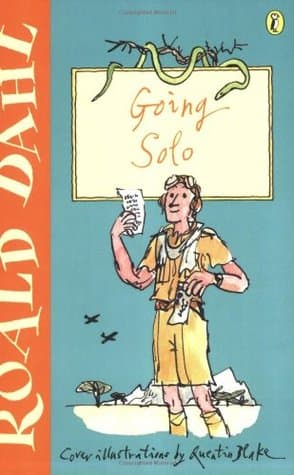
Roald Dahl (1986)
Genre
Psychology / Young Adult / Romance
Reading Time
209 min
Key Themes
See below
Sign in to track this book
From the markets of colonial Africa to the dogfights of World War II, Roald Dahl recounts his coming-of-age as a pilot, adventurer, and storyteller.
After school, Roald Dahl, at twenty-two, takes a job with Shell Oil Company in East Africa. He sails from England. In Dar es Salaam, Tanganyika (now Tanzania), he is sent to a remote region to distribute Shell products. His job involves long travels across the African bush, meeting local tribes, and managing oil distribution. He is one of few white Europeans in his isolated posts and adapts to colonial life, including encounters with wildlife and the wilderness. He describes his first impressions of the continent and its people.
During his time with Shell, Dahl recounts several memorable and often dangerous encounters. He describes a black mamba snake entering a house, leading to a frantic effort to kill it. He also details a close call with a lioness that tries to drag away a house servant, which he confronts. Beyond wildlife, Dahl observes and interacts with various local tribes, learning about their customs. He describes the differences between European and African cultures, often with respect for the local people's endurance and traditions, while acknowledging the colonial context.
Life in Tanganyika changes dramatically with the start of World War II. News reaches the isolated European community, and British colonial authorities prepare for conflict, especially with German presence nearby. Dahl, with other British civilians, rounds up German nationals living in Tanganyika and takes them to internment camps. This task is done with duty and discomfort, as many Germans were long-time residents and neighbors. The war changes Dahl's role from oil distributor to a participant in the war's initial, local efforts.
Wanting to contribute more to the war, Roald Dahl leaves his job with Shell Oil and joins the Royal Air Force. He travels to Nairobi, Kenya, to enlist. His training involves basic instruction and medical exams. He describes the friendship among recruits and the anticipation of what is ahead. This decision marks a big change, moving him from colonial administration to aerial combat. He wants to be a fighter pilot, driven by patriotism and a desire for adventure.
Dahl's flight training begins in Nairobi, where he learns to fly Tiger Moths. He recounts the challenges of learning, the strict instructors, and the thrill of flying. After initial training, he goes to Iraq for advanced instruction, flying more powerful aircraft. He describes the basic conditions of the desert airfields, the heat, and the constant threat of accidents during training. Several trainees die in crashes, showing the dangers of learning to fly combat aircraft. Dahl continues, developing the skills to be a fighter pilot.
After training, Dahl is assigned to a Hurricane squadron in Libya, part of the Desert Air Force. His first operational flight is to fly his Hurricane from Egypt to his squadron's base in Libya. However, due to incorrect coordinates from his commanding officer, he gets lost as night falls and runs out of fuel over the Western Desert. Trying an emergency landing in the dark, his plane crashes, causing severe head injuries, a smashed nose, and temporary blindness. Fellow RAF personnel rescue him and take him to a makeshift hospital, where he begins a long and painful recovery, barely surviving.
After his crash, Roald Dahl gets medical treatment and slowly recovers. He spends time in military hospitals, including one in Alexandria, Egypt, for his severe injuries, especially to his head and face. Recovery is painful, but he wants to return to flying. Despite lasting physical scars and trauma, he convinces the medical board he is fit for duty. His endurance allows him to rejoin a Hurricane squadron, ready for combat.
Dahl is assigned to 80 Squadron, defending Greece against German forces. He fights in aerial battles over Athens. During these dogfights, he experiences the chaos and terror of combat. He recounts shooting down his first enemy aircraft, a German Junkers Ju 88, a moment that is both exciting and serious. He describes the skill and bravery of his fellow pilots, and the odds they faced against the Luftwaffe's numbers. His squadron suffers losses, but Dahl emerges as a capable fighter pilot.
As the German invasion of Greece grows, Dahl's squadron must evacuate to the island of Crete. But Crete soon comes under attack from German paratroopers and bombers. The RAF pilots, including Dahl, continue to fight despite being outnumbered, often flying many sorties a day from makeshift airfields. The situation becomes impossible, and the remaining RAF personnel are ordered to leave Crete. Dahl describes the chaotic retreat, leaving equipment and facing constant danger, as they barely escape the island, showing the desperate Allied defense.
After retreating from Crete, Dahl's squadron moves to locations in the Middle East, including Palestine and Syria, where they continue combat against Vichy French forces and later German aircraft. He describes more aerial victories and the harsh conditions of desert warfare. However, the cumulative toll of combat, heat, and unsanitary conditions leads him to get severe malaria. The illness makes him too sick to fly, ending his active combat career as a fighter pilot. He is invalided out of active flying duty, finishing his direct part in the war's aerial battles.
The Protagonist
Dahl transforms from an adventurous but naive young man in colonial Africa into a seasoned, albeit injured, combat veteran, marked by the harsh realities of war.
The Supporting
Remains a consistent, loyal, and capable figure, embodying the steadfastness of local support.
The Supporting
His singular, critical error sets Dahl's initial combat trajectory, leading to injury and a delayed start to flying missions.
The Supporting
A fellow pilot who shares the dangers and experiences of combat, embodying the collective struggle of the squadron.
The Supporting
A legendary figure whose skill and bravery inspire, but whose eventual death highlights the brutal cost of war.
The Supporting
Provides essential care and discipline during Dahl's critical recovery phase, facilitating his return to health.
The Supporting
Facilitates Dahl's physical recovery, enabling his eventual return to flying duty despite severe injuries.
The Antagonist
Serve as the constant, dangerous adversaries, their presence driving the combat narrative and highlighting the stakes of war.
Adventure is central to Dahl's early life and choices. His move to Tanganyika is driven by a desire for experiences beyond the ordinary. This desire for adventure mixes with a sense of duty during wartime. When WWII starts, Dahl joins the RAF, seeing it as the ultimate adventure and a way to participate in a global event. This theme appears in his descriptions of African landscapes, wildlife, and the experience of flying a fighter plane in combat.
“And so, at the age of twenty-two, I was off to Africa, to the land of the black mamba and the lion and the rhino and the elephant, to the land of the great green mamba and the puff adder and the python, to the land of the wildebeest and the zebra and the giraffe.”
'Going Solo' portrays the realities of World War II, especially aerial combat. Dahl's story shows the injuries, the threat of death, and the loss of friends. His crash landing, severe injuries, and recovery show the physical and psychological toll of war. Beyond the violence, Dahl also touches on absurdities, like incorrect mission coordinates or chaotic retreats. The odds faced by the RAF in Greece and Crete show the desperate nature of some battles.
“In the air, there were no rules. There was only one thing: to kill or be killed. And it was a very lonely business.”
Dahl's journey shows resilience. He survives a plane crash that leaves him badly injured and partly blind, yet he fights to recover and return to flying. This theme is also clear in the RAF squadrons, who fight against superior enemy forces with fewer resources. Dahl's ability to adapt to Africa's challenges, survive a crash, and then face combat pressure shows a capacity for endurance and a will to survive.
“I had been smashed up, but I was still alive. And I was going to fly again.”
Dahl's time in Tanganyika gives a look at British colonialism in East Africa. He describes the isolated lives of European expatriates, their interactions with local people, and the attitudes of the time. His encounters with Mdisho, the black mamba, and the lion attack offer glimpses into cultural differences and the challenges of living in an unfamiliar land. While not overtly political, Dahl's observations show power dynamics and the impact of European presence on African society, often with a sense of wonder at the local people's ways of life.
“Life in the bush was a mixture of loneliness and excitement, of danger and beauty, of boredom and fascination.”
Provides an intimate, subjective account of the events from Dahl's perspective.
The entire book is narrated in the first person by Roald Dahl himself. This allows for an intimate and personal account of his experiences, thoughts, and emotions. It gives the reader direct access to his unique voice, observations, and dry humor, making the extraordinary events feel more immediate and authentic. The subjective nature of the narrative is crucial for understanding his motivations, fears, and the impact of the war on him personally, rather than as a detached historical record.
Individual, detailed stories that illustrate broader themes and experiences.
Dahl structures much of his narrative around distinct, memorable anecdotes. Examples include the detailed recounting of the black mamba incident, the lion attack, his crash landing in the desert, and specific aerial dogfights. These standalone stories are rich in detail, character, and suspense, serving to illustrate the dangers, excitements, and realities of his life in Africa and during the war, making the narrative highly engaging and memorable. They are like mini-stories within the larger memoir.
Contrasting thrilling experiences with life-threatening situations.
Dahl consistently juxtaposes the thrill and excitement of his adventures (e.g., exploring Africa, learning to fly) with the ever-present danger. The beauty of the African landscape is contrasted with venomous snakes and predatory animals. The exhilaration of flying a Hurricane is immediately followed by the terror of combat or a near-fatal crash. This device heightens the drama and tension, emphasizing the fine line between adventure and peril that defined much of Dahl's early adult life.
A dry, often dark, wit used to describe serious or absurd situations.
Despite the serious and often grim subject matter, Dahl employs an understated, dry, and sometimes dark sense of humor. This humor often arises from his observations of human behavior, the absurdities of military bureaucracy, or his own predicaments. It serves to lighten the tone, make the narrative more engaging, and provide a coping mechanism for the harsh realities he describes. This characteristic wit is a hallmark of Dahl's writing style and makes even the most frightening moments palatable.
“A life is made up of a great number of small incidents and a small number of great ones.”
— Reflecting on the nature of life experiences during his time in Africa.
“I began to realize how simple life could be if one had a regular routine to follow with fixed hours, a fixed salary, and very little original thinking to do.”
— Describing his job with the Shell Company in East Africa.
“It is impossible to make your eyes twinkle if you are not feeling twinkly yourself.”
— Observing the importance of genuine emotion in social interactions.
“The life of a writer is absolute hell compared with the life of a businessman.”
— Comparing his later career as a writer to his earlier corporate job.
“A little nonsense now and then is relished by the wisest men.”
— Reflecting on the value of humor and lightheartedness in life.
“It doesn't matter who you are or what you look like, so long as somebody loves you.”
— Contemplating the universal need for love and acceptance.
“The more precarious the situation, the sweeter the success.”
— Describing the thrill of overcoming challenges during his adventures.
“I had a passion for learning how to do things the right way.”
— Discussing his approach to mastering new skills in Africa.
“Those who don't believe in magic will never find it.”
— Reflecting on the wonder and unexpected joys in life.
“The moment that you feel that, just possibly, you're walking down the street naked, exposing too much of your heart and your mind and what exists on the inside, showing too much of yourself. That's the moment you may be starting to get it right.”
— Contemplating vulnerability and authenticity in relationships.
“It's about how you pick yourself up after a fall and keep going.”
— Reflecting on resilience during difficult times in his youth.
“The greatest secrets are always hidden in the most unlikely places.”
— Describing discoveries during his travels and experiences.
“I have a passion for teaching kids to become readers, to become comfortable with a book, not daunted. Books shouldn't be daunting, they should be funny, exciting and wonderful; and learning to be a reader gives a terrific advantage.”
— Reflecting on the importance of literacy and joy in reading.
“Love is a wonderful thing. You never have to take it out and dust it.”
— Contemplating the enduring nature of true love.
Ready to see how well you understood this book? Take our interactive quiz with 10 questions.

Roald Dahl was a British popular author of children's literature and short stories, a poet, and wartime fighter ace. His books have sold more than 300 million copies worldwide. Dahl has been called "one of the greatest storytellers for children of the 20th century".

Rhonda Byrne
4.3

Menno Henselmans
4.3
Sylvia Plath
4.3
Elliot Aronson
4.3
Joseph Campbell
4.3

Erich Fromm
4.3
Irvin D. Yalom
4.2

Lucy Strange
4.2