BookBrief
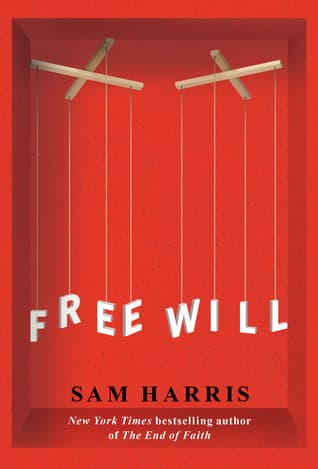
Free Will cover
Archivist's Choice

Free Will

Sam Harris (2012)

Genre

Psychology / Spirituality / Science / Philosophy

Reading Time

60 min

Key Themes

See below

Track Your Reading

Sign in to track this book

Sam Harris argues that free will is an illusion, showing how this scientific truth can improve our understanding of morality, justice, and personal responsibility.

Core Idea

Sam Harris states that free will is an illusion, a common but false belief that we consciously direct our thoughts and actions. He says our choices come from prior causes like genetics, environment, and brain activity, over which we have no ultimate control. This view, rather than being negative, helps us approach moral responsibility, crime, and personal failure with more compassion and empathy. It focuses on effective solutions instead of punishment. The absence of metaphysical free will does not remove the importance of political freedom or the ability for people to change, but it redefines agency and responsibility.
Reading time
60 min
Difficulty
Medium
✓ Read this if...
You're willing to critically examine one of humanity's most fundamental assumptions about self and agency, and are open to a scientific and philosophical perspective on why free will might not exist as commonly understood.
✗ Skip this if...
You find the idea of determinism deeply unsettling, are not open to challenging the concept of free will, or prefer a more extensive, academic treatise on the topic (this is a short, concise argument).

Core idea

The central argument and framework that powers the entire book.

Sam Harris states that free will is an illusion, a common but false belief that we consciously direct our thoughts and actions. He says our choices come from prior causes like genetics, environment, and brain activity, over which we have no ultimate control. This view, rather than being negative, helps us approach moral responsibility, crime, and personal failure with more compassion and empathy. It focuses on effective solutions instead of punishment. The absence of metaphysical free will does not remove the importance of political freedom or the ability for people to change, but it redefines agency and responsibility.

At a glance

Reading time

60 min

Difficulty

Medium

Read this if...

You're willing to critically examine one of humanity's most fundamental assumptions about self and agency, and are open to a scientific and philosophical perspective on why free will might not exist as commonly understood.

Skip this if...

You find the idea of determinism deeply unsettling, are not open to challenging the concept of free will, or prefer a more extensive, academic treatise on the topic (this is a short, concise argument).

Key Takeaways

1

The Illusion of Conscious Authorship

Our choices arise from unconscious processes, not a 'self' in control.

Quote

You are not in control of your mind—because you, as a conscious agent, are only part of your mind, living at the mercy of other parts.

Harris says the feeling of making a conscious choice is a powerful illusion. Our thoughts, intentions, and desires come from brain events and prior causes, none of which we consciously create. We become aware of a decision only after the brain starts the process, giving us the wrong idea that we 'willed' it. This challenges the common belief that a 'self' controls our actions, suggesting instead that we observe our mental processes rather than creating them. This has big implications, as our subjective experience of agency does not ma...

Supporting evidence

Harris points to neuroscientific experiments, such as those by Benjamin Libet, which show brain activity (readiness potential) preceding conscious awareness of a decision to act. He also references cases of split-brain patients and neurological disorders where the illusion of authorship is starkly revealed.

Apply this

Cultivate a deeper sense of humility and less self-blame or excessive pride. Recognize that even your 'best' ideas or 'worst' impulses are products of forces largely beyond your conscious control. This can foster greater empathy for others, understanding that their actions, too, are determined.

neuroscience-of-free-willlibet-experimentconscious-agency
2

No Self, No Free Will

The 'self' that supposedly makes free choices is itself a product of deterministic forces.

Quote

The popular conception of free will seems to rest on two assumptions: (1) that we could have behaved differently than we did in the past, and (2) that we are the conscious source of most of our thoughts and actions.

Free will relates closely to the idea of a stable, independent 'self' that can choose differently. Harris argues against this by saying this 'self' is not an uncaused origin. Our character, beliefs, desires, and even reason come from genetics, environment, and past experiences. If our 'self' is determined, then its choices are also determined. The feeling of 'I could have chosen differently' is a backward-looking illusion, ignoring the long chain of causes that led to the specific mental state at the moment of decision. The 'I' that s...

Supporting evidence

Harris uses thought experiments, like imagining being in the exact same state of mind with the exact same inputs and asking if one could truly choose differently. He also highlights how our preferences (e.g., for coffee over tea) are not chosen, but simply arise, extending this logic to more complex decisions.

Apply this

Challenge the intuitive notion of an independent chooser. When you reflect on past decisions, recognize that given all the conditions, your choice was the only one possible for 'you' at that moment. This can lead to a more compassionate view of oneself and others, replacing judgment with understanding.

determinismcompatibilismillusion-of-self
3

Moral Responsibility Without Retribution

Abandoning free will doesn't negate morality, but reframes justice towards prevention and rehabilitation.

Quote

Losing the illusion of free will does not make morality impossible or meaningless; it simply means that we must find other ways to think about human responsibility.

A common fear about rejecting free will is that it would end moral responsibility and cause chaos. Harris says this is wrong. While it removes the basis for punishment (punishing someone 'because they deserve it' for a freely chosen bad act), it supports a more rational and humane way to handle crime. We still need to protect society from dangerous people, but our focus shifts from revenge to prevention, rehabilitation, and deterrence. Understanding that criminals are products of their biology and environment does not excuse their act...

Supporting evidence

Harris discusses the analogy of a natural disaster: we don't 'blame' a hurricane, but we take steps to mitigate its damage. Similarly, a person with a brain tumor causing violent behavior isn't seen as 'choosing' evil, but as having a medical problem. Harris argues all behavior, ultimately, is similarly caused.

Apply this

Advocate for criminal justice reforms that prioritize understanding the causes of crime and implementing effective rehabilitation programs over purely punitive measures. Re-evaluate personal judgments of others, shifting from moral condemnation to understanding the causal factors behind their behavior.

retributive-justicerehabilitative-justicemoral-responsibility
4

Empathy and Forgiveness Amplified

Recognizing determinism fosters greater compassion for oneself and others.

Quote

If you don't believe in free will, then it is clear that people are not truly responsible for their actions in the deepest sense. And if that is true, then it is very difficult to hate them for what they have done.

Harris states that understanding the determined nature of human action can greatly increase empathy and forgiveness. If people are not the ultimate creators of their thoughts and actions, then holding deep resentment or hatred becomes less logical. We would not hate someone for having cancer, even if their illness caused them to act unusually. Similarly, recognizing that all behavior, good or bad, comes from genetics, environment, and brain processes can soften our judgments. This does not mean excusing harmful behavior, but it allows...

Supporting evidence

Harris points out that even our 'best' qualities—intelligence, kindness, talent—are not self-generated but gifts of genetics and luck. If we don't take ultimate credit for our virtues, why take ultimate blame for our vices? This symmetrical understanding fosters humility and empathy.

Apply this

Practice conscious forgiveness, understanding that the person who wronged you was, in that moment, incapable of acting otherwise given their brain state and life history. Extend this same compassion to yourself, letting go of debilitating guilt or shame for past 'failures.'

compassionforgivenessdeterminism-and-ethics
5

The Importance of Freedom (Political, Not Metaphysical)

Political and social freedom remain crucial, even without metaphysical free will.

Quote

To say that people are not ultimately responsible for their actions is not to say that it doesn't matter what they do. It is simply to say that there are ultimately causes for what they do.

Harris carefully separates metaphysical free will (the ability to choose differently, independent of prior causes) from practical, political, or social freedom. The absence of the first does not lessen the importance of the second. We still want societies where people are free from force, oppression, and unfair limits. The ability to make choices that match our desires, free from outside threats or manipulation, is still very valuable. In fact, understanding determinism can strengthen the argument for creating environments that encour...

Supporting evidence

Harris uses the example of choosing between two desserts. While the choice itself is determined, the experience of being free to choose (e.g., not being forced to eat one) is still a valid and desirable form of freedom, distinct from the metaphysical concept.

Apply this

Actively support policies and systems that enhance individual liberty, reduce coercion, and provide opportunities for flourishing. Recognize that 'freedom' in a societal context is about removing impediments to our determined desires, not about creating uncaused choices.

political-freedomsocial-justicecoercion
6

Beyond Praise and Blame (The Deep Kind)

While useful for shaping behavior, ultimate praise and blame are incoherent.

Quote

The feeling of being a free agent is not itself an illusion. It is the feeling of being the author of one's thoughts and actions, and it is a necessary part of consciousness. The illusion is that this feeling reflects a metaphysical reality.

Harris acknowledges that praise and blame serve a practical purpose in society: they encourage good behavior and discourage bad ones. However, he argues against the 'deep' kind of praise or blame that assumes people could have truly chosen differently and therefore 'deserve' ultimate credit or condemnation. While we can still hold people accountable and use consequences to shape future behavior, we must drop the idea that anyone is truly 'more deserving' of their fate. This view does not mean we stop telling good actions from bad ones...

Supporting evidence

Harris discusses how we praise athletes or artists for their skill, but we understand that their talent is a product of genetics, practice, and luck, not an uncaused choice. We still praise them for their achievements, but without the illusion of ultimate, uncaused authorship.

Apply this

When evaluating performance, focus on constructive feedback and systems for improvement rather than purely moralistic judgment. Recognize that 'deserving' is a socially constructed concept, useful for maintaining order, but not reflecting a deep metaphysical truth about individual agency.

accountabilitymoral-judgmentbehavioral-conditioning
7

Changing Minds is Still Possible

Determinism doesn't mean fatalism; intervention and effort still matter.

Quote

The fact that our choices are determined does not mean that choice itself is an illusion. We make choices, and these choices matter. But the choices we make are themselves the product of prior causes.

A common misunderstanding of determinism is fatalism—the idea that if everything is determined, then effort is useless. Harris clarifies that this is not true. Our thoughts, intentions, and efforts are part of the causal chain. Deciding to change a habit, learn a new skill, or pursue a goal are all determined processes, but they are still our processes, and they have real effects. The desire to change, the effort put in, and the resulting change are all linked by cause and effect. Understanding determinism does not mean passively ac...

Supporting evidence

Harris uses the analogy of a computer program: while the program's output is determined by its code, running the program and observing its output is still a meaningful process. Our consciousness and choices are like parts of that program, influencing the overall outcome.

Apply this

Embrace effort and intentional action, understanding that your 'will' to change is a powerful, determined force. Don't use determinism as an excuse for inaction; rather, see your desire for self-improvement as a vital part of the causal unfolding.

fatalismagency-within-determinismself-improvement
8

The Profound Impact on Relationships

Understanding free will's illusion transforms how we perceive and interact with others.

Quote

Consider the consequences of knowing, in your bones, that people are not the ultimate authors of their own intentions and actions.

Applying the idea that free will is an illusion to our personal relationships can change them. It helps us view others' flaws, mistakes, and even harmful actions with more understanding and less personal offense. Instead of asking 'Why did they choose to hurt me?', we might ask 'What chain of causes led to them behaving this way?' This does not excuse harmful behavior, but it shifts the emotional response from anger and resentment to a more detached, compassionate inquiry. It can lead to more patience, reduce conflict caused by percei...

Supporting evidence

Harris suggests considering someone who cuts you off in traffic. Instead of immediate anger at their 'choice,' imagine if you knew they were rushing to a dying child. While the latter is an extreme case, it illustrates how understanding underlying causes changes our emotional response. Harris argues *all* behavior has similar, albeit less dramatic, underlying causes.

Apply this

When experiencing conflict or disappointment in relationships, pause and consider the myriad factors (stress, upbringing, fatigue, neurochemistry) that might have contributed to the other person's behavior, rather than immediately attributing it to a 'bad' choice or malicious intent. Practice active listening with this empathetic framework.

interpersonal-relationshipsempathetic-communicationconflict-resolution
9

Redefining Success and Failure

Personal achievement and failure are still real, but stripped of ultimate credit or blame.

Quote

The fact that our choices are determined by prior causes does not mean that they don't matter. They matter immensely. But the feeling that we are the ultimate authors of our intentions and actions is an illusion.

The illusion of free will greatly shapes how we see our successes and failures. We tend to take full credit for our achievements ('I worked hard, I deserve this') and feel full guilt for our shortcomings ('I was lazy, I deserve this failure'). Harris says that while effort, discipline, and good choices are important, they are products of a determined mind. This view allows for a healthier relationship with both success and failure. Success can be enjoyed with gratitude for the factors that led to it, rather than an inflated ego. Failu...

Supporting evidence

Harris notes that no one chooses their parents, their genes, or the time and place of their birth—factors that profoundly shape one's potential for success or failure. Even the 'will to succeed' is not self-generated but arises from prior causes.

Apply this

Celebrate achievements with a sense of gratitude for all contributing factors (luck, genetics, environment, effort). Approach setbacks with analytical curiosity, focusing on what determined the outcome and how future determined actions can lead to different results, rather than dwelling on guilt.

meritocracygrowth-mindsetself-efficacy
10

The Liberation of Understanding

Embracing determinism can be profoundly liberating, not diminishing.

Quote

Free will is an illusion. Our wills are simply not of our own making. Thoughts and intentions emerge from background causes of which we are unaware and over which we exert no conscious control.

Far from being a negative or disempowering realization, Harris suggests that understanding the illusion of free will can be very freeing. It frees us from the burden of ultimate responsibility, the sting of unfair blame, and the harmful effects of hatred and resentment. It lets us see ourselves and others as complex, determined systems, deserving of understanding and compassion, rather than judgment and punishment. This view can lead to a more rational, humane, and empathetic approach to life, creating a deeper sense of connection and...

Supporting evidence

Harris frequently returns to the idea that the experience of consciousness itself is no less miraculous or valuable simply because it is determined. The beauty of a sunset isn't diminished by understanding physics; similarly, the richness of human experience isn't diminished by understanding neurobiology.

Apply this

Consciously practice letting go of judgments (of self and others) that are based on the assumption of ultimate free will. Embrace the wonder of your own determined existence and the interconnectedness of all phenomena, finding peace in the absence of an ultimately responsible 'self.'

existentialism-and-determinismmindfulnessspiritual-implications-of-determinism

Critical analysis

Notable Quotes

Free will is an illusion. Our wills are simply not of our own making.

Introducing the central thesis of the book.

Thoughts and intentions emerge from background causes of which we are unaware and over which we exert no conscious control.

Explaining the unconscious origins of conscious thought and action.

The popular conception of free will seems to rest on two assumptions: (1) that we could have behaved otherwise in the past, and (2) that we are the conscious source of most of our thoughts and actions in the present.

Deconstructing the common understanding of free will.

You are not controlling the storm, and you are not a puppet of the storm. You are the storm.

Metaphorically illustrating the integrated nature of self and brain processes.

The fact that our choices depend on prior causes does not mean that they don't matter.

Addressing the practical implications of determinism and the importance of choices.

The illusion of free will is itself an illusion.

Highlighting the deep-seated nature of the belief in free will.

If we view people as the products of their genes and environments, the impulse to punish them for their bad acts begins to dissipate.

Discussing the implications of a deterministic view on morality and justice.

We are not truly free until we understand what determines our choices.

Suggesting that understanding causality can lead to a different kind of freedom.

The problem with free will is that it is an incoherent concept.

Arguing that the very idea of free will is logically flawed.

A moment of conscious willing is the end product of a string of unconscious causes, not their source.

Explaining the sequence of events leading to conscious decisions.

If you don't control your own mind, what exactly are you controlling?

Challenging the notion of self-control in light of unconscious processes.

Our feeling of freedom is due to our not knowing what caused us to do what we did.

Attributing the subjective experience of free will to ignorance of underlying causes.

Losing the illusion of free will can be a liberating experience.

Suggesting a positive outcome from accepting determinism.

We are not free to choose what we choose.

A concise summary of the core argument against libertarian free will.

Quiz

Test Your Knowledge

Ready to see how well you understood this book? Take our interactive quiz with 10 questions.

10
Questions
~5
Minutes
?
Best Score

Key Questions (FAQ)

Yes, Sam Harris explicitly argues in the book 'Free Will' that the common understanding of free will is an illusion. He presents scientific and philosophical arguments to support the view that our choices are determined by prior causes, not by a conscious, uncaused agent.

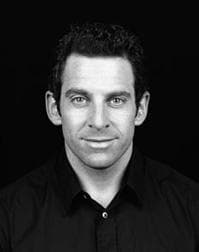
About the author