“I'm not broken. I'm just different.”
— Calliope June, the protagonist with Tourette syndrome, asserts her identity.

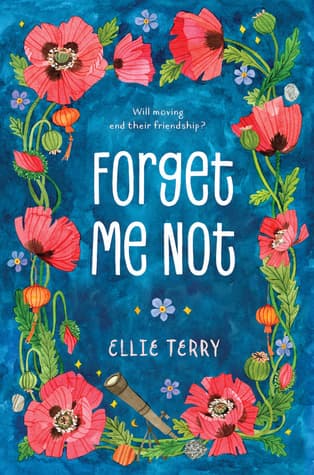
Ellie Terry (2017)
Genre
Psychology / Children's / Young Adult
Reading Time
280 min
Key Themes
See below
Sign in to track this book
In a new town with new challenges, an astronomy-loving girl with Tourette's navigates friendship and self-acceptance, hoping her true self will shine without fear.
Calliope June, an eleven-year-old girl with Tourette syndrome (TS), and her mother move into their new home in Saint George, Utah. This is one of many moves, a pattern caused by her mother's restless nature and Calli's past problems in new schools because of her tics. Calli loves astronomy, finding comfort in the stars. She is worried about starting fifth grade, determined to hide her TS from her new classmates. She believes if she can keep her tics secret, she might make friends and avoid the bullying she has faced before. Her mother encourages her to see this as a new beginning.
Soon after moving, Calli meets Jieming, her next-door neighbor, a kind and popular seventh-grader who is the student body president. Jieming is friendly and accepting, not seeming to notice Calli's subtle tics, which she tries hard to hide. At school, Calli first manages to keep her TS hidden, making a few friends like Rebecca. However, a popular and mean girl named Erica quickly notices Calli's unusual behaviors, causing early problems. Calli finds comfort in astronomy and her growing friendship with Jieming, who shares his interest in science and tells her to be herself, even offering to help her with a school project.
Despite Calli's efforts, her Tourette syndrome becomes clear in class. During a presentation, her tics become more noticeable, drawing unwanted attention and whispers from classmates. Erica, the class bully, uses this to mock Calli, calling her 'weird.' This public exposure breaks Calli's careful act and embarrasses her deeply. Rebecca, one of Calli's new friends, struggles with how to react, showing discomfort and distance. Jieming, however, supports her. He stands by her, offering understanding and encouragement, and treats her as he always has, valuing her beyond her tics.
Calli and Jieming work on a science project together, focusing on constellations and the night sky, a topic Calli loves. This teamwork gives Calli a safe place to be more open about her Tourette syndrome. She explains her tics to Jieming, describing the uncontrolled urges and her frustration. Jieming listens with empathy and curiosity, asking thoughtful questions. Their shared love for science and Jieming's acceptance help Calli feel seen and understood, something she rarely experiences. This project becomes a key part of their friendship, built on respect and shared interests, not on Calli hiding herself.
As Calli starts to settle at school and with Jieming, her mother begins dating Jeremy. Calli watches their new relationship with a mix of hope and worry. While she wants her mother to be happy, every new relationship in the past has led to another move, forcing Calli to leave friends and start over. This fear of moving is always present in Calli's life, making her hesitant to fully commit to her new friendships and her sense of belonging in Saint George. She wants this place to be different, a place where she can finally stay.
Erica's bullying of Calli gets worse, with more open mocking and exclusion. During one hurtful incident, Jieming, seeing the meanness, defends Calli. He publicly confronts Erica, explaining that Calli has Tourette syndrome and her tics are involuntary, asking classmates to understand. This public support from Jieming is a big moment for Calli, validating her and showing her she has a true friend. While it does not stop all whispers immediately, Jieming's courage starts to change things, making some other students, including Rebecca, rethink their reactions to Calli's differences and Erica's behavior.
The school science fair happens, and Calli and Jieming present their astronomy project. This event is a challenge for Calli, as it means being in a public place with many people, which often makes her tics worse. However, with Jieming next to her, offering quiet support, Calli speaks about her love for the stars. She even briefly explains her Tourette syndrome to curious attendees, showing new confidence. The project is well-received, and more importantly, Calli feels a sense of achievement and acceptance, not just for her work, but for herself, tics and all. This public display helps make her condition normal for many of her peers.
Just as Calli feels settled and accepted in Saint George, her mother gets a good job offer in another state. This news sends Calli back into her old cycle of worry and sadness. She has finally made friends, found a supportive friend in Jieming, and started to embrace her true self, and now it all might be taken away again. Calli is upset about leaving, feeling it is unfair that when things are going well, she might have to abandon everything. She struggles with how to tell her mother her feelings, knowing her mother also wants to give them the best life.
Afraid of another move, Calli finally talks to her mother about her feelings. She tearfully explains how much she loves Saint George, how she is finally making real friends, and how tiring it is to constantly start over and hide her Tourette syndrome. She tells her mother that she wants to stay, to have a home, and to not be the 'new kid' anymore. This is a big moment for Calli, as she has often just followed her mother's lead. Her mother, seeing Calli's deep pain and the real connections she has made, listens carefully, realizing how much their moving around has affected her daughter.
After much thought and a talk with Calli, her mother decides to turn down the job offer. She realizes that Calli's need for stability, friendship, and a sense of belonging is more important than potential career advancement. This decision shows a change in their relationship, with Calli's needs being put first for the first time in a while. It shows Calli's growing voice and her mother's love. They decide to stay in Saint George, letting Calli continue building her life and friendships, especially with Jieming, and embrace her identity without the constant threat of disruption.
The Protagonist
Calli transforms from a girl who desperately tries to hide her Tourette syndrome to one who slowly accepts and eventually advocates for herself, finding genuine friendship and a sense of belonging.
The Supporting
Jieming remains consistently kind and supportive, serving as a catalyst for Calli's growth and demonstrating the power of true friendship and empathy.
The Supporting
She learns to prioritize Calli's need for stability and belonging over her own restless pursuit of new opportunities, making a significant sacrifice for her daughter's well-being.
The Antagonist
Erica remains largely static, representing the societal prejudice and lack of understanding Calli faces, though her bullying is eventually challenged by Jieming.
The Supporting
Rebecca moves from initial friendliness, to discomfort and distance upon learning of Calli's TS, and eventually to a more understanding, albeit still tentative, acceptance.
The Mentioned
His presence acts as a plot device, indirectly influencing Calli's internal conflict about her mother's choices.
The Supporting
He consistently provides a supportive and understanding environment for Calli in the classroom.
A main theme is Calli's journey to accept her Tourette syndrome as part of who she is, not something to hide. At first, Calli thinks her tics stop her from having friends, making her hide them. But through her friendship with Jieming and realizing that hiding herself hurts more than being real, she starts to accept her true self. The book shows that true acceptance comes from within, but others' acceptance helps a lot.
“Maybe I can't stop the tics. / But I can stop hiding. / I can stop being a secret.”
The novel shows how friendship and empathy can change a person's life. Jieming's acceptance of Calli, his willingness to defend her, and his ability to see past her Tourette syndrome give Calli the support she needs. His empathy teaches other characters, like Rebecca, to be more understanding. This theme shows that real connection comes from seeing and valuing someone for who they are, and that one supportive friend can make a big difference.
“He doesn't care if I tic. / He just cares if I'm happy.”
Calli's constant fear of moving and her desire for a permanent home highlight the theme of belonging and stability. Her mother's moving around means Calli has never truly settled, making her long for a place where she feels safe, accepted, and connected. The chance of another move directly threatens her growing sense of belonging in Saint George, forcing her to talk to her mother about her needs. This theme explores how instability affects a child and the human need for a home.
“I want to stay. / I want to belong. / I want a home that doesn't move.”
The theme of advocacy is clear through Jieming's actions when he defends Calli against Erica's bullying, explaining her Tourette syndrome to classmates. This brave act inspires others to think differently and shows Calli she has a strong ally. It also reflects Calli's own advocacy for herself when she tells her mother she wants to stay in Saint George. The book suggests that speaking up, for oneself and for others, helps create understanding and a more inclusive environment.
“Some people have differences / that aren't easy to see. / And some people's differences / are part of their every move.”
The entire story is told through free verse poetry, reflecting Calli's internal world.
The choice to tell 'Forget Me Not' as a novel in verse is a significant plot device. The fragmented, rhythmic nature of the poetry effectively mirrors Calli's internal experience with Tourette syndrome, where thoughts and tics can feel disjointed yet ever-present. It allows for a deeper, more intimate exploration of her emotions, anxieties, and observations, especially her internal monologues about her tics and her love for astronomy. The verse format also makes the potentially heavy topic more accessible and engaging for a middle-grade audience, allowing readers to quickly grasp Calli's emotional state and connect with her unique perspective.
Calli's passion for astronomy serves as a metaphor for order, connection, and her search for belonging.
Calli's deep interest in astronomy and constellations is a recurring motif and a significant plot device. The stars represent a sense of order, consistency, and beauty that is often lacking in her tumultuous life. Learning about constellations provides her with comfort and an escape from her earthly struggles. Metaphorically, she sees herself as a 'forget-me-not' star, small but persistent. Her shared passion for astronomy with Jieming becomes a key point of connection and understanding between them, symbolizing how shared interests can bridge differences and forge deep bonds. The vastness of space also offers perspective on her own challenges.
A symbolic representation of Calli's desire to be remembered and to belong.
The title itself, 'Forget Me Not,' and the recurring mention of the flower and the associated star, function as a powerful symbol. For Calli, the 'forget-me-not' flower embodies her deepest fears and desires: the fear of being forgotten or overlooked due to her differences, and the intense longing to be remembered, to matter, and to have a lasting place. It reflects her wish for her friendships and her home to be permanent, not fleeting. The flower's delicate beauty and resilience also subtly connect to Calli's own inner strength as she navigates her challenges.
The recurring pattern of moving serves as a primary external conflict and a driver of Calli's internal anxiety.
The frequent moves Calli and her mother make are a central plot device that establishes the core external conflict and fuels Calli's profound internal anxiety. Each move forces Calli to confront the challenge of starting over, making new friends, and, most significantly, deciding whether and how to reveal her Tourette syndrome. This pattern highlights her yearning for stability and belonging. The threat of another move, especially when she finally finds acceptance, creates intense narrative tension and ultimately forces Calli to find her voice and advocate for her own needs, leading to a pivotal moment of growth and resolution.
“I'm not broken. I'm just different.”
— Calliope June, the protagonist with Tourette syndrome, asserts her identity.
“Sometimes the hardest part isn't the tics. It's the people who don't understand.”
— Calliope reflects on social challenges related to her condition.
“Forget me not. That's what I want people to remember.”
— Calliope expresses her desire for acceptance beyond her tics.
“Words can be like stones, heavy and hard to carry.”
— Calliope describes the impact of hurtful comments.
“In the garden of my mind, some flowers bloom louder than others.”
— A metaphorical reflection on Calliope's thoughts and tics.
“Friendship isn't about fixing someone. It's about standing by them.”
— Calliope learns about true friendship through her experiences.
“My tics are like uninvited guests at a party I didn't plan.”
— Calliope uses analogy to explain the unpredictability of her tics.
“Sometimes silence speaks louder than my words ever could.”
— Calliope observes how her quiet moments can be powerful.
“Being different is not a flaw. It's a feature.”
— Calliope embraces her uniqueness as a strength.
“The heart remembers what the mind tries to forget.”
— Reflection on emotional memories and resilience.
“Every star has its place in the sky, even if it twitches.”
— Calliope finds comfort in astronomy, relating it to her condition.
“Kindness is a language everyone understands, even without words.”
— Calliope learns the universal power of kindness.
“My story isn't just about tics. It's about finding my voice.”
— Calliope emphasizes her journey of self-expression.
Ready to see how well you understood this book? Take our interactive quiz with 10 questions.

Rhonda Byrne
4.3

Menno Henselmans
4.3

Sylvia Plath
4.3

Elliot Aronson
4.3

Joseph Campbell
4.3

Erich Fromm
4.3

Irvin D. Yalom
4.2

Lucy Strange
4.2