BookBrief
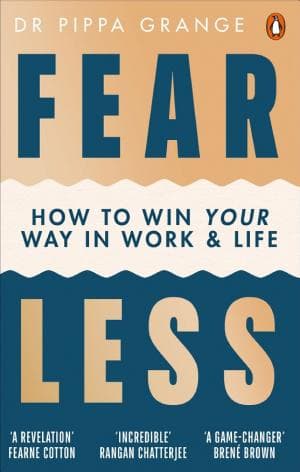
Fear Less cover
Archivist's Choice

Fear Less

Pippa Grange (2020)

Genre

Self-Help

Reading Time

180 min

Key Themes

See below

Track Your Reading

Sign in to track this book

Stop letting fear and perfectionism hold you back. This book, from the psychologist who helped the England football team, shows how to find real fulfillment.

Core Idea

Pippa Grange's "Fear Less" argues that constant external validation and the pressure to be perfect cause much anxiety, shame, and 'imposter syndrome.' The book says that lasting success and well-being come not from getting rid of fear, but from understanding it, developing an 'open mindset,' and building inner control. Grange suggests embracing vulnerability, defining success by meaning rather than status, and finding strength in the present. This helps people succeed from within, rather than being controlled by outside expectations or fear of failure.
Reading time
180 min
Difficulty
Medium
✓ Read this if...
You feel overwhelmed by societal pressures, constantly battle imposter syndrome, or find yourself chasing external validation without true satisfaction. It's for those seeking a more authentic, sustainable path to well-being and success beyond conventional metrics.
✗ Skip this if...
You are looking for quick-fix solutions or tactical strategies to eliminate fear entirely. This book focuses more on philosophical shifts and mindset changes rather than prescriptive, step-by-step exercises for specific anxieties.

Core idea

The central argument and framework that powers the entire book.

Pippa Grange's "Fear Less" argues that constant external validation and the pressure to be perfect cause much anxiety, shame, and 'imposter syndrome.' The book says that lasting success and well-being come not from getting rid of fear, but from understanding it, developing an 'open mindset,' and building inner control. Grange suggests embracing vulnerability, defining success by meaning rather than status, and finding strength in the present. This helps people succeed from within, rather than being controlled by outside expectations or fear of failure.

At a glance

Reading time

180 min

Difficulty

Medium

Read this if...

You feel overwhelmed by societal pressures, constantly battle imposter syndrome, or find yourself chasing external validation without true satisfaction. It's for those seeking a more authentic, sustainable path to well-being and success beyond conventional metrics.

Skip this if...

You are looking for quick-fix solutions or tactical strategies to eliminate fear entirely. This book focuses more on philosophical shifts and mindset changes rather than prescriptive, step-by-step exercises for specific anxieties.

Key Takeaways

1

Unmasking the Imposter

The performance persona we adopt to 'win' often isolates us from genuine success and self-acceptance.

Quote

We strive for success, but we are rarely happy. The more we try to win - putting on a brave face for work or family - the more we risk losing ourselves.

Grange says we spend much of our lives using a 'performance persona' — an ideal, often tough version of ourselves we think we need for success. This persona comes from fear: fear of failing, being judged, or not being good enough. While it might bring some achievements, it also disconnects us from our true selves and real happiness. Keeping up this act is tiring and stops us from having true connection and fulfillment, making even 'successful' outcomes feel empty. This applies to both work and personal life.

Supporting evidence

The book frequently references the pressure individuals feel in high-stakes environments (like elite sports or corporate settings) to project an image of unwavering confidence, even when internally struggling. This 'brave face' is a common coping mechanism.

Apply this

Identify situations where you feel compelled to wear a 'brave face.' Reflect on the underlying fear driving this behavior. Practice small acts of vulnerability with trusted individuals to gradually dismantle the persona, allowing your authentic self to emerge.


performance-personaauthenticityvulnerability
2

The Hollow Victory

Achieving external goals without addressing internal fears leads to a sense of emptiness, not satisfaction.

Quote

Even reaching our goals can feel strangely hollow. The culprit? Fear.

Grange notes that society often defines success by external things: trophies, promotions, money, status. We are taught that achieving these goals will bring happiness. But she points out a problem: if these goals are pursued out of fear (e.g., fear of not being good enough, poverty, or social disapproval), then the 'win' itself can feel deeply unsatisfying. The emptiness remains because the underlying fear is not addressed. This 'hollow victory' shows how important it is to change our inner view, moving beyond surface achievements to ...

Supporting evidence

Grange's experience with elite athletes who achieve peak performance but struggle with mental health or lack of fulfillment, suggesting that external success does not automatically equate to internal well-being.

Apply this

Before embarking on a new goal, ask yourself: 'Why do I want this? What fear am I trying to outrun or prove wrong?' Reframe goals to align with intrinsic values rather than solely external validation.

intrinsic-motivationexternal-validationself-worth
3

Fear's Guises: Anxiety, Shame, Perfectionism

Fear manifests in diverse, destructive ways that prevent us from living authentically.

Quote

It makes us anxious, or shameful, or turns us into perfectionists.

Fear is not just one feeling; it has many forms. Grange highlights anxiety, shame, and perfectionism as main examples. Anxiety is the fear of future threats, keeping us on edge. Shame is the fear of being unworthy or unlovable, leading us to hide. Perfectionism is the fear of making mistakes or not being good enough, driving an endless search for flawlessness. These forms, though different, share a common root: a deep fear of not being enough or of negative judgment. Understanding these specific forms is the first step to recognizing ...

Supporting evidence

Grange likely draws on case studies from her psychological practice, where individuals present with these distinct but interconnected issues, all ultimately rooted in fear.

Apply this

When you feel anxious, ashamed, or compulsively perfectionistic, pause and ask: 'What am I truly afraid of right now?' Labeling the specific fear can help you address its root rather than just its symptom.

anxietyshameperfectionismfear-mechanisms
4

The Open Mindset Manifesto

Cultivating an open mindset is the antidote to fear, fostering courage and genuine connection.

Quote

Building that open mindset is at the heart of this mould-breaking book... Her simple manifesto enables us to replace stress with courage, and connect with the people around us on a far deeper level.

Grange promotes the 'open mindset' as the main change needed to 'fear less.' This is not a passive state but an active, ongoing practice of curiosity, acceptance, and willingness to face uncertainty and vulnerability. An open mindset lets us see challenges as chances for growth instead of threats, turning stress into courage. It means lowering our defenses, being present, and truly listening, which leads to deeper, more real connections with others. This idea goes beyond just positive thinking; it's about changing how we relate to our...

Supporting evidence

The transformation of the England football team under Grange's guidance is a prime example of an open mindset in action, where players were encouraged to engage with their fears and vulnerabilities, leading to improved performance and team cohesion.

Apply this

Practice active listening without judgment. Embrace learning new things, even if you're not good at them initially. Consciously choose curiosity over defensiveness when faced with challenges or criticism.

open-mindsetcourageconnectiongrowth-mindset
5

Winning from Within

True success is an internal state of fulfillment and self-acceptance, not external accolades.

Quote

This type of success isn't about trophies or beating others, it's about winning at the very deepest level: winning from within. It's time to fear less.

Grange redefines 'winning' away from the usual competitive idea. For her, 'winning from within' means building an inner sense of worth, peace, and alignment with one's true values, regardless of outside approval or comparison. This shift frees people from the constant pursuit of trophies or outperforming others, which often causes burnout and unhappiness. Instead, it focuses on self-acceptance, resilience, and the courage to live authentically. This inner victory allows for a more lasting and satisfying life, where achievements come f...

Supporting evidence

The book's overarching theme, and likely reinforced by observations of high-achievers who, despite external success, lacked inner peace until they shifted their focus inward.

Apply this

Regularly check in with your internal state: 'Am I feeling fulfilled, or just busy?' Celebrate small personal victories, like overcoming a fear or staying true to your values, even if they aren't publicly recognized.

inner-peaceself-acceptanceintrinsic-successvalues-alignment
6

The Power of Vulnerability (and its Misconceptions)

True strength lies in acknowledging and sharing our vulnerabilities, fostering deeper bonds and resilience.

Quote

Living with open hearts rather than clenched fists.

Grange, like Brené Brown, suggests vulnerability is key to 'fearing less.' Society often sees vulnerability as weakness, causing us to adopt 'clenched fists' – defensive stances that protect us from perceived harm. However, Grange argues that this protection actually isolates us. Opening our hearts, acknowledging our fears, and sharing our true selves (when appropriate) is an act of great courage. It is the path to real human connection, empathy, and trust. This is not about oversharing, but about choosing authenticity over the exhaus...

Supporting evidence

The transformation of the England team, where fostering an environment of psychological safety and allowing players to express their fears and struggles openly led to stronger team cohesion and performance, directly supports the power of vulnerability.

Apply this

In a trusted relationship, share a fear or insecurity you've been holding back. Observe the positive impact on the connection. Practice being present and open in conversations, rather than planning your next response.

vulnerabilitypsychological-safetyconnectioncourage
7

Beyond Perfectionism: Embracing 'Good Enough'

Relinquishing the impossible standard of perfection frees up energy for genuine progress and joy.

Quote

letting go of perfectionism and anxiety

Perfectionism, Grange explains, is a fear-driven trap. It's the belief that if we are flawless, we will be safe from criticism, failure, or rejection. But this pursuit fails; perfection is an impossible goal, leading to endless delay, self-criticism, and missed chances. Grange encourages moving toward 'good enough' – a practical acceptance of our best effort within reasonable limits. This does not mean settling for average, but understanding that progress, learning, and real engagement are much more valuable than an illusion of flawle...

Supporting evidence

The book likely contains examples of individuals paralyzed by perfectionism, unable to start or complete tasks, contrasting with those who embrace imperfection and achieve more meaningful results.

Apply this

For your next task, set a realistic 'good enough' standard before you begin. Consciously resist the urge to endlessly tweak or refine. Practice launching a project or sharing an idea before you deem it 'perfect.'

perfectionismgood-enoughself-compassionprogress-over-perfection
8

The Present Moment: A Refuge from Fear

Grounding ourselves in the present diminishes the power of anxieties about the future and regrets about the past.

Quote

If we were truly free from fear, what could we achieve?

Much of our fear comes from either reliving past mistakes (shame, regret) or imagining future uncertainties (anxiety). Grange suggests that being present is a strong solution. When we are fully in the moment, our minds have less room to wander into fear-inducing thoughts. This is not about ignoring challenges, but about dealing with them calmly and clearly, rather than panicking. By consciously focusing our attention on our breath, our senses, or the task at hand, we can break the cycle of fear and create a mental space where courage ...

Supporting evidence

Many psychological interventions for anxiety and stress, which Grange would draw upon, emphasize mindfulness and grounding techniques to bring individuals back to the present moment.

Apply this

Practice a 5-minute mindfulness exercise daily: focus on your breath, notice five things you can see, four you can feel, three you can hear, two you can smell, and one you can taste. When fear arises, consciously bring yourself back to the present.

mindfulnesspresent-momentanxiety-managementgrounding
9

Redefining Success: From Status to Significance

Shifting our focus from external status to internal significance leads to deeper fulfillment and purpose.

Quote

aiming for a status that's never truly satisfying.

Grange questions the usual pursuit of status – social, professional, or material – as a path to happiness. She argues that status is often comparative and externally driven, leading to an endless cycle of striving that rarely brings lasting satisfaction. Instead, she encourages seeking significance. Significance means living a life aligned with one's values, making a meaningful contribution, and experiencing real connection. This inner measure of success is much stronger and more fulfilling than any external award, as it comes from pu...

Supporting evidence

The emptiness experienced by individuals who have achieved high status but lack a deeper sense of purpose, contrasting with those who may not hold conventional 'status' but live deeply meaningful lives.

Apply this

Reflect on what truly gives your life meaning and purpose, beyond your job title or material possessions. Prioritize activities and relationships that contribute to your sense of significance, even if they don't boost your 'status.'

significancepurposestatus-anxietymeaningful-life
10

The Contagion of Courage (and Fear)

Our ability to fear less inspires others and fosters a collective environment of openness and resilience.

Quote

connect with the people around us on a far deeper level.

Grange's work with the England team shows a powerful truth: emotions, especially fear and courage, spread easily. When people in a group act out of fear – perfectionism, defensiveness, or anxiety – it can quickly spread, hurting group performance and trust. But when leaders and team members choose courage, embrace vulnerability, and show an open mindset, it creates a positive ripple effect. This builds an environment where others feel safe to be authentic, take risks, and connect more deeply. 'Fearing less' is not just a personal jour...

Supporting evidence

The specific example of the England football team's transformation, where a shift in team culture towards openness and psychological safety under Grange's guidance led to improved team dynamics and performance in the World Cup.

Apply this

In your team or family, model vulnerability by sharing a challenge you're facing. Encourage open dialogue and active listening. Celebrate attempts and learning, not just successes, to cultivate a culture of psychological safety.

emotional-contagionteam-dynamicscollective-resiliencepsychological-safety

Critical analysis

Notable Quotes

The greatest fear is not that we are inadequate, it is that we are powerful beyond measure.

Discussing self-limiting beliefs and potential.

Your mind is a garden. Your thoughts are the seeds. You can grow flowers or you can grow weeds.

Emphasizing the importance of controlling one's thoughts.

Fear is a compass pointing to where you need to grow.

Reframing fear as an indicator for personal development.

Perfection is not the goal; progress is.

Challenging the pursuit of perfection and advocating for continuous improvement.

The only way out of the cage of fear is to open the door yourself.

Highlighting personal responsibility in overcoming fear.

What you resist, persists.

Explaining the counterproductive nature of avoiding difficult emotions or situations.

Courage is not the absence of fear, but the triumph over it.

Defining courage in the context of confronting fear.

The stories we tell ourselves shape our reality.

Discussing the power of self-narrative in creating one's experience.

Don't let the fear of striking out keep you from playing the game.

Encouraging action despite potential failure.

Your comfort zone is a beautiful place, but nothing ever grows there.

Advocating for stepping outside of one's comfort zone for personal growth.

The quality of your life is the quality of your questions.

Emphasizing the importance of self-reflection and asking meaningful questions.

The past is a place of reference, not a place of residence.

Encouraging living in the present rather than dwelling on past events.

You are not your thoughts; you are the awareness behind them.

Introducing the concept of metacognition and separating self from thoughts.

True strength is not about never falling, but about rising every time you fall.

Redefining strength as resilience and the ability to recover from setbacks.

Quiz

Test Your Knowledge

Ready to see how well you understood this book? Take our interactive quiz with 10 questions.

10
Questions
~5
Minutes
?
Best Score

Key Questions (FAQ)

'Fear Less' encourages readers to identify and overcome the fear that drives perfectionism, anxiety, and the pursuit of external validation. It advocates for living with an open mindset, finding true passions, and achieving a deeper, internal sense of fulfillment rather than chasing superficial success.

About the author