“I am not my face. I am not my body. I am something else entirely.”
— Maisie reflects on her identity after a traumatic accident that leaves her with severe facial burns.

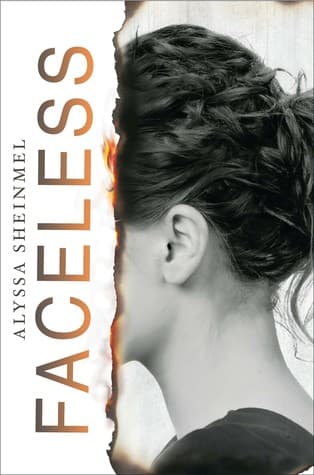
Alyssa B. Sheinmel (2015)
Genre
Psychology / Young Adult / Romance
Reading Time
450 min
Key Themes
See below
Sign in to track this book
After a devastating electrical fire obliterates her face, a teenage track star undergoes a radical face transplant, only to discover that her new identity feels as foreign as the features now staring back from the mirror.
Maisie Winters, a high school girl, goes for her morning run. As she navigates her neighborhood, a sudden storm erupts. Lightning strikes a power line directly above her, causing it to snap and shower her with live electrical wires. Maisie is engulfed in an electrical fire, which she remembers as unbearable heat and pain before losing consciousness. She wakes up in a hospital bed, disoriented and in agony, to discover the truth: the fire has destroyed her face, leaving her disfigured and unrecognizable. Her parents and doctors explain her injuries and the long road to recovery.
Confined to the hospital and grappling with the physical and emotional trauma of her injuries, Maisie learns about a radical medical procedure: a full face transplant. Her doctors explain that she is an ideal candidate due to her severe burns and overall health. While her parents are cautiously optimistic, Maisie is overwhelmed by the concept of having someone else's face. The procedure offers the hope of a 'normal' life, but the idea of looking like a stranger is unsettling. She wrestles with the implications of this decision, wondering if a new face will truly make her feel like herself again or just further alienate her.
After much thought, Maisie agrees to the face transplant. The complex surgery is a success, but her recovery is not easy. She endures immense pain, a heavily bandaged face, and the constant fear of rejection. When the bandages are finally removed, Maisie sees a reflection that is both familiar and foreign. The face staring back is not her own, but that of a girl named Chloe, the donor. This moment starts her identity crisis, as she struggles to reconcile the 'new' Maisie with the girl she was before the accident. Her interactions with family and friends are strained, as they too grapple with her altered appearance.
Back home, Maisie finds herself a stranger in her own life. Her old bedroom, her old clothes, even her old routines feel alien. She avoids mirrors, unable to accept Chloe's face as her own. Her relationship with her boyfriend, Evan, becomes strained. While he tries to be supportive, his discomfort is clear, and Maisie feels his gaze constantly searching for the girl he once knew. Her best friend, Serena, also struggles, unsure how to interact with the 'new' Maisie. Maisie retreats further into herself, her personality overshadowed by her struggle with self-perception and a sense of loss for her former identity.
Driven by a need to understand the face she now wears, Maisie begins to research Chloe. She learns that Chloe was a popular girl, a talented musician who died in a car accident. This knowledge, initially sought for comfort, only deepens Maisie's internal conflict. She feels a strange connection to Chloe, yet also guilt and pressure to honor Chloe's life, or perhaps even become her. Maisie starts to feel Chloe's presence not just on her face, but in her thoughts and actions, blurring the lines of her own identity. This obsession isolates her further from her loved ones.
Through her research into Chloe, Maisie meets Chloe's best friend, Rain. Initially, Rain is unaware that Maisie received Chloe's face. They form an unlikely friendship, with Rain finding comfort in Maisie's presence and Maisie finding understanding in Rain, who knew Chloe well. This friendship gives Maisie a new perspective on Chloe, but also intensifies her internal struggle. She grapples with the ethical problem of her deception and the growing emotional entanglement, feeling both drawn to Rain and increasingly trapped by the secret she carries. The lines between Maisie and Chloe become even more indistinct in her mind.
The secret of Maisie's identity as Chloe's face recipient eventually comes to light, shattering her friendship with Rain. Rain is shocked and betrayed, feeling that Maisie manipulated her for personal gain and a connection to Chloe. This revelation causes a rift between them, leaving Maisie feeling more alone than ever. The fallout from the truth forces Maisie to confront the consequences of her actions and the impact of her new face on those around her. It is a painful turning point, pushing her to re-evaluate her approach to her new life and relationships.
Following the rupture with Rain and the ongoing struggles with Evan and Serena, Maisie's emotional state worsens. She feels disconnected from her past, present, and future. Her old friends drift away, unable to bridge the gap created by her accident and identity crisis. Evan's inability to see past her new face leads to their breakup, a devastating blow. Maisie isolates herself, spending her days in her room, struggling with depression and loneliness. She questions whether she will ever find herself again or if she is doomed to live as a shadow of two girls.
At her lowest point, Maisie starts to realize that her identity is not solely defined by her physical appearance. She begins to understand that her experiences, her thoughts, and her spirit are what truly make her Maisie. She seeks therapy to cope with her trauma and identity issues, a step in her healing process. She starts engaging in activities she once loved, like running, even if it is different now. This gradual shift marks the beginning of her journey towards self-acceptance, understanding that while her face has changed, her core self remains. She starts to look at her reflection not as Chloe, but as a new version of Maisie.
With new self-awareness, Maisie starts to rebuild her life. She reaches out to her parents, communicating her feelings and struggles more openly. She also tries to mend fences with Rain, acknowledging her mistakes and expressing her regret. While their friendship may never be the same, a foundation for understanding is laid. Maisie begins to form new relationships, valuing people who see her for who she is, beyond her face. She accepts that her life will never be 'normal' in the way it was before, but she can forge a new, meaningful normal, embracing her unique journey and the strength she has gained through adversity.
The Protagonist
Maisie transforms from a girl whose identity is linked to her appearance and relationships to someone who understands that her true self lies within, accepting her changed reality.
The Supporting
Evan's arc shows his struggle to reconcile love with physical change, ultimately leading to the painful realization that he cannot overcome his discomfort.
The Supporting
Serena's character reflects the challenges of maintaining pre-tragedy friendships in the face of profound personal change, eventually drifting apart from Maisie.
The Mentioned
Chloe's 'arc' is told posthumously through Maisie's discoveries, serving as a catalyst for Maisie's journey of self-discovery.
The Supporting
Rain moves from befriending Maisie unknowingly, to feeling betrayed, and eventually to a place of understanding and cautious reconciliation.
The Supporting
Her arc involves learning to support Maisie through an unprecedented trauma, adapting her parenting to her daughter's new needs and identity.
The Supporting
Dr. Arnette's role is largely static, representing the medical expertise and the physical aspect of Maisie's recovery.
The Supporting
Dr. Singh helps Maisie to process her trauma and begin the journey of internal healing and self-discovery.
The central theme of 'Faceless' explores how Maisie's identity is shattered and rebuilt after her accident and face transplant. She grapples with the question of who she is when her physical appearance is no longer her own. The narrative explores the psychological impact of living with another person's face, forcing Maisie to confront whether identity is tied to outward appearance, memories, or an inner self. Her journey is one of recognizing that her essence lies beyond her reflection, and actively defining who she is in her new reality.
“How can you be yourself when you don't even recognize yourself?”
Maisie experiences grief, not for a lost loved one, but for her lost face, her lost 'normal' life, and her lost sense of self. This theme explores the stages of grief as Maisie mourns the girl she was before the accident. Her struggle to accept her new appearance and the changes in her relationships are all manifestations of this sense of loss. She also grapples with the grief for Chloe, the donor, whose life was cut short, adding another layer to her emotional burden.
“I was staring at a stranger, but worse, I was staring at a stranger who was me.”
The book examines how society views beauty and how these views impact self-worth and acceptance. Before her accident, Maisie was an ordinary, attractive girl who took her appearance for granted. After her disfigurement and transplant, she experiences the judgment, discomfort, and altered perceptions of others. The theme questions whether true acceptance comes from external validation or internal self-love, and explores the challenges of being 'different' in a world that often prioritizes conventional beauty. Maisie's journey forces her to redefine what it means to be beautiful and to accept her own unique appearance.
“It didn't matter whose face it was, it wasn't mine. And I hated it.”
The novel examines how Maisie's accident impacts her relationships with her family, boyfriend, and best friend. It shows the strain placed on these bonds when one person undergoes such a drastic transformation. The reactions of Evan and Serena, who struggle to see beyond Maisie's new face, show the challenges of empathy and understanding in the face of change. Conversely, her developing relationship with Rain, Chloe's best friend, explores the complexities of connection formed under unusual circumstances and the journey towards genuine understanding, even after deception.
“They didn't know how to look at me, and I didn't know how to let them.”
Provides intimate access to Maisie's internal struggles
The story is told entirely from Maisie's point of view, allowing readers direct access to her thoughts, fears, and complex emotional journey. This perspective is crucial for understanding the profound identity crisis she experiences, as the narrative focuses heavily on her internal monologue, her self-perception, and her struggle to reconcile her past and present selves. It immerses the reader in her isolation and her desperate search for who she is.
Symbolizes Maisie's struggle with self-recognition and identity
Mirrors serve as a recurring and powerful motif throughout the novel. Initially, Maisie avoids them, unable to confront her disfigured or transplanted face. When she does look, the reflection is a source of intense distress and alienation, as she sees Chloe's face rather than her own. The mirror represents her fractured identity and her inability to recognize herself. As Maisie progresses in her journey of self-acceptance, her relationship with her reflection evolves, symbolizing her gradual integration of her new appearance into her sense of self.
A catalyst for Maisie's obsession and deeper identity confusion
Maisie's research into Chloe's life, including details about her personality, talents, and relationships, acts as a significant plot device. This information, often gleaned from online sources or conversations, fuels Maisie's obsession with her donor and blurs the lines of her own identity. It creates a 'ghost' presence of Chloe that Maisie struggles to separate from herself, driving much of her psychological conflict and her interactions with characters like Rain. It provides a foil against which Maisie measures her own sense of self.
The central catalyst for the plot and primary symbol of identity change
Beyond being a medical procedure, the face transplant functions as the ultimate plot device, initiating Maisie's entire psychological and physical journey. It is the tangible manifestation of her loss and rebirth, forcing her to confront fundamental questions about identity, appearance, and what it means to be 'yourself.' The transplant is both a miracle and a curse, offering the promise of a new life while simultaneously stripping Maisie of her former self, driving every conflict and emotional struggle in the narrative.
“I am not my face. I am not my body. I am something else entirely.”
— Maisie reflects on her identity after a traumatic accident that leaves her with severe facial burns.
“Sometimes the hardest part of healing is letting people see the scars.”
— Maisie struggles with returning to school and facing her peers after her accident.
“Love isn't about seeing the perfect face; it's about seeing the person behind it.”
— A conversation between Maisie and her love interest, highlighting the theme of inner beauty.
“The mirror doesn't show me who I am anymore. It shows me what happened to me.”
— Maisie's internal monologue as she grapples with her changed appearance.
“You can't hide from the world forever. Eventually, you have to face it, even if you're afraid.”
— Advice from a therapist or friend encouraging Maisie to re-engage with life.
“Scars tell a story, but they don't have to define the ending.”
— A moment of realization for Maisie about moving forward despite her injuries.
“In the darkness, I found a strength I never knew I had.”
— Maisie reflecting on her journey through pain and recovery.
“People see the mask before they see me, but I'm learning to show them what's underneath.”
— Maisie's thoughts on societal perceptions and her efforts to be understood.
“Healing isn't a straight line; it's a messy, winding road with ups and downs.”
— A realistic take on the recovery process, shared in a supportive conversation.
“I used to think beauty was something you could see. Now I know it's something you feel.”
— Maisie's evolving understanding of beauty after her accident.
“The world may judge me by my face, but I judge myself by my heart.”
— Maisie asserting her self-worth despite external judgments.
“Every day is a choice: to hide in the shadows or step into the light.”
— Maisie's daily struggle with confidence and facing the world.
“Love found me when I least expected it, in the broken pieces of myself.”
— Reflecting on how romance blossomed during her recovery.
“I am more than my scars. I am a survivor, a fighter, a person.”
— A powerful affirmation from Maisie about her identity beyond her injuries.
Ready to see how well you understood this book? Take our interactive quiz with 10 questions.

Rhonda Byrne
4.3

Menno Henselmans
4.3
Sylvia Plath
4.3
Elliot Aronson
4.3
Joseph Campbell
4.3
Erich Fromm
4.3
Irvin D. Yalom
4.2

Lucy Strange
4.2