BookBrief
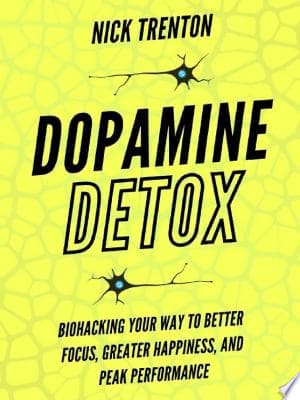
Dopamine Detox cover
Archivist's Choice

Dopamine Detox

Nick Trenton (2021)

Genre

Psychology / Science / Self-Help

Reading Time

120 min

Key Themes

See below

Track Your Reading

Sign in to track this book

Unplug from the modern world and reclaim your focus, productivity, and happiness through science-backed detoxes and biohacking strategies for mind and body.

Core Idea

Dopamine Detox suggests that constant stimulation and instant gratification in modern society have overstimulated our dopamine reward system. This leads to less joy, focus, and motivation without intense stimulation. The book argues that by reducing exposure to high-dopamine activities, people can reset their baseline dopamine sensitivity. This makes them better able to find satisfaction in simpler pleasures, improve concentration, and control impulses and habits. It aims to recalibrate dopamine's influence for greater presence and productivity. Trenton presents a practical approach that goes beyond just abstinence. It includes environmental design, gut health, sleep optimization, biohacking with light and temperature, and self-compassion. The main idea is that by understanding and managing our dopamine pathways, we can escape the hedonic treadmill, reclaim our attention, and build a more fulfilling life.
Reading time
120 min
Difficulty
Easy
✓ Read this if...
You feel overwhelmed by constant distractions, struggle with motivation for important tasks, or find yourself constantly seeking new stimuli to feel engaged. This book is for anyone looking to reset their reward system and regain focus and appreciation for everyday life.
✗ Skip this if...
You are looking for a deep dive into advanced neuroscience or prefer theoretical frameworks over practical, actionable steps. If you believe your current level of stimulation is perfectly balanced and you have no issues with focus or impulse control, this book may not offer new insights.

Core idea

The central argument and framework that powers the entire book.

Dopamine Detox suggests that constant stimulation and instant gratification in modern society have overstimulated our dopamine reward system. This leads to less joy, focus, and motivation without intense stimulation. The book argues that by reducing exposure to high-dopamine activities, people can reset their baseline dopamine sensitivity. This makes them better able to find satisfaction in simpler pleasures, improve concentration, and control impulses and habits. It aims to recalibrate dopamine's influence for greater presence and productivity.

Trenton presents a practical approach that goes beyond just abstinence. It includes environmental design, gut health, sleep optimization, biohacking with light and temperature, and self-compassion. The main idea is that by understanding and managing our dopamine pathways, we can escape the hedonic treadmill, reclaim our attention, and build a more fulfilling life.

At a glance

Reading time

120 min

Difficulty

Easy

Read this if...

You feel overwhelmed by constant distractions, struggle with motivation for important tasks, or find yourself constantly seeking new stimuli to feel engaged. This book is for anyone looking to reset their reward system and regain focus and appreciation for everyday life.

Skip this if...

You are looking for a deep dive into advanced neuroscience or prefer theoretical frameworks over practical, actionable steps. If you believe your current level of stimulation is perfectly balanced and you have no issues with focus or impulse control, this book may not offer new insights.

Key Takeaways

1

The Hedonic Treadmill of Modern Life

Constant stimulation creates a tolerance for pleasure, diminishing everyday joy.

Quote

In our modern age, we are constantly flooded with dopamine... we constantly require more and more stimulation to feel simple happiness.

Dopamine, often called the 'pleasure hormone,' is better described as a 'seeking' or 'motivation' neurotransmitter. Its release drives us to pursue rewards. In a world full of instant gratification—social media, endless entertainment, processed foods—our brains are constantly stimulated. This constant flood raises our baseline for what counts as 'reward,' leading to the hedonic treadmill. We quickly adapt to new pleasures, needing more intense experiences to feel the same satisfaction. This makes it harder to appreciate ordinary, yet ...

Supporting evidence

The book describes how the modern environment, with its instant access to high-dopamine activities, overstimulates our reward pathways, making us desensitized to natural, lower-dopamine rewards.

Apply this

Become aware of your primary sources of high-dopamine stimulation (e.g., phone, gaming, sugary snacks). Schedule specific, limited times for these activities rather than allowing them to be default behaviors. This helps recalibrate your reward system.


hedonic-treadmilldopamine-overloadinstant-gratification
2

The Dopamine Detox: A System Reset

Strategic deprivation of stimulation can reset your baseline for focus and happiness.

Quote

You'll get various techniques, all scientifically proven and validated, to regulate your dopamine to healthy levels. You'll see how 1, 3, and 7 day detoxes can work.

A dopamine detox means temporarily avoiding highly stimulating activities that offer instant, passive pleasure. This includes social media, excessive internet browsing, video games, pornography, junk food, and constant music or podcasts. By removing these easy 'hits,' the brain must find satisfaction in lower-dopamine activities like reading, walking in nature, focused work, or simple reflection. This period allows dopamine receptors to 'reset' their sensitivity, making previously bland activities more engaging and rewarding. This imp...

Supporting evidence

The book outlines structured 1, 3, and 7-day detox plans, suggesting that even short periods of abstinence can yield significant benefits in regulating dopamine levels and improving mental clarity.

Apply this

Choose a specific duration (e.g., 24 hours) and list all high-dopamine activities you will abstain from. Replace these with low-dopamine alternatives like journaling, meditation, or a walk. Observe how your perception of 'boredom' and 'enjoyment' shifts.

dopamine-fastingdigital-detoxmindfulness
3

Environment as Your Dopamine Ally or Enemy

Your surroundings profoundly influence your choices and dopamine regulation.

Quote

How your environment can be your greatest enemy or ally.

Our environment strongly shapes our habits and dopamine responses. A 'bad' environment is one with cues for instant gratification—a phone always nearby, snacks visible, a TV always on. These cues trigger dopamine release and make it hard to resist temptations, leading to constant seeking behaviors. A 'good' environment supports desired behaviors and minimizes triggers for unwanted ones. By designing our physical and digital spaces, we can reduce the effort of resisting temptation and make healthy choices easier, supporting a more bala...

Supporting evidence

The book emphasizes the importance of environmental design in supporting self-regulation, such as removing tempting items from sight or making desired activities easily accessible.

Apply this

Audit your immediate environment. For work, remove all distractions from your desk. For healthy eating, keep only nutritious foods visible and easily accessible. For better sleep, remove all screens from your bedroom.

environmental-designhabit-formationcue-management
4

The Gut-Brain Axis and Dopamine

A healthy gut microbiome is crucial for optimal dopamine production and mental well-being.

Quote

The foods, supplements, and diets that fuel us the best.

The gut-brain connection, known as the gut-brain axis, is more complex than previously thought. Our gut microbiome—trillions of bacteria in our digestive tract—produces many neurotransmitters, including precursors to dopamine and serotonin. An imbalanced gut (dysbiosis) can hinder this production, leading to mood issues, reduced cognitive function, and difficulty regulating dopamine. Nurturing a diverse and healthy gut through diet (rich in fiber, fermented foods, and prebiotics) is important for physical health and for optimizing bra...

Supporting evidence

The book discusses how specific foods and supplements can impact the gut microbiome, which in turn influences neurotransmitter synthesis and overall brain health.

Apply this

Incorporate fermented foods (yogurt, kimchi, sauerkraut) and high-fiber plant-based foods into your daily diet. Consider a high-quality probiotic supplement after consulting a healthcare professional.

gut-microbiomegut-brain-axisnutritionneurotransmitters
5

Sleep: The Ultimate Dopamine Regulator

Quality sleep is essential for dopamine receptor sensitivity and cognitive restoration.

Quote

Master the art of energizing sleep... Circadian rhythms and how to make them work for you. What you absolutely need in your bedroom, and what one thing you must keep out.

Sleep is not just inactivity; it is an active process of physical and mental restoration. During deep sleep, the brain clears metabolic waste and regulates neurotransmitter systems, including dopamine. Chronic sleep deprivation can decrease dopamine receptor sensitivity, meaning your brain needs more dopamine to feel the same reward, worsening the hedonic treadmill effect. It also harms decision-making, impulse control, and emotional regulation. Prioritizing consistent, quality sleep aligned with your circadian rhythm is a powerful 'd...

Supporting evidence

The book details the importance of circadian rhythms, bedroom setup (dark, cool, quiet), and avoiding screens before bed as crucial elements for restorative sleep.

Apply this

Establish a consistent sleep schedule, even on weekends. Create a 'wind-down' routine 60-90 minutes before bed, avoiding screens and bright lights. Ensure your bedroom is dark, cool, and quiet.

circadian-rhythmsleep-hygienerestoration
6

The Power of Small Nudges (Habit Stacking)

Tiny, consistent actions accumulate into significant changes in dopamine regulation.

Quote

How small nudges can make you the healthiest person you know.

Changing your entire lifestyle at once is often unsustainable. Instead, the book suggests using 'small nudges' or habit stacking—linking a new desired behavior to an existing habit. This uses the brain's existing pathways, making it easier to adopt new routines without relying only on willpower. For example, after brushing your teeth (established habit), you might do 5 push-ups (new habit). These small, dopamine-boosting wins reinforce positive behaviors and gradually shift your overall dopamine baseline towards more productive activi...

Supporting evidence

The concept of 'small nudges' suggests that incremental changes are more effective than drastic ones for long-term behavioral modification.

Apply this

Identify one existing daily habit. Then, choose a small, desired new habit and 'stack' it immediately before or after the existing one. Example: 'After I pour my morning coffee, I will write down three things I'm grateful for.'

habit-stackingbehavioral-nudgesmicro-habits
7

Self-Compassion: A Foundation for Change

Kindness towards oneself is essential for sustainable dopamine regulation and growth.

Quote

What self-compassion has to do with dopamine.

Making significant behavioral changes, like a dopamine detox, often involves setbacks. People often react with self-criticism, which can cause stress and lead to craving comfort (often high-dopamine activities) to escape negative feelings. Self-compassion—treating yourself with the same kindness you would a friend—breaks this cycle. It allows you to learn from mistakes without judgment, builds resilience, and reduces the emotional burden of change. This creates a stable psychological environment where lasting habit formation and dopam...

Supporting evidence

The book links self-compassion to the ability to maintain behavioral changes, suggesting that harsh self-criticism can undermine efforts.

Apply this

When you inevitably 'slip up' during a detox or new habit formation, acknowledge the setback without judgment. Instead of self-criticism, reflect on what triggered it and how you can better prepare next time, then gently recommit.

self-compassionresiliencemindful-self-awareness
8

Light and Temperature: Biohacking Your Dopamine

Optimize natural light exposure and temperature for peak hormonal balance.

Quote

The powerful effects of light and temperature on health and wellbeing.

Beyond diet and sleep, environmental factors like light and temperature control our physiology, including dopamine and other neurotransmitter regulation. Exposure to bright natural light, especially in the morning, tells the brain to wake up and produce cortisol and dopamine, setting a healthy circadian rhythm. Dimming lights in the evening promotes melatonin production for sleep. Similarly, strategic cold exposure (e.g., cold showers) can trigger a significant, sustained release of dopamine and norepinephrine, improving mood, focus, ...

Supporting evidence

The book details how morning light exposure and cold therapy can impact hormone and neurotransmitter levels, including dopamine.

Apply this

Get 10-15 minutes of natural sunlight exposure within an hour of waking. Consider incorporating cold showers or cold water face plunges into your routine, starting with short durations.

biohackingcold-therapylight-exposurecircadian-rhythms
9

The 10-Minute Daily Investment for Peak Performance

Small, consistent daily practices yield disproportionate returns in focus and well-being.

Quote

Discover the keys to peak performance in all aspects of life, in 10 minutes a day.

The idea of 'peak performance' often brings to mind intense effort, but the book suggests that big improvements can come from surprisingly brief, consistent daily practices. These are not grand gestures, but targeted actions—like a 10-minute meditation, a short burst of exercise, focused planning, or a quick gratitude journal entry. The combined effect of these small, deliberate actions is strong. They help regulate dopamine by encouraging intrinsic rewards, building self-efficacy, and creating moments of presence that counter the con...

Supporting evidence

The book promises that '10 minutes a day' can unlock keys to peak performance, implying that small, consistent efforts are highly effective.

Apply this

Identify one 10-minute slot in your day. Dedicate it to a single, high-leverage activity that supports your dopamine regulation goals, such as mindful breathing, planning your top three priorities, or a short walk without your phone.

micro-practicesdaily-ritualsconsistent-effort

Critical analysis

Notable Quotes

The problem isn't that we don't know what to do; it's that we don't do what we know.

Highlighting the gap between knowledge and action in self-improvement.

When you remove the constant stream of low-effort dopamine, your brain starts to crave the harder, more meaningful rewards.

Explaining the mechanism behind why a detox works and shifts motivation.

Boredom is not a problem to be solved, but a signal to be heeded.

Encouraging readers to embrace boredom as an opportunity for introspection or productive activity.

True discipline is not about having more willpower, but about needing less of it.

Suggesting that structuring one's environment and habits reduces the need for constant self-control.

Your brain doesn't distinguish between real accomplishments and the fleeting pleasure of social media likes.

Illustrating how modern technology can hijack our reward system without genuine effort.

The more accessible a pleasure, the less satisfying it becomes over time.

Explaining the principle of diminishing returns for easily obtained gratification.

We are not addicted to the substance, but to the feeling it provides.

Shifting the focus from external triggers to the internal emotional states they fulfill.

The greatest freedom comes from mastering your impulses, not indulging them.

Defining true freedom as self-control rather than unrestrained desire.

Your brain is constantly seeking novelty, and if you don't provide it with meaningful challenges, it will find trivial ones.

Explaining the brain's need for stimulation and how it can be misdirected.

The dopamine detox isn't about deprivation; it's about re-sensitization.

Clarifying the true purpose of the detox as restoring natural reward mechanisms.

Small, consistent actions trump grand, infrequent intentions every single time.

Emphasizing the power of consistent habits over sporadic bursts of motivation.

The real work begins when the novelty wears off.

Highlighting the challenge of maintaining progress beyond the initial excitement of a new endeavor.

If you don't control your environment, your environment will control you.

Stresssing the importance of actively shaping one's surroundings to support desired behaviors.

The less you rely on external validation, the stronger your internal compass becomes.

Encouraging self-reliance and the development of intrinsic motivation.

Quiz

Test Your Knowledge

Ready to see how well you understood this book? Take our interactive quiz with 10 questions.

10
Questions
~5
Minutes
?
Best Score

Key Questions (FAQ)

A dopamine detox is a practice designed to reset your brain's sensitivity to dopamine, the pleasure hormone. In our modern world, constant stimulation floods our brains with dopamine, leading to a diminished capacity for simple happiness and focus. Detoxing helps regulate these levels for improved well-being.

About the author