BookBrief
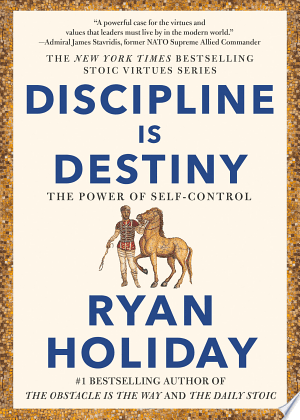
Discipline Is Destiny cover
Archivist's Choice

Discipline Is Destiny

Ryan Holiday (2022)

Genre

Philosophy / Self-Help

Reading Time

180 min

Key Themes

See below

Track Your Reading

Sign in to track this book

Ryan Holiday explains how self-discipline helps historical figures reach their full potential, achieve purpose, and avoid excess.

Core Idea

Holiday argues that discipline, meaning temperance and self-control, is the main way to true freedom and a meaningful life. Drawing from Stoic philosophy and history, the book says that by controlling our desires, impulses, and reactions, we build an inner strength that protects us from outside chaos and inner problems. This control allows for a life of purpose, resilience, and dignity, where one is not controlled by pleasure or pain, but can act based on reason and duty, shaping one's character and destiny.
Reading time
180 min
Difficulty
Medium
✓ Read this if...
You are interested in Stoic philosophy and practical self-improvement through self-control, temperance, and the development of inner strength. You appreciate historical anecdotes and a structured approach to cultivating discipline.
✗ Skip this if...
You are looking for quick fixes or a highly academic philosophical text. You dislike a prescriptive tone or find Stoic principles too rigid or austere.

Core idea

The central argument and framework that powers the entire book.

Holiday argues that discipline, meaning temperance and self-control, is the main way to true freedom and a meaningful life. Drawing from Stoic philosophy and history, the book says that by controlling our desires, impulses, and reactions, we build an inner strength that protects us from outside chaos and inner problems. This control allows for a life of purpose, resilience, and dignity, where one is not controlled by pleasure or pain, but can act based on reason and duty, shaping one's character and destiny.

At a glance

Reading time

180 min

Difficulty

Medium

Read this if...

You are interested in Stoic philosophy and practical self-improvement through self-control, temperance, and the development of inner strength. You appreciate historical anecdotes and a structured approach to cultivating discipline.

Skip this if...

You are looking for quick fixes or a highly academic philosophical text. You dislike a prescriptive tone or find Stoic principles too rigid or austere.

Key Takeaways

1

Temperance as True Freedom

Self-discipline isn't restrictive, but the gateway to genuine liberation and self-possession.

Quote

Freedom is really the opportunity to practice self-discipline.

Holiday argues that true freedom is not having no rules, but the inner ability to control oneself. Without self-discipline, we become slaves to our impulses, desires, and outside temptations. This is not freedom; it is a type of inner control. By developing temperance, the Stoic virtue of moderation and self-control, we gain control over our own lives, making conscious choices instead of being carried away by sudden urges. This inner control lets us pursue long-term goals, keep our integrity, and protect our peace of mind, freeing us ...

Supporting evidence

Eisenhower's philosophy on freedom, which he applied to both his military leadership and personal life, exemplifies the idea that discipline enables effective action and true liberty, rather than hindering it.

Apply this

Identify one area where you feel enslaved by a habit or desire (e.g., social media, unhealthy eating, procrastination). Implement a small, consistent act of temperance each day to regain control. Start with a 15-minute digital detox or a conscious choice of one healthy meal.


temperanceself-masteryfreedom
2

The Daily Practice of Discipline

Discipline isn't a grand event but a continuous series of small, consistent efforts.

Quote

We are what we repeatedly do. Excellence, then, is not an act, but a habit.

Holiday says that discipline is not about big achievements done sometimes, but about the ordinary, often unexciting, daily routines and choices. It is consistently showing up, working hard, and quietly refusing to cut corners. This daily effort builds the basic strength needed for larger challenges and important goals. It is in the small decisions—waking up early, following a schedule, resisting immediate pleasure—that character is formed and ability grows. Over time, these seemingly small acts add up, leading to deep personal and pro...

Supporting evidence

The disciplined routines of figures like Queen Elizabeth II, who maintained a rigorous schedule and commitment to duty for decades, or Marcus Aurelius's daily philosophical reflections, illustrate the power of consistent practice.

Apply this

Choose one small, positive habit you want to cultivate (e.g., reading for 10 minutes, meditating for 5, exercising for 15). Commit to doing it every single day for the next 30 days, regardless of how you feel. Focus on consistency over intensity.

habit-formationconsistencydaily-practice
3

Protecting Your Inner Citadel

Guard your mind against external chaos and internal distractions to maintain focus and peace.

Quote

You have power over your mind – not outside events. Realize this, and you will find strength.

The Stoics believed in building an 'inner citadel'—a strong mind untouched by outside problems. Holiday repeats this by showing how discipline goes beyond physical actions to include control over our thoughts and reactions. In a world full of information, distractions, and outside pressures, the ability to ignore noise, manage our emotions, and direct our attention is very important. This mental discipline helps us stay calm, make rational decisions, and keep our peace of mind from being taken over by things we cannot control. It is a...

Supporting evidence

Marcus Aurelius's Meditations serve as a testament to his constant practice of self-reflection and mental discipline, allowing him to govern an empire while maintaining inner tranquility.

Apply this

Practice 'negative visualization' by considering potential disruptions to your day and mentally rehearsing a calm, disciplined response. Implement a 'no-phone zone' or 'no-notification hour' to protect periods of focused work or reflection.

inner-citadelmental-disciplinemindfulnessattention-control
4

Discipline as a Shield Against Temptation

Self-restraint is crucial for navigating a world of excess and avoiding self-sabotage.

Quote

Without boundaries and restraint, we risk not only failing to meet our full potential and jeopardizing what we have achieved, but we ensure misery and shame.

In a time of much abundance and instant pleasure, the ability to resist temptation is more important than ever. Holiday uses warning stories to show how a lack of discipline can ruin even the most talented people. Whether it is the appeal of luxury, the comfort of putting things off, or giving in to bad habits, uncontrolled desires always lead to regret, lost potential, and unhappiness. Discipline acts as a necessary shield, helping us make choices that match our long-term values and goals, instead of giving in to short-term pleasures...

Supporting evidence

The tragic downfalls of figures like F. Scott Fitzgerald, whose talent was overshadowed by alcoholism and lavish living, or Babe Ruth, whose indiscipline outside of baseball ultimately shortened his career and tarnished his legacy, serve as powerful warnings.

Apply this

Identify your most common temptations. Pre-commit to specific rules or boundaries to avoid them (e.g., 'I will not check email after 7 PM', 'I will only have one dessert per week'). Use 'if-then' planning: 'If I feel tempted to procrastinate, then I will immediately start on the smallest task.'

temptationself-restraintpre-commitmenthedonism
5

The Dignity of Duty

Embracing responsibility and fulfilling obligations with steadfastness elevates the human spirit.

Quote

Do your duty. That is enough.

Holiday explains how discipline gives life a deep sense of purpose and dignity. It is not just about personal gain, but about fulfilling our responsibilities to others, to our work, and to our community. People who show this virtue, like Lou Gehrig playing through illness, show a strong commitment to their roles, even when things are hard. This steady dedication to duty builds character, earns respect, and helps the world in important ways. It is about showing up, keeping promises, and maintaining standards, even when no one is watchi...

Supporting evidence

Lou Gehrig's 'iron man' streak and his dignified farewell speech, despite his devastating illness, showcase an extraordinary commitment to duty and resilience.

Apply this

Reflect on your current responsibilities at work, home, or in your community. Choose one you've been neglecting and commit to fulfilling it with full attention and diligence, regardless of whether it feels exciting or glamorous.

dutyresponsibilityintegritycommitment
6

Discipline in the Face of Adversity

Self-control is paramount when confronting challenges, allowing for resilience and thoughtful action.

Quote

The impediment to action advances action. What stands in the way becomes the way.

When facing problems, an undisciplined mind often gives in to panic, anger, or despair. Holiday shows how true discipline provides the mental and emotional strength to stay calm, analyze the situation clearly, and respond well. It is about controlling one's reactions, especially under pressure, and directing energy toward finding solutions rather than dwelling on problems. This resilience is not natural; it is built through consistent self-mastery. By staying calm inside, we can turn setbacks into chances for growth and show courage e...

Supporting evidence

Floyd Patterson, the disciplined boxer who learned from his losses and meticulously prepared for rematches, exemplifies the application of discipline to overcome adversity and improve.

Apply this

When confronted with a minor setback today, pause before reacting. Take three deep breaths, analyze the situation objectively, and identify one small, disciplined action you can take to address it, rather than letting emotions dictate your response.

resilienceadversityemotional-regulationstoicism
7

The Power of Moderation and Simplicity

True strength and contentment are found in living within one's means and avoiding excess.

Quote

It is not the man who has too little, but the man who craves more, that is poor.

Holiday supports the Stoic idea of moderation, not as a lack, but as a way to true richness. Too much consumption, whether of food, possessions, or entertainment, often leads to dissatisfaction, debt, and a cluttered life. Discipline, here, means learning to appreciate 'enough,' telling needs from wants, and resisting society's pressure to always get more. This simple living frees up resources—time, money, and mental energy—for what truly matters, leading to contentment and less worry. It is about finding joy in what you have and acti...

Supporting evidence

Toni Morrison's disciplined approach to her craft and her life, avoiding unnecessary distractions and focusing on her essential work, demonstrates the power of simplicity and moderation in achieving profound impact.

Apply this

Conduct a 'digital declutter' by unsubscribing from unnecessary emails or unfollowing distracting social media accounts. Practice a 'buy nothing' day or week, focusing on utilizing what you already possess.

moderationsimplicityminimalismcontentment
8

Discipline for a Greater Purpose

Self-mastery isn't just for personal gain, but to enable service and impact beyond oneself.

Quote

We are born for cooperation, as are feet, as are hands, as are eyelids, as are the rows of upper and lower teeth. So to act against one another is contrary to nature.

While often seen as an individual goal, Holiday shows that the main aim of Stoic discipline is to better prepare us for our role in the larger human community. By mastering ourselves, we become more reliable, effective, and ethical people, able to help the world in positive ways. A disciplined person can better serve, lead, and act with fairness and wisdom. Their self-control stops them from being a burden or a source of chaos, instead making them a strong support for others. This outward-looking part raises discipline from just self-...

Supporting evidence

The disciplined leadership of figures like Queen Elizabeth II, who dedicated her life to public service, or the quiet, impactful work of Toni Morrison, whose discipline enabled her to create profound literature that shaped culture, illustrate how self-mastery serves a greater purpose.

Apply this

Identify a cause or community you care about. Consider how developing greater self-discipline (e.g., better time management, improved focus) could enable you to contribute more effectively or consistently to that cause.

servicepurposecommunityvirtue

Critical analysis

Notable Quotes

Discipline is destiny. It is the great equalizer, the great lever, the great determinant.

Introducing the central thesis of the book.

Freedom is not the absence of commitments, but the ability to choose your commitments.

Discussing how discipline leads to true freedom.

The person who is disciplined enough to sit down and do the work, day after day, is the person who will eventually be rewarded.

Emphasizing the importance of consistent effort.

Self-control is strength. Calmness is mastery. You have to get to a point where your mood doesn't shift based on the insignificant actions of someone else.

Highlighting the power of emotional discipline.

We don’t control what happens to us, but we always control how we respond. That is our power. That is our freedom.

Stressing the Stoic principle of controlling one's reactions.

The path to greatness is not a sprint, but a marathon. And it requires discipline every step of the way.

Comparing personal growth to a long-distance race.

Most people want to be great, but few are willing to put in the lonely, unglamorous work that greatness requires.

Addressing the disparity between ambition and effort.

Discipline is not punishment, but protection. It protects us from chaos, from weakness, from regret.

Redefining discipline as a beneficial force.

The greatest battles are fought within ourselves. And the greatest victories are won there too.

Focusing on the internal struggle for self-mastery.

Routine, ritual, habit. These are not shackles, but scaffolding. They give us the structure we need to build a life of purpose.

Explaining the positive role of routines in a disciplined life.

To be truly free is to be master of oneself, not a slave to one's impulses.

Connecting freedom with self-mastery over impulses.

Don't just talk about discipline. Be disciplined. Show it in your actions, in your choices, in your character.

Advocating for practical application over mere discussion of discipline.

The disciplined person knows what they want and is willing to pay the price. The undisciplined person wants everything but is willing to pay nothing.

Contrasting the mindset of disciplined versus undisciplined individuals.

Quiz

Test Your Knowledge

Ready to see how well you understood this book? Take our interactive quiz with 10 questions.

10
Questions
~5
Minutes
?
Best Score

Key Questions (FAQ)

The book argues that self-discipline is not only crucial for achieving one's potential but is also the foundation for a fulfilling and virtuous life. It emphasizes that mastering oneself—one's emotions, thoughts, and actions—is the key to mastering anything else.

About the author