“The thing about being crazy is that you don't always know you are.”
— Eliza's internal reflection on mental illness.

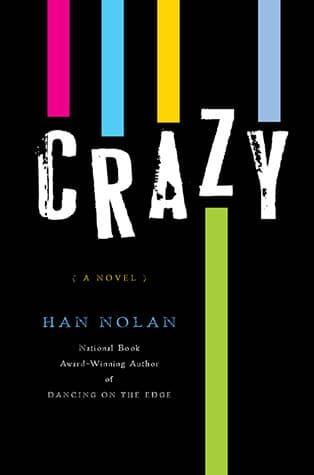
Han Nolan (2010)
Genre
Psychology / Young Adult / Romance
Reading Time
7-8 hours
Key Themes
See below
Sign in to track this book
As his father descends into madness, fifteen-year-old Jason navigates the crumbling reality of his home with the help of an elaborate imaginary world, desperately trying to keep their secret while teetering on the brink of his own sanity.
Fifteen-year-old Jason lives in a run-down house with his father, who has severe mental illness after Jason's mother died. Jason tries to keep things normal, cooking, cleaning, and trying to keep his father, who often talks to imaginary people, from attracting attention. He relies on his imaginary friends—the practical 'Practical,' the anxious 'Worrier,' and the calm 'Calm'—to help him with daily problems. The house reflects their deteriorating lives, full of clutter and disrepair, mirroring the chaos in his father's mind and Jason's growing stress.
Jason goes to school, where he tries to appear normal, but his home life always interferes. He is often late, messy, and distracted, making it hard to focus or talk to peers. He avoids bringing anyone home, fearing his father's condition will be exposed. His imaginary friends offer constant comments and advice, helping him make decisions, from what to say to teachers to how to avoid questions about his family. Despite his efforts, the strain begins to show, and he finds it harder to keep his secret contained within his crumbling home.
A new girl, Miranda, arrives at school and immediately catches Jason's eye. She is artistic, observant, and seems to see past Jason's careful facade. Her presence adds a new dynamic; Jason is drawn to her but also terrified she will discover his secret. His imaginary friends offer conflicting advice: Practical warns against risks, Worrier frets about exposure, while Calm suggests the possibility of connection. Miranda's genuine curiosity and kindness begin to break down Jason's defenses, making him question his isolation even as he fears the consequences.
Miranda, sensing Jason's struggles, actively reaches out to him. They talk at school, and she shows a real interest in his thoughts and artistic side. Jason finds himself opening up to her in small ways, a stark contrast to his usual guardedness. He even allows himself to imagine a future where he might not be so alone. However, the constant fear of his father's unpredictable behavior and the squalor of his home looms, threatening to shatter any potential for a real relationship. His imaginary friends debate the wisdom of this growing connection.
Jason's father's mental state worsens, leading to more erratic behavior. One day, his father wanders out of the house in a delusional state, causing a disturbance in the neighborhood. This public display of his father's illness shatters Jason's carefully maintained secrecy. Neighbors become aware of the situation, and the authorities are called. This event marks a turning point, as Jason can no longer pretend everything is fine. The incident leaves him feeling exposed, ashamed, and overwhelmed, signaling the end of his ability to manage the situation alone.
Following the incident, social services intervene. Jason is forced to openly discuss his father's condition and the neglect they have been living in. He struggles with shame and the feeling of having failed his father, but also a hidden relief that the burden is no longer solely his. During this time, Miranda is a steadfast friend, offering support and understanding without judgment. The intervention process is painful but necessary, as it begins to untangle the complicated web of denial and secrecy that has defined Jason's life. He starts to realize the depth of his father's illness and the impossibility of his solo care.
Jason's father is admitted to a psychiatric hospital for evaluation and treatment. This is a difficult adjustment for Jason, who has never been separated from his father for long. He visits his father, seeing firsthand the clinical environment and the severity of his father's illness, diagnosed as schizophrenia. He learns about the disease and its impact, realizing that his father's 'craziness' is a medical condition, not a personal failing. This understanding, though painful, begins to lift some of the immense guilt and responsibility Jason has carried, allowing him to see his father with more compassion and less blame.
With his father hospitalized, Jason is placed with his aunt and uncle, relatives he has not seen much since his mother's death. This new environment offers stability, cleanliness, and regular meals—a stark contrast to his previous life. While adjusting to a new family and a more structured routine is challenging, it also provides Jason with a much-needed sense of security. He begins to attend school more regularly and focus on his studies without the constant anxiety of his home life. This period marks the beginning of his own healing process, allowing him to grieve his mother and process the trauma of his father's illness.
As Jason's life stabilizes and he receives support from his relatives and Miranda, he notices a change in his imaginary friends. Practical, Worrier, and Calm, who were once constant companions and advisors, begin to speak less frequently and with less urgency. He finds himself relying on them less, making decisions independently, and seeking advice from real people. This gradual fading shows his psychological healing and his growing ability to cope with reality without the extreme coping mechanisms he developed. It is a bittersweet transition, as he acknowledges their past help while embracing his newfound independence.
With his imaginary friends fading and his life stabilizing, Jason fully embraces his friendship with Miranda. He no longer feels the need to hide his past or his vulnerabilities from her. Their bond deepens, built on shared understanding and mutual support. Jason also begins to form connections with other people at school and within his new family. He starts to see a future for himself that is not solely defined by his father's illness or his past struggles. This period is marked by hope and the promise of a more authentic, connected life, as he learns to trust others and himself.
Towards the end, Jason has grown significantly. He continues to visit his father, understanding that his illness is a long-term condition but no longer solely his responsibility. He focuses on his studies, his art, and his relationships, particularly with Miranda. While the past will always be a part of him, he is no longer defined by it. He has learned resilience, the importance of asking for help, and the power of genuine connection. The story concludes with Jason charting a course for his own future, accepting the complexities of his family and embracing the possibilities of his own life, having truly moved from 'crazy' to coping.
The Protagonist
Jason transforms from an isolated, burdened caretaker into a young man who accepts help, understands mental illness, and builds genuine relationships, ultimately finding his own path to healing.
The Supporting/Antagonist (due to illness)
His arc is one of escalating illness leading to hospitalization and eventual, though not complete, stabilization, representing the harsh realities of mental health care.
The Supporting/Love Interest
Miranda's arc is one of consistent support and understanding, acting as a catalyst for Jason's healing and growth.
The Supporting (Imaginary Friend)
Practical's presence diminishes as Jason gains real-world support, signifying his decreasing reliance on internal, defensive coping mechanisms.
The Supporting (Imaginary Friend)
Worrier's influence wanes as Jason finds external support and reduces his burden of secrecy, indicating a reduction in his overall anxiety.
The Supporting (Imaginary Friend)
Calm's role lessens as Jason develops real-world coping strategies and finds genuine emotional support, reflecting his internal peace.
The Supporting
They provide a stable, healing environment for Jason, enabling his recovery and growth.
Jason's life is defined by the desperate need to hide his father's mental illness, leading to deep isolation. He builds walls around himself, avoiding friends and social situations to prevent anyone from discovering the truth. This secrecy is a heavy burden, causing immense stress, guilt, and emotional strain. The crumbling house itself is a physical manifestation of this isolation. The eventual exposure of his secret, though painful, ultimately becomes the catalyst for his healing, showing that secrecy, while a coping mechanism, is unsustainable and destructive to well-being.
“It was like living in a glass box, trying to keep the outside from seeing in, and the inside from spilling out.”
The novel clearly shows the devastating impact of severe mental illness, specifically schizophrenia, not only on the person suffering but also on their family. Jason's father's illness completely disrupts their lives, leading to neglect, poverty, and a complete role reversal where a child must care for a parent. The story emphasizes that mental illness is a medical condition, not a moral failing, and highlights the challenges in identifying and treating it, especially for those who lack support. It underscores the long-term emotional and psychological toll on caregivers.
“He wasn't bad, just sick. But sick could be just as bad as bad, sometimes worse.”
Jason develops complex coping mechanisms to survive his circumstances. His imaginary friends—Practical, Worrier, and Calm—are personifications of his internal struggles and strategies for navigating daily crises. These voices provide a form of self-talk and decision-making when he has no one else to turn to. His resilience is evident in his continued efforts to care for his father and maintain normalcy despite overwhelming odds. The novel explores how these coping mechanisms, while initially vital for survival, must eventually be replaced by real-world support for true healing to occur.
“They were the only ones who really understood, because they were me.”
Despite Jason's deep isolation, the novel ultimately champions the transformative power of human connection and empathy. Miranda's unwavering kindness, patience, and non-judgmental presence are a lifeline for Jason. Her ability to see past his struggles and connect with his true self allows him to gradually lower his guard and trust another person. The intervention of social services and the support from his aunt and uncle further show how external support and genuine care are essential for breaking cycles of neglect and enabling individuals to heal and thrive. This theme emphasizes that no one can face profound challenges alone.
“It was like she saw something in me that no one else had bothered to look for.”
Personified internal coping mechanisms for Jason.
Jason's imaginary friends—Practical, Worrier, and Calm—serve as a crucial psychological plot device. They externalize Jason's internal monologue, representing his various emotional and rational responses to his overwhelming situation. They allow the author to illustrate Jason's thought processes, anxieties, and survival instincts in a dynamic way. As Jason heals and finds real-world support, these voices gradually fade, symbolizing his decreasing reliance on self-generated coping mechanisms and his move towards healthy external relationships.
A physical manifestation of the family's crumbling lives and mental state.
The physical state of Jason's house—dilapidated, cluttered, and neglected—is a powerful symbol and plot device. It mirrors the chaos and decay of his father's mind and the overwhelming burden on Jason. The house acts as a prison, reinforcing Jason's isolation and fear of exposure. Its condition is a constant reminder of their dire circumstances and the extent of their neglect. The eventual move to his aunt and uncle's clean, stable home signifies Jason's escape from this 'prison' and the beginning of his own restoration.
The catalyst for the father's mental decline and Jason's subsequent burden.
Jason's deceased mother is a significant plot device, even in her absence. Her death is the direct catalyst for his father's descent into schizophrenia, thereby setting the entire plot in motion. Her memory haunts Jason, contributing to his guilt and sense of responsibility. Her absence creates the void that Jason tries to fill, and the lack of a stable parental figure forces him into an adult role far too early. Her prior presence provides a stark contrast to their current desolation, highlighting the tragedy of their situation.
“The thing about being crazy is that you don't always know you are.”
— Eliza's internal reflection on mental illness.
“Sometimes the only way to stay sane is to go a little crazy.”
— Eliza's justification for her unconventional actions.
“Love isn't supposed to hurt this much.”
— Eliza's emotional turmoil over her relationship.
“We're all broken in our own ways. Some of us just show it more.”
— A moment of shared vulnerability between characters.
“It's hard to trust when everyone you've ever loved has let you down.”
— Eliza's struggle with trust due to past experiences.
“Silence can be louder than any scream.”
— Eliza observing the unsaid tension in a room.
“Maybe being normal is just a different kind of crazy.”
— Eliza questioning societal norms and perceptions.
“You can't fix someone who doesn't want to be fixed.”
— A harsh realization about helping others.
“The greatest prison is a mind without hope.”
— Eliza's internal struggle with despair.
“Sometimes, you have to break to become whole again.”
— Eliza's journey towards healing and self-discovery.
“The world doesn't stop just because your heart is breaking.”
— Eliza's observation of life continuing despite personal tragedy.
“It's not about being perfect, it's about being real.”
— A character's advice on authenticity.
“Fear is a powerful motivator, but so is love.”
— Eliza weighing her motivations for action.
“There's a fine line between passion and obsession.”
— Eliza reflecting on the intensity of her feelings.
Ready to see how well you understood this book? Take our interactive quiz with 10 questions.

Rhonda Byrne
4.3

Menno Henselmans
4.3

Sylvia Plath
4.3

Elliot Aronson
4.3

Joseph Campbell
4.3

Erich Fromm
4.3

Irvin D. Yalom
4.2

Lucy Strange
4.2