“All that we see or seem is but a dream within a dream.”
— A Dream Within a Dream

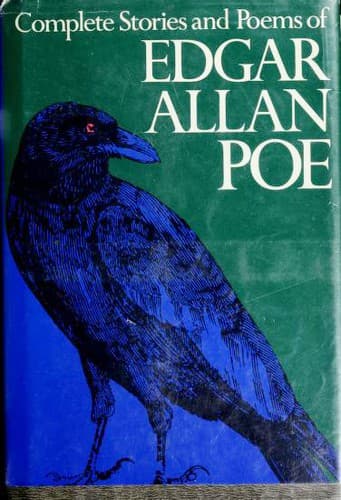
Genre
General
Reading Time
Varies significantly (hundreds of hours to read completely)
Key Themes
See below
Sign in to track this book
Delve into the shadowed depths of human psyche and the macabre through Poe's masterful verses and chilling narratives of loss, madness, and the supernatural.
In 'The Tell-Tale Heart,' an unnamed narrator, driven by an irrational aversion to an old man's 'vulture eye,' meticulously plans and executes his murder. He suffocates the old man and dismembers the body, hiding the remains beneath the floorboards. Convinced of his own sanity and cunning, he confidently entertains police officers investigating a neighbor's report of a shriek. However, as the conversation progresses, the narrator becomes increasingly agitated, believing he hears the deceased man's beating heart growing louder and louder, a sound imperceptible to anyone else. Overwhelmed by his guilt and the imagined sound, he ultimately confesses his crime, revealing his meticulously planned act was undone by a psychological tormentor.
'The Raven' recounts a distraught scholar's vigil in his chamber, mourning his lost love, Lenore. On a bleak December night, he is interrupted by a tapping at his window, which he attributes to a late visitor. Upon opening the shutter, a raven flies in and perches on a bust of Pallas above his door. The scholar, initially amused, engages the bird in conversation, asking if he will ever find solace or reunion with Lenore in the afterlife. The raven, to his astonishment, repeatedly utters the single word, 'Nevermore.' This single, despairing utterance deepens the scholar's melancholic descent, as he interprets the bird's pronouncement as a definitive, inescapable condemnation of his eternal sorrow and the permanent loss of his beloved Lenore.
'The Premature Burial' explores the intense phobia of being buried alive, a fear that consumes the unnamed narrator. He recounts several historical and anecdotal instances of premature burial, fueling his own obsessive dread. His fear is so profound that he takes extreme precautions, modifying his family vault with mechanisms to ensure his escape should he be mistakenly interred. He describes his recurring nightmares of being entombed, the suffocating darkness, and the desperate struggle for air. The story culminates in a terrifying, albeit ultimately mistaken, experience where he awakens in a confined space, believing his worst fear has come true, only to discover he was merely sleeping in a small berth on a boat, highlighting the psychological grip of his phobia.
'The Cask of Amontillado' is Montresor's chilling first-person account of how he exacted revenge upon Fortunato, a fellow nobleman who, Montresor claims, had insulted him numerous times. Feigning concern for Fortunato's expertise in wine, Montresor lures the connoisseur into his family catacombs during carnival season, under the pretense of verifying a rare Amontillado sherry. As they descend deeper into the crypt, Montresor exploits Fortunato's pride and his slight cough, plying him with wine to keep him incapacitated. Once they reach a secluded niche, Montresor chains Fortunato to the wall and, despite Fortunato's pleas, meticulously walls him alive within the catacombs, leaving him to a horrifying death. Montresor concludes his tale, claiming his deed has remained undiscovered for fifty years.
'William Wilson' follows the life of a man tormented by a doppelgänger, a mysteriously identical schoolmate who shares his name and birthdate. This second William Wilson acts as a moral foil, always appearing to thwart the narrator's increasingly immoral schemes and debaucheries. From their school days, where the doppelgänger mimics his voice and dress, to later life where he intrudes on the narrator's gambling and seduction attempts, the second Wilson serves as a constant, silent rebuke. The narrator's frustration and hatred for his double grow to an unbearable pitch. The story culminates in a duel in Rome, where the narrator fatally stabs his doppelgänger, only to discover he has, in fact, stabbed himself, revealing his double was a manifestation of his own conscience, which he has now silenced forever.
An unnamed narrator, condemned by the Spanish Inquisition, finds himself in a dark, seemingly bottomless pit. He is subjected to a series of psychological and physical tortures: first, the fear of falling into the abyss, then being bound beneath a slowly descending, razor-sharp pendulum, and finally, being driven towards the central pit by superheated, shrinking walls adorned with demonic imagery. Each escape from certain death is a desperate, ingenious act of survival. He narrowly avoids the pendulum by smearing his bonds with meat, attracting rats to chew them through. As the walls close in, pushing him towards the pit, he is saved at the last possible moment by the arrival of the French army, who have captured Toledo and thus the Inquisition's prison, rescuing him from an agonizing demise.
'The Masque of the Red Death' describes Prince Prospero's futile attempt to escape a devastating plague, the 'Red Death,' by secluding himself and a thousand guests in a fortified abbey. They indulge in lavish entertainment, with seven uniquely colored rooms, the last of which is black with scarlet windows, causing unease among the revelers. At the stroke of each hour, a gigantic ebony clock chimes, momentarily silencing the festivities and reminding them of the passage of time. During the masked ball, a mysterious figure appears, clad in the grave-shroud of the Red Death itself. Prospero confronts this figure, pursuing it through the colored chambers, only to collapse and die in the black room. The other revelers, upon attempting to unmask the figure, discover there is no tangible form beneath the costume, and they too succumb to the Red Death, illustrating the inescapability of mortality.
'The Fall of the House of Usher' details an unnamed narrator's visit to his childhood friend, Roderick Usher, who has summoned him due to a mysterious illness affecting both Roderick and his twin sister, Madeline. The Usher mansion itself is described as decaying and ominous, mirroring the family's decline. Roderick suffers from extreme hypersensitivity and a morbid fear, while Madeline is afflicted by a cataleptic illness that leads to her apparent death and premature burial in a vault beneath the house. The narrator observes Roderick's increasing madness, fueled by his sister's 'death' and the oppressive atmosphere. Eventually, Madeline, still alive, emerges from her tomb during a violent storm, collapsing upon Roderick and causing his death. The narrator flees as the ancient house, its foundations having been weakened, collapses into the tarn, symbolizing the complete destruction of the Usher lineage.
An unnamed narrator, a kind animal lover in his youth, descends into alcoholism, which transforms him into a violent and cruel man. His first victim is his beloved black cat, Pluto, whom he first blinds and then hangs from a tree in a fit of drunken rage. Soon after, his house burns down, and he finds a strange black cat, remarkably similar to Pluto, save for a white patch on its chest. This new cat, whom he names Pluto again, quickly becomes a source of both comfort and irritation. The narrator's escalating brutality leads him to attempt to kill the second cat with an axe, but he accidentally murders his wife instead. He walls her body within the cellar, believing himself safe, but the cat, having been inadvertently walled in with the body, reveals his crime to the police with its mournful cries, leading to the narrator's capture and condemnation.
'A Descent into the Maelström' is the tale of an old Norwegian fisherman who recounts his harrowing survival of a legendary whirlpool off the coast of Norway. He describes how he and his two brothers were caught in the powerful current during a storm. His brothers succumb to the maelstrom's irresistible force, their boat dragged to the bottom. The narrator, however, observes the physics of the whirlpool, noticing how cylindrical objects descend slower than others. In a desperate act of calculated risk, he ties himself to an empty water cask and throws himself overboard, allowing the maelstrom to carry the lighter object and him within it. He is eventually ejected from the whirlpool's depths and rescued by another fishing vessel, his hair having turned white from the sheer terror of the experience.
The Protagonist/Antagonist
Begins as a seemingly rational individual, albeit with an extreme phobia. His arc is a descent into madness, marked by the commission of murder and culminating in a forced confession due to his own psychological torment, demonstrating the self-destructive nature of guilt and obsession.
The Protagonist
Starts in a state of profound, yet somewhat contained, grief. His encounter with the Raven and its repeated 'Nevermore' intensifies his sorrow, leading him to a state of absolute despair, where he accepts his eternal separation from Lenore, marking a complete surrender to hopelessness.
The Protagonist/Antagonist
His arc is presented as a completed one, a successful act of vengeance. He begins with a resolved intention to punish Fortunato and executes his plan flawlessly, concluding with a sense of triumph and impunity, showcasing a character fully committed to and satisfied by his dark deed.
The Protagonist/Antagonist
Starts as a rebellious and pleasure-seeking youth. His arc is one of increasing moral decay, punctuated by the persistent interference of his double. This culminates in a desperate act of murder (of his double), which simultaneously represents his self-destruction and the permanent silencing of his conscience, leading to a life of utter solitude and despair.
The Protagonist
Begins in a state of nervous decline, exacerbated by his sister's illness. His arc is a rapid descent into madness and terror, culminating in his death from fear and shock upon Madeline's re-appearance, symbolizing the complete collapse of his mind and the Usher family line.
The Protagonist/Antagonist
Begins as a compassionate individual. His arc is a tragic deterioration driven by addiction, leading to escalating acts of violence (blinding and hanging Pluto, murdering his wife). He experiences a brief period of false security but ultimately faces exposure and execution, illustrating the destructive path of unchecked vice and the inescapable consequences of his crimes.
The Protagonist/Antagonist
Begins as a figure of authority and defiance, attempting to create a world immune to death. His arc is short and sharp, culminating in a direct, fatal confrontation with the embodiment of the Red Death, signifying the ultimate failure of his defiance and the inescapable nature of mortality.
A pervasive theme across Poe's works, exploring the fragility of the human mind and its descent into insanity. Characters are often plagued by obsessive thoughts, irrational fears, and guilt, leading to hallucinations, paranoia, and self-destruction. This theme delves into the internal torments that can unravel sanity, often without external provocation, highlighting the mind's capacity for self-inflicted horror. Poe masterfully blurs the line between sanity and madness, leaving readers to question the reliability of his narrators.
“True!—nervous—very, very dreadfully nervous I had been and am; but why will you say that I am mad? The disease had sharpened my senses—not destroyed—not dulled them.”
Poe frequently explores the profound impact of death, particularly the death of a beloved woman, on the living. This theme encompasses not only the physical cessation of life but also the lingering grief, the fear of premature burial, and the philosophical contemplation of mortality and the afterlife. His narratives often depict characters consumed by sorrow, driven to madness, or haunted by the specter of their lost loved ones, emphasizing the finality and often cruel nature of death.
“And the Raven, never flitting, still is sitting, still is sitting / On the pallid bust of Pallas just above my chamber door; / And his eyes have all the seeming of a demon’s that is dreaming, / / And my soul from out that shadow that lies floating on the floor / Shall be lifted—nevermore!”
This theme examines the dark impulse for vengeance and the meticulous, often horrific, ways in which it is executed. Poe's characters are sometimes driven by a desire to right perceived wrongs, leading to elaborate schemes of punishment. This retribution can be exacted by a human agent, as in 'The Cask of Amontillado,' or it can manifest as a supernatural or karmic consequence of a character's own cruelty, as seen in 'The Black Cat,' exploring the inescapable nature of justice, whether human or cosmic.
“I was silly enough to believe him, and I did not notice that he was smiling at my credulity. I knew my fate was sealed. The thought of my impending death filled me with terror, but even then, I could not help but admire the cold-blooded ingenuity of my murderer.”
Poe expertly uses elements of the supernatural and the uncanny to evoke fear and dread. This includes ghostly apparitions, mysterious doppelgängers, and events that defy rational explanation, often serving to externalize a character's internal psychological state. The uncanny, in particular, involves familiar things made strange and terrifying, blurring the lines between reality and illusion, and leaving readers with a lingering sense of unease about the world beyond conventional understanding.
“I looked again, and saw, more distinctly than before, the white hair, the red eyes, and the thin, pale lips of the old man. He was smiling; and in his smile there was a cold, inhuman mockery, which thrilled me with a horror I had never known.”
This theme explores the transient nature of beauty, youth, and life itself, often juxtaposed with images of physical and structural decay. Poe frequently uses crumbling mansions, deteriorating bodies, and fading memories to symbolize the inevitable passage of time and the destructive forces that erode all things. This decay is not merely physical but also psychological and moral, reflecting the corruption of the soul and the decline of noble lineages, creating an atmosphere of pervasive melancholy and impending doom.
“I looked upon the scene before me—upon the mere house, and the simple landscape features of the domain—upon the bleak walls—upon the vacant eye-like windows—upon a few rank sedges—and upon a few white trunks of decayed trees—with an utter depression of soul which I can compare to no earthly sensation more properly than to the after-dream of the reveller upon opium—the bitter lapse into everyday life—the hideous dropping off of the veil.”
Subjectivity as a source of horror
Poe frequently employs first-person narrators whose sanity, motivations, or perceptions are questionable. This device immerses the reader directly into the character's disturbed mind, blurring the line between objective reality and psychological delusion. The unreliability creates suspense and ambiguity, forcing the reader to constantly interpret events through a distorted lens, thereby intensifying the horror and psychological impact of the narrative. This technique is central to stories like 'The Tell-Tale Heart' and 'The Black Cat,' where the narrators confess their crimes while simultaneously attempting to justify their actions or deny their madness.
The environment as a character
Poe's stories are often set in desolate, decaying, and oppressive environments—crumbling mansions, dark catacombs, or isolated chambers. These settings are not merely backdrops but active participants in the narratives, mirroring the characters' internal states and contributing significantly to the overall mood of dread, despair, and claustrophobia. The atmosphere is further enhanced by elements like storms, shadows, and the eerie silence, all designed to evoke a sense of foreboding and psychological tension, making the physical world reflect the inner turmoil of the characters, as seen in 'The Fall of the House of Usher' and 'The Cask of Amontillado'.
Objects and concepts with deeper meaning
Poe masterfully uses symbolism to imbue his narratives with deeper meaning and psychological resonance. Objects, colors, animals, and even architectural features often represent abstract concepts or internal states. For example, the 'vulture eye' in 'The Tell-Tale Heart' symbolizes the narrator's irrational fear, while the Raven in 'The Raven' symbolizes inescapable grief and despair. The decaying House of Usher symbolizes the family's decline, and the Red Death's masked figure symbolizes the inevitability of mortality. This device allows Poe to explore complex themes without explicit exposition, enriching the reader's interpretive experience.
Twisted expectations and hidden meanings
Poe frequently employs various forms of irony to heighten tension, reveal character, and underscore thematic concerns. Verbal irony is evident when characters say one thing but mean another, often used by deceptive narrators like Montresor. Situational irony occurs when events unfold contrary to expectations, such as the 'Red Death' entering Prospero's impenetrable abbey. Dramatic irony is present when the audience knows more than the characters, creating a sense of impending doom for the reader. This device adds layers of complexity and often a chilling sense of inevitability to Poe's tales, as characters unwittingly hasten their own demise or are unaware of the true horror surrounding them.
“All that we see or seem is but a dream within a dream.”
— A Dream Within a Dream
“Deep into that darkness peering, long I stood there, wondering, fearing, doubting, dreaming dreams no mortal ever dared to dream before.”
— The Raven
“Once upon a midnight dreary, while I pondered, weak and weary, over many a quaint and curious volume of forgotten lore—”
— The Raven
“For the moon never beams without bringing me dreams Of the beautiful Annabel Lee;”
— Annabel Lee
“I was a child, and she was a child, In this kingdom by the sea, But we loved with a love that was more than love— I and my Annabel Lee—”
— Annabel Lee
“The boundaries which divide Life from Death are at best shadowy and vague. Who shall say where the one ends, and where the other begins?”
— The Premature Burial
“I became insane, with long intervals of horrible sanity.”
— Eleonora
“I have no faith in human perfectibility. I think that human exertion will have no appreciable effect upon humanity. Man is now only more active—not more happy—nor more wise—than he was 6000 years ago.”
— Marginalia
“Words have no power to impress the mind without the exquisite horror of their reality.”
— The Narrative of Arthur Gordon Pym of Nantucket
“The true genius is a mind of large general powers, accidentally determined to some particular direction.”
— The Poetic Principle
“There are chords in the hearts of the most reckless which cannot be touched without emotion.”
— The Tell-Tale Heart
“It is by no means an irrational fancy that, in a future existence, we shall look upon what we think is death, as a mere change of state, a passage from one stage of existence to another.”
— The Colloquy of Monos and Una
“From childhood’s hour I have not been As others were—I have not seen As others saw—I could not bring My passions from a common spring.”
— Alone
“I felt a sudden chill come over me, and a strange sensation of nausea.”
— The Fall of the House of Usher
Ready to see how well you understood this book? Take our interactive quiz with 10 questions.